Uk politics

What the new peerages tell us about the party leaders

From our UK edition

Today’s peerage list contains more interesting names than usual. Jullian Fellowes — Downton Abbey, Gosford Park, Snobs — is the one who will get the most attention. It is a sign of how confident David Cameron is feeling that he has risked the reopening of the whole class question. But perhaps, the most intriguing Tory appointment is Patience Wheatcroft. One imagines that she wouldn’t have taken the role unless it was a way to allow her to serve on the political front line. Howard Flight’s appointment to the Lords rights a wrong: his sacking as a candidate before the 2005 election was as unfair as it was hasty.

Full list of peerages

From our UK edition

Number 10 has published the full list of new peerages. There are 27 new Conservative peers, including Sir Patrick Cormack, Richard Spring, Julian Fellowes, Howard Flight, Michael Grade and Patience Wheatcroft. The Lib Dems and the Labour party have acquired15 and 10 respectively. General Dannatt is also to be ennobled, but will sit on the crossbenches, confirming his break-up from the Tory machine. Expect his strident voice to be a constant feature of the debate growing from the troubled strategic defence review.

The transparency revolution gets under way

From our UK edition

The press has gone to town on the government’s spending spree; more than £80bn of central government expenditure, itemised in this imposing document published today by Francis Maude. The government will squirm at some findings, notably on redacted defence procurement contracts, Libyan oil agreements and the 194,000 payments made to individuals and private companies (Capita has been paid £3.3bn for outsourcing government work, and De Beers, the diamond cutters, received nearly £1,200 from the Business Department). Already the blame game has begun, with Labour and the coalition sparring from a distance.

You’ve never had it so good

From our UK edition

As Michael Gove said at the launch of the Conservative Party manifesto: “Britain in 2010 is a great place to live in many ways” (4:12 in on this video). Lord Young, The Spectator’s Peer of the Year, agrees: for many of us, we’ve never had it so good. He told the Telegraph: ‘For the vast majority of people in the country today, they have never had it so good ever since this recession - this so-called recession - started…Most people with a mortgage who were paying a lot of money each month, suddenly started paying very little each month. That could make three, four, five, six hundred pounds a month difference, free of tax. That is why the retail sales have kept very good all the way through.

Ed Miliband needs to make some noise

From our UK edition

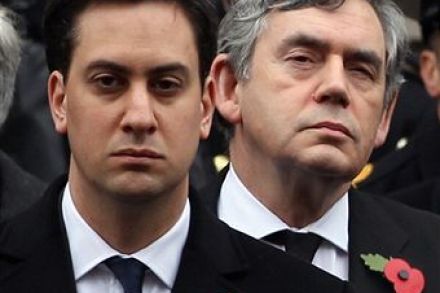
Today’s press will not have made happy reading for Ed Miliband and his supporters. Alan Johnson’s comments to The Times about the need to change the way Labour elects its leader has revived the debate about the legitimacy of Ed Miliband’s victory. Meanwhile in the New Statesman there’s a piece setting out the internal tensions within the party. Intriguingly, Lisa Tremble, who was David Miliband’s press chief during his leadership campaign, has put what could be considered a rather provocative quote on the record. She tells the magazine, ‘David’s rediscovered his excitement in politics…He’s looking forward to the new challenges. He’s not going anywhere.

Britain may not be able to avoid bailing out the Irish

From our UK edition

This morning, it sounds as though Ireland has finally buckled to demands that they accept a bailout from the EU. Their central bank governor, Patrick Honohan, has said that he expects a "very substantal loan" from Europe – although the details, and debtees, are yet to be clarified. In the UK, of course, backbench MPs and others have been quick to condemn any move which would force British taxpayers to cough up cash under the EU’s various bail-out arrangements. Only problem is: the UK may not have a choice. The part of the eurozone bail-out package which Britain could be underwriting to the tune of £6-7 billion - the so-called European Financial Stability Mechanism – is not protected by a UK veto.

Labour’s ice cream moment

From our UK edition

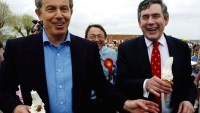
This from Matthew Taylor – the former No.10 head of policy, speaking to the Times for their series (£) on the fall of New Labour – deserves a post of its own: "For me, New Labour died when Tony bought Gordon an ice cream in 2005. I remember sitting in Downing St two days after the election win and chucking into the bin the proposal to break up the Treasury.

Ed Miliband has a choice to make about the unions

From our UK edition

On the surface, there are one or two baubles to delight a Labour supporter: their party leader has just had a second son, of course; they are pushing ahead of the Tories in a number of polls; and the coalition will surely come under sustained and heavy attack as the cuts make themselves felt. But strip back the gloss veneer, and Labour has some agonising problems to worry about. Chief among those problems – as I've written before – is their uncertain message on the economy, stretching into an uncertain policy prospectus overall. Just what do Labour stand for? Then there's the simmering resentments between teams Ed and David, with the Balls axis looking to capitalise in between.

The British taxpayer should not be bailing out Ireland

From our UK edition

Everyone is talking about the royal wedding today.  It will be a great occasion but the public finances are tight and people are already asking about the cost.  There is a bigger issue for British taxpayers, though.  Our politicians have arranged for them to get hitched to the bride from hell: the ongoing fiscal disaster in the eurozone.   Under current plans it is reported that we could be liable for up to £7 billion in any Irish bailout.  At the TaxPayers’ Alliance, we have just this morning started a petition against British taxpayers’ money being put at risk for a euro-bailout of Ireland; you can sign it here.   The eurozone is fundamentally broken.

A day off for Dave

From our UK edition

The giraffe was back. Hattie Harman came to PMQs today wearing That Frock with its eccentric pattern of burnt umber pentagonals framed by light squiggly outlines. A great colour scheme for camouflaging giraffes in Africa. And an even better one for attracting attention in the house. Why does Hattie feel herself particularly giraffic? Her noble breeding naturally aligns her sympathies with an animal that has evolved upwards over many generations and can enjoy the lush topmost leaves not available to lowlier creatures. Or perhaps it’s her unsteady gait as she lumbers through her questions. Or perhaps it’s the fact that if she leans forwards and touches her knees with her chin she’ll fall over.

The Harman bounce

From our UK edition

I kid, I kid – but it's still striking that Labour are pushing ahead in the polls as soon as Ed Miliband takes his paternity leave. According to today's YouGov poll, they are now 5 points ahead of the Tories: their biggest lead since 2007, and an escalation of the 2-point advantage they recorded in a couple of polls earlier this week. The question, of course, is whether this is a momentary blip, or representative of wider discontent over tuition fee rises and the like.

PMQs live blog | 17 November 2010

From our UK edition

VERDICT: Harriet Harman's questions must have looked quite clever on paper: a heavy emphasis on police cuts, followed by a quick dose of indigation over the vanity photographers. But, in reality, they were breezily repelled by Cameron. All he had to do was cite the words of Alan Johnson and refer to a list of Labour's own dodgy hires. By the time Harman attacked the cost of elected police commissioners, leaving Cameron to stand up for greater local democracy and accountability, it was clear who had won this bout: the Prime Minister, by some distance. Although, as Andrew Neil and Tim Montgomerie have noted, the absence of any talk about an Irish bailout was unsettling, to say the least. 1233: Labour are persistently talking down the economy, claims Cameron.

Sovereignty, and the loss of it

From our UK edition

The superb Slugger O'Toole blog highlights what is certainly the most resonant quote if the day: "When you borrow, you lose a little bit of your sovereignty, no matter who you borrow from." Those words were uttered by the Irish finance minister Brian Lenihan this morning, and they capture his country's grisly predicament perfectly. The Irish government has been fighting the European attempt to bail them out because they believe, quite understandably, that it would mean a final handover of control to Brussels and Berlin. But their loose economic policy – built on debt, and structured around a stubborn currency – has already seen them lose control to the point where the IMF is dispatching its observers to the scene.

The divide over the Guantanamo settlements

From our UK edition

After being pre-empted by the morning newspapers, Ken Clarke's statement this afternoon contained nothing that was unexpected. "We've paid the money so we can move on," he said. And he went on to emphasise that the Guantanamo payouts are not an admission of culpability, but rather all about sparing the public's money and the spooks' time. More striking were some of the responses from Clarke's coalition stablemates. Take Tom Brake, the Lib Dem MP for Carshalton and Wallington, who suggested that the government wouldn't have made the payments if the UK didn't have a case to answer.

A good day to bury good news

From our UK edition

It's not just the embarrassing and the difficult that will be buried underneath the Wills 'n' Kate coverage tomorrow – some good news will be too. Among it is the coalition's plan to expand the provision of personal budgets. According to the Lib Dem health minister Paul Burstow, speaking today, some one million elderly people will be given control of their own personal care budgets, up from 250,000 now. As I've suggested before, this is a worthwhile idea. Personal budgets promise to be one of the most concrete elements of what the Tories used to call their Post-Bureaucratic Age agenda, but has now been stuck with the Big Society label.

A royal wedding bounce?

From our UK edition

Slap all kinds of health warnings on this, but – in view of speculation that the Wills and Kate nuptials might work in the coalition's favour – I thought CoffeeHousers might like to see what happened to the the Tory government's poll rating in 1981, around when Prince Charles married Diana. So here's a graph I've put together from Ipsos MORI's figures. The dotted line represents the date of the wedding: PoliticsHome suggests that the "royal wedding worked wonders for Thatcher" – but, on the basis of the above, I'm not so sure. It's worth nothing, though, that the Tories surged ahead of Labour as soon as the Falklands War flared up in 1982. By June 1982, Thatcher's party were 27 points ahead of their rivals. P.S.

Bonfire of the vanity photographers

From our UK edition

Today is a very good day to bury bad news. Prince William and Kate Midddleton’s engagement is going to dominate the news and the front pages for at least the next 24 hours. Almost any other story can be slipped out unnoticed in the current circumstances. So it was a convenient time for Downing Street to announce that the photographer and the videographer would be moved off the public payroll and back onto the Tory one. This means that their work will not be able to appear on any government websites. Downing Street’s correction is welcome. But in reality, the damage has already been done by this story. It will be like the car following the bike, a story constantly advanced by those sceptical of the PM.