Uk politics

Who will benefit from the Royal wedding?

From our UK edition

David Cameron is playing down the effect the Royal Wedding will have on the 5th May elections, especially the AV referendum. Fleet Street’s having none of it however. On the one hand, Benedict Brogan can already hear the pops of champagne corks in the No to AV campaign offices. He reasons: ‘One consequence of the Royal wedding will be to make it even more difficult for AV supporters to get their campaign motoring in time for the referendum.’ On the other, Alex Barker makes the case for the Lib Dems’ Yes to AV campaign. He has a three point-plan, centring on low turnout following reduced campaign time. This, he thinks, will benefit those concerned about the injustice of the current system, rather than its die-hard defenders.

A Royal Holiday

From our UK edition

Kate Middleton and Prince William will marry on Friday 29th April at Westminster Abbey. I can scarcely contain my indifference, even at this early stage; but congratulations to them all the same. Number 10 has confirmed that the occasion will be marked by a public holiday. There is, you see, nothing like a right Royal bash and the darling buds of May to dispel the privations of austerity ahead of awkward elections and a referendum on 5th May. Then again, an Arctic breeze and intermittent hail will have the opposite effect.

Coulson to stay

From our UK edition

The indefatigable Paul Waugh reports that Andy Coulson plans to break Tom Watson’s delicate heart: the government’s communications director is not going to resign for whatever it is that he is alleged to have done. Pity poor Tom. Coulson may be an anonymous figure, certainly by comparison with Alistair Campbell, and the government may have problems articulating a growth strategy. But Coulson’s survival will warm the cockles of Tory MPs, who rely on him to uphold those issues the leadership ignores. Witness Coulson’s savage reprimand for Crispin Blunt over the prisoners’ entertainment plans.

Another coalition compromise, this time on immigration

From our UK edition

Agreement has been reached on the troublesome immigration cap. The BBC reports that skilled non-EU migration will be limited to 43,000. This is just a 13 percent reduction from this year’s cap and there are numerous exemptions to be made; notably, inter-company transfers will not be included when workers earn more than £40,000 per annum. This is a considerable moment for the coalition because the cap was thought unworkable. The Conservatives have their cap, a pep pill for the embattled Home Secretary.  But this is also a victory for Vince, who is being feted by businessmen across the airwaves this morning. Cable and May have also been praised by Migration Watch’s Andrew Green for formulating policy to tackle Britain’s net migration.

Cowen will seek a dissolution next year

From our UK edition

There has been much consternation and intrigue swirling around both Dublin and Westminster this afternoon about the near-collapse of the governing coalition in Ireland. The Greens, who support Brian Cowen’s Fianna Fáil-led government, pulled out; seeking a dissolution in the hope that it might save their skins from the fate that is likely (though not certain) to befall Fianna Fáil. If the government had collapsed, then IMF would have postponed the bailout. At least now Cowen can formulate a monetary plan, hopefully under the oversight of Ireland's international creditors, to free the country from its current extremis.

Stop blaming Israel alone

From our UK edition

Reading the British press - or even listening to some ministers - you would be forgiven for thinking that the only obstacle preventing Middle East peace is Israeli obstinacy and Benjamin Netanyahu's unwillingness to force his political allies - like Shas - to the negotiating table. But, as always, things are a bit more complicated than the newspaper headlines would suggest. From Israel's position, the region is looking increasingly hostile. Talk of a war in Lebanon with Hezbollah persists. In Syria, President Assad looks less interested in a rapprochement than he has done for years.

Miliband should re-examine Cameron’s playbook for the real lessons

From our UK edition

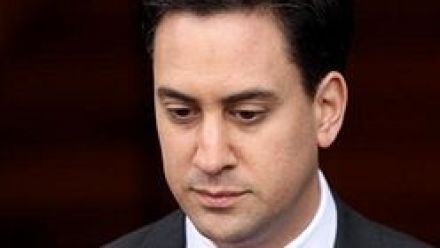
Ed Miliband has come roaring back from his paternity leave, keen to silence the growing chorus of criticism that he is not in control of his party and has let the Coalition determine the agenda.     To do so, he has come out in favour of a permanent top rate of income tax at 50 percent, but is otherwise taking a leaf out of the Cameron playbook - by establishing a number of policy reviews. But he might want to take another look at Cameron's experience. Reviews are a great tactical ploy - they show a willingness to "think big", allow a leader to reach out to a range party factions, aid front bench spokesmen to understand their portfolios and, perhaps most importantly, punts any serious policy discussions into the future.

From The Annals of the Gord

From our UK edition

This snippet from Anthony Seldon and Guy Lodge’s latest book merits repeating: ‘As Barack Obama waited in a cavernous building in London, he suddenly noticed Gordon Brown stomping towards him down a corridor, with a flurry of aides in his wake. Unfortunately — probably because he has a glass eye as the result of a rugby injury — the Prime Minister didn’t see the President. To the surprise of Obama and his entourage, the British premier was doing a passable impression of an erupting volcano. He was clearly furious about something his aides had or hadn’t done. It was hardly the behaviour anyone would expect of a G20 summit host, and the American President watched with growing disbelief.

Ireland’s crisis is the fault of Fianna Fáil, not just the euro

From our UK edition

In all likelihood, George Osborne will rise this afternoon to groans if not jeers. Britain looks set to lend Ireland £7bn as part of multilateral and bilateral bailouts. Many, particularly the Eurosceptic right, question our involvement, given our straitened financial circumstances and the apparent fact that Britain is sustaining the eurozone’s monetary and debt union, and will have to borrow to do so.     George Osborne has been adamant throughout: Ireland is too important to Britain’s recovery to risk collapse – British and Irish banks are closely linked, debts and borrowing are often co-dependent, trade is very profitable. That the bailout should strengthen the euro is a natural consequence of Ireland being a member of the euro.

Gove dilutes schools funding pledge

From our UK edition

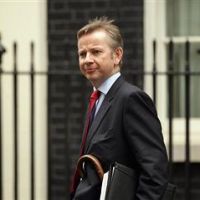
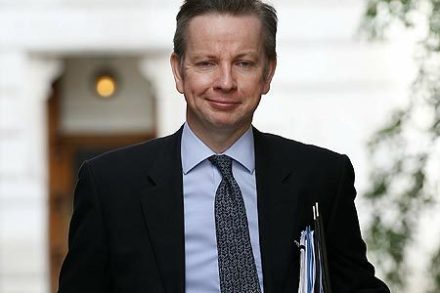
Last week, the FT revealed that Michael Gove was planning to introduce direct funding of schools, a move that weaken local authorities’ grip on education funding. Theoretically, it is a central component of Gove’s plan to free schools from local authorities’ bureaucratic control in a bid to improve standards by creating a quasi-market. It was, as Gove’s aides have been at pains to express, ‘exciting’. But Gove denied the story on Andrew Marr this morning: the legislation will contain no such clause. The FT responded this afternoon, proving that Gove has diluted the legislation.

Unite turns back the clock

From our UK edition

Len McCluskey has won the race to lead Unite, Britain’s largest union. McCluskey will therefore have a major role in how the left respond to cuts in public spending. It would premature to label McCluskey but he comes with a reputation for militancy. He cut his teeth at the Transport and General Workers Union in the 80s and was a confidant of Derek Hatton’s. And he hasn’t forsaken childish things – being an integral figure in the long running and wholely counter-productive BA dispute. So, impeccable credentials for a man of the old left; akin to the roll call of Wellington, Sandhurst and the City for those on the right. But McCluskey must resist temptation.

The death knell for the Euro?

From our UK edition

Are we witnessing the start of a very long death scene for the Euro? Asked if the Euro will survive, William Hague replied simply: “who knows?”. The new president, Herman Von Rompuy, has said that the Euro faces an “existential test”. We are looking at the very real prospect of the Euro’s collapse. And that “if we don't survive with the eurozone, we will not survive with the European Union”. This would, by necessity, require a new treaty - and give Britain an unprecedented opportunity to renegotiate its membership on terms the public regard as acceptable. In my News of the World column today, I say (£) that this presents Cameron with what would be the greatest foreign policy opportunity of his premiership.

Labour’s terror u-turn doesn’t lessen its authoritarianism

From our UK edition

It is a day for about turns. First, the Pope has taken a historic decision to approve the use of condoms to fight AIDS; second, Labour has vowed to change its position on terror legislation and law and order. The party feels its record in government has damaged its reputation as a guarantor of liberty. Generation Ed wants to make another break from the past. Ed Balls has masterminded a cunning sleight of hand. The proposal is nowhere near as dramatic as headlines suggest. Labour will support the government’s proposed reduction of detention periods from 28 days to 14, provided the police and security services are not impeded by the change. Balls also indicated that he could support the abolition of control orders if an alternative was found.

Miliband’s New Generation draws the line under donor peers

From our UK edition

Patronage remains a strong statement of leadership, and an indication of a leader's competence. As James noted yesterday, Ed Miliband chose the occasion to play one of his few picture cards: Maurice Glassman’s accession into red ermine is a major PR coup for Labour in the battle to be ‘progressive’ and community-focused. But Miliband’s list is also noteworthy for those it excluded. The Times has the details (£): ‘He decided against handing seats in the House of Lords to Nigel Doughty and Sir Ronald Cohen — who have given more than £6 million to the party since 2005 — as well as Jon Mendelsohn, Labour’s fundraising chief.

The kiss of death | 19 November 2010

From our UK edition

Oh dear. On Wednesday night, we at The Spectator saw David Cameron handing Lord Young his Spectator/Threadneedle Parliamentarian of the Year in the category of Peer of the Year. “Over the decades,” said yours truly, “Prime Ministers have come to value his advice. As Thatcher put it: ‘other people bring me problems, David brings me solutions.'” Not any more - David has brought him a problem, followed by a resignation. Less than 48 hours after picking-up our award, his political career appears to be at an end.   It is true that there are some people who have had a “good recession”. That is: faced no danger of losing their job and saw the cost of their mortgage collapse as part of the monetary stimulus.

Neo-isolationism is NATO’s greatest enemy

From our UK edition

As NATO leaders gather for a key summit in Lisbon, expect the newspapers to be full of the usual “why bother” commentary. NATO, they will argue, was founded for a different age and is not relevant for dealing with today’s threats – from cyber-attacks to nuclear non-proliferation. It is even struggling to deal with older threats, such as the Taliban insurgency. Most Europeans do not seem to mind. They feel safer than at any time before and worry predominantly about post-material threats, not conventional attack, as a think tank report showed recently. As a result, Europeans are set to spend less on defence. Germany expert Hans Kundnani has an excellent piece on Berlin’s anti-militarism over on ECFR’s new blog.

Lord Young resigns

From our UK edition

Yet another GOAT fails to stay the course. Sky News reports that the gaffe-prone peer, Lord Young, has resigned, following his ill-considered comments about the 'so-called recession'. As the morning progressed, there was a growing sense of inevitability that he would resign. Once again, the government has been unable to steer a communications strategy through a brief and not very serious crisis: after all, Young was chatting idly to a journalist, not expounding government policy. I don't think his position was totally untenable: if Nick Clegg can hold forth on the legality of the Iraq war, why are the loose private opinions of an underling so unacceptable?