Uk politics

Five things the student unions didn’t protest against in the last 13 years…

From our UK edition

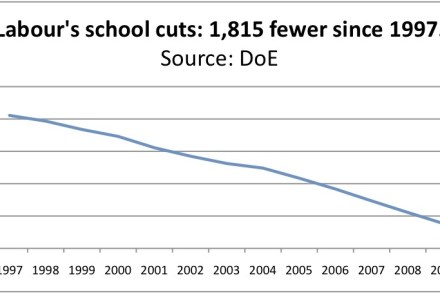
1)    That Labour cut the number of schools each year. 2)    That pupils were shepherded into ever-larger schools. 3)    That, although the budget trebled, class sizes hardly moved. 4)    That the attainment gap between private and public schools grew to become the largest of any country except Brazil (Source: OECD ) 5)    And all at a time when the supposed funding per pupil was soaring… Moral: cash doesn’t help schools. Reform does.

Britain should have a Freedom Minister

From our UK edition

Has liberal democracy lifted people out of poverty? To a casual observer, the answer is unequivocally yes. One part of the world - the industrialised democratic northern half - is both richer, and healthier than the (historically undemocratic) South or East. Coincidence?   The West's success may be a function of north Europe's temperate climate, cultural mores shaped on the windswept British isles and European plains, the competition spurred by centuries of warfare, the invention of modern banking, the head-start provided by inventors, colonial conquests and possibly even the ideas and ecclesiastical hierarchy of the Judeo-Christian faith. But many other regions had similar in-puts. Perhaps the West was just blessed by better leaders, thinkers and entrepreneurs.

The corpse of Black Wednesday has been exhumed, and the demon exorcised 

From our UK edition

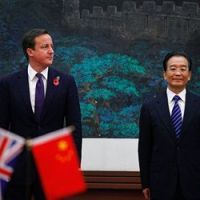
Cameron clearly doesn’t rate Ed Miliband. That may be a mistake in the long run but it worked fine today. The opposition leader returned to PMQs after a fortnight’s paternity leave and Cameron welcomed him with some warm ceremonial waffle about the new baby. Then came a joke. ‘I know what it’s like,’ said Cameron, ‘the noise; the mess; the chaos; trying to get the children to shut up,’ [Beat], ‘I’m sure he’s glad to have had two weeks away from it.’ This densely worded, carefully crafted, neatly timed quip had obviously been rehearsed at the Tory gag-conference this morning. The fact that Cameron had time to polish it suggests that he anticipated no trouble from Miliband today.

Gove starts the revolution

From our UK edition

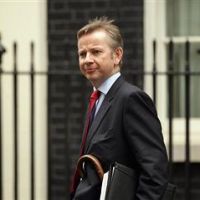
The Spectator has been a long-term fan of Michael Gove – indeed, we named him the single best reason to vote Tory at the last election. His ‘free school’ reforms are laudable and the emphasis on improving standards is imperative. Under the previous government, Britain slid down the international rankings of educational attainment. A tide of politically correct initiatives robbed teachers of their classrooms and discipline suffered. The post code lottery under which state education operates sentences the poorest and most vulnerable in society to rot in under-funded sink schools. Reform is both a moral crusade and a necessity if Britain is to continuing punching above its weight in the future.

PMQs Live blog | 24 November 2010

From our UK edition

VERDICT: Ed Miliband did well. He exploited the Cabinet divide on school sport and also illustrated how teachers are wary of Gove's plans. If anything, this reveals the complexity of the opposition facing Gove, and the extent to which it is ingrained, even within Conservative circles. There was also a withering and effective personal attack on Gove. Cameron laid out his government's stall: Gove (and arguably Cameron) will stand or fall by it. For once, Labour's opposition was very clearly delineated. So it should have been: courtesy of the long established system, state education is Labour's natural territory and many of its MPs and councillors cut their teeth running it in local government. Miliband was less assured with his second set of questions, on banking.

Balkan promises still to keep

From our UK edition

One of the many areas that the Conservative Party took a very different line from Labour was on the Western Balkans. William Hague travelled to the region, frequently asked questions in Parliament and had the war-torn region written into the Coalition Agreement as a government priority. Seven months into the government's mandate, how has Britain's Balkan policy changed? How has Britain been able to affect things for the better? The answer is a tad disappointing. There are no more British soldiers or diplomats in the region than there were before the election. Reconstruction funds are slated to decrease.

Who will benefit from the Royal wedding?

From our UK edition

David Cameron is playing down the effect the Royal Wedding will have on the 5th May elections, especially the AV referendum. Fleet Street’s having none of it however. On the one hand, Benedict Brogan can already hear the pops of champagne corks in the No to AV campaign offices. He reasons: ‘One consequence of the Royal wedding will be to make it even more difficult for AV supporters to get their campaign motoring in time for the referendum.’ On the other, Alex Barker makes the case for the Lib Dems’ Yes to AV campaign. He has a three point-plan, centring on low turnout following reduced campaign time. This, he thinks, will benefit those concerned about the injustice of the current system, rather than its die-hard defenders.

A Royal Holiday

From our UK edition

Kate Middleton and Prince William will marry on Friday 29th April at Westminster Abbey. I can scarcely contain my indifference, even at this early stage; but congratulations to them all the same. Number 10 has confirmed that the occasion will be marked by a public holiday. There is, you see, nothing like a right Royal bash and the darling buds of May to dispel the privations of austerity ahead of awkward elections and a referendum on 5th May. Then again, an Arctic breeze and intermittent hail will have the opposite effect.

Coulson to stay

From our UK edition

The indefatigable Paul Waugh reports that Andy Coulson plans to break Tom Watson’s delicate heart: the government’s communications director is not going to resign for whatever it is that he is alleged to have done. Pity poor Tom. Coulson may be an anonymous figure, certainly by comparison with Alistair Campbell, and the government may have problems articulating a growth strategy. But Coulson’s survival will warm the cockles of Tory MPs, who rely on him to uphold those issues the leadership ignores. Witness Coulson’s savage reprimand for Crispin Blunt over the prisoners’ entertainment plans.

Another coalition compromise, this time on immigration

From our UK edition

Agreement has been reached on the troublesome immigration cap. The BBC reports that skilled non-EU migration will be limited to 43,000. This is just a 13 percent reduction from this year’s cap and there are numerous exemptions to be made; notably, inter-company transfers will not be included when workers earn more than £40,000 per annum. This is a considerable moment for the coalition because the cap was thought unworkable. The Conservatives have their cap, a pep pill for the embattled Home Secretary.  But this is also a victory for Vince, who is being feted by businessmen across the airwaves this morning. Cable and May have also been praised by Migration Watch’s Andrew Green for formulating policy to tackle Britain’s net migration.

Cowen will seek a dissolution next year

From our UK edition

There has been much consternation and intrigue swirling around both Dublin and Westminster this afternoon about the near-collapse of the governing coalition in Ireland. The Greens, who support Brian Cowen’s Fianna Fáil-led government, pulled out; seeking a dissolution in the hope that it might save their skins from the fate that is likely (though not certain) to befall Fianna Fáil. If the government had collapsed, then IMF would have postponed the bailout. At least now Cowen can formulate a monetary plan, hopefully under the oversight of Ireland's international creditors, to free the country from its current extremis.

Stop blaming Israel alone

From our UK edition

Reading the British press - or even listening to some ministers - you would be forgiven for thinking that the only obstacle preventing Middle East peace is Israeli obstinacy and Benjamin Netanyahu's unwillingness to force his political allies - like Shas - to the negotiating table. But, as always, things are a bit more complicated than the newspaper headlines would suggest. From Israel's position, the region is looking increasingly hostile. Talk of a war in Lebanon with Hezbollah persists. In Syria, President Assad looks less interested in a rapprochement than he has done for years.

Miliband should re-examine Cameron’s playbook for the real lessons

From our UK edition

Ed Miliband has come roaring back from his paternity leave, keen to silence the growing chorus of criticism that he is not in control of his party and has let the Coalition determine the agenda.     To do so, he has come out in favour of a permanent top rate of income tax at 50 percent, but is otherwise taking a leaf out of the Cameron playbook - by establishing a number of policy reviews. But he might want to take another look at Cameron's experience. Reviews are a great tactical ploy - they show a willingness to "think big", allow a leader to reach out to a range party factions, aid front bench spokesmen to understand their portfolios and, perhaps most importantly, punts any serious policy discussions into the future.

From The Annals of the Gord

From our UK edition

This snippet from Anthony Seldon and Guy Lodge’s latest book merits repeating: ‘As Barack Obama waited in a cavernous building in London, he suddenly noticed Gordon Brown stomping towards him down a corridor, with a flurry of aides in his wake. Unfortunately — probably because he has a glass eye as the result of a rugby injury — the Prime Minister didn’t see the President. To the surprise of Obama and his entourage, the British premier was doing a passable impression of an erupting volcano. He was clearly furious about something his aides had or hadn’t done. It was hardly the behaviour anyone would expect of a G20 summit host, and the American President watched with growing disbelief.

Ireland’s crisis is the fault of Fianna Fáil, not just the euro

From our UK edition

In all likelihood, George Osborne will rise this afternoon to groans if not jeers. Britain looks set to lend Ireland £7bn as part of multilateral and bilateral bailouts. Many, particularly the Eurosceptic right, question our involvement, given our straitened financial circumstances and the apparent fact that Britain is sustaining the eurozone’s monetary and debt union, and will have to borrow to do so.     George Osborne has been adamant throughout: Ireland is too important to Britain’s recovery to risk collapse – British and Irish banks are closely linked, debts and borrowing are often co-dependent, trade is very profitable. That the bailout should strengthen the euro is a natural consequence of Ireland being a member of the euro.

Gove dilutes schools funding pledge

From our UK edition

Last week, the FT revealed that Michael Gove was planning to introduce direct funding of schools, a move that weaken local authorities’ grip on education funding. Theoretically, it is a central component of Gove’s plan to free schools from local authorities’ bureaucratic control in a bid to improve standards by creating a quasi-market. It was, as Gove’s aides have been at pains to express, ‘exciting’. But Gove denied the story on Andrew Marr this morning: the legislation will contain no such clause. The FT responded this afternoon, proving that Gove has diluted the legislation.