Uk politics

What price a fuel duty stabiliser?

From our UK edition

Last we heard, the government was considering what it should, and could, do to suppress rising fuel prices. I wonder whether they have now pencilled something into March's Red Book. You see, after a swell of speculative fear triggered by events in the Middle East, the cost of oil is going up, up, up. Brent Crude touched $120 a barrel yesterday, the highest price since August 2008, although it eventually settled to around $111. Some observers predict it will soon exceed the previous record price of $150. Naturally, this threatens to unstitch the delicate fabric of the global economy – drastically rising oil prices could bring pervasive stagflation in their wake. But there are also more parochial concerns, not least what all this means for motorists.

Will cuts kill the little platoons?

From our UK edition

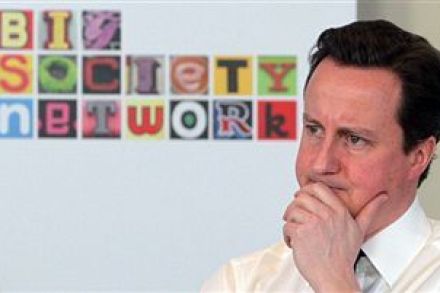
David Cameron is clear that his Big Society is about more than just volunteering. Yet during the recent spat on the matter, one of the strongest, most frequent criticisms voiced against it was that cutting state spending will lead to fewer volunteers. Dame Elisabeth Hoodless, executive director of Community Service Volunteers, claimed that the coalition’s spending cuts risk “destroying the volunteer army”. Johann Hari was also among those making this attack. In the 10 O’Clock Live debate that Fraser blogged last week, he claimed that international evidence tells us that volunteering is highest where public spending is highest.

Sharing the burden will enable tax cuts in the future

From our UK edition

The elderly have been sheltered from cuts, so far at least. New research from the IEA suggests that the government could save an additional £16bn a year simply by cutting the various non-means-tested benefits older people receive and by making some minor changes to the pensions system.   Such a cull would include: the abolition of free bus travel (which would save £1.3bn per year), free TV licences (£0.7bn) and the winter fuel allowance (£2.1bn). In addition to those cuts, the state pension age should be raised to 66, which would save an extra £5bn. Abandoning the “triple lock” policy for pension increases from 2011 would save another £5.

Reforming government: the Cabinet Office

From our UK edition

Last week Reform published its 2011 scorecard of the Coalition Government’s public service reform programme. Following the articles on the health, welfare  and education reforms, Andrew Haldenby, Reform’s Director, discusses the Cabinet Office.   The Prime Minister has put the Cabinet Office in the vanguard of his efforts to reform public services.  The Cabinet Office Structural Reform Plan gives the Cabinet Office responsibilities to reform the Civil Service, create more competitive public sector markets and reduce inefficiency” (through the operation of the Efficiency and Reform Group).  These are major objectives on which the success of the wider programme depends.

A dodgy Damascene conversion

From our UK edition

I’d like to add my tuppenceworth to the extraordinary story that Ed Howker has revealed in this week’s magazine about the funding of the ‘Yes to AV’ campaign. His investigation has exposed the Electoral Reform Society as little more than a front for a massive £21 million-a-year corporation called ERSL, which flogs voting equipment and services at a remarkable profit. Ed got hold of the accounts for ERSL, its money-spinning division, and a line jumped out at me: accounts. “A very healthy profit margin of 24 percent is nice to have,” it rather smugly said. You can say that again. That means, for every £4 it charges its clients (for the printing of ballot papers, sending of letters, etc) it made £1of profit.

A fraternal fix

From our UK edition

"Now he and his leader know what it’s like to be people’s second choice," trilled George Osborne during his recent encounter with Ed Balls over the dispatch box. But might Balls actually have been Miliband's third choice for the shadow chancellorship? That's the implication of a delicious little story in today's Sun, which claims that Miliband first "tapped up" his brother, aka MiliD, when trying to replace Alan Johnson: "A Labour insider revealed: 'Ed's people were desperate not to give the job to Balls.' However, Ed stopped short of offering his brother the job when David made it clear he wanted to stay on the backbenches." If true, then it's revealing on two counts.

EXCLUSIVE: What the Yes to AV campaign doesn’t want you to know

From our UK edition

For this week’s magazine (subscribers click here or follow this link to subscribe from £1/week), I have been on the trail of the ‘Yes To Fairer Votes’ (YTFV) campaign, attempting to discover the real source of their funding. What I found reveals a catalogue of undeclared donations, hidden money trails and one massive conflict of interest of such comical proportions that even Berlusconi would blush. It shows, in effect, that the largest single donor to the 'Yes' campaign is Britain's no1 vendor of ballot papers and vote counting services – a massively profitable outfit whose commercial interest in a new, complicated Westminster voting system is clear.

Downing Street’s bureaucratic burden

From our UK edition

Do head over to ConservativeHome, where Tim Montgomerie has put together a comprehensive guide to the revamped Downing Street operation. I won't spoil its considerable insights here, except to highlight this: "An analysis of papers sent to Downing Street and the Cabinet Office has revealed that just 40% are directly related to the Coalition's programme. Roughly 30% come from the Whitehall bureaucracy and another 30% from the EU." James makes the point in his latest politics column that Tory ministers are becoming more and more Eurosceptic as they face the EU in government. That pile of European directives in the in-tray must just be getting too much.

Chaos thy name is Libya

From our UK edition

Colonel Gaddafi’s strength appears to be diminishing: Foreign Office sources suggest that the latest YouTube footage suggests that the rebels are now 30 miles from Tripoli, there are reports of Libyan servicemen spiking their guns rather than fire on their compatriots and members of the Gaddafi family have failed to present a united front to the dissent that intends to depose them. But, chaos thy name is Libya. Communications have long been silent, except for the savage drone of state radio, conduit for Gaddafi’s prophesies of victory or martyrdom. Evacuees from Tripoli’s now hellish airport relate a city bristling with arms and testosterone – the fear is that Gaddafi and his dogs of war are sufficiently mad to fight to the last bullet.

Reforming schools: choice and autonomy

From our UK edition

Last week Reform published its 2011 scorecard of the coalition government’s public service reform programme. Following on from articles on the health and welfare reforms, Dale Bassett, Research Director at Reform, explains why the coalition’s school reforms are not as radical as they appear.   The government is pursuing a dual agenda in education reform, altering structures (to increase decentralisation and autonomy) and centralising standards (to increase rigour and central accountability). Key government reforms include giving all schools the right to convert to academy status and allowing charities and groups of parents or teachers to establish new, independent, state-funded schools with the same freedoms as academies.

50,000 NHS jobs to go, apparently

From our UK edition

An anti-cuts campaign website, False Economy, claims that 50,000 NHS jobs will be lost over the next four years. It’s a bald, headline grabbing figure and the response has been predictably feverish.   But tug a little, and the numbers unravel. One of the key points is made by False Economy themselves: that "most of the cuts are likely to be achieved through natural wastage" – in other words, by people moving on, or retiring, of their own accord. In figures highlighted by the Department of Health, for instance, one foundation trust expects to shed 14 per cent of its workforce through natural wastage by 2013. The health service may choose not to fill the vacancies that result, but this is hardly a wave of mass sackings.

Going for growth

From our UK edition

The government says it has a growth strategy. Speaking to the Confederation of British Industry's annual conference last October, the prime minister said his government would adopt a "forensic, relentless focus on growth" in the coming years. The strategy has three elements: creating a framework for enterprise and business investment; directing resources into areas where Britain has a competitive advantage – such as wind technology; and making it easier for new companies and innovations to flourish. But for all this and the denunciation of Gordon Brown's legacy, the coalition still seems to be reading from a core part of Labour's pre-crisis script: businesses are spoken of primarily as agents for social work.

The emergence of a Cameron doctrine

From our UK edition

Daniel Finkelstein makes a simple but important point in the Times today (£): a Prime Minister’s foreign policy is determined by events more than by instincts. The revolts in the Middle East are defining David Cameron’s diplomacy. The emerging policy is a realistic expression of Britain’s current domestic and international capabilities. Cameron’s speech to the Kuwaiti parliament did not match Harold Macmillan’s ‘winds of change’ speech because Britain no longer disposes of continents. Likewise, Tony Blair’s messianic tendencies belong to a past era. Colonel Gaddafi’s murderous stream of conscious could have given cause to evoke the moral certainty of an 'ethical foreign policy'.

Reforming welfare: a mixed bag

From our UK edition

Last week, Reform published its 2011 scorecard of the coalition government’s public service reform programme. Yesterday, Thomas Cawston explained how the coalition can get NHS reforms back on track. Today, Patrick Nolan, Chief Economist at Reform, discusses why the government’s welfare reforms scraped through with a pass. The government’s welfare reforms are significant. The 2010 Emergency Budget and Spending Review announced cuts of £18 billion to benefits, so the DWP had to respond with a radical agenda. The Work Programme aims to incentivise providers to deliver better outcomes from welfare to work services and the Universal Credit promises to create a simpler system where “work always pays.

The 50p tax in action

From our UK edition

Today, we have seen the 50p tax in action: reflected in January’s bumper tax receipts. A jubilant John Rentoul has just tweeted: “Where is Fraser Nelson when you need him? The 50p income tax rate has brought in a ton of money. He said it would probably reduce revenue.” He is absolutely right – but not for the reasons he thinks. Were John self-employed, he’d know that the tax paid last month was in respect of the 2009-10 tax year – when the top rate of tax was 40p. Of course, many of the super-rich are on PAYE – but that has happened since last April. It doesn't explain a January uplift. Today’s surprise tax haul can be partly explained by the fact that folk sucked forward their income, to avoid the 50p rate.

Tehran’s latest provocation

From our UK edition

The people of Egypt and Libya may have swung the spotlight onto their respective countries – but it is a spotlight that Iran is keen to exploit. Two of their warships have just passed through the Suez canal en route to Syria, the first to do so since 1979. They were given clearance by Egypt's new military stewards a few days ago. On one level, Tehran's actions are unimpeachable: Egypt cannot forbid access to Suez unless it is at war with the country at sail. But they are also, of course, designed to provoke. Why choose to do this now, other than to suggest something about the new latticework of power, and of power relationships, in a turbulent Middle East? Israel, for its part, is less than impressed.

Cameron’s fine, liberal speech

From our UK edition

David Cameron’s speech in Kuwait today did not take on his hosts in the way that Harold Macmillan’s ‘winds of change’ speech did. But it was a still fine, liberal speech. The key argument of the speech was that: ”As recent events have confirmed, denying people their basic rights does not preserve stability, rather the reverse. Our interests lie in upholding our values – in insisting on the right to peaceful protest, in freedom of speech and the internet, in freedom of assembly and the rule of law. But these are not just our values, but the entitlement of people everywhere; of people in Tahrir Square as much as Trafalgar Square.” This is the crucial point: crude realism is not realistic.

Osborne shouldn’t spend the extra money

From our UK edition

Lucky old George Osborne. The British economy is not in "meltdown," but churning out tax revenue like a fruit machine. Figures out from the ONS today show that the tax haul for January alone was £58.4 billion – pushing the public finances into a surplus £3.7 billion for that month (an almighty £3.6 billion more than expected). If this rate continues (no reason why not, seeing as we're all getting drunk on Mervyn King's underpriced debt again), then Citi estimates he will have £8 billion more to play with than expected in the current financial year. So what will he do? Osborne's decision will tell us plenty about what type of Chancellor he is.