Uk politics

Plurality or not?

From our UK edition

With all the provisos attached to News Corp’s takeover of BSkyB, opposition to the deal has surely now been diluted. But there are, perhaps, two groups who can still legitimately complain about the outcome.   Firstly, those of us who believe that unrestricted freedom of speech is vital in the TV broadcasting arena. The Murdoch empire has had to surrender its news channel in order to, essentially, buy a profitable platform for broadcasting sport and movies. This is seriously disturbing for anyone who feels that the BBC’s output of ‘neutral news’ needs to be challenged. The only major independent broadcaster – ITV – gave up long ago with their own news channel. Only Murdoch ran an alternative news platform, and at a massive loss.

A night that will not be quickly forgotten

From our UK edition

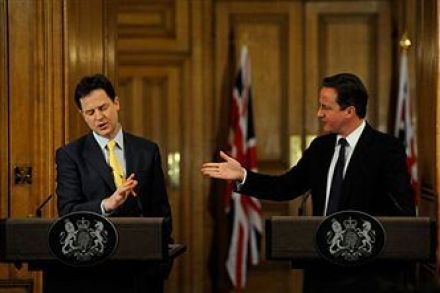
Last night’s by-election result in Barnsley is embarrassing for both Clegg and Cameron. For Clegg, it is obviously humiliating to come sixth. Fourth would have been bad enough but sixth is an even worse result than the Lib Dems feared. The fact the Lib Dems also lost their deposit just adds insult to injury. The result will certainly make activists heading to Sheffield next week for their spring conference jumpy. I also suspect that we’ll see some enterprising newspaper doing a poll in Clegg’s Sheffield constituency before next weekend.  On the Conservative side, coming third behind UKIP is going to lend weight to those who argue that the party has conceded too much to its coalition partners.

New World temporarily postponed

From our UK edition

We are meant to be living in a multi-polar world, one where US power is waning, and where countries reject the prying interference of the West. Except, erm, we aren't. Today's world looks exactly as it did yesterday. First, many of the 20th century issues people thought would disappear – dictators, repression and democracy – remain as prevalent now as then. The Iraq War has tempered people's appetite for humanitarian interventions without extinguishing it. The key difference seems to be that support is now minimal on the Left and still strong on the neo-con Right. Everyone is also still focused on what the US will or will not do, even in Britain.

A grim morning for the coalition – as Lib Dems finish sixth in Barnsley

From our UK edition

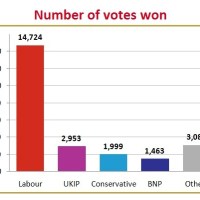
    You may notice that the Liberal Democrats don't feature in the first two graphs of the by-election result in Barnsley Central last night. Or, rather, they do – they're just subsumed under the 'Others' category, having finished in sixth place. Second in the general election, sixth last night. The 1,012 votes for the Lib Dems put them behind Labour, UKIP, the Tories, the BNP and an independent candidate called Tony Devoy. Their share of the vote has fallen by 13.1 points on last May's result. This was an unequivocal, almost ritualistic, beating. Blood everywhere. And the other half of the coalition hasn't escaped unbruised either. The Tories finished third in the general election, third now – so what's changed?

Clegg collides with Cameron over extremism

From our UK edition

Nick Clegg’s speech in Luton today on extremism is a challenge to large parts of David Cameron’s remarks on the subject in Munich just last month. Indeed, even the venue of the speech can be seen as a rebuke to Cameron who was attacked for giving a speech on Islamic extremism on the same day that the English Defence League was marching in Luton. Cameron’s speech, which was one of the best of his premiership, argued that ‘the ideology of extremism is the problem’ and that terrorism’s ‘root lies in the existence of this extremist ideology’.

Hunt’s rising star

From our UK edition

The decision on News Corp's take-over of BSkyB has thrust Jeremy Hunt into the spotlight. The culture secretary is many Tories' bet to be the next leader of the party. Hunt is ambitious even by political standards: during the Brown bounce he canvassed opinion as to whether he should stand in the Tory leadership contest that would follow an election defeat, and has a John Major like ability to make factions in the party feel like he is one of them. Add to this, a good television manner and one can see why people think he'll go far. One of the odd things about politics is that there is no heir apparent to Cameron in the Tory party. Hague used to be considered the obvious emergency replacement. But that is no longer true.

Labour shuns aid choices

From our UK edition

Government is about choices. In opposition you can like anything, support any measure, back any proposal. But when in office you either make choices or invite dismissal. So when International Development Secretary Andrew Mitchell looked at Britain's development spending he was determined to make choices. Now that he has, some people don't like it. Not one bit. They like choices in general, much as they accept a theoretical form of cuts; but they recoil from real ones. Former Europe Minister Denis MacShane is one of the choice-avoiders. Writing in the New Statesman, he rails about cutting funds to the International Labour Organisation, seeing a Tory plot to undermine trade unionism.

The case for abandoning HS2 restated

From our UK edition

The government release a claim that HS2 will bring 40,000 new jobs. They are so desperate to let the public know that figure they breach proper practice by briefing it ahead of the publication of the consultation document. When the consultation document comes out, I will look at whether creating that number of jobs is actually impressive, for an investment of £17 billion. The wider economy produces four times as many jobs per pound of capital, so it actually doesn't look very impressive at all. Professor David Begg, eminent representative of an endangered quango, is furious though. He attacks me for making an unfair comparison.

Lessons from wars gone by

From our UK edition

As the situation deteriorates in Libya and the international community begins to look at various options, including military ones, policymakers would do well to remember a number of key lessons from the last 15 years of warfare. Like all history, they don't provide a guide to the future, but can be a warning nonetheless. The Bosnian experience of the mid '90s contains four key lessons. The first is that international handwringing costs lives. Many lives. (The same lesson emerges from the post-Gulf War I slaughter of the Kurds and Shia by Saddam Hussein). Wait, and the situation usually gets worse not better. The second lesson is that however great the humanitarian need may be, any military mission must not be framed as a humanitarian one.

Tackling the last great unreformed public service

From our UK edition

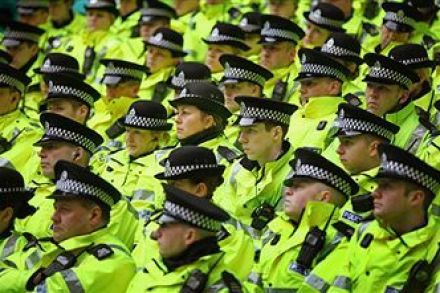
The Home Office has an ambitious police reform agenda and is overseeing challenging budget reductions, but they are also forging ahead with plans to introduce real workforce modernisation.  The serious and credible reviewer, Tom Winsor, will publish his independent report next Tuesday.   Winsor’s review will cover pay, conditions and other aspects of employment that will set the framework for a new settlement when the current 3-year pay deal expires. Expect police overtime and shift patterns to be another major focus of the review.   David Cameron himself, who once boldly described the police as “the last great unreformed public service” is firmly committed to this agenda.

Government to appeal on prisoner votes

From our UK edition

PoliticsHome reports that the government is to ask the ECHR to reconsider its verdict in the prisoner voting rights case. The website says: ‘In a response to a parliamentary question from Labour MP Gordon Marsden, Cabinet Office Under-Secretary Mark Harper said: "We believe that the court should look again at the principles in "Hirst" which outlaws a blanket ban on prisoners voting, particularly given the recent debate in the House of Commons."’ This is unsurprising. Last month, the government asked its lawyers to advise on the ramifications of noncompliance. The lawyers were unequivocal: the repercussions of such defiance was diplomatically impossible and extremely expensive.

Blame Twitter for the increased oil prices

From our UK edition

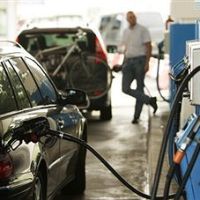
The BBC are reporting that unleaded petrol has now reached 130p per litre and are blaming Libya. I¹m not convinced. Libya only accounts for about 2.3 percent of global oil production and even now the Arabian Gulf Oil Co¹s production in east Libya is around a third of normal levels. The real cause of the current price increase seems to be Twitter and Facebook. The social networking sites are allowing protestors to organise uprisings with a sophistication and speed which have taken analysts completely by surprise. Increased oil prices are the market¹s response to all this uncertainty and the possibility of this revolutionary fervour spreading. It's not unreasonable: after all, four of the top ten oil producing countries in the world are in the Middle East.

Dave ‘n’ Ed’s Flying Circus

From our UK edition

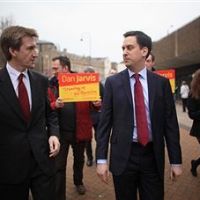
It was Monty Python without the jokes. The focus of PMQs today veered surreally between crisis in north Africa and early swimming pool closures in Leeds. The session opened in Security Council mode with Ed Miliband politely asking the PM to brief us on the humanitarian disaster evolving in Libya’s border-zone. Cameron went into his statesman-of-the-year routine and announced that HMS York had docked in Benghazi with medical supplies.   At such moments the imperial ghosts of the Commons seem momentarily reawakened. Ed Miliband sounds like some Victorian stooge asking the Foreign Secretary to reassure the nation that an uprising in a far-flung oriental possession is being energetically suppressed. Having dealt with Libya, Ed Miliband moved to Bromley.

Promoting Cameron from a party leader to a national leader

From our UK edition

Danny Finkelstein’s paean of praise (£) to Andrew Cooper, the PM’s new director of political strategy, contains several interesting lines.  Finkelstein says that his former flat mate’s biggest challenge is, ‘Devising a strategy for changes in the NHS so that a critical political battle isn’t lost disastrously’. This is yet another indication of how nervous Osborne and co are about Lansley’s reforms and reopening the NHS as a political issue. The second is him reporting that Cooper will tell ‘Cameron to be a national leader, rather than a party politician. Especially in the Commons.

May’s change of emphasis

From our UK edition

Theresa May has a new soundbite: police pay or police jobs. May has been asked to find cuts of 20 percent in the police budget. May insists that the frontline must and will be protected and that therefore these ‘extraordinary circumstances’ mean that the government will have to rewrite the terms and conditions of police employment. The former rail regulator, Tim Windsor, is already conducting a review into police pay and working conditions. In addition to his recommendations, May is scrutinising overtime payments, housing and travel allowances and so forth. Estimates vary but these perks are thought to cost the taxpayer more than £500million a year. She is also overseeing a deluge of bureaucratic reforms, which she hopes will save 800,000 man hours a year.

The failing business case for HS2

From our UK edition

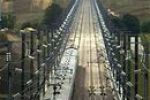
Under a week ago, when James Forsyth wrote about how the government was successfully mobilising third party groups to support high-speed rail, it looked like Philip Hammond was going to get the neat debate he wanted. The script was simple: the new high speed line was urgently needed and in the national interest, a small number of people ardently opposed it because it would spoil their views. Since then that message has come unstuck. I think it is understandable that some people are very upset at the aesthetic disruption that could come with HS2.  But that isn't the only objection. Plenty of people who have no particular attachment to Wendover, Aylesbury or Great Missenden are opposed.

Of course Pickles is ambitious. He needs to be

From our UK edition

No one, most of all the normally genial Eric Pickles, said that reforming local government would be easy or quick. The New Local Government Network reports that the government’s plan to encourage councils to share back office functions is ‘hugely ambitious’. It says that considerable savings can be made, but it doubts that councils will meet the 40 percent target for backroom efficiencies. Savings of 20 percent are more likely, the NLGN argues. On the face of it, the NLGN is correct. Eric Pickles’s demand that councils share their functions and facilities is ambitious. At the moment, councils are struggling to meet the upfront costs of uniting geographically diverse buildings and services.

Brits want to give money abroad – but not necessarily via the government

From our UK edition

"A well-targeted aid budget is essential if Britain is to punch above its weight on the world stage." That's how Tim Montgomerie finishes his neat defence (£) of British aid policy for the Times today. But, putting aside the matter of whether it's wise to give aid to, say, India at a time of spending restraint back home, Tim's claim rather inspires a question: is our aid budget well-targeted? And the answer, it seems to me, is encoded in Ian Birrell's punchy piece for the Evening Standard. Ian's overall point is similar to that made by economists such as Dambisa Moyo, whose work we have mentioned on Coffee House before now: that international aid is failing, on a grand scale, to do anything about the poverty it's meant to alleviate. Worse, it even has counterproductive effects.