Uk politics

Ed Miliband by numbers, April edition

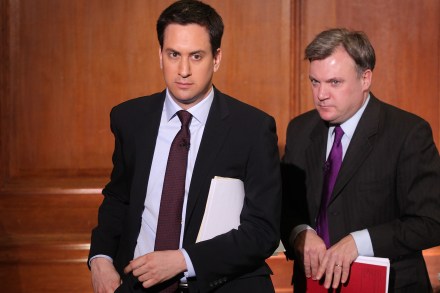
It's just a single poll, sure — but Ipsos MORI's latest is still fairly eye-catching stuff. And this is why: it has the Tories level with Labour for the first time since October. Anthony Wells serves up a pinch of salt over at UK Polling Report, saying that this "unusual" result is most likely down to the weightings that are used. But, technicalities aside, any poll that puts the Tories close to Labour, at this stage in the political cycle, is going to be greeted cheerily by Cameron & Co. – and less so by Team Miliband. It's not all bad news for Ed Miliband, though. His personal ratings have improved since last month; a fact which deepens one of the conundrums of his reign.

The PM turns for his tailcoat

The Prime Minister will now wear a morning suit to the Royal Wedding, Ben Brogan reports. Since I first revealed in the Mail on Sunday that he was planning to wear a lounge suit there has been a slew of complaints that this was not appropriate. Even Bruce Anderson — the columnist most sympathetic to Cameron — joined in the criticism today and used it to tell a broader story about the coalition’s problems.  Downing Street has now clearly listened and realised that the job of a Prime Minister on these occasions is not to make news. I think the issue acquired such salience because it became a question of authenticity.

The NHS furore rumbles on

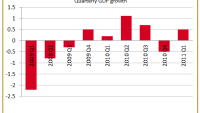
Another story to sour Andrew Lansley's cornflakes this morning: the King's Fund has released a "monitoring report" into the NHS which highlights, among other things, that hospital waiting times are at a 3-year high. The figures they have used are available on the Department of Health website — but unshackled from Excel files, and transcribed into graph form (see above, click for a larger version), they are now, it seems, a discussion point. The Today Programme tried to bait a couple of NHS chieftains on the matter earlier. The worst they could extract from either of them was that, "[waiting times] haven't got massively longer now, but people are worried about the future.

Labour are drawing the wrong lessons from America

The global debate about how we live within our means is moving fast. I spent a week in Washington while Congress and the President hammered out their deal on this year’s budget. The deal was significant because all sides agreed on the need to cut spending now. After days of brinkmanship, they agreed to £38 billion in-year cuts. Significant, perhaps, because America has now started to tackle its huge deficit. But everyone agreed it is a small downpayment ahead of a much bigger debate to come.   What’s fascinating for us here is that President Obama’s proposals are to cut the deficit slightly faster than we are here. Congress would go faster still.

Councils can seriously damage your health

There’s a fantastic post by Nicholas Timmins at the FT’s Westminster blog. Using the example of Enfield Council, which has just blocked moves to close failing wards in a local hospital, Timmins argues that councils commissioning healthcare is a recipe for disaster: ‘The reason council commissioning of care is a not a good idea is that it mixes representation without taxation. Councillors have democratic legitimacy. But they don’t raise the money for the NHS.

There are more attacks on Clegg to come

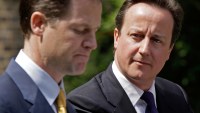
As the chances of AV passing diminish, the Lib Dems are complaining with increasing volume about just how directly Nick Clegg is being targeted. Up to now, they have kept their concerns about what, they are calling, the swift boating of Nick Clegg relatively private. Last night, Chris Huhne said that he was “shocked that coalition partners can stoop to a level of campaign that we have not seen in this country before”. This morning, Paddy Ashdown has follow up on his phone call to Nick Robinson with a demand that David Cameron disassociate himself from the No campaign’s attacks on Clegg. This isn’t going to happen.

Tuition fees set to spoil summer

Tuition fees are lowering in the distance, threatening the stability of the coalition. A straw poll by the BBC suggests that a majority (two-thirds) of institutions are planning to charge the full whack of £9,000 a year. It's unclear which universities the BBC contacted, but the results follow a developing trend. 39 universities have stated that they want to charge the full amount on all of their courses, which prompts the Guardian to claim that the potential average tuition fee currently stands at £8,679.20, well above the £7,000 predicted by the government, which has led to fears of a black hole in the universities budget. Above all, this threatens to destabilise the coalition.

Cameron quells the storm

David Cameron turned in an emollient performance on the Today Programme this morning. He declined to stoke the coalition row over immigration, heaped praise on Vince Cable and stressed that the Liberal Democrats have been good coalition partners. Even when pressed on the question of whether Britain would block Gordon Brown from becoming director of the International Monetary Fund, Cameron spoke softly. The only line of questioning in the interview that discomforted the Prime Minister was when Evan Davis pressed him on why a localist government was placing restrictions on what local government could charge residents for recycling or rubbish collection.

Lansley needs to get his quiet friends talking

Is Andrew Lansley hearing rather than listening? Dame Barbara Hakin, one of the Department of Health’s national managing directors, has written a letter to some GPs that suggests the pace of health reform will not be affected by the ‘legislative pause’. Hakin writes: ‘Everyone within the Department of Health is very aware of the support shown by the GP community to date and we have been struck by the energy and enthusiasm demonstrated in pathfinders across the country. Therefore, although the Government has taken the opportunity of a natural break in the passage of the Health and Social Care Bill, we are very keen that the momentum we have built to date should not stop.

Cameron: Gordon Brown could have remained as PM under AV

Here is David Cameron at this morning's event, arguing that FPTP produces decisive results, even in the event of a hung parliament. He argues that Gordon Brown's denuded Labour Party could have remained in office after the last election had AV had been used. Perhaps, but I'd point out that Brown could easily have remained as PM had Clegg and Cameron not reached an agreement last May.

The Odd Couples

It must be Jack Lemmon and Walter Matthau season at the Commons' film club. A string of odd political couples has stalked stages across the land this morning, supposedly pronouncing the merits or demerits of the alternative vote. David Cameron and John Reid were the oddest: the Prime Minister’s well-heeled insouciance contrasting with his lordship’s winking Glaswegian charm. It’s good fun, without being hugely constructive. Cameron and Reid joked that they agreed on nothing beyond FPTP, before embarking on a distended muse about party politics and that old canard 'Britishness'. Things were little better for Ed Miliband, who spent a large portion of his conference listening to Vince Cable explain why he wasn’t resigning from the government.

How the coalition plans to recover

This morning’s battle of the political odd couples shows the dangerous direction in which the AV referendum is going for the coalition. The Yes campaign are becoming ever closer to making explicit the argument that a yes vote is the best way to keep the Tories out. For their part, the No side are continuing to hammer the compromises of coalition and the unfairness of the party in third place determining the result. In other words, no more Lib Dems in government. These campaign strategies mean that the result of the referendum will be seen as a decisive rejection of one side or other of the coalition.

Why Vince Cable can’t keep his peace on immigration

The row sparked by Vince Cable’s attack on David Cameron’s speech on immigration is still rumbling on. The Sunday Times reports that Cable’s opposition to the coalition’s immigration policies has even extended to advising a college to take out an injunction against the government’s policies limiting non-EU student numbers. Cable’s actions are undoubtedly straining the coalition; Nick Clegg was visibly uncomfortable on the politics show as he attempted to square Cable’s actions with Cabinet collective responsibility. So, why is Cable doing this? I don’t think the reasons are particularly Machiavellian.

Pickles wins

Eric Pickles has been fighting councils who publish newspapers to celebrate their exploits. The government has used a combination of political pressure and legislation to curtail these ‘Pravdas’. Most offending councils have maintained their resistance, but Lambeth has relented. Its freesheet, Lambeth Life, cost £500,000 to produce last year. The Spectator submitted freedom of information requests to examine the paper’s accounts and a list of staff. Lambeth’s FoI officers replied: ‘4 people used to work on the Lambeth Life newspaper, an editor, journalist, sales manager and a designer. Although due to changes in the publicity code for local Government, the paper is ceased to print in March.

Cameron: we’re looking at doing more for the Libyan rebels

As James Kirkup says, David Cameron’s appearance on Sky News this morning was intriguing. In addition to trying to reassure the massing media doubters that the coalition “remains strong” despite its differences, the PM was keen to discuss the military mission in Libya. The letter that he authored with Sarkozy and Obama on Friday asserted that regime change was a necessity for peace. Since then, both Whitehall and the Elysee have insisted that Gaddafi cannot remain. How then might he go? Plainly, Gaddafi will not abdicate of his own volition. On the other hand, Cameron is adamant that there can be no ‘invasion or occupation’, and he reiterated the point this morning. Therefore the rebels will have to defeat Gaddafi.

The heir and the spare

Nick Clegg has announced a review into male primogeniture, but subscribers to The Spectator will – as so often – be already well-briefed on the subject. We ran a piece on this in Thursday’s magazine by Rachel Ward, the firstborn of the younger brother of an earl. This in itself will be enough to earn her a ribbing from some commentators on this blog, I imagine, but her thoughts on the subject are fascinating.

The threat to Christianity

Is secularism now a greater threat to Christianity than Islam? This is the title of our next Spectator debate, to be held at 29 June, and it grows more topical by the week. In tomorrow's Mail on Sunday, we learn that a Christian electrician could be sacked after displaying a crucifix in his white van. His name is Colin Atkinson, and he works for Wakefield and District Housing Association who ordered him to remove the cross because it may offend non-Christians. They picked the wrong guy. Mr Atkinson is a former soldier and thinks this is a battle worth fighting for. He tells the newspaper, “The treatment of Christians in this country is becoming diabolical. I am determined to stand up for my rights.

Clegg breaks the mould

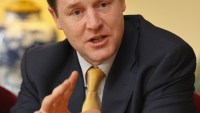
For weeks now, the genteel coalition has been getting grubbier. Today the Deputy Prime Minister cut loose and went into campaign mode as the leader of the Liberal Democrats. With both eyes on preserving his party’s loosening roots in local government, he assaulted (£) Conservative and Labour councils for cutting services. Clegg was not assisted by the more prominent Lib Dems in local government: the ubiquitous councillor Richard Kemp, the Lib Dems’ chief at the Local Government Association, asserted, almost with a note of relish, that the party is going to get a ‘kicking’. It probably will. But, as James argues, Clegg’s immediate concern after 5 May will be to ensure that the coalition returns to something approaching normality.