Uk politics

Clegg paints the world yellow

From our UK edition

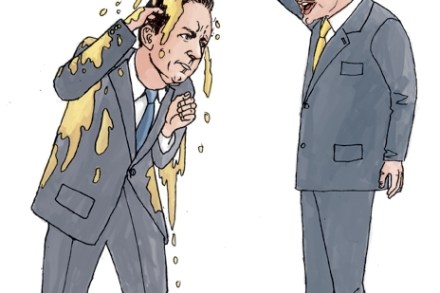
Nick Clegg laughed-off the dousing of blue paint he received in Glasgow yesterday, like one of Noel Edmonds’ unwitting victims. Today, Clegg has turned into the grinning douser: drenching his coalition partners in yellow paint by saying that the European Convention on Human Rights will not be watered down. Writing in the Guardian, Clegg says that the Conservatives are right to seek operational reform of the European Court of Human Rights, but the common ground ends there. He says that “the Human Rights Act and the European convention on human rights have been instrumental” in preventing injustices from council snooping to the misuse of DNA records and that the incorporation of human rights into domestic law was a “hugely positive step”.
Beating Labour’s education legacy

From our UK edition

If it is GCSE results day, there must be a row about government education policy. True to form, the NASUWT — a union whose role often appears to be to make the NUT look moderate by comparison — has come out with a comically hyperbolic statement accusing the coalition of a ‘betrayal of young people’ because of its decision to reform the educational maintenance allowance. What the NASUWT statement ignores is that the real betrayal of young people has been pushing them into doing courses and qualifications that condemn them to a life of low-skilled labour at best. Last year, only 16 per cent of pupils achieved a C or above in English, Maths, a foreign language, a science and one of history of geography.

Cameron’s immigration problem

From our UK edition

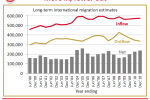
Poor David Cameron. He pledged to reduce annual net migration from the current 240,000 to the "tens of thousands" and what happens? Net migration in 2010 was up by 21 per cent from 2009. In a way, he deserves the flak he'll get because this was a daft target that could only have been set by someone poorly-advised about the nature of immigration. And the target allows success to be presented as failure. The inflow to Britain has stayed steady (see graph below), but the number emigrating from Britain has fallen. This is a compliment to Cameron: the most sincere vote people can make is with their feet. And in our globalised world, countries have to compete for people. Britain is as attractive as ever it was to immigrants, and more natives are staying put.

The schools revolution in action

From our UK edition

Harris Academies, one of the best-known new chains of state secondaries, have today posted an  extraordinary set of results. It's worth studying because it shows how a change of management can transform education for pupils in deprived areas. Pour in money if you like, but the way a school is run is the key determinant. This is the idea behind City Academies, perhaps Labour's single best (and most rapidly-vindicated) policy. The notion is rejected by teaching unions, who loathe the idea that some teachers are better than others. Bad schools are kept bad by the idea that their performance is due to deeply-ingrained social problems, etc. Harris has produced a table showing the results of their schools when they were last run by the council, and this year's results.

New immigration figures

From our UK edition

The Conservative wing of this government is on a quest to reduce net migration to, in the words of David Cameron, the “tens of thousands from the hundreds of thousands”. Liberal Democrat ministers may have dragged their feet on the issue, but there are serious doubts about whether Cameron's policies will have any real effect. As Fraser revealed last week, the coalition is struggling to secure a substantial reduction in immigration, with foreign born workers continuing to fill many jobs in Britain. This poses a threat to IDS’ welfare reform plans, as well as an electoral quandary for the Tories.  New migration figures for the period from 2009 to the present have been published today.

Treasury agrees Swiss bank tax

From our UK edition

First came the Germans and then came the Brits. The UK Treasury has secured an agreement with authorities in Zurich to tax the assets of UK citizens held in Swiss banks to reduce on tax avoidance and stamp out evasion. The deal will follow the lines of that which Switzerland made with Germany last month. The FT has details: 'Taxes on future income will be withheld at a rate of 48 per cent, corresponding to the top 50 per cent rate that now applies to Britain’s highest earners. A one-off levy of between 19 and 34 per cent will be applied to all Swiss accounts held by UK residents, with the exact percentage to be determined by the size of the deposit and how long it has been maintained.

Cameron winning over the Libya doubters

From our UK edition

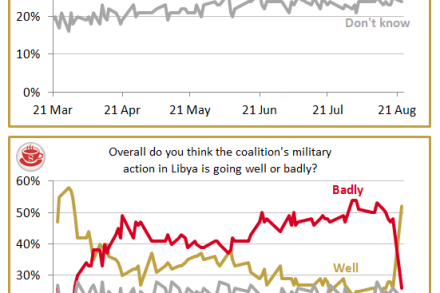
"They'll like us when we win," the West Wing's Toby Ziegler said of the Arab world. David Cameron might have said the same when public opinion was turning against the intervention in Libya. And, judging by today's YouGov poll, he'd have been right. Public support for military intervention has mirrored the public’s view of how well the action is going. In the first two weeks, when optimism prevailed, the public were largely in favour. However, as that optimism wore off and people increasingly doubted that the rebels could succeed, more and more began to oppose our involvement. Before the weekend, just 26 per cent thought the intervention was going well, and only 31 per cent were in favour of it.

Mentoring deserves an audience

From our UK edition

It is easy to mock the idea of ministers and Downing Street advisers ‘mentoring’ problem families. But the idea is onto something important. First of all, a lot of what these families need is help from someone who understands how to get on in the world. Someone there pushing and prodding them to start applying for jobs would be a healthy development. Second, as Alice Thomson points out in The Times today (£), it would act as a social bridge between the two nations of modern Britain.  As with so many ‘big society’ schemes, this idea runs slap bang into the problem of how time poor most professional people are. But restoring the social fabric in this country is going to require creating a great sense of community.

Mandelson and the Lib Dems’ dilemma

From our UK edition

The Prince of Darkness has made a rare foray into the light of public life. He uses an article in today's Times (£) to do a little waspish mischief about the coalition and the Liberal Democrats. He writes: ‘The Lib Dems are beginning to behave like an internal opposition. Staking out positions in the media, drawing public lines in the sand and making threatening noises when something is not to their liking is not the way to address their political problems of the past year. These led to their trouncing in the May elections and the AV referendum.

The riots, Whitehall and universality

From our UK edition

Away from the excitement of Libya and Colonel Gaddafi’s singular definition of ‘tactical retreat’, the post-riots debate continues. The government has announced that unemployed offenders will have to work a minimum 28 hours in their communities for four days per week and spend a fifth day looking for a job. This is part of the plan to bolster the Community Payback Scheme, signalled by Nick Clegg last week. Crispin Blunt, the prisons minister, has described the riots as a “one-off” and said it was vital that community sentences were sufficiently firm and constructive to “break the cycle of crime and encourage a law-abiding life.

Beating fuel poverty

From our UK edition

As Tim Montgomerie has noted, a growing priority for voters is the astronomical cost of petrol. In fact, according to a Populous poll conducted outside the Westminster bubble, people are far more concerned about energy prices than almost any other issue, even public sector spending cuts. With prices hitting 150p per litre at some garages, many fear that petrol and diesel is becoming part of the poverty trap. For example, in my constituency of Harlow, figures show that the average motorist is now paying something like £1,700 a year just to fill up the family car. This is a tenth of the average income in our town. Experts have ruled that spending a tenth of your income to keep warm is classed as fuel poverty.

BBC alleges that Coulson received hundreds of thousands of pounds from News Int while working for the Tories

From our UK edition

Tonight, the main news is—obviously—the situation in Libya. But Robert Peston’s claim that Andy Coulson carried on receiving payments from News International, as part of his severance package, while working for the Tories is worthy of note. If true, this piece of news is a further embarrassment for the Tories and David Cameron. Even if the money was simply part of a severance deal, it does not look seemly for a political party to have a communications director who is in the pay of a media group (Though, it should be noted that these payments stopped at the end of 2007 once Coulson had been paid the amount he was entitled to).

Cameron: No transition is ever smooth

From our UK edition

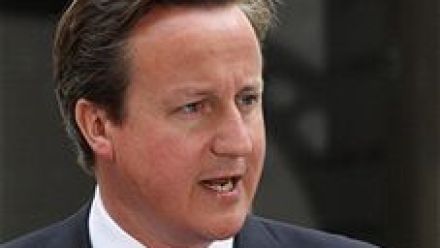
David Cameron’s statement on Libya just now was cautious in tone and content. The Prime Minister stressed that "no transition is ever smooth or easy." Cameron said that he wanted to see Libya become a "free, democratic and inclusive" country. He emphasised that the NATO mission there would continue for as long as necessary. In an attempt to reassure the country that the liberation of Tripoli will not be followed by the chaos that followed the fall of Baghdad, Cameron repeatedly mentioned the post-conflict reconstruction planning that has been going on. He also said that he had stressed to the National Transitional Council that there must be no reprisals. Noticeably, Cameron decided to reiterate his "necessary, legal and right" formulation in this statement.

A victory for the Libyan rebellion, and for NATO

From our UK edition

The regime of Colonel Gaddafi appears to be over. In a matter of hours, we hope, the Libyan dictator will be located and captured, assuming he does not flee Libya. Finally, after 42 of evil rule, the Libyans can build a free nation. The tumultuous events of recent days are, first of all, a victory for the brave Libyan rebels who took arms against Gaddafi. They defied the odds, underwent setbacks but carried on. But, secondly, today's events are a vindication for David Cameron and Nicolas Sarkozy. Keen to learn the lessons of Bosnia, Kosovo and Rwanda, they saved Benghazi from a massacre and helped to build up the Transitional National Council. In the process, they suffered the opprobrium of realists, armchair generals and so-called "experts".

070, licensed to rebel

From our UK edition

It's no surprise that 70 Tory MPs have formed a Eurosceptic group, as the Sunday Telegraph reveals today. They are the modernisers now. The new Tory intake are strikingly robust on all this: by and large, their idea of political balance is a picture of Thatcher on the wall and Jacques Delors on the dartboard. The impending boundary review and thinner-than-they-expected majorities mean they worry more about their constituency (and constituency associations) than the whips. But I'm told today that this rebellion isn't quite as fierce as it may seem. One Tory backbencher tells me the Tory whips have actually encouraged this group to call for renegotiation of the UK terms of EU membership.

This autumn, Europe could become the most important issue in British politics again

From our UK edition

Europe will be one of the political issues of the autumn. The government expects another round of sovereign debt crises in the autumn and these will add urgency to the Merkel Sarkozy plan for ever closer fiscal union between the eurozone members. Nearly every Tory MP and minister I have spoken to is instinctively sceptical of the Franco-German strategy. But Cameron, Osborne and Hague believe that because the Eurozone members won’t accept the break-up of the currency union, Britain has to back further fiscal integration in the hope that it will make the euro work. (Cynically, one might add that their position also makes life easier within the coalition given the Lib Dem’s Europhile leanings.

Human rights wrangle

From our UK edition

A set-to has broken out this morning over the Human Rights Act. David Cameron has declared that he is going to fight the Human Rights Act and its interpretation. Cameron writes: ‘The British people have fought and died for people’s rights to freedom and dignity but they did not fight so that people did not have to take full responsibility for their actions. So though it won’t be easy, though it will mean taking on parts of the establishment, I am determined we get a grip on the misrepresentation of human rights. We are looking at creating our own British Bill of Rights.

Blair on the riots

From our UK edition

Tony Blair has dropped in to write an article on the social context to the recent riots. It’s insightful, especially as a testament of his failings in government. At the close of his premiership, he says, he’d realised that the acute social problems in Britain’s inner cities were “specific” and could not be solved with “conventional policy”. So much for ‘education, education, education’, Blair’s favoured solution was a mixture of early intervention on a family by family basis to militate against the “profoundly dysfunctional” upbringings these young people endure and a draconian response to antisocial behaviour. Alas, he was forced from office for before implementing the plan.