Uk politics

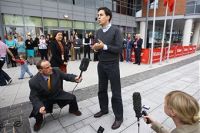
Miliband woos the strivers

From our UK edition

Finally, a good idea from the Labour conference. In his speech tomorrow, Ed Miliband will say he'd give workers priority over the jobless for social housing. This is the dividing line he was reluctant to draw when asked to by Andrew Marr on Sunday. It's a clever move, and one that recognises the resentment felt by the strivers against the welfare dependent. He will say: "The hard truth is that we still have a system where reward for work is not high enough, where benefits are too easy to come by for those who abuse the system." So councils dolling out housing should not only take need into account, but whether applicants "are working, whether they look after the property and are good neighbours." I can't see why IDS would oppose this, and perhaps consensus can be reached.
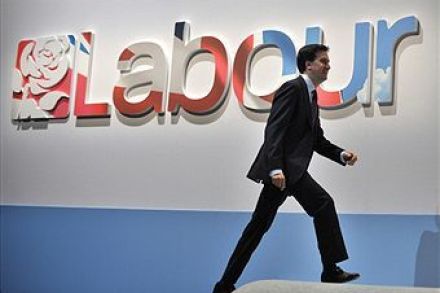
Balls’ Brownies

From our UK edition

In his speech today, Ed Balls proved himself worthy of the "Son of Brown" tag, slipping in more than a few "Brownies". I thought CoffeeHousers would be interested in some of the figures behind his claims... Balls claimed that "we went into the crisis with lower national debt than we inherited in 1997". That is flatly untrue. Public sector net debt when Labour took over was £350 billion. In 2006-07 it was £500 billion. Even adjusting for inflation, Brown and Balls had added £62.8 billion in today's money to the national debt they "inherited" by the time the crisis started: Balls' defenders will say that he meant "debt ratio" – and, to be sure, debt did not rise as fast as GDP over those years so the ratio fell (from 42.5 per cent to 35.

It’s not Brown, it’s Balls

From our UK edition

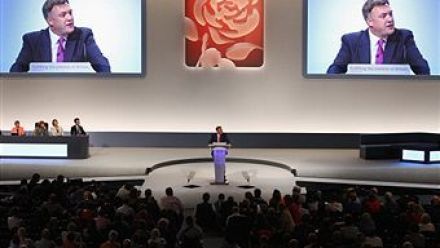
Ed Balls’s speech to Labour conference just now was a typically Ballsian performance. There was intellectual aggression, dividing lines with the Tories and a bit of class warfare from this privately educated Oxbridge graduate. The meat of Balls’ address was a Brown-style five point plan. The new elements of this were a National Insurance holiday for new workers and a reduction in Vat to five percent for home improvements and maintenance. The former struck me as a classic bit of opposition politics, work out what the government might try and do and announce it first.

Welfare worries

From our UK edition

Away from Liverpool, the big stories of the day are the markets’ reaction to the putative Eurozone deal, which has been mixed so far, and the Telegraph’s splash about the progress of the Universal Credit, the coalition’s flagship welfare reform. The scheme is designed to simplify the benefits system and save circa £5 billion a year by reducing the scope for claims to be duplicated and errors made; it is a crucial cog in the coalition’s plan to make work pay. James Kirkup reports that the Treasury has apparently put the credit at the top of its “to watch” list of government projects that are at risk of running over schedule, over budget or failing to be launched at all.

New Balls?

From our UK edition

Given that Ed Balls’ strategy has backfired on his party so far, with Labour ten points behind the Tories on economic credibility, something has to change. Either the policies, or the shadow chancellor. Read between the lines of Balls’ speech today, and you can see a man backtracking – and trying to hold on to his job. Even when Balls tells porkies, he does so with imagination and élan. He is always worth listening to. He had the 8.10am slot on Today this morning. Here’s what jumped out at me: 1) Mea Culpa, kinda. The other day in the Commons, Balls said sorry – you could tell then that it’s the first of many.  He repeated it again, while making clear that he is no more guilty than any finance minister anywhere around the world.

Balls’ new rules

From our UK edition

It’s Ed Balls’ speech today, and he’s cleared it with Ed Miliband – a courtesy that Gordon Brown never extended to Tony Blair. He promises to introduce a new set of fiscal rules, which I’m sure will make the nation’s heart leap, given how well the last set of fiscal rules worked. But what jumps out at me is his pledge to use any money raised from flogging off the banks for deficit reduction, rather than a giveaway. Here’s what Balls is expected to say, 'Even as bank shares are falling again, David Cameron and Nick Clegg are still betting on a windfall gain from privatising RBS and Lloyds to pay for a pre-election giveaway. We could also pledge to spend that windfall.

Exploiting a conservative moment

From our UK edition

Away from the resurrection of David Miliband, other Labour modernisers convened at the Progress rally earlier this evening. These weren’t just any old party hacks; they were grandees: Douglas Alexander, Tessa Jowell, Caroline Flint, Liam Byrne and Jacqui Smith to name a few: and the audience was reverential. They were discussing The Purple Book, the latest contribution to the debate about Labour’s future. The central thesis of the book is that the state is passé. As Jowell put it, “People are much more sceptical, much more hostile to the idea of the state spending their money on their behalf.

For one night only, David Miliband returns

From our UK edition

David Miliband was studiously loyal to his brother in his one speaking appearance at Labour conference. He told Movement for Change, the community organising group that he founded, that ‘Ed deserves huge praise’, that ‘Ed has led with purpose and conviction and that ‘we’ll all here because we want to put Ed into Downing Street’ But the brother over the water did come with three warning for Labour. The first was that ‘if Labour becomes a sectional party, we’ll never be elected to government.’ The second was that there’s ‘never been more distrust of the state across the industrialised world’ so if Labour becomes ‘a big state party, we’ll never get over the mistrust of the state’.

A Labour attitude to Scotland

From our UK edition

As a coda to James' post on Labour's attitude to Scotland and the Union, it's worth relating this little snippet from Ivan Lewis MP at a fringe event earlier this evening. Lewis said that, despite the SNP's current high-flying poll ratings and the need for Labour to learn lessons north of the border, "most Scots don't want independence". The upshot is that some in Labour think that the party will return to power in Scotland as a matter of course and minimal effort is required to reverse losses. Given the situation in Edinburgh, descibed so vividly by Hamish Macdonell, Lewis' complacency is quite striking.

Labour spokesmen divided on whether they’ll campaign for the Union with Cameron

From our UK edition

Douglas Alexander has just told Andrew Neil that he will campaign for Scotland to stay in the union with ‘anybody else who wants to join me’. This opens up a difference with Alexander’s normally close political ally, Jim Murphy. Murphy, Scottish Secretary in the last Labour government and currently shadow defence secretary, recently declared that he wouldn’t share a platform with David Cameron during any referendum campaign. When asked about this earlier in the day, Alexander said that he was more interested in making the argument about the value of the union rather than arranging the chairs. But Alexander does seem to hold a different position than Murphy on the question of whether Labour figures should campaign with Cameron or not.

A preview of just how personal the Boris Ken struggle will be

From our UK edition

If anyone had any doubts about just how personal the 2012 London mayoral campaign is going to be, they should have been dispelled by Ken Livingstone’s speech to Labour conference today. Ken claimed that the Mayor had ‘got what he wished for’ in above average unemployment and accused him of standing for a ‘privileged minority’. He then went on to draw an equivalence between Boris’s student antics and those of the rioters: “What is the difference between the rioters, and a gang of over-privileged arrogant students vandalising restaurants and throwing chairs through windows in Oxford? Come on Boris – what’s the moral difference between your Bullingdon vandalism as a student and the criminality of the rioters?

Labour’s tuition fee gambit

From our UK edition

As James noted earlier this morning, Ed Miliband said that Labour may go further with its policy capping tuition fees when it reveals its manifesto later this parliament. Shadow universities minister John Denham has since said that a graduate tax remains the party's long-term aspiration. Denham's comments muddies the already dark waters on the issue: first Miliband opposed a hike in fees, now he seems to recognises that they must rise but should be capped, and at the same we're told that the aspiration is a graduate tax. Liam Byrne has added a further confusion by saying that the top 10 per cent of graduates will pay "a little more" to meet the costs of the cap.

Miliband’s growing argument

From our UK edition

Ed Miliband turned in a crisp performance on the Andrew Marr show this morning. If he is having media training, it is paying off. In a clear sign of where Labour’s economic policy is heading, he constantly stressed that growth was the key to getting the deficit down. But he was far less clear on how he would stimulate the economy beyond a proposed cut in VAT. Miliband was also asked about his proposal to cut tuition fees to £6,000. I’m not convinced by the politics of this move. It leaves fees in place and raises them from where they were under the last government which is hardly a radical change or enough to fire up the student vote. But, interestingly, Miliband suggested that Labour would try to go further on this issue by the time of its manifesto.

Labour tries to make its mark

From our UK edition

Global events may soon relegate Labour conference to the News in Brief sections of newspapers, especially as it appears that G20 finance ministers are preparing for Greece to default and for contagion to spread to other parts of the Eurozone. So, the Labour leader has wasted no time as Labour conference opens. In interviews with the Observer and the Sunday Mirror, he revives his tactic of presenting himself as an insurgent, the man to "rip up the rulebook”. He makes a pledge or two: the headline grabbing idea is a cap tuition fees at £6,000 per year, paid for by reversing a planned corporation tax cut on the hated banks.

Searching for an alternative

From our UK edition

The Labour conference has started badly for Ed Miliband, with David Blunkett criticising the party for allowing the Tories to define the national economic debate. Blunkett was concurring with shadow foreign secretary Douglas Alexander’s view that the Tories had been successful in “framing a public language that made more sense of the economic crisis”. To be fair to Miliband, he made the same point in his recent interview with the New Statesman, but he is yet to provide a coherent or credible alternative to the government’s policies. So, inquiring eyes turn on Ed Balls (and today’s Mail relates another alleged tale of his part in our economic downfall). The shadow chancellor has written an article on economic policy for the Guardian.

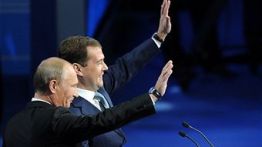
Medvedev clears the way for Putin

From our UK edition

President Dmitri Medvedev has named his successor: one Vladimir Putin. Reports from Moscow say that Medvedev will step aside and support the man he succeeded in elections next March. This turn of events is not particularly surprising and Putin is a certain victor: as Pavel Stroilov revealed on Coffee House last week, Putin has been practicing that singularly Russian art of eliminating the opposition. Stroilov also warned Western governments against falling into Putin’s embrace. Russia is forecast to grow very quickly in the next 30-odd years, retaining its spot in the G7 according to PwC’s recent research paper, The World in 2050.

Hard Labour

From our UK edition

The sense of unreality that hangs over party conference seems particularly heightened this year. As events outside roll on at a dramatic pace, the conferences try to proceed as normal. A new law on stalking may be necessary but it is small beer compared to the economic crisis gripping the Western world at the moment. Ed Miliband’s challenge in the next few days is two-fold. First, he has to work to restore Labour’s economic credibility—something that will be made even harder by today’s allegations about the role of his shadow Chancellor in the last government. Second, he has to show that the party gets the seriousness of this moment. Miliband, who travelled up on the train with his wife and children earlier today, is running into a headwind of bad polls.

Osborne’s dire warning

From our UK edition

This morning’s headlines are apocalyptic: “Global economy on the brink”, “Six weeks to save the Euro”, “Collective action needed now”. The unifying theme is the lack of leadership in the Eurozone: someone must grasp the nettle, say external politicians and commentators. Meanwhile, Charles Moore points out, with typical understatement, that Europe is leaderless by nature: no one is in charge and that is its tragedy. Moore doesn't mention the European President, who could, conceivably, offer direction and insist on fiscal discipline; but Herbert Van Rompuy is yet to meet that challenge. You wonder if someone of Tony Blair’s international standing might have succeeded where Van Rompuy has so far failed.