Uk politics

Cable’s latest embarrassment

"None of this will stop me talking out against tax avoidance." So says Vince Cable, rather hilariously, in response to being fined £500 for failing to pay £25,000 of VAT on his media work. You've got to hand it to the Business Secretary: it is an ingenious, if convoluted, way to top up the public finances. Although there are questions about whether other people would have got off quite so lightly.    You might say, as Vince's people are this morning, that this is the sort of mistake that can befall anyone — particularly someone so busy as a Cabinet minister. But this isn't just anyone. This is Vince Cable, who has staggered between embarrassment, inconsistency and insubordination ever since the coalition government was formed.

Has the EU debacle hurt Cameron?

Leaving aside Cameron's relationship with his own backbenchers for now, how has yesterday's vote affected the public's view of him? The first proper hint comes from today's YouGov poll (conducted on Sunday and yesterday), which asks respondents to rate the qualities of each of the party leaders. Among the public as a whole, there is no significant change in views of the Prime Minister since last month. But there is a change in what Conservatives think of him, and not in the direction Cameron would like. Now just 40 per cent of Tory voters think Cameron is honest, down from 53 per cent last a month ago. And a mere 19 per cent say he's "in touch with the concerns of ordinary people," down from 31 per cent.

We need better schools, not more spending

More money, better services? You might have thought that Gordon Brown had already tested that theory to destruction, but here it is again in the coverage of today's Institute for Fiscal Studies report on education and schools spending. The IFS highlights that education is facing the biggest cuts over a four year period since the 1950s. And the coalition's opponents are gleefully seizing on this as a problem in and of itself. But it isn't, really. As CoffeeHousers will know, education funding increased massively during the past decade. The IFS admit this themselves: “Over the decade between 1999–2000 and 2009–10, it grew by 5.1% per year in real terms, the fastest growth over any decade since the mid-1970s. As a result, it rose from 4.

Cameron needs a new management style

There seem to be three schools of thought among those close to the leadership about last night's rebellion. One even now maintains that the issue was handled as well as it could have been and blames the rebels for all the trouble. These people don't seem to realise that what they are saying is effectively that the Conservative parliamentary party is unmanageable. The second group says that the issue of Europe sends the Conservative party loopy. But they also concede that Number 10 got caught up in the madness too. The third lot are the ones who have grasped the significance of last night's events. Despite being loyalists, they are in no doubt about the need for Cameron to change his style of party management.

The coalition bares its tensions over Europe

Here's an irony: last night's EU fandango was the fifth largest vote in favour of the government this year. And yet there is little about the situation that is favourable to the government this morning, as the story moves on from Tory splits to coalition ones.  It started with Michael Gove's appearance on the Today Programme earlier. The Secretary of State for Education put in a much more conciliatory performance than William Hague managed yesterday; praising the "cordiality" of the Tory rebels, and reassuring them that the Tory leadership would like to see specific powers returned from Europe "in this Parliament".

When will MPs wake up to Shale?

It's just baffling. The House of Commons committee on energy has today published a report entitled “UK Energy Supply: Security or Independence?” with hardly a mention of the 200 trillion cubic feet of Shale gas recently found outside Blackpool. As Matt Ridley wrote recently in his definitive Spectator piece, these reserves – if exploited – are "enough to keep the entire British economy going for many decades. And it's just the first field to have been drilled." It may well be that just a fifth of this are exploitable, but there is no mention of this potentially game-changing discovery in the committee's report today.

43 percent of Tory backbenchers vote for an EU referendum in defiance of David Cameron

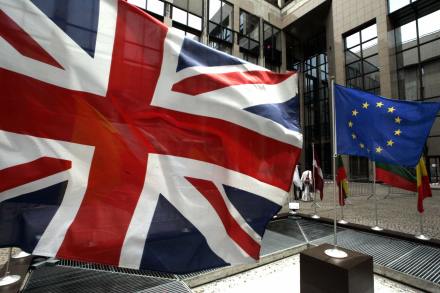
The scale of tonight’s rebellion is quite remarkable, 43 percent of Tory backbenchers have defied a three line whip—and we are only 18 months into the parliament. Indeed, if you factor in the abstentions more than half of Tory backbenchers rebelled. This should be a wake-up call to David Cameron. He needs to develop a proper policy for repatriating powers from Brussels, change his style of party management, and reform the Whips office.  This rebellion will encourage the hard-line Euro-sceptics to try again and again. They will reckon, rightly, that as the parliament goes on the number of potential rebels will grow.

Europe Minister’s PPS quits over referendum vote

Adam Holloway, PPS to the Europe Minister David Lidington, has just effectively quit his job by giving a speech setting out his intention to vote for the motion. That the Europe Minister’s PPS is walking over this issue is an embarrassment for the government and a sign of how strongly opinion on this issue is running. The most striking thing about William Hague’s speech was the near silence in which it was listened to on the Tory benches. When Hague mocked the motion, he didn’t draw laughs from even the most sycophantic backbenchers. Whatever happens tonight, this debate has widened divisions on the Tory side. There is a real danger that without urgent action, up to a third of the backbenches will become actively hostile to the Prime Minister.

Another voice: Why Cameron had no choice but to fight

Fraser performed a valuable service to the MPs currently debating a motion proposing a referendum on membership of the European Union by imagining what he thought David Cameron ought to have said: "Sure, guys, have your vote. It's a backbench motion, so the government won't take part and as you know I've booked a trip abroad next Thursday anyway so I won't be here. But I was serious when I said those petitions are a way to 'rebuild trust in politics'. If this reached the threshold I set — 100,000 votes — then I'm happy for this to be debated, with a free vote. If you ask me, it's an odd time to discuss a referendum. But hey, I run the government — not parliament. You guys work for your constituents, not for me. So go for it.

Cameron’s warm up act

David Cameron's statement on the European Council served as the warm up act for this afternoon's debate on the EU referendum motion. Cameron attempted to show his backbenchers that he is serious about bringing back powers from Brussels. He stressed that he had already prevented the transfer of further authority to the European Union without a referendum and that he "remained committed" to repatriating powers. In an attempt to flash a bit of leg to his own side, he said that when the debate about treaty change starts "every country can wield a veto until its needs are met." But Cameron remained vague about what powers he would like to see returned.

Whipping up a storm | 24 October 2011

It looks like about a third of Tory backbenchers will rebel in tonight’s vote on an EU referendum. 18 months into government, this is a massive rebellion and one that should make the Prime Minister think again about his style of party management. Those in Number 10 who claim that many of the rebels will ‘never be happy’ are missing the point that, while there may be a hardcore of MPs keen to rebel, many more are reluctant rebels who feel they have been pushed into it by Cameron’s failure to engage with the party on the whole issue of Europe. One reluctant rebel said to me over the weekend: if you write anything about this please say that the whips office needs sorting out.

Dave’s EU opportunity

Lucky David Cameron. His chance to repatriate powers from the EU will come sooner than he thought. Now the latest EU summit is over, it looks as if there will indeed be change to the Lisbon Treaty — the very document that the Prime Minister and William Hague promised Britain a referendum on. Last night, Herman Van Rompuy said that EU leaders had promised to "explore the possibility of limited change" in the weekend talks. Germany since confirmed that provisions for "limited treaty change" were included in the conclusions. We all know what that means. Indeed, here are the Prime Minister’s words: "Treaty change can only happen if it is agreed by all the 27 member states of the European Union.

Your scorecard for today’s EU referendum vote

I hope you adjusted your calendars accordingly, CoffeeHousers. The parliamentary debate and vote on an EU referendum starts at 1600 today — and what morbid fun it promises to be too. Fresh from being bawled out by Nicolas Sarkozy at the weekend, David Cameron is returning to London to be bawled out by a significant proportion of his own party. And while the Tory leadership is certain to defeat David Nuttall's Eurosceptic motion, it will not avoid being wounded in the process. Most of the wounds have already been self-inflicted.

Gaddafi’s death boosts support for Libya intervention

In August, I showed that the rebels' success in toppling Gaddafi's regime had boosted British support for the intervention in Libya – and David Cameron's handling of it. Unsurprisingly, this week's news appears to have done the same. Even though Gaddafi's death was not an explicit goal of the intervention, it seems to have been many people's definition of success. 62 per cent now say the military action is "going well", up sharply from 46 per cent last week: As a result, 45 per cent now support the decision to take military action, while only 31 per cent think it was wrong – the lowest opposition since the start of the conflict. And there can no be no doubt that Libya is seen as a personal success for David Cameron.

Tory Wars, redux

Even after reading Jonathan's post, I struggle to see the strategy in David Cameron's position with his party over Europe. The motion is non-binding, and Miliband has three-line-whipped his party to vote against so there was zero chance of the motion passing. It is the result of a petition to parliament, so you can't write this off as the idea of a few Tory MPs in the tearooms. Cameron should have said: "Sure, guys, have your vote. It's a backbench motion, so the government won't take part and as you know I've booked a trip abroad next Thursday anyway so I won't be here. But I was serious when I said those petitions are a way to "rebuild trust in politics".

Cameron’s strategy is better than it looks

The number of Tory MPs set to defy the government in the vote on an EU referndum tomorrow now stands at around 90, and numerous backbenchers – including John Redwood and David Davis – have called on the Prime Minister to drop the three-line whip. Even though he is certain to win the vote, many are already accusing Cameron of "blundering" and mismanaging this affair. But others are now suggesting that Cameron is in fact displaying a great deal of political nous by taking on the hardline Eurosceptics in his party.

Liddington: EU vote should follow a new treaty

David Liddington, the Europe Minister, has just told the Murnaghan Show that the moment for a referendum on the European Union is once a treaty change has been agreed. Liddington argued that then everyone would know what they were voting on. This is quite a significant shift in the government’s position. Up to now, the position has been that there would only be a referendum if yet more powers were transferred from Westminster to Brussels. Liddington appeared to be saying that a vote would follow any new treaty, even one that brought powers back. This moves the government far closer to a position of renegotiation followed by a referendum.

The End of a Delusion

The sight of Colonel Muammar Gaddafi blood-stained and bewildered, pulled around by a crowd in the final moments of his life is not a sight that will cause much pity. For more than four decades he had none for those Libyans whom he repressed and killed — anymore than he had for the victims on Pan Am Flight 103, his other multiple acts of terrorism, or his pointless and bloody interventions across Africa. Yet there is something pitiful about it: perhaps most obviously because watching his end is to watch the end of a delusion. Even more than Saddam Hussein crawling out of a hole in the ground and saying that he wanted to negotiate, the sight of Gaddafi coming out of a soil-pipe armed with a golden gun seems the perfect example of reality catching up with the autocrat.