Uk politics

Cameron attacked from all sides on Europe

From our UK edition

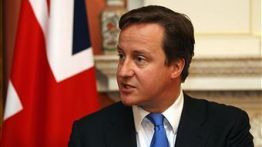
David Cameron’s usual insouciance gave way to something approaching shouty panic as Europe dominated exchanges at PMQs. 8 Conservative MPs, all of them hostile to varying degrees, asked questions about Cameron’s intentions at the Brussels summit on Friday. This may not have surprised him, but the word around the Commons tearooms is that Cameroons are blaming Speaker Bercow for calling so many antagonistic MPs to their feet. It looked like a co-ordinated attack; and it's no surprise that an opportunistic Boris has since taken to the airwaves renewing his call for a referendum. Cameron’s article in this morning’s Times may have been intended to quell disaffection by looking decisive, but it seems to have had the opposite effect.

Cameron’s plan

From our UK edition

Much ado about a Cabinet split over Europe this morning. The Financial Times has interviewed Ken Clarke, whose europhile instincts are well known — something he shares with the senior Lib Dems. Clarke tells his eurosceptic colleagues not to expect powers to be repatriated from the EU at Friday’s summit. Meanwhile, David Cameron has written a piece in today’s Times (£), reiterating that he will veto any treaty that damages British interests. He also says that his ‘requests will be practical and focussed’. And therein, apparently, lays the split. The word ‘requests’ might open the possibility of repatriation.

Labour’s late to the policemens’ ball

From our UK edition

Labour has today unveiled a panel of experts to consider the future of British policing.  The review, chaired by the former Metropolitan Police Commissioner Lord Stevens, will report by spring 2013. There are far-reaching changes underway to the institutional structure of the police.  The coalition government is pursuing sweeping reforms of police pay and conditions and creating a remodelled national policing architecture, with a new National Crime Agency.  The boldest reform — devolving governance to locally elected Police & Crime Commissioners (PCCs) — will have long-term implications.

Lobbying for a lobbyists’ register

From our UK edition

“I certainly think it’s a serious problem and I described it when we last discussed this as a canker on the body politic and I would stay with that,” said Jesse Norman on the World at One earlier today. The Bureau of Investigative Journalism’s sting, splashed by this morning’s Independent, of executives from lobbying/PR firm Bell Pottinger boasting of their influence over the prime minister has renewed the debate about regulating the lobbying industry, with calls for a public register to be established. Downing Street has outright denied the allegations, which do sound rather far-fetched. Bravado is, of course, the currency of thin-air merchants. The objection is not to the bragging (how else can one tout ‘influence’?

Back to square one | 6 December 2011

From our UK edition

Benedict Brogan has some bad news from the engine room of public service reform. ‘I'm told Downing Street is starting all over again on public service reform. Will Cavendish, one of the key people guiding policy in No10, has been put in charge and told to assemble a new team of officials that will put together what effectively is a response to the white paper. The last 18 months, according to those close to the debate, were a waste of time. We'll have to see whether the principles Mr Cameron set out 10 months ago still apply.’ Those principles are that the ‘state will have to justify why should it ever operate a monopoly’ on public services, as Cameron once put it.

Mutiny in the air

From our UK edition

David Cameron’s European problems seem to be mounting. The usual suspects — Carswell, Redwood, Jenkin et al — have been only too happy to take the airwaves and talk of this ‘great opportunity’ to repatriate powers. Those sentiments are growing across the backbenches. The Guardian quotes an ally of Iain Duncan Smith saying that he and his friends ‘do not accept the prime minister's argument that the changes will only affect the eurozone. Of course the changes will have an impact on Britain.’ The mounting disquiet appears to have been created, to an extent, by the PM hedging his bets and lowering expectations.

The New York Times’ austerity myth

From our UK edition

Yet again, the New York Times fact-checkers seem to have taken the day off. The newspaper yesterday printed an editorial about British economic policy which contained basic errors – identical to those made in a blog which Paul Krugman bashed out last week. It's worth fisking a little, because Krugman appears to be using the newspaper to create an austerity myth. 'A year and a half ago, Prime Minister David Cameron of Britain came to office promising to slash deficits and energize economic growth through radical fiscal austerity. It failed dismally.' This is right, insofar as there was no austerity. The below shows current spending, for every month since the government took power. They overspendt.

Disappointment in Durban

From our UK edition

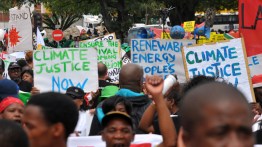
Will Durban break the cycle of climate change meetings that repeatedly disappoint those hoping to replace Kyoto with an upgraded model? With so much else on, most people seem to be ignoring the latest summit entirely. Scanning the major newspaper websites, only the Guardian and the Independent mention “Durban” on their homepages.    First Copenhagen failed to live up to the massive hype. Then Cancun continued the stalemate on the big picture and negotiators contented themselves with addressing some relatively minor points. But Kyoto’s commitment period ends at the end of 2012, so those hoping for new mandatory targets can’t content themselves with stalling forever.

The referendum question Pt. 2

From our UK edition

Earlier this morning, Number 10 briefed that fiscal union in the eurozone would not trigger a referendum in this country because sovereignty will not be transfered from London to Brussels — a pre-requisite for any vote. The problem for Cameron is that some of his backbenchers say there should be a referendum. Bernard Jenkin was on the Daily Politics earlier, insisting that fiscal integration marks a new era in the history of the Eurozone, which he dubbed ‘Maastricht Plus’. On the other hand, some eurosceptic backbenchers caution that now is not the time to hold a referendum — stability in the eurozone is the order of the day.

Raab’s early hits

From our UK edition

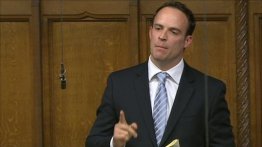
The Commons will debate the UK’s controversial extradition treaty with the US and the European Arrest Warrant later today. The debate has been brought by Dominic Raab MP. He was on the Today programme this morning, explaining that he wanted to introduce a ‘forum clause’ to the UK-US treaty. Forum is a principle that could apply in cross-border cases like Gary McKinnon’s, which Raab has been championing. Raab wants to end the ‘sort of haggling between prosecutors behind closed doors’ that governs extraditions at present, and reform the process by placing it before open court in Britain. He argues that numerous other countries enjoy such an arrangement with the US, why shouldn’t its ‘stalwart’ British allies?

The referendum question

From our UK edition

As French and German officials make final preparations ahead of tomorrow’s meeting on fiscal union, it’s worth reconsidering the coalition’s triple referendum lock. James Kirkup has an incisive post on the issue, describing a potential government split. The division was evident on TV this morning: Iain Duncan Smith told Dermot Murnaghan that a referendum would be held ‘if there is a major treaty change’, while Nick Clegg told Andrew Marr that only ‘an additional surrender of sovereignty from us to Brussels’ can spark a vote. Kirkup argues that IDS reflects the broader sceptic position on the Tory backbenches: that the PM has promised a vote on all substantial treaty changes.

Baseline advantage

From our UK edition

One of the advantages the governing party has during an election campaign is the ability to set the baseline. It is your plans which every other parties’ are measured against. So, if they plan extra spending you can accuse them of a ‘tax bombshell’ or if they want to spend less than you, then you can say they want ‘savage cuts.’ After Tuesday’s autumn statement, Treasury sources were adamant that there would be a spending review before the end of this parliament setting out the cuts the coalition would make to meet its fiscal mandate. Danny Alexander confirmed on Newsnight that these would be jointly-agreed coalition cuts.

The importance of being earnest | 4 December 2011

From our UK edition

The absence of growth and the importance of credibility are recurring themes in this morning’s papers. John Lord Hutton has told the BBC that revised growth figures make pension reform even more urgent, and he added that the deal that was put before trade unions was ‘perfectly credible’. Meanwhile, David Cameron has insisted that ministers increase their pension contributions by an average of 4.2 per cent (more than the 3.2 average across the public sector) to show that ‘we are all in this together’. Pensions also feature in an Independent on Sunday interview with Tim Farron, the Lib Dem President.

The significance of the Iron Lady

From our UK edition

Charles Moore’s essay on the Iron Lady in today’s Telegraph is required reading. Here’s how he starts: ‘The best way to understand why a feature film about Margaret Thatcher might work is to imagine trying to make one about other 20th-century British prime ministers. How about Safety First (Stanley Baldwin), A Period of Silence (Clement Attlee), Crisis? What Crisis? (James Callaghan) or In No Small Measure (John Major)? It doesn’t do, does it? Even Tony Blair, already the subject of several films, invites a satire treatment, not a life story. There is a case, perhaps, for David Lloyd George. There is the towering subject of Winston Churchill. And then there is Margaret Thatcher. Of course she should have a biopic.

The Gospel according to Delors

From our UK edition

An old enemy of England nestles in the pages of today’s Daily Telegraph. Charles Moore travelled to Paris to meet Jacques Delors, the architect of the euro and advocate of Europe’s ‘social dimension’. Moore found defiance where one might have expected humility, perhaps even repentance. Delors insists that the fault was in the execution not the design of the euro.

Balls’ blindness

From our UK edition

This week has marked something of a watershed in the British economic debate. The story of the strike on Wednesday was not one of paralysis, but of resilience. There was an 85 per cent turnout in NHS staff; Cumbria council kept every office open as so few staff went on strike; Aussies landing at Heathrow cleared passport control in record time, due to the large number of volunteers who were qualified with two days' notice. As I say in my Daily Telegraph column today, the union leaders went rather quiet afterwards: they misjudged the mood of the country. As has Ed Balls.

A tale of two cities | 2 December 2011

From our UK edition

Nicolas Sarkozy is grudgingly admired by French socialists as a political fighter, capable of thriving even in the most desperate situation. David Cameron is coming to understand what they mean. It is the best of times and the worst of times between Paris and London. Two months ago, David Cameron and Nicolas Sarkozy assumed the victor’s garlands in Benghazi; today, they met at odds, if not yet in animosity, over the contested logic of ever closer union in Europe. Sarkozy appears to have got his wish: the 17 countries of the Eurozone will deepen their economic and political relations in an attempt to save the single currency — and with it, he hopes, France’s economic and political strength on the international stage.

How happy is Britain? 7.4

From our UK edition

Remember General Well-Being – David Cameron's attempt to come up with a new set of statistics to encapsulate all the things that GDP doesn't? Well one aspect of it, the Office for National Statistics says, is 'subjective well-being'. That is, how do people rate their own well-being? It's not all there is to well-being, we're told – health, personal relationships, job satisfaction and economic security will need to be added to the mix too – but it is an important part. And so, the ONS has set about measuring it. Over the last few months, they've begun asking the public four questions: Overall, how satisfied are you with your life nowadays? Overall, to what extent do you feel the things you do in your life are worthwhile?

Woolf tucks into perfidious Albion

From our UK edition

Yesterday night's news that a senior FCO official lobbied Oxford University on behalf of Saif al-Islam Gaddafi adds more ordure to the already fetid story of Britain’s role in Colonel Gaddafi’s rehabilitation. The Woolf Inquiry into Saif’s dealings with British universities and businesses found that, 'It was made clear [to Oxford] … that the FCO would appreciate help in this case since Libya was opening up to the West again.'  Oxford resisted; but this episode has hardly covered Britain’s elites in glory: the civil service, BAE and august universities are all criticised in Woolf's report.

What did the public make of the Autumn Statement?

From our UK edition

The lack of growth in the economy has taken its toll on the government – and George Osborne – according to YouGov's post-Autumn Staement poll. After the Budget in March, 34 per cent said the Chancellor was doing a good job – now it's just 24 per cent. And the percentage saying he's doing a bad job has risen from from 40 to 49. Here's how the public's view of the economic performance of the coalition as a whole has declined since Osborne's first Budget: Despite this, Labour have failed to seize the initiative. Osborne still leads Ed Balls on the question of who'd make the better Chancellor, 30-24. Indeed, that just 61 per cent of Labour supporters pick Balls should be of deep concern to the Labour leadship.