Uk politics

Cameron’s fight over the Falklands

From our UK edition

Thirty years on from the Falklands War, and the hostility between Britain and Argentina persists. And it was that hostility that delivered the most striking moment of PMQs earlier. Not only did David Cameron, at the insistence of Andrew Rosindell, describe the Argentinian attitude towards the Islands as ‘far more like colonialism’ than that of the British, but he also confirmed that the National Security Council yesterday discussed the simmering situation in the south Atlantic. As he put it himself, he wants to send out a ‘strong message’ to Argentina, after the recent sabre-rattling actions of their President, Cristina Kirchner — which Daniel has blogged about here.
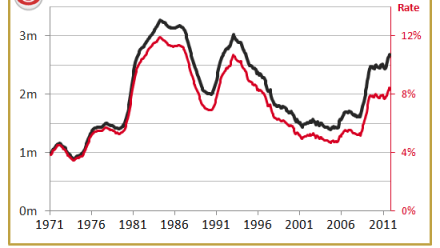
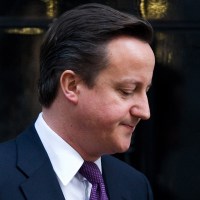
The lesson from today’s PMQs? Unemployment makes Cameron uncomfortable

From our UK edition

What’s the point of Ed Miliband? Does the Opposition leader have any purpose in life other than to provide ritual entertainment for the Tory wrecking crew at PMQs? Having spent the New Year listening to lethal attacks from his dearest supporters, Mr Miliband has now seen his leadership shrivel to a pair of policy statements which rival each other in desperation and barminess. The first, outlined by Liam Byrne this morning, is a fantasy tax on banking, ‘to create 100,000 jobs’. The second is Labour’s new position on the government’s austerity programme. This would baffle the dippiest and trippiest resident of Alice in Wonderland. We hate the cuts. We back the cuts. We oppose the cuts. We endorse the cuts. We accept the cuts.

Cameron endures his monthly unemployment grilling

From our UK edition

Downing Street is painfully aware that one PMQs in four is going to be about unemployment. Today, with the monthly figures having come out this morning, Miliband led on the subject. The Cameron-Miliband exchanges were not particularly enlightening. Miliband said ‘it really is back to the 1980s’ and Cameron mocked Miliband for being ‘so incompetent, he can’t even do a U-turn properly’. In the backbench questions, Cameron wasn’t put under much pressure. The news of the session came when he said in response to a question from Andrew Rosindell that the National Security Council had devoted a whole session to the Falklands yesterday.

What Boris Island tells us about Cameron

From our UK edition

He already has his bikes and his buses, but might Boris get his island too? Today's Telegraph reports that David Cameron is going to announce a consultation into building a new airport in the Thames estuary, as was first proposed by the London Mayor. The PM will wait until that consultation is over before making a final decision, but he's said to be 'provisionally supportive' of the plan at the moment. Nick Clegg, by the sounds of it, is more provisionally negative. Even the very prospect of Boris Island is a triumph for the Mayor, and not least because Cameron and George Osborne were previously opposed to it. It also says much about the more general shift in attitude of those Tories in government.

The new politics of leaning on business

From our UK edition

Ed Miliband the consumer champion, the saviour of the squeezed classes. That, more or less, is how the Labour leader has always sought to sell himself — but this morning the sales pitch goes into overdrive. He has an interview with the Daily Telegraph in which he attacks 'Rip-off Britain'. Not the TV show, mind, but those companies that hammer their customers with extra costs and hidden charges. Excessive savings fees, car-parking charges, airline levies, bank charges, consumer helpline costs and energy bills; all these should come to an end, says Miliband. And he has a few measures for achieving that. What strikes me, when reading the interview, is how this fits into a trend of politicians leaning on businesses to make them curb certain excesses.

Miliband tells the unions ‘tough’

From our UK edition

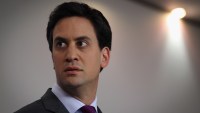
Ed Miliband has just done a TV clip full of the kind of quotes that politicians love using. In an interview with Nick Robinson (above), the Labour leader declared that ‘I’m leading this party and making the difficult decisions. And if people don't like it, I’m afraid it's tough, because that is the way I’ve got to lead this party’. It seems that Miliband has decided to pivot off the attack on him by the Unite and GMB unions, to use them to try and show the electorate that he’s his own man and is fiscally credible. The worry among some Labour supporters is that Unite, Labour’s biggest financial backer, walks away from the party in disgust at its support for the public sector pay freeze.

Inflation at 4.2 per cent is nothing to cheer

From our UK edition

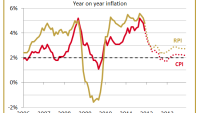
Are today’s inflation figures cause for celebration? The Consumer Price Index rose a mere 4.2 per cent in the year to December, down from 4.8 per cent in November. So, yes, a sharp drop — but only a statistical boffin could describe this as good news. Sure, a similar drop can be expected when the VAT rise drops out of the comparison figures next month. But the prices confronting British shoppers are still rising at twice the supposed inflation target, and will keep rising above this target for months to come. The following graph shows the trajectory we can expect for CPI and RPI over the next few years: The misery that inflation inflicts on the public is, of course, mitigated by pay rises.

What will Miliband do now?

From our UK edition

The Labour leader Ed Miliband has been determined not to define himself by picking fights against his own side. He didn’t want to do a Blair or a Cameron and triangulate his way to power. Rather, his model was, in one respect, Thatcher. His team were struck by how she managed to move the political centre from opposition. But Miliband now finds his own side picking fights against him. As Pete blogged earlier, Unite’s Len McCluskey has launched an intemperate attack on him in The Guardian. McCluskey claims that Miliband’s recognition that Labour’s starting point has to be that the cuts will be reality by 2015 has ‘undermined his leadership’.

Labour disunited

From our UK edition

Labour MPs didn't pick Ed Miliband as Labour leader; they preferred his brother. Labour members didn't pick Ed Miliband as Labour leader; they preferred his brother too. It was the union bloc that delivered the crown unto Ed — spearheaded by the votes, support and influence of the country's largest trade union, Unite. Which is what makes Len McCluskey's article for the Guardian today so dangerous for the Labour leader. McCluskey, you'll remember, is the head of Unite — and he's not happy with how things are going now that Miliband has closed the ground, rhetorically at least, between his party's fiscal stance and the coalition's.

A joke too far?

From our UK edition

Tom Harris lost his job as Labour's ‘Twitter tsar’ today after uploading this Salmond-themed Downfall video onto YouTube.

Clegg versus vested interests (and the Tories)

From our UK edition

‘Another week, another speech about the evils of capitalism.’ So joked Nick Clegg at the start of his speech to Mansion House earlier, and there was some truth in this particular jest. All three parties are jostling to be seen as the harbingers of a new economy at the moment — one that doesn't reward failure; that benefits everyone ‘fairly’; that won't seize up as the old one did; that etc, etc. Ed Miliband sketched out his rather insipid vision for this economy last week; David Cameron will hope to do a better job later this week. Today, though, was the Deputy Prime Minister's turn. So what did Clegg say?

A Cameron-friendly backbench group

From our UK edition

The 301 Group is the nearest that David Cameron has to a loyalist backbench support group; it is named after the number of seats the Tories will need at the next election to win a majority. The Times today reports the group's concerns that the Tories are in danger of forgetting the importance of a broad agenda that goes beyond the party’s staple issues. I suspect that several people in Downing Street will nod along at these concerns. The group has certainly been encouraged by Number 10, which has difficult relations with the 1922 Committee. Its early speakers have included the chief whip Patrick McLoughlin and the vice-chairman of the party Michael Fallon.

Osborne visits China, but can’t escape Europe

From our UK edition

Yet another day here in Westminster that's all about the economy. Nick Clegg has just delivered a speech on the subject to Mansion House, focusing on ‘responsible capitalism’, which we'll blog shortly. And two prominent forecasting groups, the Ernst & Young ITEM Club and the Centre for Economic and Business Research, have suggested that we're effectively back in recession. They both reckon that the economy shrank in the final quarter of last year, and is wilting even further in this current quarter. But, like the OECD, they also predict that this ‘double dip’ will be relatively short-lived and relatively mild. Against that backdrop, enter George Osborne.

Miliband beats Miliband in the polls

From our UK edition

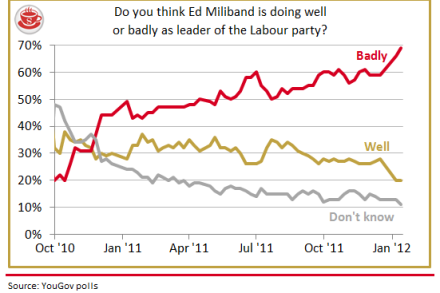
Ed Miliband's poll ratings are going from bad to disastrous at the moment. Last week his YouGov approval rating dropped to its worst ever, with just 20 per cent of respondents saying he's doing a good job, and 66 per cent saying he's doing a bad one. And today they slip even further. Again 20 per cent say he's doing ‘well’, but now 69 per cent say ‘badly’: And, most worryingly for the Labour leader, the number of Labour voters giving him the thumbs down (49 per cent) now outnumbers those giving him the thumps up (46 per cent). That's compared to the 95 per cent of Tories who think Cameron's doing well, and the 72 per cent of Lib Dems for Clegg.

Gove: It’ll take ten years to turn around the education system

From our UK edition

Speaking on the new Sunday Politics Show, Michael Gove said that it would take a decade for his reforms to change education in this country. Pressed by Andrew Neil on whether he would be able to reverse England’s fall in the PISA rankings, Gove remarked that it would take ten years before we can see whether his reforms have worked in reversing England’s educational decline in comparison to other OECD economies. Interestingly, Gove suggested that one of the measures of the success of his reforms was whether private schools started entering the state sector. He also defended his decision to force some schools to become academies.

Miliband, dented but defiant

From our UK edition

In the news bulletin after Ed Miliband’s interview on the Andrew Marr show, the headline was about Miliband saying he does listen to criticism of his leadership. It rather summed up Miliband’s problem at the moment: he can’t get beyond all the chatter about his leadership. In terms of the substance, Miliband’s explanation of Labour’s new economic position showed just how difficult it is going to be to explain it to the public. Miliband argued, as Balls did on Saturday, that the cuts are currently going ‘too far, too fast’ but that he can’t promise to reverse them. As one Tory said to me yesterday, Labour is saying that the cuts are the problem but we might have to adopt them.

Labour’s new strategy in the cuts blame game

From our UK edition

Even as Ed Balls embraces the need for austerity today, he takes a very different position to the coalition on why it’s necessary. The government has always blamed the need for cuts on the ‘awful economic inheritance’ bequeathed it by Labour. Balls, on the other hand, puts the blame squarely at George Osborne’s door. In his Fabian Society speech, he said: ‘George Osborne’s economic mistakes mean more difficult decisions on tax, spending and pay.’ His argument is that, by cutting ‘too far and too fast’, the coalition has caused the economy to stagnate and thereby created the need for more austerity. Labour has, of course, long been trying to shift the blame for the cuts away from themselves and onto the coalition.