Uk politics

My week in Westminster

From our UK edition

I'm presenting Radio Four's Week in Westminster this morning, on deficit wars, London wars, welfare wars, and another set of wars which no one has really discussed yet: the directly-elected police commissioners. There will be about 40 of them elected in November, and candidates are already emerging: Nick Ross (ex-Crimewatch), Colonel Tim Collins and London mayoral hopeful Brian Paddick. I interview two names that have been thrown into the frame, both former ministers and both women: Jane Kennedy (Labour) and Ann Widdecombe (Tory). I wanted to find out just how excited we should be about these elected police commissioners.

Osborne needs to come up with radical growth policies, and soon

From our UK edition

When it comes to defending the free market, and making the case for fiscal sanity, there's scarcely anyone better than David Cameron. He was on superb form in Davos yesterday, giving much-needed blunt advice to the continentals. ‘Eurozone countries must do everything possible to get to grips with their own debts,’ he said. And he's right. The snag, as I say in my Daily Telegraph column today, is that Cameron's definition of getting to grips with debt involves increasing it more than Labour planned to, more than France, Germany, Italy or Portugal. On the first sign of trouble, his government gave up on its deficit reduction timetable – it will now halve the deficit over five years, whereas Darling promised to do it in four.

A matter of honour

From our UK edition

Condemnation’s coming from all sides for the £963,000 bonus awarded to RBS’s Stephen Hester, on top of his £1.2 million salary. The most prominent denunciation came from Lib Dem Foreign Office minister Jeremy Browne on last night's Question Time: ‘I think there’s a sort of question of honour. Even if there is a contractual opportunity for him to have a bonus, it doesn’t mean he has to accept it. He’s already being paid more than £1 million a year. His total package now, means he gets paid in about three days what a soldier risking his life in Afghanistan gets paid in a whole year. And I think he should reflect on that.

Transparency marches on

From our UK edition

It has been quite a few days for transparency in Westminster. First, Ben Gummer's ten minute rule bill for tax transparency — which would see every taxpayer in the country receive a statement detailing what they owe and what the money's being spent on — earned itself a second reading in the House. And now, today, the Department for Education releases its new ‘performance tables’ for secondary schools. You can sift through them here, and I'd recommend you spend at least a couple of minutes doing just that.

Abbott quits abortion talks, but will her contributions be missed?

From our UK edition

Diane Abbott has, the BBC reports, walked away from the all-party talks on abortion because of the government’s proposals on counselling services. But others involved in the talks claim that Labour’s public health spokeswoman was not a particularly active participant. Abbott, who is not always the easiest of people to work with, had already irritated some of those involved in these talks. In the first meeting she, allegedly, took the opportunity to rest her eyes. She then apparently turned up half an hour late for the second meeting before missing the third one completely. When I put these claims to Abbott’s office, they said that they doubted they were true but they would check with the MP. But so far, there’s been no word back.

Dave in Davos

From our UK edition

https://www.youtube.com/watch?v=iWDdpmS89LQ Reading Cameron's speech to the suits in Davos, one thing stands out: he's in no mood to stop ‘lecturing’ the eurozone, as Nicolas Sarkozy would put it. The whole thing is saturated with firm advice for our European brethren, from generalities such as ‘Tinkering here and there and hoping we’ll drift to a solution simply won’t cut it any more,’ to specific policies that the Continent should introduce so that it can ‘recover its dynamism’. He even found space to attack the ‘madness’ of a Tobin tax, as well as to hawk the coalition's deficit-reduction plan. It's the sort of advice that could, of course, put Cameron further at odds with his fellow European leaders.

Clegg echoes Obama’s message

From our UK edition

Nick Clegg, this morning, advocating closing loopholes for the rich to pay for raising the income tax threshold: ‘Right now, because of loopholes and shelters in the tax code, a quarter of all millionaires pay lower tax rates than millions of middle-class households. Right now, Warren Buffett pays a lower tax rate than his secretary.’ Oh, all right, that wasn't Clegg. That was Barack Obama, in his State of the Union address on Tuesday night. But it's remarkably similar to what Clegg just said in his speech at the Resolution Foundation this morning.

A Lib Dem demand that the Tories should get behind

From our UK edition

Remember those Lib Dem calls for a mansion tax at the weekend? I said at the time that, ‘the Lib Dems appear to be drawing more attention to which of their own policies they are fighting for within government, whether those policies make it to the statute books or not.’ Well, now they're at it again. Nick Clegg is giving a speech this morning in which he'll urge George Osborne to go ‘further and faster’ in raising the income tax threshold to £10,000 a year. It was the stand-out policy of the Lib Dem manifesto, so it's hardly controversial that Clegg should want to see it enacted ASAP. But it's still striking that he's making this appeal in public. A year ago, he'd have emphasised what the coalition was already doing to raise the threshhold.

Salmond lays the ground for his referendum

From our UK edition

So now we have it: the ten words which Alex Salmond hopes will end Scotland’s 300-year-old membership of the United Kingdom. ‘Do you agree that Scotland should be an independent country?’ The First Minister unveiled his consultation paper on an independence referendum today and, to the surprise of many, actually did what David Cameron has been asking of him. He came out with a short, simple, clear question on independence which he wants to put on the ballot paper. The debate will now rage as to whether this question is fair (is it, for example, too positive? Should it perhaps include something about the United Kingdom?), but this does mark a fairly big step on the road towards agreement.

Academies work, now let them expand

From our UK edition

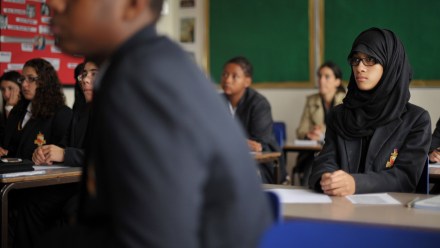
ARK Schools, one of the leading City Academy providers, has just released another amazing set of results with GCSE passes 11 percentage points higher last year than were achieved in 2010. This is staggering progress, given that these schools are serving the same neighbourhoods with the same demographics as the council-run schools which they replaced. It is also a reminder that the City Academy programme, started by Tony Blair and Andrew Adonis and expanded by Michael Gove, can claim to be the most rapidly-vindicated social experiments in recent history. The results of ARK’s schools speak best for themselves: ARK’s formula clearly works, and I’d like to see it applied to many more schools rapidly.

The recession: four years and counting

From our UK edition

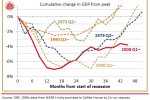
It is now four years since recession hit the UK. It took just over three years for GDP to return to pre-recession levels in the much milder downturns of the ‘70s and the ‘90s. Even after the Great Depression of the 30s, the economy had fully recovered by this point. By contrast, economic output in 2011 Q4 was still 3.8 per cent down on 2008 Q1. And it’s going to take a while longer to get back. The OBR’s projections suggest the economy won’t have fully recovered until the end of 2013. Other forecasts are gloomier still. But even if we do manage it by then, it’ll have taken us two years longer than it did to recover from the Great Depression.

Miliband delivers for once, but Cameron’s left unharmed

From our UK edition

Incredible events in the chamber today. An absolute sensation at PMQS. For the first time since last summer, Ed Miliband got through the session without triggering talk of a leadership crisis. There was gloomy news aplenty to dwell on. Debts soaring; growth flat-lining; dole queues snaking back through blighted high streets and bankrupt business parks. The Labour leader chose to wallop Cameron with a well-prepared attack on the NHS. Quoting the prime minister’s vow, ‘to take our nurses and doctors with us’, he asked why the government had stopped listening. The prime minister’s reply was frivolous and desperate. He giggled and smirked like a teenager at the despatch box and tried to make light of his loathed policy.

Europe gives Osborne the context he needs

From our UK edition

The political implications of today’s growth numbers are complex. On one level, a contraction in the economy should provide Miliband and Balls with an opportunity to make their economic case against the government. Indeed, Balls is already out with a statement calling the GDP figures a ‘damning indictment of David Cameron and George Osborne’s failed economic plan’. I suspect that Miliband is also looking forward to PMQs rather more than normal.   But on the other hand, as long as Cameron and Osborne enjoy a big lead on the economy — 18 points in the last ICM survey — bad economic news will reinforce voters’ tendency to stick close to nurse for fear of something worse.

Bad news doesn’t have to be surprising

From our UK edition

I'm still of the mind that Westminster fusses too much about these quarterly growth figures, particularly when parts of the country have been in economic decline for decades. But there's no doubting that they have the capacity to shift the political mood, both here and around the country. There is something disheartening about the idea that the economy returned to shrinkage in the final quarter of last year (even if today's preliminary figure of -0.2 per cent might be revised upwards, or downwards, in due course). You can expect Ed Miliband to make much of it in this afternoon's PMQs. The politics of the situation are not stacked entirely against George Osborne, though. His major consolation today is that everyone expected this sort of minor contraction.

In defence of the Welfare Bill

From our UK edition

The government’s welfare reforms seem to be staggering on, despite the concern from the Lords that they’ll harm those who need help most: children and the disabled. But before the Bill goes back to the Commons, and everyone becomes more agitated, let me put the case for the Bill from the perspective of someone it might affect.  I have a vested interest in the impending changes to disability benefits, because both my brothers are autistic – one severely so. My family depends on the Disability Living Allowance; caring for my brothers is a full time occupation for both my parents, and without support they simply wouldn’t be able to cope.

Salmond’s dangerous strategy

From our UK edition

Cartoonists like to portray Alex Salmond as a modern-day Braveheart preparing to charge the English enemy. But, in truth, Salmond’s strategy is far more subtle — and dangerous — than that.   The SNP leader’s piece in The Guardian today — a preview of the Hugo Young lecture he’s delivering tonight — downplays what a dramatic step independence would be. At times the article reads like an argument for ‘devo max’, not independence. He bemoans that devolution ‘left Scotland with fewer powers than the German Länder, most American states, parts of Spain or, within these islands, the Isle of Man’.   Salmond also wants to suggest that not that much would change after independence.