Uk politics

The Hunt becomes the hunted

From our UK edition

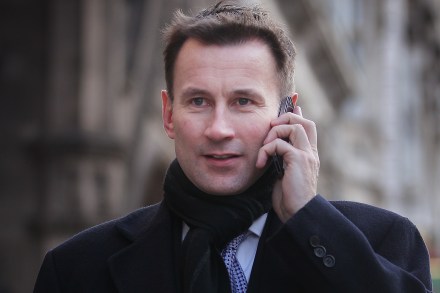
The Eurocrisis may be nagging at our political class, but it's got nothing on the Leveson inquiry. Today has been James Murdoch’s turn in the hotseat, and it has produced some of the most explosive testimony so far. There was the claim that, contrary to previous Tory insinuations, Murdoch Jr did chat about the BSkyB bid with David Cameron at that notorious Christmas Dinner in 2010. But topping that is the revelation that News Corp had all sorts of contact with Jeremy Hunt about the bid, mainly via their head of public affairs Fred Michel, as it was simmering along in 2010 and 2011. It doesn’t look good for Hunt.
The Eurocrisis persists

From our UK edition

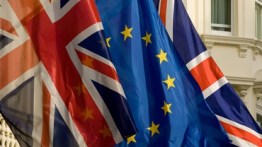
Holland and Hollande; they're the non-identical twins that are causing palpitations across Europe today. Holland, because the country's Prime Minister yesterday resigned after failing to agree a package of cuts for his country’s budget. Hollande, because he's the socialist candidate set to win the presidential election in France, probably eroding that country’s commitment to fiscal consolidation in the process. The markets quivered in fear at this morning’s headlines — and what they mean for the eurozone — even if they have, in some parts, slightly recovered since. It’s all another reminder that the Eurocrisis just isn't going away — neither for countries such as France and the Netherlands, nor for George Osborne.

The state of the public finances

From our UK edition

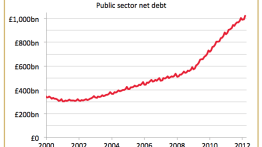
£126 billion. As we discover today, that’s how much the government borrowed in 2011-12 — the fiscal year that's just ended — pushing the national debt up to £1.02 trillion. The figures show the deficit falling by 10 per cent in real terms on 2010-11, but it has come in slightly over the £122 billion the OBR predicted in March last year, and well above the £116 billion it forecast when Osborne delivered his first Budget. So the fiscal consolidation is proceeding, albeit a bit slower than planned. So far, it’s mainly being achieved through raising revenues — particularly VAT receipts, which are up 10 per cent on last year. Central government current spending, meanwhile, has fallen by just 0.2 per cent.

What good would an annual National Strategy do?

From our UK edition

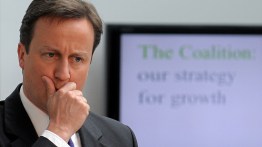
Another set of bad notices for Cameron & Co. this morning, chief among them the Public Administration Select Committee’s report into government strategy. It basically says that there is none: short-term fripperies are indulged at the expense of long-term objectives. Or as the report puts it in one of its most trenchant passages, ‘We have little confidence that policies are informed by a clear, coherent strategic approach, informed by an assessment of the public's aspirations and their perceptions of the national interest.’ This is a diagnosis that many will agree with, partially if not in full. Most governments could do with more long-term thinking, let alone one that is split between two parties.

QE is a government hijack, says King

From our UK edition

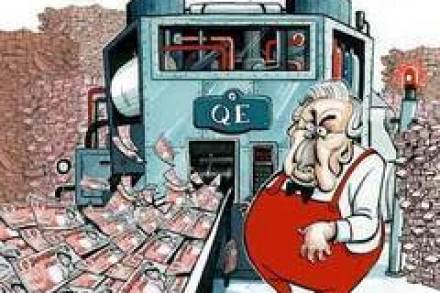
While Mervyn continues to inflate our universe via Quantitative Easing, another Mr King — Stephen, the chief economist of HSBC — has issued a report saying QE is a way for governments to ‘hijack the credit system’. ‘The financial system is being rigged via acts of financial repression as governments look for new ways of funding excessive debts,’ says King in his bluntly worded report. While he doesn’t cite the UK or Sir Merv by name, it’s clear that reference is being made to QEs I and II, the government’s preferred means of stimulating lending through lowering borrowing costs.

Nadine Dorries: Cameron and Osborne ‘are two arrogant posh boys’

From our UK edition

Nadine Dorries has form when it comes to attacking her party's leadership, but this sets a new high water mark (from about 1:48 in): "playlist=http://playlists.bbc.co.uk/news/uk-politics-17813706A/playlist.sxml&config=http://www.bbc.co.uk/player/emp/2_0_39/config/default.xml&embedReferer=http://www.bbc.co.uk/news/politics/&domId=emp-17813706-76418&config_settings_showPopoutButton=false&mediatorHref=http://open.live.bbc.co.uk/mediaselector/5/select/version/2.0/mediaset/journalism-pc/vpid/&fmtjDocURI=/news/uk-politics-17813706&config_settings_showUpdatedInFooter=true&uxHighlightColour=0xff0000&config_plugin_fmtjLiveStats_pageType=eav1&config_settings_showShareButton=true&holdingImage=http://news.bbcimg.co.

Is Alexander ushering in Austerity Squared?

From our UK edition

23rd April, 2012 — mark it down in your calendars, CoffeeHousers. For, after weeks of froth and fury about tax, today’s the day when the government focused on spending cuts again. In a speech to the Institute for Fiscal Studies, Danny Alexander has announced what are, in theory, a couple of new restraints on spending. First, government departments will have to share information about their spending with the Treasury on a monthly basis, and let Osborne & Co. pore over it. And, second, they will also have to find extra capacity in their existing budgets for unforeseen expenditure, rather than just relying on the Treasury’s central reserve.

Cameron needs results that match his words

From our UK edition

Further to James’s post on the Cameron interview, here’s what jumped out at me: 1. ‘Governments have difficult months. This government came together to dig this country out of the huge economic mess that it's in…’ This is the official No.10 explanation about the last few months; that it’s the problems of the austerity agenda. As James Forsyth says in his political column in the current magazine, there are strongly-held alternative explanations. 2. ‘We’re not just a bunch of accountants dealing with the deficit…’ Cameron kicks off with this, an interesting phrase as it has been used by those criticising his Chancellor’s economic message.

Cameron tries to return to the big picture

From our UK edition

David Cameron is out doing the media rounds today. He wants to, in his words, get back to the ‘big picture’, the argument over deficit reduction. Indeed, Danny Alexander’s speech today saying that departments have to indentify additional saving seems to have been timed to tee up this argument. Cameron’s Today Programme interview, though, was dominated by Abu Qatada, tax avoidance, Lords reforms and whether or not — in John Humphrys’ words — the PM is ‘a bit lazy.’ On Qatada, Cameron was insistent that the Home Office had ‘checked repeatedly’ with the European Court of Human Rights on the deadline. I expect that the Home Office will have to release details of these contacts today.

Clegg stands firm against Lords referendum

From our UK edition

In his interview with Andrew Neil on the Sunday Politics, Nick Clegg argued against a referendum on Lords reform on the grounds that the three main parties all agree on it and so, in an absurdly patronising phrase, there’s no need ‘to subcontract to the British people’ the decision. He also added that it would cost several hundred million pounds. Now having been on the wrong side of the AV referendum result, Clegg knows how potent the waste of money charge can be — remember those anti-AV posters. But I suspect that this is going to be a difficult line for him to hold for as supporters of a referendum will simply argue that it should be held simultaneously with the next general election which would cut the costs considerably.

The case for ignoring Strasbourg

From our UK edition

If Theresa May loses her job over this kerfuffle over Abu Qatada’s appeals deadline, would anyone in the Cabinet be safe? If you were to rank the blunders this government has made, it wouldn’t even make the top 20. The Home Office is notoriously dysfunctional, and the real surprise is that May has made it thus far with only two or three major skirmishes. It’s fun for her enemies to claim she made a basic mistake, but it’s not clear-cut. In the weird world of European law, the number of days in a three month period can vary depending on things like the estimated postal time between London and Luxembourg. Far simpler if British justice was decided in Britain – precisely what the founders of the European Convention on Human Rights envisaged.

Mid-term blues or something more serious?

From our UK edition

The argument in the Cameron circle about what the government needs to do to get back on course has been the story of this week. As I say in the political column, there’s a divide between those who think that this month’s events have been little more than a bit of mid-term blues, and those who worry that they have revealed serious, structural problems that needs addressing if they are not to cripple the government. At a meeting of Conservative Cabinet ministers on Wednesday lunchtime, this divide came clearly into sight.

Siobhan Benita: Boris’ secret weapon

From our UK edition

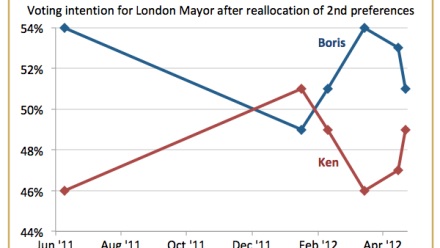
With anti-politics on the rise, there's one candidate in the May elections who is out to capitalise on the mood. Siobhan Benita, the independent running for London Mayor, has been making increasingly remarkable waves in the run up to 3rd May. She is a technocrat, priding herself on the absence of political views, but adds colour to the race — according to our wine correspondent, Simon Hoggart — whose other employer, the Guardian, has a soft spot for her: 'Finally she arrived and, while I won't say that the media swooned, she certainly had an impact. Tall, glossy-haired, elegant in a pencil dress with scarlet jacket, and a diamond wedding ring that would make an American rapper envious, she'd stand out in any room.

How would the House of Lords be elected?

From our UK edition

In the debate over House of Lords reform, the Lib Dems are trying to say that they favour an elected House of Lords and anyone who opposes them is a reactionary in favour of the status quo. They believe that this is their best chance of winning the argument. But, in reality, things are more complicated than that. Some of the Tories most sceptical of the Clegg proposals are actually believers in an elected second chamber. They just don’t want it to be done through STV, a system that the Lib Dems favour because it would hand them the balance of power there. The issue of the voting system under which the Lords will be elected will take centre stage next week with the publication of the Joint Committee’s report on the matter.

Ash Green’s academy success story

From our UK edition

I was a panellist on Radio Four's Any Questions last night, in Bedworth outside Coventry. At the reception afterwards, I got talking to the pupils, teachers and even the local vicar of the school where the show was recorded. With so much gloom (and shambles) in Westminster, it was a heartening reminder of what is going right in Britain, aided by David Cameron’s government. I thought I’d share it with CoffeeHousers. Not so long ago, Ash Green School was seeing a pathetic 3 per cent of its pupils achieve what is now called 'Five Good GCSEs' (5 GCSEs at A-Cs, including English & Maths). Now it’s 65 per cent.

Lewis Hamilton vs Ed Miliband

From our UK edition

Every so often, British sportsmen are prevailed upon not to go to certain countries, in protest at some usually-hideous policy. Now it’s the turn of our racing drivers. Yvette Cooper said on Question Time last night that, at the very least, Jenson Button and Lewis Hamilton should pull out of the Formula One race this weekend. Ed Miliband wants the race to be cancelled. What baffles me is that the racing drivers should be seen as so controversial, whereas (so far as I can tell) neither Cooper nor Miliband has had anything to say about the British government approving the sale of arms to Bahrain long after its uprising started in Feb 2011.

Gove’s historical conundrum

From our UK edition

Is it possible to set schools free while demanding a beefed up teaching of our nation's history? Both are topics close to the heart of the Education Secretary but eventually, he’s going to have to choose one over the other. Top-down orders on the History curriculum will undermine attempts to give schools and teachers more control over what they do. Tristram Hunt threw this curveball in this weeks magazine, where he states it is a example of the classic Tory struggle between liberalism and conservatism: 'The self-inflicted challenge comes with delivering this national narrative of Britishness. Because at the crux of Gove’s schools revolution is the dismantling of national provision.

Britain will contribute again to the IMF

From our UK edition

Britain will contribute $15 billion (£10 billion) more to the International Monetary Fund. This means that there will be no need for another parliamentary vote on UK funding of the IMF as it is within the limits set by parliament in its last vote on the matter. This news has emerged in a joint statement by Australia, South Korea, Singapore and the UK; the UK’s $15 billion contribution is in proportion to this country’s voting share in the organisation. In terms of the politics of this decision, it is interesting that the Australian Liberals, the Tories’ sister party Down Under, are going to back the increase in the Australian contribution despite being in opposition.

Cameron remains adamant on Lords reform

From our UK edition

Despite last night’s threats, David Cameron remains personally committed to the cause of reforming the House of Lords. The coalition is also resisting calls for a referendum on the reforms, saying that it is ‘not persuaded of a case of having one’. Their view comes despite reports that the joint committee and banks of Tory and Labour MPs want a referendum. The pressure on David Cameron, of course, pulls both ways. On the one hand, his backbenchers are vowing to prepare ‘off the scale’ rebellions that are ‘worse than Maastricht’. On the other hand, are the Lib Dems. In a show of strength that bordered on hubris, Lord Oakeshott said earlier today that his party expects all coalition MPs to vote for the bill.