PMQs live blog | 25 April 2012
From our UK edition
PMQs 25 April.
From our UK edition
PMQs 25 April.
From our UK edition
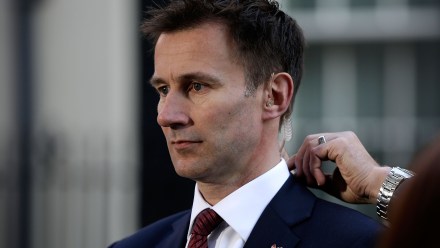
There’s been a resignation this morning, but it is not Jeremy Hunt’s. Instead, it’s his special adviser Adam Smith. Smith’s departure before Hunt’s Commons statement at 12:30 is designed to put a firebreak around the Secretary of State. In his resignation statement, Smith declares that ‘the content and extent of my contact was done without authorisation from the Secretary of State’. This provides Hunt with his response to any questions about the nature of the text messages between Smith and Frederic Michel. But special adviser appointments are very personal. Secretaries of State talk constantly to their special advisers and it is remarkable that Smith and Hunt never discussed what he was telling Michel.
From our UK edition
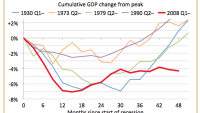
As of today, we now have four years’ worth of GDP figures since the UK first went into recession — and they don’t look pretty. By this point in the 1930s, we’d already fully recovered from the Great Depression.

From our UK edition
This morning brought the economic news that the coalition has been dreading: the country has double dipped. Now, this is based on preliminary figures which may well be revised up. But, as Pete says, the political impact of this story will be huge. The government’s handling of the economy has now been caught up in this whole argument about competence. It provides quite a back-drop to Rupert Murdoch’s testimony today. PMQs today has now taken on a special significance. Ed Miliband has two massive targets to aim at, the Jeremy Hunt revelations from yesterday and these GDP figures. For Cameron it will be his most testing appearance at the despatch box yet. One other thing to watch is what effect these developments have on the polls in London.
From our UK edition
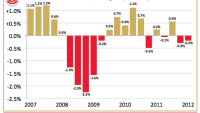
Or at least technically-speaking it did. The figures released this morning suggest that the economy shrank by 0.2 per cent in the first quarter of this year, which is the second quarter of shrinkage in a row after last winter's 0.3 per cent fall. The numbers are tiny, but the politics is huge. It's a double dip — and you can expect Ed Miliband to mention that fact again and again in PMQs later, with dread accompaniment from Ed Balls and his hand gestures. There are some caveats, of course. This is only a preliminary estimate, so the Office for National Statistics could revise it upwards at some point. It's also the slightest of slight downturns.
From our UK edition
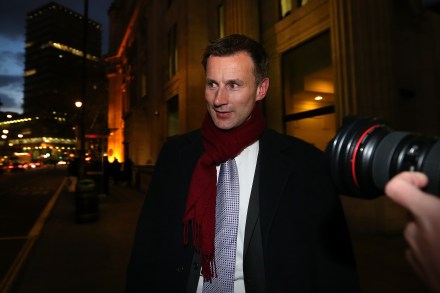
Since I wrote my earlier blog, I have been contacted by Tories who are supportive of Jeremy Hunt. One minister argued to me with eloquence and passion that Hunt was not someone who would do anything improper and that would become clear when he faced Leveson. Another Tory told me that ‘Hunt is an absolute star,’ and that it is crucial that he survives as he is one of Cameron’s more effective ministers. Most backbench Tory MPs I have spoken to this evening are supportive of Hunt. But, intriguingly, among Liberal Democrats there is not the same sentiment.
From our UK edition
Here's the full statement: ‘Now is not a time for kneejerk reactions. We’ve heard one side of the story today but some of the evidence reported meetings and conversations that simply didn’t happen. Rather than jump on political bandwagon, we need to hear what Lord Justice Leveson thinks after he’s heard all the evidence. Let me be clear my number one priority was to give the public confidence in the integrity of process. I asked for advice from independent regulators — which I didn’t have to do — and I followed that advice to the letter.
From our UK edition
For the first time since August last year, Ed Miliband’s net approval rating with Ipsos MORI is higher than David Cameron’s. That marks quite a turnaround in the last few weeks: in January, Miliband’s rating was 25 points lower than the PM’s. Cameron’s ratings are now at their worst point ever.

From our UK edition
If anyone doubted just how dramatic the Murdochs' evidence to Leveson was going to be, then the five hours of testimony today have settled that argument. In the process, they have also turned Jeremy Hunt into the political equivalent of damaged goods. It is now hard to see how he can be Secretary of State when the Olympics open let alone Tory leader one day. The emails that have just been released show just how deep a hole Hunt is in. He and his special adviser seem to have been rather reckless in their interactions with Murdoch and his representatives, they have certainly opened themselves up to criticism. It should be noted, though, that the accuracy of Michel’s emails may well be challenged by Hunt when he appears before Leveson.
From our UK edition
The Eurocrisis may be nagging at our political class, but it's got nothing on the Leveson inquiry. Today has been James Murdoch’s turn in the hotseat, and it has produced some of the most explosive testimony so far. There was the claim that, contrary to previous Tory insinuations, Murdoch Jr did chat about the BSkyB bid with David Cameron at that notorious Christmas Dinner in 2010. But topping that is the revelation that News Corp had all sorts of contact with Jeremy Hunt about the bid, mainly via their head of public affairs Fred Michel, as it was simmering along in 2010 and 2011. It doesn’t look good for Hunt.
From our UK edition
Holland and Hollande; they're the non-identical twins that are causing palpitations across Europe today. Holland, because the country's Prime Minister yesterday resigned after failing to agree a package of cuts for his country’s budget. Hollande, because he's the socialist candidate set to win the presidential election in France, probably eroding that country’s commitment to fiscal consolidation in the process. The markets quivered in fear at this morning’s headlines — and what they mean for the eurozone — even if they have, in some parts, slightly recovered since. It’s all another reminder that the Eurocrisis just isn't going away — neither for countries such as France and the Netherlands, nor for George Osborne.
From our UK edition
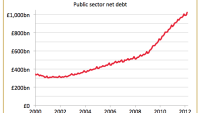
£126 billion. As we discover today, that’s how much the government borrowed in 2011-12 — the fiscal year that's just ended — pushing the national debt up to £1.02 trillion. The figures show the deficit falling by 10 per cent in real terms on 2010-11, but it has come in slightly over the £122 billion the OBR predicted in March last year, and well above the £116 billion it forecast when Osborne delivered his first Budget. So the fiscal consolidation is proceeding, albeit a bit slower than planned. So far, it’s mainly being achieved through raising revenues — particularly VAT receipts, which are up 10 per cent on last year. Central government current spending, meanwhile, has fallen by just 0.2 per cent.
From our UK edition
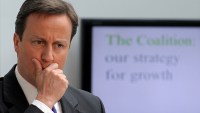
Another set of bad notices for Cameron & Co. this morning, chief among them the Public Administration Select Committee’s report into government strategy. It basically says that there is none: short-term fripperies are indulged at the expense of long-term objectives. Or as the report puts it in one of its most trenchant passages, ‘We have little confidence that policies are informed by a clear, coherent strategic approach, informed by an assessment of the public's aspirations and their perceptions of the national interest.’ This is a diagnosis that many will agree with, partially if not in full. Most governments could do with more long-term thinking, let alone one that is split between two parties.
From our UK edition
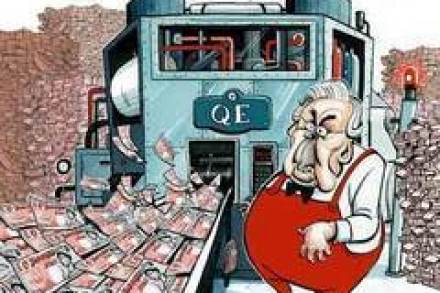
While Mervyn continues to inflate our universe via Quantitative Easing, another Mr King — Stephen, the chief economist of HSBC — has issued a report saying QE is a way for governments to ‘hijack the credit system’. ‘The financial system is being rigged via acts of financial repression as governments look for new ways of funding excessive debts,’ says King in his bluntly worded report. While he doesn’t cite the UK or Sir Merv by name, it’s clear that reference is being made to QEs I and II, the government’s preferred means of stimulating lending through lowering borrowing costs.
From our UK edition
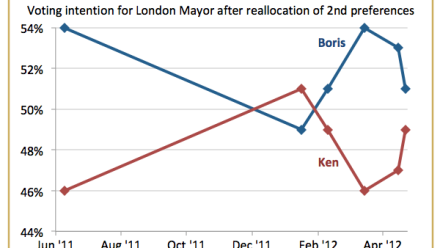
It looks as though the London Mayoral election isn’t the foregone conclusion some thought it was. A new YouGov poll for the Evening Standard has the gap between Boris and Ken down to just two points — well within the margin of error. That contrasts with the eight-point lead that Boris had opened up last month: One interesting finding is that, despite all the controversy over his tax affairs, Labour supporters are not turning their backs on Ken. In fact, they seem to be rallying around him. Of those Labour general election voters who express a preference between Ken and Boris, Ken now has the support of 89 per cent.
From our UK edition
Nadine Dorries has form when it comes to attacking her party's leadership, but this sets a new high water mark (from about 1:48 in): "playlist=http://playlists.bbc.co.uk/news/uk-politics-17813706A/playlist.sxml&config=http://www.bbc.co.uk/player/emp/2_0_39/config/default.xml&embedReferer=http://www.bbc.co.uk/news/politics/&domId=emp-17813706-76418&config_settings_showPopoutButton=false&mediatorHref=http://open.live.bbc.co.uk/mediaselector/5/select/version/2.0/mediaset/journalism-pc/vpid/&fmtjDocURI=/news/uk-politics-17813706&config_settings_showUpdatedInFooter=true&uxHighlightColour=0xff0000&config_plugin_fmtjLiveStats_pageType=eav1&config_settings_showShareButton=true&holdingImage=http://news.bbcimg.co.

From our UK edition
23rd April, 2012 — mark it down in your calendars, CoffeeHousers. For, after weeks of froth and fury about tax, today’s the day when the government focused on spending cuts again. In a speech to the Institute for Fiscal Studies, Danny Alexander has announced what are, in theory, a couple of new restraints on spending. First, government departments will have to share information about their spending with the Treasury on a monthly basis, and let Osborne & Co. pore over it. And, second, they will also have to find extra capacity in their existing budgets for unforeseen expenditure, rather than just relying on the Treasury’s central reserve.
From our UK edition
Further to James’s post on the Cameron interview, here’s what jumped out at me: 1. ‘Governments have difficult months. This government came together to dig this country out of the huge economic mess that it's in…’ This is the official No.10 explanation about the last few months; that it’s the problems of the austerity agenda. As James Forsyth says in his political column in the current magazine, there are strongly-held alternative explanations. 2. ‘We’re not just a bunch of accountants dealing with the deficit…’ Cameron kicks off with this, an interesting phrase as it has been used by those criticising his Chancellor’s economic message.
From our UK edition
David Cameron is out doing the media rounds today. He wants to, in his words, get back to the ‘big picture’, the argument over deficit reduction. Indeed, Danny Alexander’s speech today saying that departments have to indentify additional saving seems to have been timed to tee up this argument. Cameron’s Today Programme interview, though, was dominated by Abu Qatada, tax avoidance, Lords reforms and whether or not — in John Humphrys’ words — the PM is ‘a bit lazy.’ On Qatada, Cameron was insistent that the Home Office had ‘checked repeatedly’ with the European Court of Human Rights on the deadline. I expect that the Home Office will have to release details of these contacts today.
From our UK edition
In his interview with Andrew Neil on the Sunday Politics, Nick Clegg argued against a referendum on Lords reform on the grounds that the three main parties all agree on it and so, in an absurdly patronising phrase, there’s no need ‘to subcontract to the British people’ the decision. He also added that it would cost several hundred million pounds. Now having been on the wrong side of the AV referendum result, Clegg knows how potent the waste of money charge can be — remember those anti-AV posters. But I suspect that this is going to be a difficult line for him to hold for as supporters of a referendum will simply argue that it should be held simultaneously with the next general election which would cut the costs considerably.
