Uk politics

Osborne brings it back to the economy

From our UK edition

It wasn’t, as expected, Nick Clegg on Marr this morning but George Osborne as the coalition attempted to move the argument back onto the economy. Osborne kept stressing that the government would focus on the things that ‘really matter’ to people; code for we’re not going to spend too long on Lords reform. Indeed, given that Nick Clegg has turned down a compromise on that, we now appear to be heading for — at most — a referendum on the subject. Osborne defended his deficit reduction programme, arguing that the lack of growth was a result of the Eurozone crisis and the oil price spike. But he did concede that a Tory government would be going far further on employment law reform than the coalition is.
It’s time to lurch towards the public

From our UK edition

Much of the post-Boris analysis in today’s press features on whether a rightwards shift is appropriate. The Daily Mail calls for a return to Tory values, while Matthew Parris in The Times says such calls are predictable and meaningless. But, to me, talk about moving to the right or the left is pretty pointless. As the Telegraph says in its leader today, what’s needed isn’t a lurch to the right, but a lurch towards the public. This comes back to the great, eternally-relevant distinction that Keith Joseph made between the ‘middle ground’ between political parties, and the ‘common ground’ between a party and the public.

The View from City Hall

From our UK edition

Yesterday evening, I was at City Hall in London to watch the Mayoral proceedings unfold. While the evening delivered the expected result of a Boris victory — incidentally, YouGov was the most accurate pollster once again, with Peter Kellner calling 52 vs 48 to Boris at 7:30pm — it was a tense affair. Missing ballot boxes and broken counting machines in Brent and Harrow delayed the final announcement until nearly midnight. Amid the confusion, I managed to speak to Dan Hodges, Blairite blogger with the Telegraph, who said early on he still believed that Boris would prevail and discussed Ed Miliband's egging in Southampton.

Boris is back — and Ken retires

From our UK edition

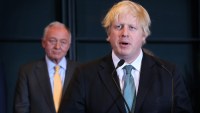
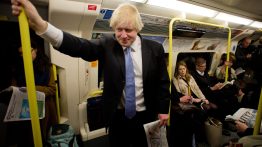
Just before midnight, Boris Johnson was confirmed as the winner of the London mayoral election. The margin was tight, 51.5 percent to 48.5 percent after the second preference votes had been counted. But in these difficult circumstances, any win by a Tory candidate in a Labour-leaning city is impressive. Boris’s victory speech was short and light-hearted. Ken’s was long and slightly self-indulgent. But given that he was using his concession speech to announce his retirement from electoral politics, we shouldn’t object too much to that, I suppose. I suspect that Labour will start planning who they intend to run in 2016 very soon. David Lammy will start this nominating contest as favourite.

What Cameron can learn from Boris

From our UK edition

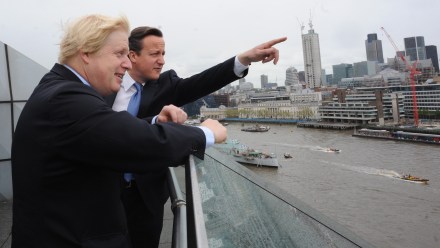
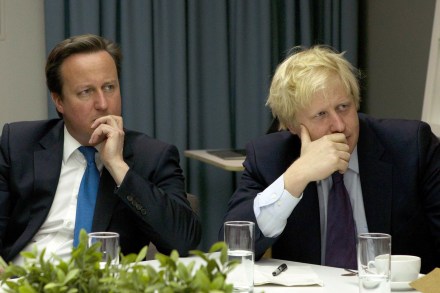
It looks like Conservatism will tonight be affirmed in the greatest city in the world — but thanks to Boris Johnson, who has been able to sell it to Londoners far better than David Cameron managed in the general election campaign. The number to watch out for tonight is the Boris factor, the gulf between those voting for him as Mayor and those voting Conservative for the Greater London Authority.  As I say in my Telegraph column today, the clown prince is getting something badly right.   Until recently, we had been told that there are two choices for Conservatism: the ‘modernising’ faction of it, or the old voter-repelling model which lost the last three elections.

Labour succeeds in slowing Salmond’s advance

From our UK edition

This was the election which was supposed to establish the SNP as Scotland’s new national party, replacing Labour as the default party of choice for Scottish voters. This was also the election which was expected show that last year’s extraordinary Scottish Parliament result was not a one-off and that the SNP could push on and defeat Labour in its town hall heartlands too. But none of this has happened. Not all the results are in from Scotland’s councils yet but the overall picture is already clear. Labour has recovered from last year’s Scottish Parliament shocker and halted the SNP momentum — at least in its core key urban areas of west and central Scotland.

Why Boris will struggle to become PM

From our UK edition

‘Just three months ago’, writes Tim Montgomerie in today’s Times (£), ‘it was almost fanciful to imagine Boris as a future leader.’ Notwithstanding today’s news, it still is. The idea that, unless David Cameron ‘finds an election game-changer, the party might very reluctantly reach for the blond-coloured nuclear button,’ is a great story. But, even if the rumours that the Mayor is planning to stand for Parliament again are true, securing the leadership of the Conservative Party is going to be very difficult indeed. Here’s why.

The Lib Dems are having a bad day too

From our UK edition

We've heard about those disgruntled Tories, but what about the Lib Dems? After all, the local elections always used to be their psychic salve: they may have struggled to make much progress in general elections, but their fierce local activism could always be counted on to yield council seats. But now that’s less reliable a tonic. After today the party is going to have fewer than 3,000 councillors for the first time since the it was formed in 1988, losing overall control of Cambridge in the process There's even talk that Brian Paddick will slump to fourth place, or possibly fifth, in the London Mayoral race. Of course, all this is unsurprising: the Lib Dems have been struggling against a tide of national hatred and indifference for almost two years now.

A dreadful turnout

From our UK edition

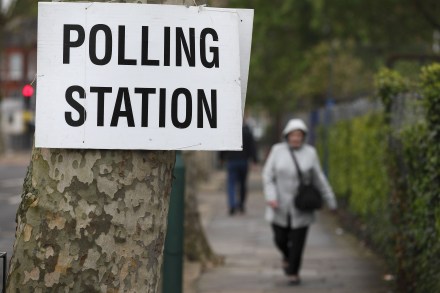
There are two major stories behind the headline results this morning: the rejection of elected mayors and the low voter turnout. Of these, I think the second is the most significant. You can apportion some of the blame to the dreary weather, if you like. But, still, a predicted turnout figure of 32 per cent? That's hardly encouraging. First, though, we shouldn't exaggerate the situation. This wouldn’t be the lowest turnout figure for any local election in history — but the lowest since 2000, when the figure was less than 30 per cent. And it’s also true that turnout has risen for the past three general elections, even if we’re still some way down on the 83.9 per cent achieved in 1950.

Where we stand this morning

From our UK edition

The results so far have been good but not spectacular for Labour. The BBC’s national vote share projection has them on 39 percent, the Tories on 31, and the Lib Dems on 16. These numbers would deliver a comfortable Labour majority on both the old and new boundaries. Strikingly, UKIP is averaging 14 percent in the wards it is standing in. This is an impressive result given that UKIP traditionally doesn’t do that well in local elections where Europe is less of an issue.

The early signs from the local elections

From our UK edition

Tonight, there seems to be a general acceptance that Boris has won London. The talk is of a four points plus victory. But it is worth, of course, remembering that no votes have been counted and there’s been no exit poll. But, sadly, it appears that there will be few other mayoralties created this evening. The opposition of the local political establishment appears to have triumphed in nearly all the cities holding referendums on whether or not to have a mayor. Their loss is Liverpool’s gain which will benefit considerably if it is the largest city outside London with a mayor.

15 (other) cities to watch

From our UK edition

Forget London. Odds are that Boris will win re-election while Labour becomes the largest party on the GLA. There are far more exciting battles going on around the country. Here’s the state of play in 15 cities outside the M25: 1. Birmingham. After strong gains in 2011, Labour are looking to depose the Conservative-Lib Dem coalition and regain the overall majority they held here until 2003. They need just five gains to do so — and, with 18 Tory seats and 13 Lib Dem ones up, that shouldn’t prove too difficult. Both of the coalition parties are simply in damage limitation mode. 2. Glasgow. Labour held a majority here for three decades, but lost it just a few weeks ago through resignations.

Leveson narrows Cameron’s fightback window

From our UK edition

During the government’s recent troubles, Cameroons have talked about the ‘window’ for action that David Cameron will have if Boris does win the mayoralty. But that window got a lot smaller with the news that Andy Coulson and Rebekah Brooks are appearing at the Leveson Inquiry on Thursday and Friday next week. Their appearances means that, next week, the media won’t be dominated by discussion of the Queen’s speech but by one of Cameron’s biggest misjudgments: his decision to get so close to News International. If there are anywhere near as many text messages between Cameron and Brooks as Peter Oborne alleges then it will be, at best, horribly embarrassing for the Prime Minister.

Boris wins the popularity contest

From our UK edition

So, after all that, it looks like today’s London Mayoral will be just a little bit of history repeating. YouGov’s final poll predicts that Boris will defeat Ken in the second round by 53 to 47 — exactly the same result we saw four years ago. The third place finisher will probably be the same too: the poll has Brian Paddick getting 7 per cent in the first round, ahead of Siobhan Benita and UKIP’s Lawrence Webb on 4 and Green Jenny Jones on 3. If Boris does overcome Labour’s partisan advantage in London, it won’t be mainly down to his achievements in office. In fact, voters are split 39-38 between Ken and Boris on who’s achieved more as Mayor (although Ken did, of course, have four more years than Boris has so far).

The contests that really matter today

From our UK edition

For the long-term future of Britain, perhaps, the most important contests today are the mayoral referendums in 11 of Britain’s biggest cities. For elected mayors offer the best chance of urban renewal. As recently as the ‘70s people described Birmingham as the city of the future. No one would say that now. But a mayor might just be able to give Britain’s sclerotic second city the leadership it needs. Indeed, it is hard to imagine how a mayor could be worse than the Tory-Lib Dem council that currently runs the city which opposed education reform for far too long. Liverpool has already decided to have a mayor and is electing one today. None of the candidates are particularly inspirational or impressive.

GOD isn’t good enough for Threadneedle Street

From our UK edition

When Gus O’Donnell was running the civil service, he was known by his initials — GOD. It seems to have gone to his head. He says in this week’s House magazine that he’s considering applying to be Governor of the Bank of England, and in the same interview exposes his failure to grasp modern economics by saying it would be dangerous to put income tax back to 40p (which was the plan even under Gordon Brown). It is striking that the technocrats like O’Donnell now want to run the show explicitly (as his endorsement of a civil service candidate for Mayor, Siobhan Benita, demonstrates).