Uk politics

Why the Tories are shaping up for an EU referendum

From our UK edition

An EU referendum pledge in the next Tory manifesto is ‘basically, a certainty’ according to one of those most closely involved in the party’s electoral strategy for 2015. The current plan is for the manifesto to declare that a Conservative government would renegotiate Britain’s membership of the European Union and then put the new terms to the people in a referendum within 18 months of the general election. I understand that the Tory line would be that they would urge staying in the EU if Britain’s concerns could be met through this process. But if the rest of the European Union refused to play ball, they would be prepared to advocate leaving.

Jokes and jibes follow the ‘gracious speech’

From our UK edition

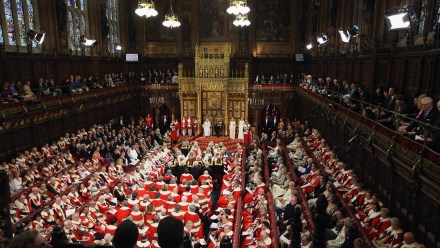
The Queen’s Speech debate is a unique mix of parliamentary variety show and proper politics. The debate was opened by Nadhim Zahawi — who combined humour with some serious points to good effect — and Malcolm Bruce, who gave a rather worthy speech. Ed Miliband then kicked off the more political part of proceedings. Miliband, who no longer has a kick-me sign attached to him when he gets up to the despatch box, is clearly still exulting in the local election results. He scored the best hit of the debate when he complimented Zahawi on his speech. Noting that the Tory MP was the co-founder of YouGov, Miliband joked ‘I’ve spent the last 18 months thinking he has a lot to answer for.

The Queen’s Speech: full text | 9 May 2012

From our UK edition

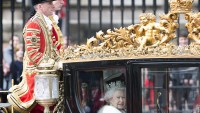
My Government’s legislative programme will focus on economic growth, justice and constitutional reform.   My Ministers’ first priority will be to reduce the deficit and restore economic stability. Legislation will be introduced to reduce burdens on business by repealing unnecessary legislation and to limit state inspection of businesses. My Government will introduce legislation to reform competition law to promote enterprise and fair markets. My Government will introduce legislation to establish a Green Investment Bank. Measures will be brought forward to further strengthen regulation of the financial services sector and implement the recommendations of the Independent Commission on Banking.

Cameron tries to reassure his backbenchers ahead of the Queen’s Speech

From our UK edition

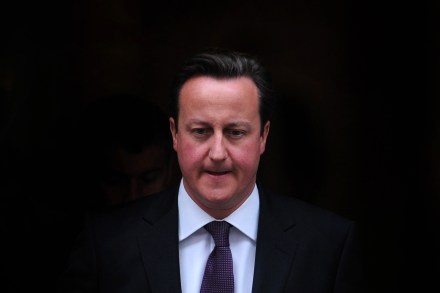
The newspapers are awash with articles previewing today’s Queen’s Speech, but few stand out as much as James Chapman’s interview with David Cameron in the Daily Mail. Here, Cameron does something that he rarely does: complain about life with the Lib Dems. There was that one time when he claimed the Tories would be ‘making further steps’ on welfare and immigration were they in a majority government, of course — but this goes further than that. He tells the paper, ‘There is a growing list of things that I want to do but can’t.’ As for the specific items on that list, Cameron mentions ECHR reform, employment regulation and the recognition of marriage in the tax system.

Today’s theatrics will soon be overshadowed by Leveson

From our UK edition

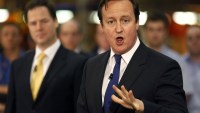
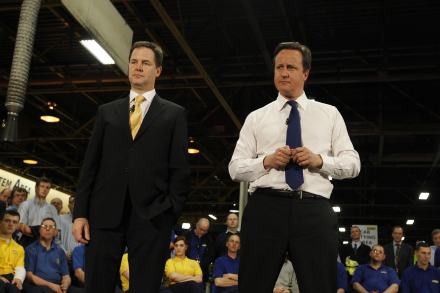
Today’s Cameron-Clegg event was meant to be very different from the one in the Downing Street garden two years ago: grittier, more real. Watching it, one was struck by the fact that the two leaders still seem comfortable in each other’s company. The dynamics between them are better than those between Blair and Brown two years in. But, thanks to the compromises of coalition, they lack a compelling growth message for the here and now — as opposed to the long term — at the moment. One of their other problems is that coalition makes everyone focus that much more on the political process.

The US has taken a stance against Argentina’s brinkmanship — it’s time we joined them

From our UK edition

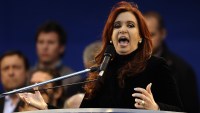
The 30th anniversary of the Falklands War – and the bellicose rhetoric (and videos) currently emerging from Buenos Aires — has once more shone a spotlight on the UK’s relationship with Argentina. Were it not for the Falklands, it’s unlikely that Argentina would occupy much discussion in this country. The truth, for those of us who have followed the country’s recent history, is that Argentina, most notably under the current Government, is truly remarkable. But for all the wrong reasons. In Britain, of course, our chief concern is the ongoing nationalist rhetoric that President Cristina Kirchner is whipping up around the sovereignty of the Falkland Islands.

Have the Milibands got Hollande fever?

From our UK edition

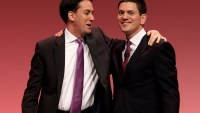
We’ve grown so used to regarding Ed and David Miliband as mutual nemeses that it’s strange to see them operating as a tag team today. The younger brother has delivered a fiery attack on the ‘unfairness and economic failure’ of the coalition, while the elder brother has an article in the Mirror arguing that the government is ‘Wrong about how to grow the economy in the modern world’. There’s also another article by the latter in the Times (£), just in case you haven’t had your fill of MiliCommentary. Much of what they say is unsurprising, but some things do stand out from their twin attacks nonetheless. The first is their insistence that the coalition isn’t just incompetent, but also ‘wrong’.

Politicians are avoiding the real problems with social care

From our UK edition

‘The smell would be even worse’, says Zoe, the social worker I’m shadowing for the week, ‘were it not for the clothes.’ Trying not to touch or breathe, I survey the mounds of sweaters and jeans and dresses interspersed across the bare floorboards. The place is a disaster — junk everywhere, filling the shelves, piling up the surfaces; the sound of broken taps from the kitchen; the living room a living ruin. I’m on a housing estate in one of the Home Counties and we’ve been called out to see about putting in place a ‘preventative measure’ for Mrs R, a 90 year-old woman at risk of falls.

Cameron faces a political storm

From our UK edition

For the Cameroons, the political weather at the moment is about as appealing as the prospect of a Bank Holiday trip to the beach. The Tory party is having a very public debate about its future strategy. The Alternative Queen’s Speech being promoted by David Davis, John Redwood and Tim Montgomerie is a reminder of how vocal the leadership’s internal critics are prepared to be. The worry for Cameron has to be that there is this much sounding off just two years into the coalition. One wonders what it will like be a year from now.

Hollande, Cameron and the 21st arrondissement

From our UK edition

While David Cameron has good cause to be glad of Sarkozy’s defeat, he has even better cause to be nervous about this trend of lefty nerds being elected. Much of the Cameroon’s re-election hopes are pinned on the idea that their boss will trounce the geeky Ed Miliband. Nowadays, the argument goes, these ex-special advisers who have no charisma and alarming leftist policies just don’t win modern elections. But, as Ben Brogan argued in the Telegraph last week, the French may well be about to prove that even dullards can get elected — if the incumbent fails to deliver the change he promised. At least Hollande says he’ll balance the books by 2015, which is more than Osborne is planning to do.

Balls wants you to trust him

From our UK edition

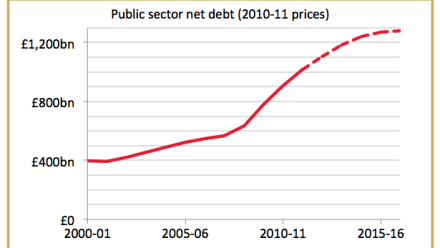
It's only ten days or so since Ed Balls was last quizzed by Andrew Neil, but there he was rehashing many of the same lines on the Sunday Politics today. Among the things that stood out was this: the shadow chancellor’s argument on the public finances is ever more cleaving into two halves. First, he accuses George Osborne of borrowing £150 billion more over this Parliament than originally planned. (Although there’s a detail that often, conveniently, gets obscured: namely, that borrowing is still going down year-on-year under Osborne's plan). Second, that Balls's plan would decrease borrowing in the medium-term even though it would increase spending and reduce tax revenues in the short-term.

Whatever they say, Lords reform will remain on politcians’ minds

From our UK edition

Have our politicos looked at last week’s turnout numbers, and thought ‘y’know, we might be a bit cut-off after all’? Reason I ask is because they’re all tripping over themselves today to downplay the significance of Lords reform, and focus the conversation on The Issues That Actually Matter. This, as James said earlier, is what George Osborne has been up to throughout the day. Ed Balls did likewise during an appearance on the Sunday Politics with Andrew Neil. And, most significantly, even Vince Cable echoed their sentiments in his interview on Sky’s Murnaghan Show.

Osborne brings it back to the economy

From our UK edition

It wasn’t, as expected, Nick Clegg on Marr this morning but George Osborne as the coalition attempted to move the argument back onto the economy. Osborne kept stressing that the government would focus on the things that ‘really matter’ to people; code for we’re not going to spend too long on Lords reform. Indeed, given that Nick Clegg has turned down a compromise on that, we now appear to be heading for — at most — a referendum on the subject. Osborne defended his deficit reduction programme, arguing that the lack of growth was a result of the Eurozone crisis and the oil price spike. But he did concede that a Tory government would be going far further on employment law reform than the coalition is.

It’s time to lurch towards the public

From our UK edition

Much of the post-Boris analysis in today’s press features on whether a rightwards shift is appropriate. The Daily Mail calls for a return to Tory values, while Matthew Parris in The Times says such calls are predictable and meaningless. But, to me, talk about moving to the right or the left is pretty pointless. As the Telegraph says in its leader today, what’s needed isn’t a lurch to the right, but a lurch towards the public. This comes back to the great, eternally-relevant distinction that Keith Joseph made between the ‘middle ground’ between political parties, and the ‘common ground’ between a party and the public.

How the parties fared

From our UK edition

As the dust settles on these elections, it is becoming clearer how the parties did. Labour exceeded expectations, the Tories had a bad but not disastrous set of results and the Liberal Democrats took another kicking. Indeed, they actually lost a higher proportion of the seats that they were defending this year than they did last year: 44 per cent compared to 41 per cent in 2011. Given these results is it is quite remarkable how solidly behind Nick Clegg the Lib Dem parliamentary party remains. Not a single MP has called for him to go or for the party to quit coalition. I’m sure this is partly because the Lib Dems are doing better in the parliamentary seats that they hold than they are nationally. But their calm under fire is still noteworthy.

The View from City Hall

From our UK edition

Yesterday evening, I was at City Hall in London to watch the Mayoral proceedings unfold. While the evening delivered the expected result of a Boris victory — incidentally, YouGov was the most accurate pollster once again, with Peter Kellner calling 52 vs 48 to Boris at 7:30pm — it was a tense affair. Missing ballot boxes and broken counting machines in Brent and Harrow delayed the final announcement until nearly midnight. Amid the confusion, I managed to speak to Dan Hodges, Blairite blogger with the Telegraph, who said early on he still believed that Boris would prevail and discussed Ed Miliband's egging in Southampton.