Uk politics

Cameron can no longer laugh off Ed

From our UK edition

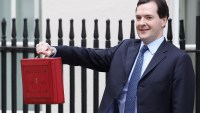
The Cameroons have long taken comfort in their belief that Ed Miliband will never be Prime Minister. They have seen him as a firebreak between them and electoral defeat. Three things have driven their conviction that the Labour leader will never make it to Number 10. First, their belief that he fails the blink test: can you see him standing outside Number 10? Second, the next election will almost certainly be fought on the economy, Labour’s weakest area. Their final reason was a sense that he would never get the full support of those on the Labour side who know how to win elections. But recent events suggest that this confidence that Miliband will lose the next election might be misplaced.

Cuts or spin?

From our UK edition

Writing here on Tuesday, I made two accusations regarding the government’s deficit reduction plan. First, I said that cuts so far had been minimal. Second, I argued that higher taxation, rather than cuts in spending, was being used to reduce the deficit. On this basis, I said, government and opposition alike are being mendacious when they speak of ‘savage cuts’ in public spending. In reply, Matthew Hancock said that I was using the wrong periods for comparison. The government, which took office in May 2010, could not be held responsible for spending in 2010-11, so it was misleading for me to use Labour’s last year in office (2009-10) as my base year.

Cameron vents his euro frustration

From our UK edition

David Cameron’s speech today is a sign of his frustration with the eurozone. Numbers 10 and 11 are increasingly irritated by how eurozone leaders are refusing to accept the logic of their project. What Downing Street is keen to avoid is another wasted year as Angela Merkel gears up for her reelection campaign. So, intriguingly, we see Britain throwing her weight behind Hollande’s support for project bonds. Cameron also uses the speech to again back eurobonds, which Merkel is firmly opposed to as she knows that this would mean Germany effectively standing behind everyone else’s debt. I can’t see a resolution to this crisis coming anytime soon, though. The economics and the politics are, yet again, set against each other.

The View from 22: Greece is burning

From our UK edition

The upcoming Greek elections will push the nation into a confrontation with the European authorities, reports Faisal Islam, the economics editor of Channel 4 News, in his cover feature for the latest issue of The Spectator. And in this week's episode of The View from 22 podcast he provides an insight into the changing attitudes he witnessed during his most recent visit to Athens last week: 'Six months back, there was certainly a high stakes game of poker. But to me, it was pretty clear 6 months ago that the Greek people would do what was necessary to stay in the Euro. When you asked people on the streets, politicians, businessmen, yes things were taken to the edge of the abyss. They were told to peer over but they would still go for the Euro.

The 301 Group purge the 1922 committee

From our UK edition

The 1922 elections were not a clean sweep for the loyalist 301 Group slate, they missed out on one of the secretary position. But they have pretty much succeeded in purging the ’22 and the Backbench Business Committee of the so-called ‘wreckers’. Indeed, the only ‘wrecker’ who has survived is Bernard Jenkin who remains on the ’22 executive. But, significantly, I understand that Stewart Jackson, who spoke up in defence of Nadine Dorries at ’22 last week and was very critical of David Cameron at the weekend, came — in the words of one who has seen the actual voting numbers — ‘within a whisker’ of being elected to the executive. These elections are odd affairs, people vote on friendship as much as ideology.

A part-time recovery

From our UK edition

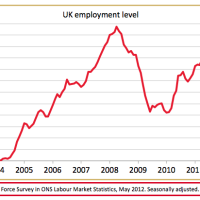
Today’s jobs figures show a 105,000 rise in employment and a 45,000 fall in unemployment, from the final quarter of 2011 to the first quarter of 2012. Welcome news, although both figures are within the margin of error, meaning we can’t say with confidence that employment is indeed higher or that unemployment is lower. But even taking the figures at face value, there’s another cause for concern: the rise in employment is coming in part-time, rather than full-time, jobs.

Cameron injects some anger into a playful PMQs

From our UK edition

Strange mood at PMQs today. Rather good-natured. Like a staff awayday with both sides joshing each other for fun. A Tory from the shires, Pauline Latham (Con, Mid-Derbyshire), stood up in her best garden-party dress and made this lament: ‘My constituents are having a very difficult time at the moment.’ Labour MPs cheered like mad. They wouldn’t have done that before the local elections. Cameron and Miliband were in a similarly playful mood. After an enforced separation of two weeks they seemed almost glad to see one other. Ed Miliband charmingly conceded that today’s drop in unemployment was welcome. And Cameron welcomed this welcome from his opponent.

Cameron gets tough with the eurozone

From our UK edition

Today’s PMQs will be remembered for one thing, Cameron saying that the eurozone had to ‘make up or it is looking at a potential break-up’. This is a distinct hardening of the government’s line on the single currency. Cameron’s comment was particularly striking coming just days after George Osborne said that ‘open speculation’ about whether or not Greece would leave the euro was ‘doing real damage across the whole European economy’. However those close to Cameron are not resiling from the remark. Instead, I understand that we can expect more from the Prime Minister on this subject when he makes a speech on the economy tomorrow. The break-up of the euro would be extremely painful in the short-term.

Let’s get real about the fiscal situation

From our UK edition

Recently on Coffee House, and elsewhere, some people have been arguing that the deficit reduction isn’t happening fast enough. The latest, a paper from Tullet Prebon, argues that it’s wrong to say there are cuts. Its author, Dr Tim Morgan, reiterated its points on the Today Programme this morning. But it isn’t true — and the analysis itself proves it.   When this Government entered office, there was no credible plan to convince the bond markets that Britain was serious about dealing with its debts. So the new Coalition accelerated the pace at which the structural deficit was to be eliminated.   Some on the right and left disagree with the pace of this plan.

Miliband’s reshuffle isn’t necessarily to the left

From our UK edition

Ed Miliband’s reshuffle turned out to be a rather small affair. The news out of it is that control over the policy review passes from Liam Byrne to Jon Cruddas, although Byrne continues to shadow Iain Duncan Smith. Given that Byrne is a Blairite who has been pushing for a tougher line on welfare, and that Cruddas rebelled to vote against the second reading of the welfare reform bill, some will see this as a shift to the left. But Cruddas is a more interesting thinker than that. The Blue Labour philosophy that he is an advocate of is, in many ways, a rather socially conservative view of the world. He’s also a Eurosceptic; he was the link man between the No to the single currency campaign and the unions.

Basel III and the EU’s strange desire not to compete

From our UK edition

Greece is the centre of European attention, but as George Osborne met with other EU finance ministers today there was another issue bubbling in the background — Basel III. This had been brewing for a while and is yet one of those matters that threatened to isolate Britain from the rest of the EU (though some would argue this is a good place to be). The Chancellor this morning appears to have agreed to the Basel III accord, which stipulates the amount and quality of capital that banks are required to keep. But this was after much haggling — and an Osborne outburst where he said signing on to the original banking capital rules would make him look ‘like an idiot’ — saw amendments being added.

How Britain is using spin to con the bond markets

From our UK edition

Austerity, austerity, austerity. The A-word is cropping up everywhere at the moment, whether in France or Greece or Germany. And the UK isn't immune from it either. If there is anything on which Britain’s political factions agree, it is the reality of fiscal austerity. Whether it's Ed Balls banging on about ‘too far and too fast’, or the coalition saying that their programme of painful austerity is essential if the UK is to defend its triple-A ‘safe haven’ status, this is something on which our political class has reached consensus.   But, as we at Tullett Prebon argued in a briefing paper yesterday (available here as a pdf), the tale of ‘big’ cuts in public spending is a bare-faced deception.

Brooks charges mean more trouble for Cameron

From our UK edition

The news that Rebekah Brooks and Charlie Brooks have been charged with perverting the course of justice means that there'll be at least one trial involving friends of the Prime Minister before the next election. In cynical political terms, that Charlie has been charged as well as Rebekah creates an additional political problem for David Cameron. Part of Cameron's explanation for how close he got to Rebekah Brooks has always been that she married an old school friend of his. Undoubtedly, the Charlie Brooks connection added a genuine layer of friendship to relations between Rebekah Brooks and Cameron. I suspect that if it was not for Charlie Brooks there would have been no riding of the retired police horse and the like.

Walking beyond parody

From our UK edition

As the Times's Sam Coates suggests, this official Department of Transport video lands right in the middle of The Thick of It territory. Remoding (1:00 in), anyone?

Greece is still the word

From our UK edition

Remember when Europe’s leaders were basically saying, ‘Don’t worry, it’s all sorted’? Remember when they were putting out communiqués that started ‘The euro continues to rest on solid fundamentals’? No doubt they’ll do so again, but those past shows of certainty still look kinda funny this morning. Despite some last-minute concessionary efforts by Europe’s beancounters, it still appears that Greece’s main parties will be unable to form a coalition, and are heading for another election. And we know what that could mean: victory for the left-wing Syriza coalition, a severe swing against austerity, Greece’s exit from the euro, etc. etc.

The battle for the ’22

From our UK edition

Elections to the 1922 Committee of Tory backbenchers have always been a test of the relative strengths of the right and left of the party. But this year, the split is between those who are backing the broadly pro-leadership 301 Group slate and those who view the ’22 as more of an alternative voice. The contest has become particularly heated after last week’s fiery meeting of the ’22 Committee. Intriguingly, Stewart Jackson, who was barracked when he tried to defend Nadine Dorries for her ‘posh boys’ attack on Cameron and Osborne, is standing for the executive. Given what he wrote on Sunday and that he resigned as a PPS over the EU referendum vote, the support for him will demonstrate how many MPs are dissatisfied with Cameron’s leadership.

The public doesn’t want the government to drop Lords reform or gay marriage

From our UK edition

It’s been a fashionable line on the Tory right of late that if the government pushes ahead with Lords reform and same-sex marriage, it will be out-of-step with public opinion. But we have new evidence — courtesy of YouGov — suggesting that isn’t the case. In their latest poll, YouGov asks whether respondents think ‘the government should or should not go ahead with’ a number of contentious policies, including ‘Reforming the House of Lords to make it mostly elected’ and ‘Allowing same-sex couples to get married’. Note that they’re not just asking whether folk support the policies, but whether they think the government should be going ahead with them now. And what do they find?