Uk politics

More pupils, fewer schools

From our UK edition

On Tuesday next week, The Spectator will hold its third annual Schools Revolution conference. On the agenda will be the striking failure of new 'free schools' to keep pace with the rising pupil demand. Michael Gove, the education secretary, will be our keynote speaker. To book tickets, click here. A couple of month's ago, Fraser warned that the recent baby boom would lead to a schools crisis, with demand for places outstripping supply. Today's new figures from the Department for Education show that the crisis has already begun. This year, there are more primary school pupils than there were 30 years ago, but 3,800 fewer primary schools.

Meryvn has his case for more QE

From our UK edition

Last Thursday Mervyn King said ‘the case for further monetary easing is growing’, and today’s surprise inflation figures give the Governor and his policymakers more leeway to introduce the next round of QE, probably as early as next month. Consumer price inflation fell to 2.8 per cent in May from 3.0 per cent in April, below analysts’ average forecast of a flat reading. It’s the weakest monthly inflation since November 2009, with the main contributors being falling food and oil prices. This is good news indeed, especially given that inflation has been – and still is – eroding savers’ earnings by about 8 per cent over five years.

How not to create jobs

From our UK edition

The Keynes vs Hayek debate is at its sharpest on the issue of employment. Can government create jobs (as Balls says)? Or does large public sector employment simply displace economic activity that would happen elsewhere (as Osborne says)? A fascinating study has been released today by the Spatial Economics Research Centre at the LSE showing the damage done by public sector employment to the real economy. Drawing on a huge amount of local-level data over an eight-year period, it’s a serious piece of research that is worth looking into and deserves to impact our economic debate. 1. First, what is seen. In the short term, hiring someone to work for the government means another worker, who in turn spends.

A more ambitious approach to fighting poverty

From our UK edition

‘You attack poverty by knowing what you do changes the lives of those people.’ In that phrase on this morning’s Today programme, Iain Duncan Smith summed up the difference between his approach to combating poverty and Gordon Brown’s. As Fraser has put it, Brown saw poverty as ‘a statistical game… his great spreadsheet puzzler’. The aim of the game? To reduce the number of people living in households below the ‘poverty line’ — set at 60 per cent of median income. The easiest way to achieve this is to move people from just below the line to just above it by giving them a bit of extra cash (in the form of tax credits). Brown called this ‘lifting people out of poverty’.

A day for celebration, but more must be done to protect free speech

From our UK edition

It’s not often that three relatively small NGOs can change politics. So today’s parliamentary debate on the Defamation Bill is cause for considerable pride, among my former colleagues at Index on Censorship and their partners at English PEN and Sense about Science. In November 2009, we began a campaign to reform England’s unfair libel laws. The claimant cabal, those law firms who encourage the rich and famous, particularly those from abroad, to use London’s indulgent courts, assumed that the campaign would fizzle out. It didn’t, picking up steam as it went along. So today’s events should be a cause for celebration. They are, but only in part. The legislative process has been a long and tortuous one.

On the road to disestablishment

From our UK edition

There's an inevitability about the Times's big splash (£) this morning: Gay Marriage Plan Could Divorce Church From State. The Church of England's historic role as 'religious registrar' for the State would have to be severed, we are told, if government plans to legalise gay marriage go ahead. That would not, apparently, mean 'total dis-establishment ... but it would be a significant step in that direction.' The CofE, for all its liberalism, says it will not support a legal attempt to redefine 'the objective distinctiveness of men and women.'   So that — if this report is to be believed — is that.

Lord Leveson’s generation game

From our UK edition

It was back to the future at the Leveson inquiry today, as Sir John Major suggested how the press might be regulated. He was calm and confident, launching the odd softly-spoken salvo at former enemies, among them Rupert Murdoch. He said: "Certainly he [Murdoch] never asked for anything directly from me but he was not averse to pressing for policy changes. In the run up to the 1997 general election in my third and last meeting with him on 2 February 1997 he made it clear that he disliked my European policies which he wished me to change....If not, his papers could not and would not support the Conservative government.' This account does not quite chime with Murdoch's evidence to the inquiry in which he said, 'I have never asked a prime minister for anything.

Miliband plays the national identity game

From our UK edition

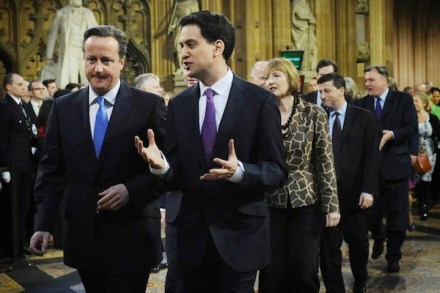
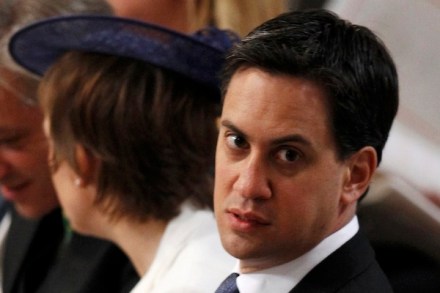
Ed Miliband's speech last week, in which he grappled with questions of Britishness, identity and Unionism, was a worthy effort. By which you will grasp that it was also, in the end, not quite good enough. The Labour leader spoke as though he had only recently appreciated — or had brought to his attention — that national identity on these islands is often a matter of choice and that — insert obligatory Whitman reference here, please — many people have multiple, layered identities that may, at times, even seem to contradict one another. Gosh, you think?   And, alas, he foundered in the Q&A when he told one inquisitor: ‘People can be Scottish and British, it's OK. And if they feel primarily Scottish that's fine too.

Labour’s October putsch against Hodges

From our UK edition

Comrades! There is a traitor in our midst. Word reaches Mr Steerpike that the phones are red hot in Labour circles as party hacks consider expelling a vocal enemy of the leadership.    Dan Hodges — Labour insider turned Telegraph writer — has been a vociferous critic of Ed Miliband. He also hated Ken Livingstone so much that he urged his readers to vote for Boris. Now delegates to this year's Labour Party Conference are being sounded out on whether they would support a motion to have the fiery scribe banished from the party.    The motion will appeal to the Labour National Constitutional Committee to expel Hodges on grounds that he campaigned against an official Labour Party candidate.

The Jubilee stewards scandal reveals the flaws of the Work Programme

From our UK edition

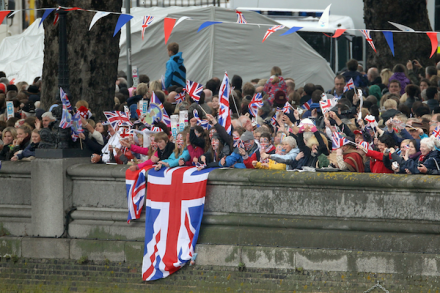
It all seemed innocent enough. I even found myself in the rain at Somerset House watching the river pageant (for the kids, you understand). The street party in my road meant I met neighbours I had never spoken to. And the high-kitsch of the Diamond Jubilee concert seemed to give the world a lesson in how not to take yourself too seriously. But then came Shiv Malik's scoop on the unpaid Jubilee pageant stewards shivering under the bridges with sodden food and no shelter from the elements. It is hard to imagine a more powerful image of our divided nation. Sometimes a news story emerges which has a symbolic power beyond the mere facts it reports. This is one of them.

 The expense of the Jubilee celebrations was always difficult to justify in these straitened times.

Egan-Jones cuts UK credit rating

From our UK edition

Even as the Queen’s Diamond Jubilee BBC Concert rocked on outside Buckingham Palace (amid the slightly worrying news that the Duke of Edinburgh is in hospital), some bad economic news came in — rating agency Egan-Jones has cut the UK’s credit rating to AA-minus with a negative outlook, from AA. ‘The over-riding concern is whether the country will be able to continue to cut its deficit in the face of weaker economic conditions and a possible deterioration in the country's financial sector,’ Egan-Jones said in its statement, according to Reuters. ‘Unfortunately, we expect that the UK's debt-GDP [ratio] will continue to rise and the country will remain pressed.

The reshuffle is approaching

From our UK edition

One of the issues that David Cameron is contemplating at the moment is the timing of the reshuffle. I hear that he devoted a considerable chunk of last week to thinking about the structure he wants for the government.   The pressing matter that has been delaying the move is doubts over whether certain ministers could survive or not; no Prime Minister wants to freshen up his government only to have to make more changes a few weeks later. So, it was deemed to be impossible to do one before Jeremy Hunt appeared before the Leveson Inquiry. Now, some in Number 10 think that the Prime Minister will have to wait until the investigations into Sayeeda Warsi’s expenses are complete.

On the eve of Hunt’s Leveson appearance

From our UK edition

It has become the conventional wisdom in Westminster that Jeremy Hunt’s career will turn on his appearance before the Leveson Inquiry tomorrow. Friends of Hunt have today been arguing that the Inquiry’s focus should be on how he carried out the quasi-judicial role. They are saying that once appointed to it, Hunt behaved — unlike Vince Cable — properly. They concede that Hunt’s texts to Fred Michel were overly familiar. But they maintain that, unlike Adam Smith’s texts, they gave away nothing about the state of the bid process.

How did it all get so complicated?

From our UK edition

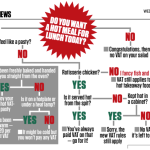
Further to Pete's blog on the new rules about pasties and VAT, the below graphic from today's City AM sums it up perfectly. It does, of course, make the case for tax simplification — which is what George Osborne was trying to do in the first place.

Social mobility — more than a political battle over universities

From our UK edition

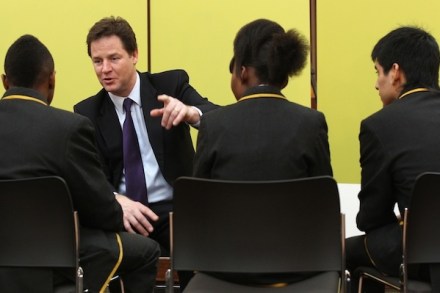
Nick Clegg wants to make social mobility his big theme in office. This is an ambitious target and one unlikely to be motivated by electoral consideration given that visible progress on this front is unlike to be achieved by 2015. The publication of the former Labour minister Alan Milburn’s report, commissioned by the coalition, into the professions and social mobility takes us to the heart of the debate: when can most be done to aid social mobility. Personally, I think the emphasis should be on education reform and family policy. Others, argue that more can — and should — be done later.

Gove stands up for free speech

From our UK edition

Michael Gove’s appearance at the Leveson Inquiry has set the heather alight in Tory and journalistic circles. There is, among those who fret about the dangers to free speech created by the current mood, relief that someone has set out the case for liberty so clearly and without apology. While among Tories there is a delight at seeing one of their ministers articulate a Conservative worldview so clearly. Gove was, in some ways, at an advantage going before the inquiry. His department has no responsibility for the press and so he knew that the focus would be on his work as a journalist and his attack on Leveson, saying that the atmosphere around the inquiry was having a chilling effect on free speech. But, even given that, his performance was an impressive one.

Clegg takes on the Establishment (and the Tories) again

From our UK edition

So Nick Clegg wants to present himself as anti-Establishment, does he? That’s hardly surprising. After all, the Deputy Prime Minister has ploughed this furrow before now, attacking the ‘vested interests’ that are the banks and the political class. And it’s generally a large part of the Lib Dems’ ‘differentiation strategy’ to come across as insurgents in suits. But Clegg’s comments today are still striking for how far they weaponise this theme and then turn it against the Tories. It’s not just the context of it: with Tory ministers — including Jeremy Hunt — appearing before Leveson this week, Clegg chooses to attack those who ‘bow and scrape in front of Rupert Murdoch’.

So let’s get this straight…

From our UK edition

After today’s VAT changes: a) If you walked into a pasty shop and bought a pasty that has been kept hot in a cabinet (or in foil, or on a hot plate, or whatever), then you WOULD pay VAT. b) If instead that pasty had come straight out of the oven, then you WOULD NOT pay VAT. c) If the pasty was cold, or had been left to cool, you WOULD NOT pay VAT. d) If the pasty was cold, and then reheated in an oven or microwave before being handed over, then you WOULD pay VAT. e) If the pasty was being kept hot in a cabinet when you ordered it, and then it was taken out to cool before being handed to you, would you pay VAT or not? It wouldn't have cooled naturally from exiting the oven, as the government seems to specify — but it has been left to cool, after all.

Secret justice concessions won’t silence its critics

From our UK edition

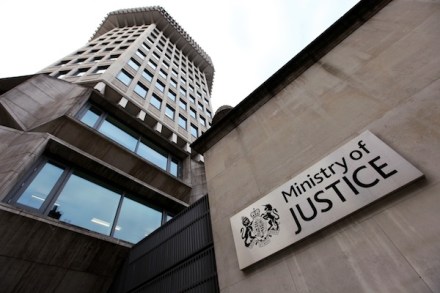
Two U-turns in 12 hours — even for this government that’s some going. Following George Osborne’s watering down of his VAT changes, Ken Clarke has rowed back some of his ‘secret justice’ proposals. Specifically, the Justice and Security Bill — published today — does not extend closed hearings to inquests, as previously planned. It will still allow Closed Material Procedures to be used in civil cases, but only on ‘national security’ grounds rather than ‘public interest’ ones, and only when a judge — not just a minister — decides that it is necessary. These concessions are being touted as Lib Dem victories, after Nick Clegg and his party vigorously opposed the original plans.