Uk politics

The coalition rows back on the Budget’s VAT changes

From our UK edition

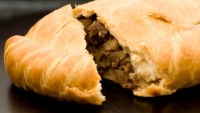
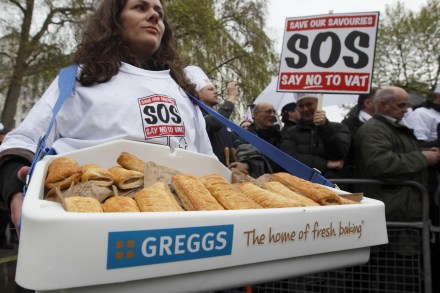
No government likes to u-turn, and particularly not on a Budget measure. So, tonight’s changes to the VAT regime proposed by the Budget for Cornish pasties and static caravans are embarrassing for the coalition. It is also worth noting that they have come after they have taken most of the political heat they were likely to take for the changes, including in the House of Commons where there were decent-sized rebellions on both issues. One of the lessons that I suspect that politicians, and particularly the coalition, will learn from this episode is: don’t try and deal with the anomalies in the VAT system. Voters, for obvious and understandable reasons, react particularly badly to taxes hitting products that were not taxed before.

Spinner unspun

From our UK edition

UPDATE: The below video has now been taken down from YouTube, but Guido has another copy here. Guido was first to this video of Downing St’s Director of Communications, Craig Oliver, remonstrating with the political correspondent Norman Smith about the tone of a BBC report — but it’s worth posting again here.

Your guide to the Warsi allegations

From our UK edition

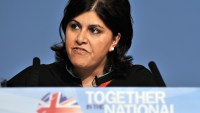
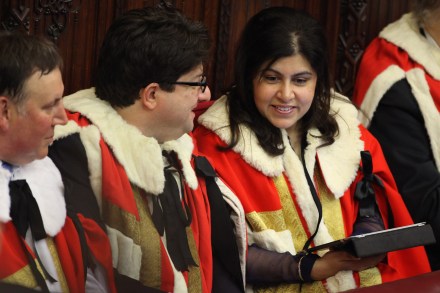
What is Baroness Warsi accused of? The main allegation in yesterday's Sunday Times is that, in early 2008, Warsi was 'claiming parliamentary expenses for overnight accommodation when she was staying rent-free in a friend’s house' in Acton. The house in question is owned by Dr Wafik Moustafa but Warsi stayed there as a guest of Naweed Khan — who was himself staying in the house rent-free. There was also a second allegation that the Baroness failed to declare on the Register of Lords' Interests income from a flat she owned and was renting out — although it did appear on the Register of Ministers' Interests. Warsi has admitted to this one, saying it was 'an oversight for which I take full responsibility'. So how much money are we talking about?

The coalition’s new idea for more debt

From our UK edition

How best to help British business? More debt, of course — varieties of this answer come time and time again from this government. This time it's Lord Young proposing £2,500 loans for young people, copying a successful model of the Prince's Trust. The latter point should give reassurance, as the Trust has quite a striking success rate. But what would really help business grow is to abolish regulation on firms with 200 employees or fewer, to cut payroll tax — the 'jobs tax' as Cameron called it before he increased it — or cut corporation tax to the 15 per cent that (as Ben Brogan revealed) Steve Hilton proposed before he quit. You can't really get a substitute for this supply side reform.

The coalition’s euro-differences start to boil over

From our UK edition

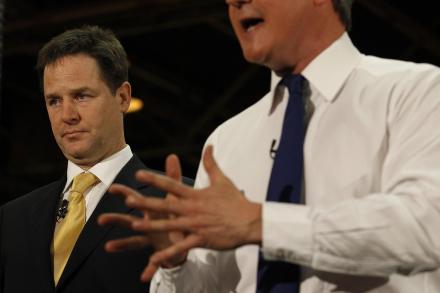
Nick Clegg did not show his Berlin speech on the Euro crisis to Number 10 or the Foreign Office before releasing it to the media. This is quite remarkable. Up to now, there has been a recognition that while the Liberal Democrats may try and differentiate themselves from the Prime Minister on various things, the government must speak with one voice on the deficit reduction strategy and foreign policy. No credible country can afford to send mixed messages to either the bond markets or foreign governments. Clegg’s freelancing on this issue is a reminder of how Europe remains the biggest ideological fault-line in the coalition. When David Cameron formed the government, he hoped that the whole Europe issue could be parked until he had a majority of his own.

The expenses spotlight falls on Baroness Warsi

From our UK edition

If David Cameron had a list of headlines he doesn’t want to see, I’m sure ‘Top Tory in expenses scandal’ would be near the top of it. Yet that’s what he, and we, will read this morning on the cover of the Sunday Times (£). The ‘Top Tory’ in question is Baroness Warsi, co-chairman of the party. And her offence, apparently, is to have claimed expenses for overnight accommodation while staying for free in a friend’s house. Warsi has more or less denied the accusation, saying that she did stay at the property on ‘occasional nights’ as the guest of a party official — but made an ‘appropriate payment equivalent to what I was paying at the time in hotel costs’.

Getting personal

From our UK edition

‘It’s getting personal this time.’ So says a UK Uncut type, in the video above, explaining why the group staged a protest outside Nick Clegg’s home in Putney today. The event passed off peacefully, apparently — but this brand of personalisation must still be worrying for those subjected to it. As Tim Montgomerie points out, ‘The Cleggs have young children and it can’t have been pleasant for them (if they were at home) or for local families.’ You wonder which politician, and which other local families, will be next.

A shift in the government’s thinking about the Eurocrisis

From our UK edition

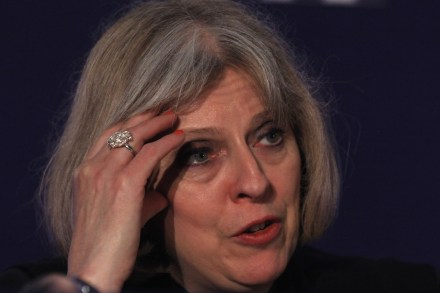
Theresa May’s suggestion that Britain could suspend the free movement of people in the event of a Eurozone break up is a reminder of just how transformative an event the falling apart of the single currency would be. The Home Secretary is a cautious politician who picks her word carefully, so when she says that the government ‘will be doing contingency planning’ about the immigration implications of a Eurozone break-up you know it is serious. One of the things that makes this such an intriguing development is that it suggests a shift in government thinking on the severity of the crisis that could be coming.

Yes campaign launch will cause problems — for the independence movement

From our UK edition

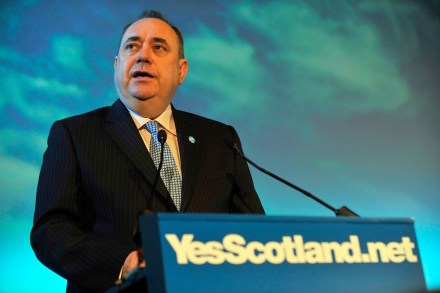
Some of those who queued outside the Cineworld multiplex in Edinburgh for this morning’s Yes for Independence launch found it hard to contain their chortles. There, hanging above the door through which Alex Salmond was due to arrive was a huge poster carrying just two words — The Dictator. And if that ad for Sacha Baron Cohen’s new movie wasn’t enough to send the First Minister into a fury with his PR team, there was more inside.

There are economic reasons to cut the state, irrespective of the deficit

From our UK edition

Treasury Select Committee Chairman Andrew Tyrie recently explained he would support cutting back the size of the state even if our public finances were in balance. I doubt whether the leadership of the Conservative party agrees. Cameron and Osborne seemed settled on the Brownite consensus until the financial crisis threw them a curved ball. This, in many ways, makes the so-called ‘austerity’ programme more difficult for them to implement. Without the argument that they genuinely believe in smaller government for economic or moral reasons, the party has had to adopt the ‘we wish we weren’t doing this but we have to’ line.

Spectator debate: It’s time to let Scotland go

From our UK edition

The campaign for an independent Scotland launches today — but the date to really keep in mind is the 27th June, when The Spectator will hold its own debate on Scotland’s future. The motion is ‘It’s time to let Scotland go’. The venue is the Royal Geographic Society in London. The chair is Andrew Neil. And we’ve collected a great bunch of speakers to argue for and against, including Gerry Hassan and Kelvin Mackenzie on the ‘For’ side, and Malcolm Rifkind, Rory Stewart and Iain Martin on the ‘Against’. For further details — and tickets — click here. We’d be delighted to see you there.

Will a Greek exit mean an EU referendum?

From our UK edition

A couple of weeks ago, James revealed that the promise of an EU referendum is almost certain to feature in the 2015 Tory manifesto. But might we actually have one before then? If the speculation by ‘senior government sources’ in today's Times is to be believed, we might indeed. According to No.10 and the Foreign Office, a Greek exit from the euro — which could follow soon after the country's new round of elections on 17 June — would necessitate a rewriting of EU treaties. And that, the Times says, ‘would trigger “aggressive” demands by Tory MPs to hold a referendum on Britain's EU membership.

May backs gay marriage

From our UK edition

So Theresa May has voiced her support for same-sex marriage, joining Lynne Featherstone, Yvette Cooper and the PM’s Parliamentary Private Secretary Desmond Swayne in recording an Out4Marriage video. Of course, we shouldn’t be too surprised. It’s May’s own department that’s put forward the proposals for same-sex marriage, with a foreword signed by both the Home Secretary and Featherstone saying: ‘We do not think that the ban on same-sex couples getting married should continue. Put simply, it’s not right that a couple who love each other and want to formalise a commitment to each other should be denied the right to marry.

Off target on immigration

From our UK edition

How goes the Tories’ plan to reduce net migration to the ‘tens of thousands’ over this Parliament? Not too well, judging by the latest ONS figures released today. As it is, net migration was 252,000 in the year up to September 2011. That, lest you need reminding, is over double the Tory target. No.10, however, has been fairly defiant in response. ‘It's still our intention to bring levels of net migration back down to tens of thousands,’ said a spokesman today, before adding that, ‘clearly that's going to take some time.’ They also cited different Home Office statistics, which record the number of visas issued up until March of this year.

Leveson continues, but it is a sideshow to the Euro drama

From our UK edition

Fred Michel’s testimony this morning at the Leveson Inquiry was embarrassing but not devastating. The texts between him and Jeremy Hunt are cringe-worthy but my read is that the Culture Secretary is not in a weaker position than he was this morning. More important for Hunt’s survival prospect is the appearance of his former spad Adam Smith this afternoon. The question is, did Hunt not know of the extent of contact between Smith and Michel? Everything going on at Leveson, though, is a sideshow compared to the economic news and the storm brewing on the continent. On that note, it does seem odd that Nick Clegg is suggesting that the seventy percent of German voters who would like Greece to leave the euro are irrational.

What Farage’s offer means for David Cameron

From our UK edition

Nigel Farage’s suggestion of joint UKIP / Tory candidates at the next general election is part serious offer, part mischief-making. Farage knows that if the polls stay the same this will be an appealing offer to Tory candidates. As one leading Eurosceptic Tory MP said to me when I put the idea to him, ‘the maths says is has got to be done.’ There are an increasingly large number of Tory MPs who fear that they can’t hold their seats unless they can win back the voters and activists who have gone over to UKIP. They will be attracted to the concept of an electoral alliance with UKIP.

Obama vs Balls

From our UK edition

What do Ed Balls and Mitt Romney have in common? They both want you to think that Barack Obama is spending government money like never before. For Mitt Romney, it’s an attack: he wants to make Obama a Big Government bogeyman who’s failing to tackle America’s deficit. ‘I will lead us out of this debt and spending inferno,’ the Republican nominee promises. For Ed Balls, it’s an example for Britain to follow: ‘I will lead us into this debt and spending inferno’, the shadow chancellor promises. Well, essentially. But the Obama camp is pushing back hard against such claims, highlighting a Wall Street Journal article yesterday titled ‘Obama spending binge never happened’.

More evidence of the need for NHS reform

From our UK edition

If you want to know why the great Labour-NHS argument about healthcare is wrong, read today’s National Audit Office report on the provision of diabetes care in England. Diabetes is one of this country’s biggest health problems and it is getting worse. There are currently over three million people with diabetes here today, and, on some estimates, by 2020 there will be nearly four. In the last 15 years the number of people with the condition in England has more than doubled. Yet according to the NAO, the treatment they receive from the NHS is little short of shocking.