Uk politics

Miliband gets under Cameron’s skin at PMQs

From our UK edition

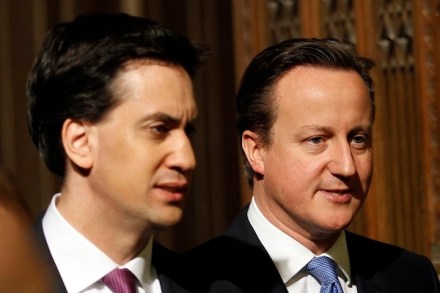
Ed Miliband enjoyed Prime Minister's Questions today. For the first time, he tried to bully Cameron. His questions were all designed to get under the Prime Minister’s skin. Once he had got the requisite rise, he joked about Cameron: ‘The redder he gets, the less he convinces.’ In a sign of what the general election could be like, Cameron’s response was based on Labour’s record in office. He declared ‘we will never forget what we were left by the party opposite’ and ‘never forgive them for what they did'. Miliband, for his part, concentrated on the recession and the Tories' decision to cut the top rate of tax. Perhaps, the most interesting thing about PMQs, though, was the reaction of Tory benches.
Cameron’s attack on Jesse Norman will backfire

From our UK edition

Jesse Norman became the hero of the hour yesterday afternoon when the government admitted defeat against the Tory rebels and dropped the programme motion on Lords reform. Norman was keen to claim the victory for his rebel operation, making an early intervention to say: 'Let me make it clear from the Conservative benches that the very substantial opposition from within the Conservative party, not just that from Labour, was responsible for the withdrawal of the motion. That should be perfectly clear and reflected in the record.' As leader of the rebel camp, and a member of the 91 who voted against the second reading of the Bill late last night, Norman was the toast of his colleagues after the programme motion failed.

The free-school ‘scandal’ ignores parents and pupils

From our UK edition

The Guardian has published a piece on school reform which perfectly expresses the attitude which has condemned children of lower-income parents to dismal education for years. The introduction of the story goes as follows:   There are around 10,600 empty school places in Suffolk. Or, to put it another way, if 10 average-sized secondary schools were closed down, there would still be a place for every child living in the county who needs one. Which made it somewhat surprising, therefore, when the Department for Education approved four free schools in the county, with a further two in the offing. 'The Suffolk free school scandal', as local campaigners are calling it…   Behold the bureaucratic mindset: why open a new school if there are places to fill in bad ones?

Making work pay

From our UK edition

‘Making work pay’ – it’s the phrase du jour of welfare reform. It's not always clear, though, how it is actually achieved. One part of the equation is looking at how earnings, taxes and benefits interact at the lower end of the income scale. As people earn more, they’re entitled to fewer benefits, and have to start paying higher taxes. This creates what’s known as a ‘withdrawal rate’ – the percentage of any extra income lost to this combination. When people talk about the ‘poverty trap’ or work not paying, this is often what they’re referring to: because if people don’t get to keep much of the money, their incentive to earn more is weak.

A U-turn on international students would be welcome

From our UK edition

If you have been confused over the last couple of days by the mixed messages emerging from Downing Street about the government’s policy on international students, you are not alone: the same applies to many figures inside Whitehall.  The Sunday Times reported a Number 10 source saying David Cameron is 'definitely considering a change in policy', 'fearing the UK could lose billions if students are caught up in the pledge to reduce net migration to below 100,000 by 2015'. The Mail followed up the story in its leader on Monday, endorsing it but suggesting it would be a mistake – and blaming it on the Lib Dems.

Cameron’s leadership is bruised by Lords rebellion

From our UK edition

'Shouldn't we just go home?' the SNP's Pete Wishart asked Sir George Young this evening after the Leader of the House revealed the government was dropping its programme motion on the House of Lords. 'You know it's all over. They know it's all over,' he added. But they didn't go home, and the Commons has just voted in favour of the second reading 462 votes to 162. Early reports suggest that there were 86 Conservative MPs who defied the whip, which would make this the biggest rebellion in this parliament. Nick Clegg paused from trying very hard not to grimace on the front bench to cheer as Mark Harper told the chamber shortly before the division that this legislation belonged to the coalition. But the speeches from MPs throughout the evening gave a very different message.

Diamond’s ‘complete lack of candour’

From our UK edition

Bob Diamond could be rather too busy in the next few weeks to enjoy the £2 million salary and pension entitlement that he will still collect from Barclays despite waiving £20 million in bonuses. The Treasury Select Committee may well recall the former Barclays chief executive to explain what chair Andrew Tyrie called a 'complete lack of candour to Parliament'. The bank's chair Marcus Agius revealed to the committee this morning that the fatal blow to Diamond's career was dealt by Sir Mervyn King, who told the Barclays board that Diamond no longer commanded the confidence of the regulators. But there remain questions about the veracity of some of Diamond's evidence, which centre around a letter from Financial Services Authority chairman Lord Turner to Agius.

J’accuse backfires

From our UK edition

Andrea Leadsom seems to have backed down a little from last night's suggestion that George Osborne 'should apologise' for saying that Ed Balls had 'questions to answer' about Libor. This morning, perhaps after a cheery morning phone call from someone at CCHQ, she took to the airwaves to clarify what she had said:  'Look, I was talking about a very specific point last night, which is the extent to which the Labour party may have leaned on the Bank of England, which Paul Tucker completely refuted. I want to be very clear here: this is an inquiry about the banks’ behaviour, and Ed Balls still has a huge amount to answer for about his time in office during the last parliament, when the tripartite regime absolutely failed us and allowed the banks to get into this mess.

Cameron will pick party over coalition on Lords reform

From our UK edition

The government’s apparent decision to pull the programme motion on the Lords Reform Bill is an admission that it would have lost the vote tonight, and heavily. The rebel numbers have more than held up today and by mid-afternoon even previously loyal MPs were contemplating jumping in to the rebel camp. The question now is what the coalition does next, does it plough on with the bill and try to guillotine it at a later date or quietly drop it. Certainly, the Tory opponents of the bill are in no mood to back down. They are making clear that even if the government comes back offering twenty days of debate they’ll still oppose it.

Lords reform is in the long grass

From our UK edition

The look on Nick Clegg’s face as he entered the chamber to hear Sir George Young announce the withdrawal of the programme motion said it all. The Deputy Prime Minister knows that Lords reform is now in the long grass and it will only come out of there if either the Tory rebels back down or Labour agree to a programme motion, both of which are unlikely scenarios. Source close to Nick Clegg say that the Prime Minister informed the Deputy Prime Minister today that he needed more time to build consensus on his own side. The public plan is now to try for a programme motion again in the autumn. But I understand that this is dependent on the Tory rebellion crumbling, or at least reducing in size — something that seems unlikely at present.

The Osborne/Balls stalemate

From our UK edition

George Osborne and Ed Balls are now locked into something of a staring match over the Libor scandal, with one waiting for the other to flinch. After Paul Tucker's evidence to the Treasury Select Committee yesterday cleared the Shadow Chancellor and his ministerial colleagues in the Labour government of leaning on the Bank of England, Balls demanded an apology from Osborne for his comments to the Spectator. Andrea Leadsom, one of the members of the committee, saw enough in Tucker's testimony to publicly call for an apology. This is significant because Leadsom is not the sort of MP who openly briefs against her bosses. She may have a slightly rebellious streak over Europe, but she's no Nadine Dorries when it comes to making pronouncements on the Government.

Yellow dove down

From our UK edition

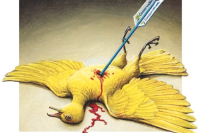
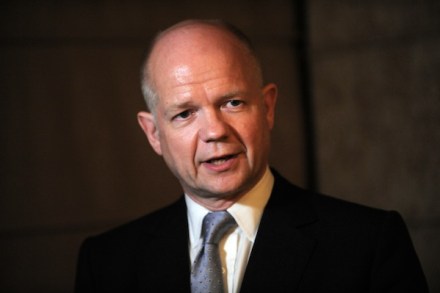
The Lib Dem dove has been shot by a well-aimed Tory arrow tonight, and you can bet that more than a few of Nick Clegg’s allies will feel deeply betrayed. The Lib Dems walked on the coals of the tuition fee rises, and for what? The Tory leadership cannot really claim to be giving its full backing to Lords reform. Yes, William Hague was sent on the radio this morning – in theory to urge obedience over the reform. But when the Foreign Secretary started laughing you had the feeling that he did not quite take his mission very seriously. Every Tory MP knows that the whips have given mixed messages, and did not tell them that there was no way back if they rebelled. You can't send the majority of your backbenchers to Siberia.

‘Unprecedented’ sanctions could still be powerless

From our UK edition

Are sanctions among the most pointless tools in contemporary diplomacy? That certainly seems to be the case in Syria where sanctions have been in place against the Assad regime ever since he launched a brutal crackdown against his own people 16 months ago. Last week, Wikileaks began releasing a massive tranche of emails from Assad’s inner circle which will make uncomfortable reading for many companies in the West. They reveal that in May 2011 a subsidiary of Finmeccanica, the Italian defence manufacturer, sold over £30 million worth of equipment to the Syrian government just when an EU trade embargo was being placed on the regime.

Is the Work Programme working?

From our UK edition

School and welfare reform are the signature missions of David Cameron’s government – but is welfare going wrong? Labour is crowing that today’s figures from the Work and Pensions department on welfare-to-work show it’s a failure. I’ve just come back from a DWP briefing with Chris Grayling, the minister responsible, and thought Coffee Housers would be interested in his take. It was Labour who first involved private companies into welfare-to-work, and the coalition has continued it – but pressed the reset button. Their scheme is called the Work Programme, the largest welfare-to-work programme on the planet with 750,000 clients. It means the government pays a £4,000 fee to a company that can place someone with a job for 18 months.

What Labour did next on banking

From our UK edition

When Ed Miliband gave his speech to Labour's autumn conference last year, he rather tied himself in knots about how to end predatory capitalism. The Labour leader was trying to make it clear that he would stand up to vested interests, but the message was lost under a row about whether he was pro- or anti-business. Today Miliband managed to put that speech into context a little more, by announcing Labour's plans to change the culture of banking in this country. Instead of predator banks, he wants 'stewardship banking', which builds 'a long-term, trusted relationship with their customer' and serves the real economy as well as the industry itself.

The day of the Lords arrives

From our UK edition

Lords reform makes its way into the Commons today, but it's hardly a relief for the whips that after weeks of threats from the rebel camp, the legislation is finally being debated. With tales circulating the House that there are 110 Tory MPs prepared to defy the whip on the programme motion, this could be the first time the Government is defeated on its legislative programme. The BBC's Norman Smith tweeted this morning that the rebels were being told to vote against second reading rather than the programme motion if they were unhappy with the legislation. But even if, as Paul Goodman argues, not every rebel on that list of 110 actually sticks to the commitment they've given to the rebel whips, Labour only need 50 Conservative MPs to join them in voting down the programme motion.

Shots in the arm for the economy

From our UK edition

There's an interesting paper out from a number of members of the Conservative Free Enterprise Group this morning. The report, called Policy Bites: Seven Shots in the Arm of Britain, makes these seven recommendations for reforming the economy: 1. Over 65s still in work should continue to pay National Insurance contributions on their earned income to fund NIC holidays for young low-paid workers. 2. Exempt businesses with up to three employees and less than £75,000 annual turnover from employment regulation. 3. Reform the Treasury to place greater emphasis on supply-side reform. 4. Give planning permission for a third and fourth runway at Heathrow. 5. Create a new Ministry of Infrastructure covering transport, communications and utilities. 6.

Tucker denies Labour leant on Bank over Libor

From our UK edition

So Labour ministers did not 'lean on' the Bank of England to encourage lowballing of Libor rates, according to Paul Tucker. The Deputy Governor of the Bank told the Treasury Select Committee this afternoon that he had held conversations with officials about how able Barclays was to fund its operations. This is the exchange between Pat McFadden and Mr Tucker. McFadden asked whether any minister had tried to 'lean on' him over Libor: 'Absolutely not.' Asked whether Shriti Vadera had leant on him: 'I don't think that I spoke to Shriti Vadera throughout this whole process.' Ed Balls? 'No' Other ministers?