Uk politics

Cameron shows his hand on Europe

David Cameron’s interview with the Telegraph today reveals that the Prime Minister would not campaign for an ‘out’ vote in a referendum on Britain’s membership of the European Union. This will confuse some Conservatives, who had hoped that the ‘fresh deal and a fresh settlement’ that the Prime Minister described in the chamber earlier this month would either lead to a successful renegotiation followed by a referendum in which the government pushed for a ‘yes’ vote, or a failed attempt at renegotiation followed by a referendum in which the government pushed for a ‘no’ vote. But Cameron told Robert Winnett that he would never campaign for an ‘out’ vote. He adds: ‘It comes back

Consulting on consultations

We’re approaching that point in the government’s life cycle when ministers begin to worry about whether they’ll be able to get things done before the next election. One Tory was complaining to me yesterday that the civil service will simply be able to run down the clock with any new ministers after the next reshuffle. This nervousness about their ability to get things done is reflected in the fact that, and don’t laugh, the government is holding a consultation on whether its consultations need to go on so long. Eric Pickles has long been pushing for this, arguing that the 12 week consultations were excessively cumbersome. They certainly mitigate against any rapid

What the Casey report teaches us about problem families

Louise Casey’s report on troubled families has come in for a few knocks today. The ‘troubled families tsar’ interviewed 16 families to draw up a picture of the challenges that those within the 120,000-strong group that the Prime Minister identified after last summer’s rioting as in need of focused work. Peter Mullen in the Telegraph says the research spells out ‘the blinking obvious’, which in many ways it does: the lives of the families on this list are messy beyond most people’s normal experience. Casey has simply conducted a very small-scale exercise in qualitative research and then published it. Like many CoffeeHousers, I’m more of a quantitative data person myself. I do love a

All eyes on the Work Programme

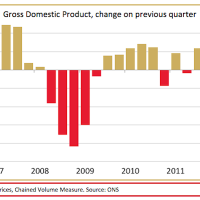
Today’s headline figures on unemployment are good news: a 65,000 fall in the number of unemployed people to 2.58 million in the three months to May and a 0.2 per cent fall in the unemployment rate to 8.1 per cent of the economically active population. The focus is now growing on the Work Programme to deliver on its promises. Liam Byrne’s response to the figures was that they were ‘fresh evidence that the beleaguered Work Programme isn’t working’. But as Fraser blogged last week, it’s rather too early to tell either way, actually. The CBI says that a 6,100 rise in the number of people claiming Jobseekers Allowance, and 441,000 people who have

Restoring the coalition’s credibility

The coalition’s infrastructure shopping spree to cheer itself up after a miserable few weeks continues today. George Osborne and Danny Alexander are offering guarantees on up to £40 billion of ‘ready or nearly ready’ projects such as transport, communications and energy. They are also announcing a £6 billion temporary lending programme and a £5 billion export guarantee facility, which will give long-term support for British exporters. Today’s announcements are clever because they don’t commit any extra money, using the government’s balance sheet purely to guarantee the projects and get them off the ground. Osborne and Alexander have written a joint comment piece for PoliticsHome, in which they point out that their efforts

Libor and what the Bank did and didn’t know

Listening to Mervyn King and his Bank of England deputy Paul Tucker over the past few days, you’d have thought they only found out about Libor manipulation with the rest of us, three weeks ago. Appearing before the Treasury Select Committee this morning, King stated that ‘the first I knew of any alleged wrongdoing was when the report came out two weeks ago’. But documents from the New York Federal Reserve, made public as part of the US Congress’s investigation, suggest that US authorities did know, and tried to warn the Bank of England that manipulation was going on. First, the transcript of a phone call on 11 April 2008 between a Barclays

G4S’ failure does not destroy the argument for outsourcing

The left are having a field day in traducing the concept of contracting-out as if, somehow, the failure of G4S to deliver its Olympic contract was some kind of slam dunk. It is curious that one does not hear the same voices raised against the use of public sector in-house teams in relation to the queues at Heathrow airport’s immigration desks. In many senses, the obvious failure of contractors in situations such as the G4S Olympic contract, and in the welfare-to-work schemes, is a sign of the success of the whole idea. When government services provided by in-house teams fail, non-delivery is brushed under the carpet. Poorly performing schools linger

Buckling under the strain

During the Home Affairs Select Committee’s evidence session with Nick Buckles it was difficult not to fall into the trap of feeling rather sorry for the G4S chief. He was softly spoken and anxious-looking. His haircut made him look rather boyish. Next to the garishly pinstriped Ian Horseman-Sewell, he appeared more muted. Buckles even seemed a little confused by the hearing. Was the committee speaking in fluent English, Keith Vaz asked him, slightly jovially, at one point. Buckles confounded him rather by saying he didn’t know. When asked by David Winnick whether this was a ‘humiliating shambles for your company’, Buckles gave a sheepish reply. ‘I cannot disagree with you,’

The Olympic censorship row

Nick Cohen’s Spectator cover story on Olympic censorship has been a smash hit, and is still being tweeted all over the world. It was followed up this morning by BBC Radio 4’s Today programme on its 8.10am slot, and CoffeeHousers who missed it can listen again here. Freddy Gray, assistant editor of The Spectator, is quoted at the beginning on the appalling heavy-handedness of it all. Even the Cubans didn’t copyright the now-famous Che Guevara image (which was drawn by an Irishman in any case). A liberal society like Britain should let people do what they want with words and images of major people and events. Including words like ‘Olympics’ and those rings. The Radio Four

Five questions for Nick Buckles

G4S chief Nick Buckles will face MPs on the Home Affairs Select Committee today. Here are some key questions they will want to ask him about the security firm’s handling of staffing for the Olympics: 1. When did you start processing applications from potential staff? G4S launched its recruitment drive at the end of January, and just days later told the press it had been swamped by 20,000 applications. Ministers say they were repeatedly assured that the firm would overshoot its targets. So why did it take so long to realise that those 20,000 applications were not going to translate into 10,000 staff? 2. When did you realise that you

Railing against government policy | 16 July 2012

The cabinet is out and about today, trying to smooth feathers ruffled by last week’s Lords reform row by splashing out on £9 billion worth of investment for railways. Today’s announcement by David Cameron and Nick Clegg is, as much as anything else, an attempt to put into practice the Prime Minister’s claim yesterday that the coalition is still capable of making real progress on big issues, despite differences on constitutional reform. Handily for Nick Clegg, today’s announcement may also encourage some friendly feelings from his own constituents, as it includes electrifying the line between Bedford to Sheffield. But the work isn’t starting tomorrow, which means this announcement could be

The Libor mud-slinging makes things murkier

As the inquiry into Libor-fixing by the Treasury Select Committee rolls on, two things become apparent – one, as the muck spreads across the financial community it actually becomes harder to tell exactly where the buck stops, and two, the toothlessness of such inquiries themselves. As more bankers and officials are hauled before the TSC, the criss-crossing blame game that’s going on looks like it may serve only to obfuscate, rather than illuminate, matters. Today, Barclays ex-chief operating officer Jerry del Missier said it was his former boss Bob Diamond who told him to submit lower Libor rates, as a counter to Diamond’s testimony last week that del Missier misinterpreted

The benefit cap is a key test of compassionate Conservatism

David Cameron and Nick Clegg’s railways announcement wasn’t the only attempt today by the coalition to bounce back from the strife of the past few weeks. Iain Duncan Smith also chose to point to another area where the Government is delivering on voters’ demands: welfare. In an op-ed in the Daily Mail, the Work and Pensions Secretary said the £26,000 benefit cap for workless families, which is one of the government’s most popular policies, is already effecting the behavioural change ministers hoped it would, with a third of claimants saying they are going to look for a job in order to avoid the cap, which comes into effect in 2013. In

The danger for Labour in the G4S shambles

The row over G4S’ failure to provide sufficient security cover for the Olympics is starting to feel a little awkward for Labour. This afternoon in the Commons, Yvette Cooper managed to rouse a sardonic chuckle from not just the benches opposite but also the hacks perched in the press gallery when she said that everyone wanted the Olympics to be a success. Why the laughs? Well, the danger for Labour is that in slamming the government’s handling of G4S, the party gets too carried away and appears to be branding the Olympics a shambles too. That would be fine if we had six months before the games, but the opening

A crowded island – but mainly in the South East

By Matt Cavanagh The 2011 Census, published today, shows that the population of England and Wales reached 56.1 million, up by 3.7 million since 2001, and slightly higher than previous estimates. The three facts which are likely to make the headlines are: that this is the largest ten-year increase since the Census began in 1801; that over half (55 per cent) of the increase was due to net migration; and that the population density of England, at just over 400 people per square kilometre, is higher than G8 countries and all major EU countries except the Netherlands. But there is more to the Census than these headlines suggest. If 55 per

MPs should move their money from big banks

by Stephen Williams MP The Libor scandal has shown the UK’s banking sector in its worst light. The public has lost trust in the big banks and are concerned that their politicians are more interested in political point scoring than the urgent task of fixing our broken banking system. That is why, last year, I joined the Move Your Money campaign, which urges the public to use their consumer power to change the behaviour of the big banks by moving their money, or at least some of it, to ethical, local or mutual financial institutions. The stats show that we are more likely to go through a couple of divorces

Downing Street: G4S is a ‘good story’

I’ve just returned from the morning lobby briefing, where the Prime Minister’s official spokesman was grilled on the unfolding G4S debacle. He rather surprised journalists by claiming ‘the story is a good one’ on the Olympics because all the venues have been delivered on time and the Government had thought to put contingency plans in place on this matter, which it can now use given G4S’ failure to recruit sufficient numbers of security staff. ‘There are going to be millions of additional visitors to London over the next few weeks and people will notice the difference, but we have plans to deal with those challenges and we have contingency plans