Uk politics

Ofqual to investigate GCSE results

From our UK edition

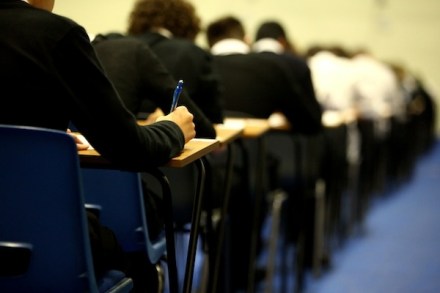
Labour and the teachers' unions have had their way: there is going to be an official inquiry into the GCSE results. The exams regulator Ofqual is only investigating the English results, though, saying there are 'questions about how grade boundaries were set in a very small number of units across the year'. In a letter to the National Association of Head Teachers, Ofqual chief regulator Glenys Stacey wrote: 'We recognise the continuing concerns among students, parents and teachers about this year's GCSE English results. We will look closely at how the results were arrived at. We will do this quickly, but thoroughly, so that we ensure confidence is maintained in our examinations system.

The SNP’s Slumbering Summer – Spectator Blogs

From our UK edition

I have it on good authority that, as matters stand, some senior figures within the SNP are concerned by the way the party has lost - or is perceived to have lost - momentum this summer. Of course, the road to the independence referendum is a long one and there's ample time for the nationalists to up their game. Nevertheless, right now, their message is not cutting through as effectively as they would hope. That's the subject for a column I've written for today's Scotsman: Even so, the SNP’s message has become oddly blurred. What is independence actually designed to achieve? For months now, the party has reassured voters that much of what they hold dear about Britain will remain unchanged post-independence.

Reshuffling the whips won’t solve Cameron’s rebel problem

From our UK edition

One of the biggest problems that David Cameron faces at the moment is discipline within his own party. He was astonished by the size of the rebellion on the second reading of the House of Lords Reform Bill, which he had expected to be much smaller. He is now considering what to do with the many talented Conservative rebels as he approaches the September reshuffle: does he promote some more of those who revolted over Europe, but leave the Lords rebels languishing in career Coventry for a little longer? The Guardian carries a story by Nick Watt which suggests Cameron isn't just going to tackle bad behaviour by keeping rebellious spirits on side, though.

The IMF’s ‘too far, too fast’ warning

From our UK edition

There is great excitement in some circles at a paper from the International Monetary Fund which has emerged in the past 24 hours. This piece of research warns that cutting government spending too quickly can weaken economies permanently and lead to even deeper recessions. It says: The analysis in this paper shows that withdrawing fiscal stimuli too quickly in economies where output is already contracting can prolong their recessions without generating the expected fiscal saving. This is particularly true if the consolidation is centred around cuts to public expenditure - likely reflecting the fact that reductions in public spending have powerful effects on the consumption of financially-constrained agents in the economy - and if the size of the consolidation is large.

Farage eyes working class Labour vote

From our UK edition

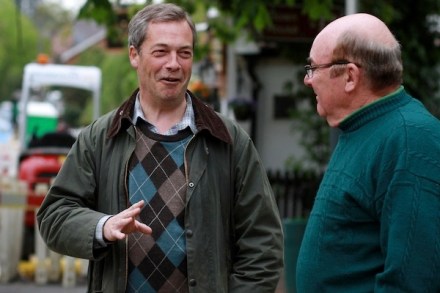
One of the solutions Tory MPs are mulling over now the boundary reforms are dead in the water is some sort of partnership with UKIP to boost the party's chances in 2015. As many as 60 per cent of Conservative activists are reported to favour such a pact. But David Cameron has yet to show any sign that he's warming towards the party he once described as consisting of ‘loonies, fruitcakes and racists'. If he is not careful, Cameron's hand may be played for him. The Eurozone crisis may finally come to a head, which could lead to a soar in UKIP’s popularity. The Prime Minister might then have to broker a deal to avoid electoral meltdown. If he refuses then, Nigel Jones thinks another Tory leader might be more willing.

Forget school sports: the Paralympic row could be far more toxic

From our UK edition

The Paralympic flame is now burning in Trafalgar Square ahead of the Games' opening ceremony on Wednesday. As it was lit, Boris Johnson encouraged London to 're-ignite the spirit of the Golden Games' for the Paralympics, which London looks ready to do, given the record sales of 2.3 million tickets (a lesson in endurance and determination to succeed in spite of many obstacles in itself, given the quality of the Locog website that sells those tickets). As with the Olympics, even though the Paralympics are not about politics, they still offer an opportunity for some to make political points. During the first Games, the arguments focused largely on school sports and were as amusing as they were vitriolic.

How mini jobs could support people back into work

From our UK edition

Remember when we used to laugh at Germany’s economy? Gordon Brown loved to contrast its sclerotic labour market with booming Britain. That was in the boom years. As Warren Buffet said, when the tide goes out you can see who is swimming naked – and today Britain looks as naked as a prince on a billiard table while Germany celebrates unemployment at near-record lows. We know where we went wrong, but it’s time for us to learn where Germany went right.  It's main insight was that the problem is a supply of willing workers, not a supply of jobs. There's no point borrowing cash to create vacancies if you can't find Germans to fill them.The so-called Hartz reforms were aimed at reforming the labour market, and improving the incentive to take jobs.

Why do the Lib Dems love leaflets so much?

From our UK edition

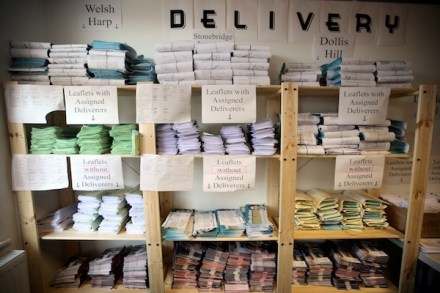
Polling analyst Mark Gettleson has a fascinating piece of research on ConHome today about the implications for the Conservatives of a collapse in the Liberal Democrat vote in 2015. In summary, it will be bad news for the Tories. Gettleson argues that in seats where the Lib Dems come third, those who had supported the party did so on the basis of national political messages. He says: 'It is with these voters that an obvious left-right split becomes important - more precisely a Labour vs Coalition one. While Liberal Democrat voters who feel favourably towards the Coalition may well stick with Mr Clegg rather than leap to the defence of their incumbent Conservative, those who find the idea of going into bed with the Tories revolting will switch directly to Labour.

What influences GCSE grades?

From our UK edition

For the first time in the history of GCSE exams, this year’s results have seen a decline in grades. Today, the Joint Council for Qualifications, which represents exam boards, announced that the number of papers marked A*-C has dropped from 69.8 per cent last year to 69.4 per cent. A grades have dropped by 0.8 per cent while A* grades are down by 0.5 per cent and C grades also down 0.4 per cent. Since GCSEs were first set in 1986, rising grades each year may have been welcomed by the pupils receiving them, but have led to concerns about grade inflation. To address this, the exams regulator Ofqual has placed extra pressure on examiners as well as curbing the modular aspects of some exams.

Working families risk being shut out by Montague row

From our UK edition

Today’s publication of the Montague Review into institutional investment in build-to-let addresses an important gap in our housing market. Large numbers of people, and a growing number of families, who would have bought homes in the past are now shut out of ownership for the medium to long term. Dominated by buy-to-let landlords, the private rented sector currently offers them variable quality and limited security at a high price. These working families represent a new form of housing need but they risk being overlooked if the Review’s recommendations get caught up in a conflict between affordable housing (or social housing as it used to be called) and the private rented sector.

You can’t judge a school by its sports fields

From our UK edition

There's a glass case in the hall of Number 10 at the moment which contains a large sports bag with two shiny Olympic medals poking out. This wasn't left behind by a Team GB athlete: it's actually an enormous, elaborate cake, complete with icing zips. Downing Street staffers are looking forward to eating this part of the Olympic legacy soon. A considerably less tasty leftover from the Games is the row over school sports provision. During the Olympics, I argued that the Prime Minister's interventions on the matter were largely unhelpful, but as Fraser and Matthew d'Ancona have pointed out, schools selling off old tennis courts to pay for new gyms, or a proliferation of Indian dancing classes will become more common under the freedoms they now enjoy.

Straining every sinew a just that little bit further for growth

From our UK edition

The Institute of Directors added a bit more moss to the rolling stone of worry about the government's growth agenda today, releasing the results of a survey of business leaders that condemned a list of the government's reforms as 'ineffective'. It's worth looking at the full list of areas where the respondents felt the government is failing to deliver, but in short simplifying the planning system was deemed the least ineffectual set of reforms, with reducing tax complexity the area where the government scored worst. Now, before Chuka Umunna gets too excited about the words 'too far and too fast', the IoD's members did support the government's deficit reduction measures. But this survey does add to the growing consensus that something must be done about growth this autumn.

Galloway and Murray’s smears ignore how simple the Assange case is

From our UK edition

The remorseless smears of the alleged victims of serious sexual assault by George Galloway MP and Craig Murray, our former ambassador to Uzbekistan will have serious consequences for the victims of sexual assault on British shores. Both men are guilty of some of the most callous behaviour of modern political times in their intemperate outbursts, which are about much more than Julian Assange. The victims of these crimes in this country already suffer from a unique combination of trauma and stigma. It is no surprise that rape and associated crimes are perennially underreported. An authoritative study commissioned by the Home Office in 2007 found that 'between 75 and 95 per cent of rape crimes are never reported to the police'.

Firestarter Francis Maude needs to keep fanning the quango bonfire

From our UK edition

The Prime Minister once promised a 'bonfire of the quangos'. Although his government has sometimes failed to fulfil expectations, his firestarter in the Cabinet Office, Francis Maude, has managed to make a dent in the 1,000+ organisations that flourished under Labour. The latest figures released by the Cabinet Office today claim that £1.4bn has saved through the government's quango reform programme. So far, 106 public bodies have closed, with a further 150 merged down into 70. Among the more quirky ex-quangos  are the Government Hospitality Advisory Committee on the Purchase of Wines, Advisory Committee on National Historic Ships and Advisory Committee on Packaging.

Why a Labour council is selling expensive housing stock

From our UK edition

The Policy Exchange report Ending Expensive Social Tenancies has predictably provoked a renewed debate about council housing and the value of genuinely mixed communities. It was welcomed by the right as providing a potential narrative for ending the automatic claim of the working and non-working poor to live in more salubrious neighbourhoods, whilst some on the left have attacked it as a fundamental attack on the very notion of council housing. On the basis of my experience as leader of Southwark Council - the largest social landlord in London - I believe the report actually presents us with an opportunity to start talking about what we want our social housing to deliver in future decades, and whether it is time to challenge the direction of so-called ‘affordable housing’.

The world belongs to small businesses. Why are we stifling them?

From our UK edition

From the moment the Queen uttered the words, 'Good evening, Mr. Bond,' Britain was caught in a two-week Olympic bubble of sporting and national pride. I’m sorry to kill the buzz, but while Mo Farah was hurtling at full speed towards the finishing line, Britain’s economy was crawling on its knees. We’ve seen a shock rise in inflation. We’ve seen warnings from the TUC that the job outlook for the young is its toughest since 1994. And, with Britain now being the only major economy apart from Italy to stay in recession, we’ve been dubbed the 'sick man of Europe'. If Britain is going to perform as well as its athletes, this government needs to stop acting as a kind of feudal landlord that takes our money, no questions asked.

MPs and voters turn on Osborne

From our UK edition

The Treasury received some bad news today, so it sent out Chloe Smith to respond instead of her boss George Osborne. The economic secretary made the same point as Fraser about Labour's alternative strategy when she responded to the latest borrowing figures this afternoon. She said: 'Their strategy would be to borrow more and to spend more and we cannot take that kind of decision in these circumstances.' But she then added: 'What these figures really show is the importance of sticking to the plan that has won Britain international credibility.' The 'international credibility' line is quite interesting as presumably Smith is referring to Britain's credit rating, which Danny Alexander said recently was 'not the be-all and end-all'.

Cameron does not have to worry about the lack of big donations, at least not yet

From our UK edition

Are the big Tory donors running away from David Cameron? The Times reports that many of the major backers have held back on coughing up funds, as a result of their dissatisfaction with Cameron's leadership: ‘Some donors have told The Times that they are pessimistic about the next election. Other donors complain about government disarray, lack of action on the economy, irritation at gay marriage plans and the party’s stance on bonuses and bankers. Boris Johnson is attracting some interest from the donor community, according to two of them.’ So far, the Tories are £1.28 million down on the same period in 2011. But it is the depleted income from Lord Ashcroft, Michael Spencer, Lord Harris and Michael Hintze that is most apparent.