Uk politics

We need to talk about democracy

From our UK edition

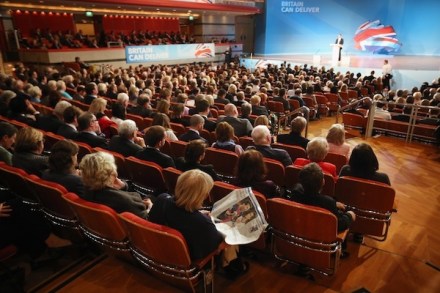
I’ve been away from party politics for a few weeks and have watched the conferences as an interested reader rather than an active participant, so it is interesting (for me at least) to consider their aftermath this morning. It seems undeniable that, from the perspective of having gone about one’s normal working life for three weeks, the conference halls seemed very distant, almost as if they existed in a different sphere of reality. This is not to say that they are unimportant or even that the politicians found in them are out of touch, necessarily; but it is to say that there is more to our national political life than these salons for the tribal.

David Cameron and the long election campaign

From our UK edition

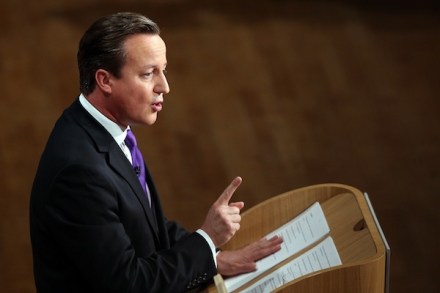
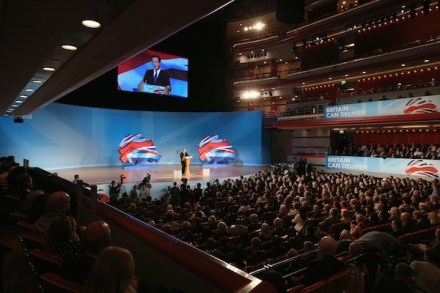
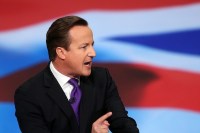
Number 10 will be pleased with the press coverage this morning of David Cameron’s conference speech. It has received a good write-up in nearly every centre-right newspaper. Cameron will today return to normal Number 10 work, addressing how to commemorate the centenary of World War One. Over the next few months, it’ll be intriguing to see how he strikes the balance between his party duties and his Prime Ministerial ones. Since the reshuffle in September, Cameron has been more political and his conference speech brought together his governing strategy and political strategy. This conference speech has, in many ways, fired the gun on a two and a half year election campaign; we now know what pitch all three party leaders want to make to the electorate in 2015.

Ten lessons from the Conservative party conference

From our UK edition

The Conservative party conference has been short and sweet, and delegates are winding their ways back to constituencies and Westminster. Here are five important lessons to take away from Birmingham: 1. The government will pursue a further cuts to the welfare budget, but there's a fight ahead on how much money can be cut, with the Liberal Democrats rejecting the George Osborne and Iain Duncan Smith's plan for £10 billion of cuts. James examines how the relationship between Osborne and Vince Cable will be key to the negotiations over further cuts in his political column in tomorrow's Spectator. 2. David Cameron is keen to keep both compassionate Conservatism and the Big Society alive as key brands for the Conservative party.

Conservative conference: Cameron writes the Liberal Democrats out of his speech

From our UK edition

The only mention that the Liberal Democrats received in David Cameron’s speech was a reference to the fact that they, unlike the Tories, had not been committed to real-terms increases in the NHS budget. Combine this with the fact that the speech saw Cameron pit the Tory view of the world against Labour’s and one could see an attempt to write the Liberal Democrats out of the script. The absence of the Liberal Democrats from the speech was, I’m informed, quite deliberate. Cameron’s implicit message was that the really big things the coalition is doing — education and welfare reform and the structural changes to the economy — are Conservative things. In 2015, the choice between Labour and the Conservatives will be stark.

Conservative conference: Clear blue water

From our UK edition

The next election is going to be a clash of ideological visions. There is now clear blue water between the Tories and Labour. Last week, Miliband set out his view of ‘one nation’. Its power came from its authenticity but it was also a distinctly left-wing vision of the world. Today, Cameron responded with one of the most Tory speeches I’ve ever heard him make. Too often, Cameron has tried to portray himself simply as a competent steward of national affairs, shying away from ideological definition. But this speech was different. It had a central argument, about the need for Britain to become more competitive. His answer was right-wing: boost enterprise, improve schools and deal with an unaffordable welfare system.

Conservative conference: How David Cameron fought back against Ed Miliband

From our UK edition

As the audience filed out of the Manchester Central conference hall after Ed Miliband's speech last week, the question repeated over and over again was 'well, what's David Cameron going to do now?' Though the Prime Minister's aides were dismissive of suggestions that he should try to beat Miliband by memorising his speech and walking around the stage while delivering it (Paul Waugh notes in his email memo this morning that one spinner said 'He’s Prime Minister, he doesn’t have days and days to practice and memorise a speech - like you do in Opposition'), the PM was clearly rattled enough to produce a speech which contained large sections of reaction.

Conservative conference: David Cameron gives a clear explanation for the first time of what the government is doing

From our UK edition

The Cameroons are leaving Birmingham with a spring in their step. David Cameron’s conference speech was the best he has delivered in years. He finally got off the mat and took on Labour’s argument about 50p and him being out of touch. His willingness to engage Ed Miliuband on his claim that he is writing cheques to millionaires was a refreshing sign of confidence in the power of Tory arguments about the relationship between the state and the individual. Crucially, Cameron — for the first time — gave a really clear explanation of what his government is doing. He linked together education reform, welfare reform and his economic measures as part of a broader effort to make Britain more competitive.

Conservative conference: David Cameron’s rally-style speech

From our UK edition

This was one of David Cameron's optimism speeches, a recession-era variant of his 'let sunshine win the day'. It was pretty short of announcements, which is understandable given the lack of any good news. Instead he focused on essential optimism of the Conservative message: that this is a party which places faith in people, not in governments. And he wanted to spell out what that means, confronting Labour's criticism of his party (and himself) head-on. His speech was full of praise for 'buccaneering' Britain, a nation whose ability to take on the world was reflected in the Olympic medals table. That there is no problem we can't solve, if we can persuade the Queen to parachute out of an aircraft to raise a laugh we can do anything.

David Cameron to Ed Miliband: Come and have a go, if you think you’re hard enough – Spectator Blogs

From our UK edition

For months now, David Cameron and his government have been pursued around the ring. Chased by Labour and harassed by events they have often been caught on the ropes. Off-balance and out of position Cameron has struggled to respond to Labour's jabs. No wonder he's behind on points. The Prime Minister's speech to the Conservative party conference this morning was a counter-attack. Cameron has had enough of running; now he means to stand in the centre of the ring and trade blows with the opposition. It will be a rare old tear-up. Those who say this was a speech delivered to his party, not his country are, I think, mistaken. This was Cameron's clearest declaration of principle in years. A pugilistic defence of his ideas and his politics.

Conservative conference: David Cameron’s speech, full text

From our UK edition

In May 2010, this party stood on the threshold of power for the first time in more than a decade. We knew then that it was not just the ordinary duties of office that we were assuming. We were entering into Government at a grave moment in the modern history of Britain. At a time when people felt uncertainty, even fear. Here was the challenge: To make an insolvent nation solvent again. To set our country back on the path to prosperity that all can share in. To bring home our troops from danger while keeping our citizens safe from terror. To mend a broken society. Two and a half years later of course I can't tell you that all is well, but I can say this: Britain is on the right track.

Dr Liam Fox on what voters want: anything but the truth?

From our UK edition

Dr Liam Fox is no dummie so I'm not sure quite what he means when, as reported by Isabel, he told Tories gathered at a Carlton Club fringe event: What I want is to see us keeping faith with the British people and I want to see us having a slogan at the next election which says ‘Back to a Common Market’, back to an economic and trading relationship with Europe that parks all the political interference in the running of our economy, our workplace, our legal system and all the other things that we don’t like.’ How, pray, is this going to work? Dr Fox surely knows that much of the "interference" to which he objects are laws, directives and other regulations designed to improve, broaden, manage or otherwise regulate the Common Market of which he is so enthused.

Conservative conference: Owen Paterson says yes to shale gas and no to wind farms subsidies

From our UK edition

‘We will only improve the environment if we improve the economy.’ Owen Paterson demonstrated the government's new environmental mantra at a Policy Exchange fringe event this evening, discussing how we can build a sustainable green economy. The new Environment Secretary said that he will only pursue technologies that will make a positive contribution to the economy: ‘We should not be frightened of major projects brought in to improve the economy, because by improving the economy, we generate the funds to improve the environment. And if we are imaginative we can also bring the two together. The two are, empathically,not mutual exclusive.

Conservative conference: David Cameron to warn that Britain must ‘do or decline’

From our UK edition

David Cameron's speech today to the Conservative party conference will be deeply personal, and deeply challenging. I understand that the Prime Minister is going to weave in stories from his own life: pushing his late son around in his wheelchair, and his late father's own story. He will say: 'It’s only when your dad’s gone that you realise – not just how much you really miss them – but how much you really owe them. My dad influenced me much more than I ever thought.' These this-is-who-I-am details will help the Prime Minister talk about his vision for the Conservative party, and his vision for the country too. It's not dissimilar to the approach Ed Miliband took in his own speech last week.

David Cameron must beware of hitting his dream ‘striver’ voters

From our UK edition

Now that the Tories have at least agreed within their own party that they can find £10 billion of further cuts to the welfare budget, they are starting to ramp up the rhetoric on why it's fair to do this, and how they can achieve it. Yesterday, Chancellor George Osborne said this: 'Where is the fairness, we ask, for the shift-worker, leaving home in the dark hours of the early morning, who looks up at the closed blinds of their next door neighbour sleeping off a life on benefits? When we say we're all in this together, we speak for that worker. We speak all those who want to work hard and get on.' Today, David Cameron described the sort of person that he thinks the Conservatives don't speak for as he fleshed out some of his thoughts on where the next round of welfare cuts might fall.

IMF: Anatomy of a downgrade

From our UK edition

Growth forecast downgrades should come as no surprise these days, but when they come from the IMF they naturally command a fair bit of attention. In fact, the IMF's downgrades for annual GDP change — to -0.4 per cent in 2012 (from +0.2) and +1.1 per cent in 2013 (from +1.4) — simply bring them into line with the consensus. The below graph shows how the average of independent forecasts for 2012 growth has changed over the last few  months: Given that the ONS shows the economy having contracted by 0.7 per cent in the first half of this year, the IMF's forecast of a 0.4 per cent contraction for the whole of 2012 implies slight growth of about 0.2 per cent in the second half. And, as always, growth downgrades have a nasty knock-on effect for George Osborne's deficit plans.

Scottish Tory Leader to Scots: Drop Dead – Spectator Blogs

From our UK edition

These days, alas, the only time the leader of the Scottish Conservative and Unionist party makes it onto the front pages of the nation's newspapers is if she's made some almighty blunder. Sadly, Ruth Davidson's speech to a fringe meeting in Birmingham this week was a calamity. That's the subject of my latest Think Scotland piece: Ruth Davidson's suggestion, made during an appearance at a fringe event in Birmingham this week, that, in effect, most Scots spend their lives suckling on the government teat is not, I'm afraid, a helpful one.

Conservative conference: Michael Gove’s facts on the ground

From our UK edition

The speed with which Michael Gove is going about his education reforms means that he is creating facts on the grounds, facts which Labour will—I suspect—have to accept by the next election. Parents with children at new free schools and academies are not going to vote for a party that is going to abolish their child’s school. For example, the mother of a child at a Birmingham free school—Geraldine Henry—spoke at Tory conference today in favour of free schools. I expect that Henry would never have expected to find herself speaking at a Tory conference but she clearly felt compelled to come and promote and defend her son’s school.