Uk politics

Class War: George Osborne caught in first class with the wrong train ticket

From our UK edition

ITV's Rachel Townsend had a more exciting train journey into Euston than she might have expected this afternoon. She discovered George Osborne sitting in first class with a standard ticket. CLASS. His aide tells ticket collector he cannot possibly move and sit with the likes of us in standard class and requests he is allowed to — Rachel Townsend (@RachTownsendITV) October 19, 2012 remain in First Class. Ticket collector refuses #standoff — Rachel Townsend (@RachTownsendITV) October 19, 2012   What a shame that this happened on a quiet and rainy Friday afternoon in Westminster when every hack and blogger was twiddling their thumbs and wondering what to do.
Politicians shouldn’t meddle with energy prices

From our UK edition

David Cameron's announcement in the House of Commons on Wednesday – that he would force energy companies to give people the lowest tariff – caused a stir. The Downing Street comms machine has been trying to clarify the new policy ever since and we're only just starting to see a clear idea taking shape. So what are we to make of it? Well, there is almost no competition in the energy market. There are only six big companies, and those are regulated within an inch of their lives. So with no proper competition, you could make the case that government has a role to make sure that customers are properly informed about prices, so that they won't be cheated.

Exclusive: No 10 advised to punish land hoarders

From our UK edition

Though the government's planning reforms will make it easier for developments supported by local communities to gain planning permission, one of the big blockages in the system is made up of developers themselves. The government is becoming increasingly aware of this, and one ministerial aide close to housing policy has come up with a solution. Jake Berry, who has worked as PPS to Grant Shapps since November 2010, has written a paper for Number 10, which Coffee House has had exclusive sight of. It argues that developers who land bank sites with planning permission should be penalised for doing so.

Austerity latest: borrowing STILL higher

From our UK edition

Today's borrowing figures show that the government has borrowed £2.6 billion more so far this fiscal year than it did in the same six months last year*, allowing Labour to continue to claim that the deficit is rising. This is, of course, embarrassing to a Chancellor who defines himself by deficit reduction — but, all things considered, it's probably better news than Team Osborne were expecting. Last month's figures showed that borrowing in April to August 2012 was £10.6 billion higher than in the same period of 2011*, so this month's release is in fact a marked improvement. It shows that September borrowing was £0.7 billion lower this year than last, and the ONS has also revised down its estimate of borrowing in April to August by £6.7 billion.

MPs slam FSA’s ‘serious misjudgement’ on RBS

From our UK edition

The Treasury Select Committee has published a stinging report this morning on the failings of the Financial Services Authority's oversight of RBS. The MPs on the committee was unimpressed, concluding that the FSA could and should have intervened in the bank's takeover of ABN Amro. Its members believe the regulator should have stopped the takeover, and they criticise the FSA for failing to investigate the failure. The report says: 'In December 2010 the FSA initially felt that a 298-word statement about RBS’s failure was explanation enough. This reflects serious flaws in the culture and governance of the regulator. It also reflects a fundamental misunderstanding of its duty to account for its actions to the public and Parliament.

The expenses scandal’s next chapter?

From our UK edition

The Daily Telegraph is the paper that broke the expenses scandal and its splash tomorrow threatens to become the latest chapter in this sorry saga. Holly Watt reports that ‘at least eight MPs are either letting properties to, or renting from, another MP’. Now, it is worth stressing that this is not against the rules. One senior MP, who is not renting out his London residence to another MP or anyone else, argued passionately to me earlier that this is a product of badly drawn up rules. They allow MPs to claim for rent but not mortgage interest payments even if the later would be cheaper for the taxpayer. But what is certain is that parliamentary expenses will now be back under scrutiny and that, almost certainly, means more damage to the reputation of politics.

Sorry, Alex, but Scots are going off the idea of independence

From our UK edition

With two years to go, Alex Salmond's campaign for a 'Yes' vote in the Scottish independence referendum is facing a big challenge to turn around public opinion. Ipsos MORI have a new poll out today, showing almost two-to-one opposition to independence, and support for Salmond's cause has been declining all year. This matches the findings of two other pollsters. YouGov found the split going from 33 'yes'/53 'no' in January to 27-60 in August. And TNS-BMRB have it going from 35-44 in January to 28-53 this month. So the SNP has its work cut out — it needs to change plenty of Scottish minds if its even going to make the 2014 vote close. They seem to be testing out messages to achieve this, having commissioned a YouGov poll last week.

Andrew Mitchell needs to worry about his own team, not Labour’s £1,000 fine threat

From our UK edition

Determined to keep the Andrew Mitchell story alive for as long as possible, Labour confirmed this morning that next week's Opposition Day debate will follow the party's call for Andrew Mitchell to receive a £1,000 fine for his outburst by the gates of Downing Street and debate police cuts. The idea is to highlight the 'double standards' line that Ed Miliband pushed yesterday at PMQs: while swearing at a police officer would lead to 'a night in the cell for the yobs, it is a night at the Carlton Club for the Chief Whip'. As James reported last night, the 1922 Committee was largely warm towards the chief whip, with only five MPs speaking out against Mitchell in the end.

Lancashire police taser a blind man: he’s lucky to be alive. Others will not be so fortunate. – Spectator Blogs

From our UK edition

How hard can it be to tell the difference between a samurai sword and a white cane? Relatedly, how difficult is to be accepted as the kind of person qualified to serve as a member of the Lancashire police? The news that a 61-year old blind man was tasered by police searching for a "suspect" seen carrying a samurai sword through the wild and mean streets of Chorley, Lancashire should surprise no-one. Colin Farmer, the victim of this assault, is fortunate to be alive. Granted, the police officer responsible for tasering him could not know Mr Farmer had twice suffered strokes but how hard can it really be to avoid tasering an old man? Plenty hard, apparently. The specifics of this particular case are appalling but they should not astonish anyone.

How David Cameron fluffed a key cost of living announcement on energy

From our UK edition

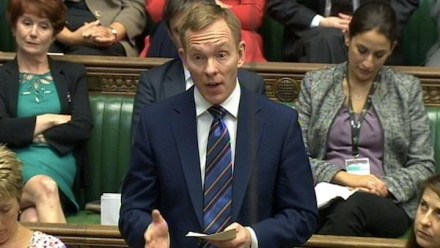
The Conservatives are worried that voters are deserting them over the rising cost of living, yet their leader has managed to fluff an announcement designed to remedy that problem. Yesterday at Prime Minister's Questions, David Cameron surprised the whole chamber and the department concerned by announcing a brand new energy policy. In response to a question from Labour's Chris Williamson about what the government was doing to help people reduce their energy bills, Cameron said: 'We have encouraged people to switch, which is one of the best ways to get energy bills down.

The 1922 swings behind its chief whip

From our UK edition

In normal circumstances, five Tory MPs questioning the chief whip's position at the 1922 Committee would send Tory high command into a panic. But tonight there is relief that only five MPs spoke out against Andrew Mitchell and that more than a dozen spoke in his support. I understand that Bernard Jenkin’s intervention was particularly effective, persuading at least one MP not to speak against Mitchell. Those present say that the mood of the room was largely in favour of the chief whip remaining in post. There’s a sense that while what he did was foolish, the issue has now been hijacked by the Police Federation and the media. Some who initially thought that he should quit now believe there’s simply no good outcome.

The Olympic effect on jobs

From our UK edition

It seems today's good jobs figures — employment at a record high and the unemployment rate back below 8 per cent — are at least partly thanks to the Olympic Games. While the UK added 212,000 net jobs in June-August, London alone added 101,000 — accounting for 47 per cent of the total rise. And — as Citi's Michael Saunders observes  — the six boroughs that hosted the Games (Hackney, Newham, Barking and Dagenham, Waltham Forest, Tower Hamlets and Greenwich) have seen their proportion of residents claiming Jobseeker's Allowance fall by an average of 0.48 percentage points, compared to 0.25 points for the other 27 London boroughs and 0.1 points for the country as a whole.

Credit where credit’s due for Unite’s payday lender challenge

From our UK edition

Coffee House isn't always the greatest friend of the trade unions, but one union made a striking announcement today which demonstrated the good that these bodies can do in society. Unite plans to set up a nationwide network of credit unions to try to divert struggling families away from legal loan sharks. Credit unions make small loans to members using deposits, and are a safe alternative to payday lenders such as Wonga, which charges a staggering 4,214 per cent APR on its loans. The Guardian quotes Unite's director of executive policy Steve Turner: 'We are in discussions to try to establish a UK-wide credit union that will give access to cheap finance and cheap credit to millions of people.

Cameron to make EU referendum pledge before Christmas

From our UK edition

Sometime in the next nine weeks David Cameron will announce that if re-elected, he would seek to renegotiate the terms of Britain’s EU membership and then put the results to the public. I understand that the current plan is to have a referendum offering a choice between the new terms and out. Cameron believes that with time, he can secure far more satisfactory terms of membership for Britain. He also reasons that this announcement — the formalisation of the new terms, fresh consent that he talked about again at PMQs — will reassure his own eurosceptics. Conservative strategists also hope that this should stem the tide in support for UKIP before the 2014 European elections.

PMQs sketch: Andrew Mitchell needed a haircut, a feed-up, and a good cuddle. But Miliband offered no comfort.

From our UK edition

It was a question of when not if. Today’s PMQs was always going to turn into a kangaroo inquiry into Andrew Mitchell. The man who said ‘pleb’ was in full view on the front bench but he looked as if he were sitting in the Number One dock at the Old Bailey. Ed Miliband started by asking the PM about joblessness which – unhappily for Labour – has fallen. He attacked Cameron for failing to tackle long-term youth unemployment and Cameron countered by pointing out that the number of kids on the dole had doubled during Labour’s last two years in power. They tussled for a few moments over the statistics, quite pointlessly. It was like watching a pie-chart trying to smother a Venn diagram. Miliband manouevred onto the real issue of the day.

‘Plan B’ is not the answer

From our UK edition

Is George Osborne’s plan working? You can see why his enemies are circling. If you take his own definition – his ‘fiscal rule’ that the debt/GDP ratio should be falling by the end of the Parliament – then no. But this is mainly because Osborne has been flexible – some would argue too flexible - following the eurozone crisis and high commodity prices, which have hampered growth prospects through weaker-than-expected net trade and higher than expected inflation (see the OBR yesterday). Last autumn, the Chancellor had a choice between more cuts or more debt. He chose more debt, and stuck to his old spending plans knowing that the growth (and tax revenues) would not be as he had hoped.

Why for-profit companies should take over weak schools

From our UK edition

The basic question in my report for Policy Exchange on school chains, out today, is simple: we’ve got a big education problem in this country and what can we do about it? Here is the problem. We know that England is only a middling country when it comes to the international league tables. The cause of this disappointing performance is the large group of schools where the education on offer is no more than satisfactory. Estimates vary, but according to Ofsted the quality of teaching and learning is no better than satisfactory in 40 per cent of schools, and 6,000 (out of around 20,000) schools only reached 'satisfactory' in their last Ofsted inspection.