Uk politics

Nick Herbert calls for Britain to quit the European Court of Human Rights

From our UK edition

The prisoner voting issue is threatening to bring the whole issue of the jurisdiction of the European Court of Human Rights to a head. It is almost impossible to see how the Strasbourg court can be satisfied without the ending of the ban on all prisoners voting, while it is hard to see parliament ever agreeing to that. Cabinet Ministers concede that the government’s current efforts are about buying time more than anything else. (For more on the legal questions that arise from this matter, see David's post on the subject.) Leaving the jurisdiction of the Court is fast becoming the mainstream position in the Tory party.

Suing Twitter for Libel is a Mug’s Game – Spectator Blogs

From our UK edition

Rod Liddle asks a question of the kind one frequently sees raised by media types: [W]hy is [Lord McAlpine] not suing Twitter itself? It is not Philip Schofield who the peer is suing, but ITV. Surely, likewise, Twitter needs to take some responsibility for its output? If, unlike broadcasters, it has no legal responsibility for what is put out through its witless conduit, then surely there is less of a responsibility on the people who use it, too? On the face of it this seems a reasonable question. But it doesn't take long to appreciate that it really isn't and that, though doubtless well-intentioned, it doesn't make a heap of sense. That is, it misunderstands both Twitter and the nature of the web. ITV employs Philip Schofield and is responsible for the programmes it chooses to broadcast.

Annals of Odd Complaint: Moaning that Google Does Exactly What You Say You Want It To Do – Spectator Blogs

From our UK edition

Via Tim Worstall, here's Jeanette Winterson: A fiery Jeanette Winterson has called for the hundreds of millions of pounds of profit which Amazon, Starbucks and Google were last week accused of diverting from the UK to be used to save Britain's beleaguered public libraries. In an impassioned speech at the British Library this evening, the award-winning author of Oranges Are Not the Only Fruit said: "Libraries cost about a billion a year to run right now. Make it two billion and charge Google, Amazon and Starbucks all that back tax on their profits here. Or if they want to go on paying fancy lawyers to legally avoid their moral duties, then perhaps those companies could do an Andrew Carnegie and build us new kinds of libraries for a new kind of future in a fairer and better world?

Grant Shapps confirms that 20 of the 40 Tory target seats are Lib Dem held

From our UK edition

On the Sunday Politics just now, Grant Shapps confirmed to Andrew Neil The Spectator’s story that 20 of the 40 Tory target seats at the next election are Liberal Democrat held. Shapps stressed that it was nothing personal about the Liberal Democrats but just a reflection of what needed to be done if the Tories were to win a majority. When asked why voters in Liberal Democrat Ministers constituencies should prefer a Tory majority to the current coalition, Shapps cited the need to renegotiate Britain’s relationship with the European Union and the European Court of Human Rights as well as the global economic race. This suggests that these issues will form an important part of the Tory message to swing voters in Lib Dem / Tory marginals.

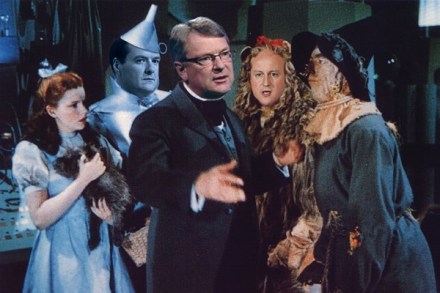
David Cameron brings in the Wizard of Oz

From our UK edition

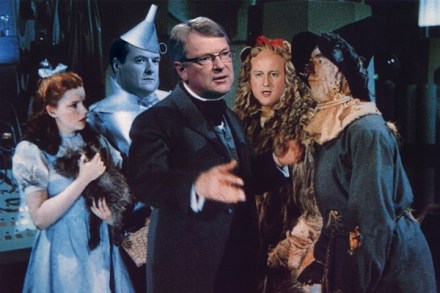
After months of will he/won’t he, Lynton Crosby has decided to join the Cameron clan. The Sunday Telegraph reports that the Australian strategist behind Boris’ two victories has signed up as a consultant to run David Cameron’s re-election campaign. The efforts to secure his return were described in the political column in this week's Spectator: 'Later this month, George Osborne and two of the Prime Minister’s most senior political aides — Stephen Gilbert and Andrew Cooper — will sit down with Lynton Crosby to see if a command structure for the election campaign can be worked out. Conservative high command is keen to bring Crosby, the man who oversaw Boris Johnson’s elections as London Mayor, on board.

Imposing a minimum price for alcohol will leave Cameron with a political hangover

From our UK edition

On Monday, the government is set to announce its alcohol strategy. It is expected that this will call for a minimum unit price of 40p. As Graham Wilson reports in The Sun, this idea is a personal favourite of the Prime Minister but opposed by several influential members of the Cabinet. These ministers worry that it’ll be seen as the rich man taking away the poor man’s pleasure. Given the media reaction to the pasty tax and the caravan tax, this is a legitimate concern. They also fear that a successful legal challenge to it, which is a distinct possibility, would do further damage to the government’s reputation for competence.

Can the Wizard of Oz solve the Tories’ 2015 problem?

From our UK edition

How is David Cameron planning to get re-elected? If he couldn't win a majority against Gordon Brown in 2010 then why should he do so much better after five years of flat growth and shrinking living standards? The Police Commissioner elections have been another reminder that, for all their other merits, the Cameroons are not very good at fighting elections. So what to do? James Forsyth reveals their strategy in his political column this week: the  40+40 strategy. It involves love-bombing 20 LibDems out of their seats. But how to make this strategy work? At present, Lynton Crosby is the obvious solution to avoid history repeating itself. He’s the Australian mastermind behind Boris Johnson’s two victories in London.

Reasons for all three parties to worry

From our UK edition

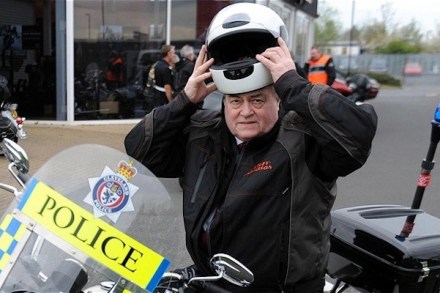
Of the three main parties, Labour will be happiest with today’s results. They’ve won Corby, the contest that was always going to get the most media attention. But, I think, there are things to worry all three parties in the results. Last week, Labour sources were talking about how the big two tests for them of the night were Corby and the Bristol mayoralty. In Bristol, they’ve been beaten by an independent candidate. Ben Bradshaw is already complaining on Twitter that this defeat can be put down, in part, to the party’s resource allocations for these elections; the fact that Corby was prioritised above everywhere else. The Police and Crime Commissioner elections also haven’t been great for the party. John Prescott suffered a spectacular defeat in Humberside.

Michael Gove: an adult in a parliament of toddlers – Spectator Blogs

From our UK edition

Michael Gove, the most important and successful Aberdonian politician since, well, since I don't know actually, is also that rarest of things: a grown-up cabinet minister. He knows the importance of praise. Consider this passage - highlighted by John Rentoul - from a speech he gave on Child Protection this morning: Just as the Labour Government early in its life felt that teachers needed to be told how to operate – down to the tiniest detail of what should happen in every literacy or numeracy hour – so the Labour Government towards the end of its life felt it had to produce thousands of pages of central Government prescription on social work practice. Both sets of interventions reflected a lack of trust in the frontline.

Will Osborne have the luck of the Irish with his 4G auction?

From our UK edition

Could George Osborne be in line for a genuine windfall? The Chancellor is getting quite good at conjuring fake ones (Post Office pensions, raiding £35 billion from the Bank of England) but he has yet to sell the 4G licenses. This could be more significant than next month's mini-Budget. The stunning success of Ireland's 4G auction (here) suggests that the UK auction may yield a lot more than is currently expected. A decade ago, governments world over pocketed massive windfalls auctioning the 3G licenses to mobile operators. This time Ofcom has put a reserve of £1.3 billion. But the Irish government expected to get just €170 million from its licenses. In the end, it raised €482 million in upfront fees with €373 million more to come by the end of the next decade.

Labour hold in two by-elections but turnout low

From our UK edition

So far, the election results are as expected. Labour has comfortably held Manchester Central and Cardiff South and the Tory candidate has been elected as the Police and Crime Commissioner for Wiltshire. But turnout has not been good. In Manchester Central it was under 20 percent, the lowest by-election turnout since the war according to the BBC. While in Wiltshire, only 16 percent of people bothered to vote in the Commissioner contest. so far, it looks like yesterday was not Super Thursday but Stay-at-Home Thursday.

Election night: It’s all over bar the counting

From our UK edition

Tonight is election night but there’s not much counting going on. The Corby by-election count doesn’t start until tomorrow morning and Wiltshire is the only place where the Police and Crime Commissioner votes are being tallied up over night. But we should get results in the next few hours in Manchester Central and Cardiff South, two safe Labour seats where the MP is standing down to run as a Police and Crime Commissioner. Most of the media attention will focus on Corby. It is, indeed, a bellwether seat. But it is worth remembering that this is mid-term and a Tory defeat here would not tell us that much, especially given the circumstances of the by-election—constituencies don’t take kindly to MPs standing down half-way through their term.

Will supporting gay marriage help the Tories? It’s all a matter of location, location, location. – Spectator Blogs

From our UK edition

Do pollsters and pundits actually understand how British elections work? I sometimes wonder. Take, for instance, the debate concerning whether or not supporting gay marriage might win the Conservative party more votes than it loses. The Prime Minister says there are polls that suggest it would. Not so fast, retorts ComRes's Andrew Hawkins. He argues: Your letter of 19 October 2012 to The Rt Hon Cheryl Gillan MP states that “a recent poll by ComRes found that 10 percent of current Conservative voters say that the policy [to legalise same-sex marriage] would make them ‘less likely to vote Conservative’ compared with 7 percent saying it would make them ‘more likely to vote Conservative’.

Lord McAlpine speaks out

From our UK edition

Lord McAlpine has just given an incredibly moving interview to BBC Radio 4's World at One. He talks about how the false accusations affected him. He said, 'It gets into your bones, it gets into your soul. There's nothing bad as this you can do to people.' The damage, he said, could not be repaired because of the British proverb 'that there is no smoke without fire'. As Andrew Neil tweeted moments ago, 'Many should be hanging their heads in shame - and not just at BBC!!

Spectator exclusive: Tories ‘top 40’ hit list includes 20 Liberal Democrats

From our UK edition

The Tories have a 40:40 strategy for the next election. The aim is to defend their 40 most vulnerable seats and try and win 40 others to give the party a majority. So which 40 are in their sights? Normally, it's an easy one to answer: you just look at the last election and count which seats have the most narrow Tory defeat. If you'd done this, there would only be 9 Liberal Democrat MPs on the Tory hit list. But the Liberal Democrat vote has changed radically since the last election. So Stephen Gilbert, the PM’s political secretary,  has drawn up a new list, added in demographic factors, current polling data and consumer targeting. As a result, the  number of Liberal Democrat seats on the list more than doubled.

Employment has recovered from the recession, but wages haven’t

From our UK edition

Today's employment figures don't contain much new to shout about. The number of people in work — although it rose by 100,000 on the previous quarter — is actually down very slightly from last month's record high (but still above the pre-recession peak, just). Unemployment fell by 49,000 from Q2 to Q3, although that's well within the Labour Force Survey's margin of error (so we can't be certain that it fell at all). The best news in today's figures — from the government's point of view — is probably that the headline unemployment rate is now 7.8 per cent, very slightly below the 7.9 per cent rate when the coalition took office (though again, it's worth remembering that the margin of error on that figure is +/– 0.3 percentage points).

They’re nearly here but still, no one cares about elected police commissioners

From our UK edition

This time tomorrow, the country will be flocking to the polls to select their first ever police commissioners. Or at least some of them will. Turnout has long predicted to be low, but the latest analysis by Sky's psephologist Michael Trasher suggests it will come in between 15 and 20 per cent. Such a figure would be the lowest of any election in modern times (outside of London). As the Electoral Reform society notes, the current record stands from 1998 at 25 per cent. Much of the apathy towards these elections can be blamed on poor public understanding of PCCs. Although a marketing push has been underway in the last few weeks, it appears to have made little impact. Last weekend, I took a straw poll of people in Newcastle to find out their views.

Another headache for the Tory whips

From our UK edition

Today brings yet another set of reminders for Numbers 9, 10 and 11 Downing Street about how difficult maintaining party discipline is going to be. First, there’s The Guardian story about Chris Heaton-Harris trying to use James Delingpole and the threat of him running as an anti-wind farm candidate in Corby as leverage to toughen up the party’s position on the issue. Then, there’s the letter signed by 15 Tory MPs calling on Cameron to make a transferable tax allowance for married couples part of the 2013 Budget. In a sign of where a lot of the trouble will come from in the coming months, the lead signatory to the letter is a minister who was sacked in the reshuffle, Tim Loughton.

Abu Qatada and the who governs Britain question

From our UK edition

No government ever wants to look like it is in office but not in power. This is why this country’s inability to deport Abu Qatada is causing such concern in Conservative circles. David Cameron will be well aware of the symbolism of the issue. In his conference speech this year, he boasted that “For years people asked why we couldn’t get rid of those radical preachers who spout hatred about Britain while living off the taxpayer……well, Theresa May – a great Home Secretary - has done it – and she’s got Abu Hamza on that plane and out of our country to face justice.” Today, Cameron declared himself ‘completely fed up’ with the fact that Abu Qatada is still here.