Uk politics

Half of the British Army’s officer corps is privately educated. Does that matter? – Spectator Blogs

From our UK edition

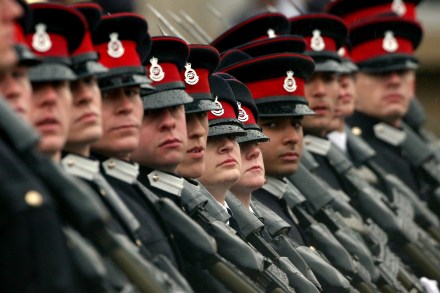
An interesting spot, courtesy of the good chaps at Think Defence. From Hansard: Diana Johnson (Kingston upon Hull North, Labour) To ask the Secretary of State for Defence what proportion of new recruits to the Army at (a) soldier and (b) officer level previously attended state school. Andrew Robathan (South Leicestershire, Conservative) The proportion of soldier recruits that had previously attended a state school is not held centrally and could be provided only at disproportionate cost. Including the most recent intake of officer cadets to the Royal Military Academy Sandhurst, in January 2013, 53.5% of the UK educated intake over the last 12 months came from state schools.
Is the press biased against the SNP? Probably. But we are all nationalists now. – Spectator Blogs

From our UK edition

So we have a question and it is a simple one. Should Scotland be an independent country? There, that wasn't so difficult was it? It is, after all, the nub of the matter. Granted, one might agree that Scotland should be an independent country but still conclude that being so is a different matter. That might be a metaphysical matter beyond the Electoral Commission's ken. Nevertheless, it is not an unreasonable question. Some reports seemed keen to spin this as some kind of 'setback' for Alex Salmond. Apparently dropping the preamble 'Do you agree' - included in the SNP's favoured wording - is yet another indication the nationalists are on the ropes. This is unpersuasive guff.

Cameron: defence spending is protected. Hammond: no it isn’t

From our UK edition

After Cabinet tensions on the matter, David Cameron was trying to reassure those worried about further defence cuts while visiting Algeria. The Telegraph reports a senior government source saying the Prime Minister will honour his pledge to increase defence spending from 2015. The source told the newspaper: 'The Prime Minister does not resile from anything he has said about defence.' But rather less reassuringly, Philip Hammond decided to clarify that reassurance this morning.

William Hague goads Labour on Europe

From our UK edition

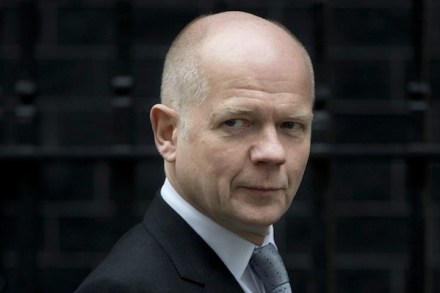
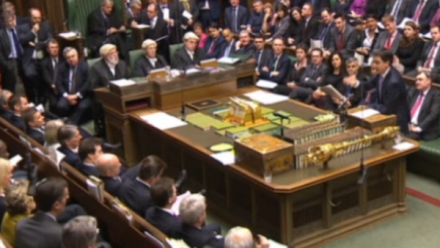
What a lot of fun William Hague had this afternoon in the Commons as he opened a debate tabled by the Prime Minister on Europe. 'I have not yet exhausted the list of the Coalition's achievements,' he told an MP trying to intervene. His speech was rather like a slow motion version of the PM's address last week, but with words like 'subsidiarity' added in for good measure, and a longer tour of how wonderfully robust the Tory party is on Europe. Though some Tory MPs made their own thoughts on the referendum clear (James Clappison called for legislation in this parliament for a referendum in the next, and Bill Cash said he'd rather the plebiscite take place before the European elections), the focus was on poking fun at the Labour party: a rare moment of Coalition unity.

How the terms of debate on Europe changed

From our UK edition

The website of the new Centre for British Influence through Europe reveals just how far on the back foot the pro-Europeans are. Its introductory article states: ‘It is also wrong that the other extreme think that they own the European flag in their belief that the only future is full on in.’ This is a major concession by the pro-European forces. It is strikingly different from the Britain in Europe message that this country must join the single currency and be at the heart of Europe. Now pretty much everyone accepts that Britain isn’t going to join the Euro and isn’t going to pursue ever closer union with the rest of the European Union. The debate is about how much looser Britain’s relationship with the other EU member states should become.

Tory opponents of gay marriage meet as whipping plans upset backbenchers

From our UK edition

Tory MPs opposed to gay marriage are holding a meeting in the next hour to discuss next Tuesday's second reading of the Bill, I understand. The meeting is being co-ordinated by, among others, David Burrowes, who has been a vocal opponent of the reforms. One of the things that is particularly upsetting the MPs is that there will be a three-line whip on the programme motion for the vote. The legislation itself will be a free vote, but the vote on how it is scrutinised will be whipped, which is leading some MPs to argue that this isn't a really free vote. Those opposed to the legislation want it debated by a committee of the whole house, not a public bill committee staffed with loyal MPs.

PMQs: Ed Miliband argues Labour would borrow for success

From our UK edition

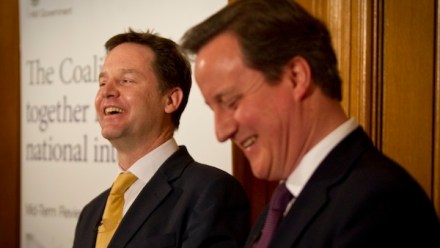
'We'd borrow more, but we'd use it better.' That was the message Ed Miliband found himself trying to get across when attacking David Cameron at PMQs today. He accused the Prime Minister of 'borrowing for failure', saying: 'He is borrowing for failure: that is the reality, and he is borrowing more for failure. That is the reality of his record. And here is the truth: they said they'd balance the books, they said they'd get growth, they haven't.' So Labour would borrow for success. What would that mean? Miliband decided to tease us by not mentioning how he'd do better borrowing. The two leaders traded quotes from various IMF staff members, as it's easy to find something in anything the IMF issues to suit your own theories about the economy.

Cameron encourages his party to bang on about Europe

From our UK edition

Something quite curious is going to happen in the Commons this afternoon. David Cameron is encouraging his party to bang on about Europe. He has called a general debate, with the motion 'that this House has considered the matter of Europe', and it promises to be rather strange. The strangest thing is that a month ago, David Cameron would never have dreamed of tabling this sort of debate: his camp were busy in October trying to quell an uprising of backbenchers over the EU Budget. But after the speech that delighted even Mrs Bone last week, Cameron finally doesn't have to wait for a backbencher to pounce on him with entreaties on referenda and renegotiations: he's got nothing to hide now.

David Cameron visits Algeria for talks on ‘generational struggle’

From our UK edition

The Prime Minister is visiting Algeria today to pay his respects to the victims of the hostage crisis. He will also hold talks with Algerian Prime Minister Abdelmalek Sellal, and The Sun reports that he will ask Sellal's permission for MI6 to hunt down the attack's mastermind, Mokhtar Belmokhtar. This will mark the next move in the 'generational struggle' he described in his Commons statement. One of the first big steps in this struggle took place yesterday, with Downing Street confirming the deployment of more than 330 troops to North Africa to help the French action in Mali. None of those troops will be in combat roles, with the majority training forces in neighbouring countries.

George Osborne urged to drop Google boss as business adviser

From our UK edition

Starbucks had a go at David Cameron on Sunday for his 'cheap shots' at the coffee chain's tax arrangements in the UK. The company felt it was being unfairly singled out in comments about companies legally avoiding tax needing to 'wake up and smell the coffee'. So what about other firms known to be avoiding tax? Coffee House has learned that the former Lib Dem Treasury spokesman Lord Oakeshott is writing a rather scathing pair of letters to David Cameron and George Osborne about the government's dealings with Google, which paid only £6 million in corporation tax in the UK in 2012 by funnelling £6 billion worth of transactions through the tax haven of Bermuda. Google's executive chairman, Eric Schmidt, currently sits on the government's Business Advisory Group.

Backbenchers want a cost of living Budget

From our UK edition

Aside from Ed Balls' attack on George Osborne for going 'on the piste' in Davos, Treasury question time in the Commons today was interesting not for what Labour did or didn't have to say, but for some of the pushes from the Tory backbench on helping those on low incomes. Sometimes it's the pattern of the questions that matters more than the individual answers. Many of the questions were pitches for the Budget, which also gave ministers the opportunity to not really answer them. Robert Halfon asked about reintroducing the 10p income tax rate, to which Greg Clark said he noted the MP's bid for the Budget, adding: 'But he will know that we have taken people out of tax, which has been important in restoring incentives and the rewards people have for going back to work.

Briefing: Immigration from Bulgaria and Romania

From our UK edition

What's changing? Bulgaria and Romania joined the European Union on 1 January 2007. This gave their citizens the freedom to travel unrestricted within the EU, but countries were allowed to impose transitional controls on their freedom to work for up to seven years. In 2004, when eight other east European countries (the 'A8') joined the EU, the Labour government decided not to impose such restrictions, but this time they did. Those controls must be lifted by 1 January 2014. What are the transitional controls?

Truss’ truncated childcare announcement highlights mid-term review weaknesses

From our UK edition

Controversial though her proposals to relax quotas for childminders and nursery staff may be, no-one disagrees with Liz Truss' central mission to reduce the cost of childcare. The opposition know affordable childcare will form an important part of their 2015 offer, and have also been visiting countries such as Denmark to pick up some tips. It's also worth noting that Truss is only relaxing quotas in so far as childcare providers can take on one or two more children per staff member: a nursery worker will be allowed to look after four babies instead of three, and six under-fives rather than four. Similarly, a childminder will be able to look after two babies rather than one, and four under-fives, rather than three.

As the most persistent private prosecutor, the RSPCA has questions to answer

From our UK edition

Parliament debating how laws are prosecuted is not a rare event, unless that is, MPs are pondering the role of the country’s most persistent private prosecutor. Alongside its role as a prosecutor, the RSPCA also campaigns for new legislation and changes to the existing laws it is prosecuting under what seems like an increasingly radical agenda. That is why I have sponsored a debate today about their role as a prosecutor to which the Attorney General will respond. This debate is not about the 95 per cent of the RSPCA’s work directly protecting animals which we all support and applaud, indeed I was a member of the RSPCA for many years.

Morrissey and Johnny Marr Explain Scottish Independence… – Spectator Blogs

From our UK edition

There are only 600 or so days to go until Scotland has its referendum on independence. The excitement is almost palpable. Fortunately The Smiths back catalogue is all you need peruse to have a keen grip on the defining stramash de nos jours. Morrissey has always fancied himself, I think, as a kind of prophet. Johnny Marr wrote the tunes. Astonishing as it may seem, all sides in this rammy are, essentially, taking their cues from The Smiths. A Scottish independence playlist-dialogue might run something like this: Nationalist: Is It Really So Strange? Unionist: Barbarism Begins At Home. Nationalist:  London. Unionist:  Paint A Vulgar Picture. Nationalist: I Know It's Over. Unionist: I Don't Owe You Anything. Nationalist: How Soon Is Now?

Webb vs Byrne on the ‘bedroom tax’

From our UK edition

One of the most frustrating things about being a policymaker must surely be when something that sounds so very sensible and straightforward in your ivory tower ends up being a bit messy in practice. Take the 'bedroom tax': it's not actually a tax, but Labour enjoy calling anything they don't like a 'tax' (odd, given their own penchant for taxation). This is a housing benefit cut for social tenants living in homes with more bedrooms than they need. It was announced in the 2010 emergency budget and comes into effect from April. Very sensible, you might think, especially when private tenants don't get extra housing benefit for spare rooms. The policy is in theory a no-brainer.

Are High Speed Railways for the North or for London?

From our UK edition

I used to think High Speed Rail was an excellent idea. Now I'm not so sure. I suspect the economic case for the proposals is weaker than its proponents allow. More importantly, I'm not at all sure the government's plans for fast trains linking London and Birmingham are the right or most useful possible idea for high-speed rail. Knocking ten minutes off the London to Birmingham route seems like relatively little gain that comes at quite a price. Eventually, of course, the plan is to extend high-speed rail to Lancashire and, perhaps, Yorkshire too. Sometime, one would guess, towards the middle of this century. You can't accuse modern Britain of rushing large-scale infrastructure projects. It is good that the government is paying some attention to northern England. About time too.

Senior Tory mulls changes to secret courts bill

From our UK edition

After publishing a paper highly critical of the Justice and Security Bill this morning, Andrew Tyrie is now considering making amendments to the legislation, I understand. MPs in a Bill committee will scrutinise the legislation line by line this week, and are expected to report to the House of Commons by mid-February. Tyrie, who also chairs the influential Treasury Select Committee, is considering tabling amendments to the Bill to be debated at that report stage. The Centre for Policy Studies paper which Tyrie has co-authored with Anthony Peto QC says that 'part 2 of the Bill should, preferably, be withdrawn, at least until the government can come back with more balanced proposals, accompanied by a more rigorous explanation of the need for them'.