Uk politics

The view from Davos: Boris Johnson’s economic adviser on infrastructure

From our UK edition

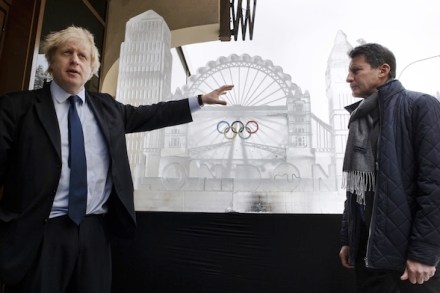
As the speaker for yesterday's Davos British business leaders’ lunch, Boris Johnson had the audience in his hand in his usual colourful way. I grabbed his very new Chief Economic Adviser, Dr Gerard Lyons, former Chief Economist at Standard Chartered, on the way out. How did he think we are doing economically? He told me the last big economic gathering was the IMF last October in Tokyo.  There, he said, the mood about the global economy was pessimistic, but now, three months later, the mood had improved, if only slightly.  There was more confidence about China and the US but still a lot of caution about Europe.
The Americans accuse the French of being too ambitious in Mali as British involvement grows

From our UK edition

It might have been pushed down the news agenda this week by David Cameron’s Europe speech and the bad economic news, but the situation in Mali is offering us a preview of the next decade in international relations. This decade will, William Hague warns in The Times today, be far more dangerous than what we have seen so far this century. This is a sobering statement when you consider that in the last 13 years we have had 9/11, 7/7, Iraq and Afghanistan. One of the striking things about the Mali mission is it shows how the US is far less interested in playing the role if global policemen these days. The New York Times reports today that the Obama administration thinks that the French aims in Mali are too ambitious.

Why The Guardian has got it wrong – on cuts and on Boris.

From our UK edition

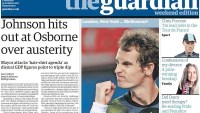
'George Osborne is under pressure to tear up his austerity programme after Boris Johnson called on the government to drop its ‘hair-shirt, Stafford Cripps agenda,' reports the delighted Guardian today. Even Boris is against it! Even he can see that the obvious solution to our debt crisis is even more debt! Except, as you’d expect, it’s all nonsense. Kamal Ahmed at the Telegraph got it right: Boris’s problem is with Osborne’s language: talking about pain, rather than recovery. He quotes Boris: 'We need to junk the rhetoric of austerity and be confident.

Scottish Tories: It’s Time To Man Up – Spectator Blogs

From our UK edition

Ruth Davidson became leader of the Scottish Conservative and Unionist Party in large part because she was the candidate favoured by the party establishment. Where Murdo Fraser suggested - rather too boldly as it turned out - the party should fold its tent and start again under a new banner, Davidson preferred a more cautious approach. Moreover, she said it was time to "draw a line in the sand" on the matter of transferring further powers to the Scottish parliament. A little more than a year later it seems as though that line has been washed away by the tide. Perhaps it was a mistake to draw it in the first place.

The view from Davos: Cameron’s mad to talk about leaving the EU

From our UK edition

‘Cameron’s speech on Europe is badly timed; we must stop this endless European bickering when facing such huge worldwide political challenges’.  That’s the view of Neil Selby, the London-based Director of Executive Education for the Cheung Kong Graduate School of Business but who at the moment is, like me, here in Davos. ‘Let’s think instead of the links we can make with East Asia’, he tells me. It’s very disconcerting: while in Britain most columnists and commentators seem to be congratulating Cameron on his big Europe speech, here at Davos there’s no enthusiasm. Most of the people around me think the emphasis was all wrong. At a lunch on East vs.

If Nick Clegg doesn’t think his local schools are much cop, then he should say so

From our UK edition

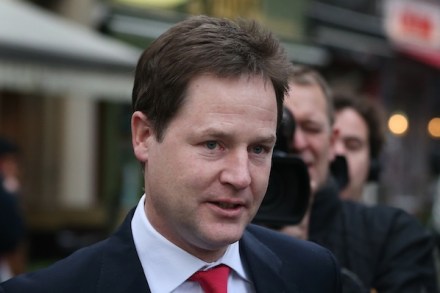
Normally, it is really rather tiresome when a politician is pilloried in the media for choosing to send their children to a private school above the local state schools. There's even an argument that if you can afford to send your kid to a fee-paying school, then at least it is one less pressure in the great London school places crush. But one thing worth mulling over about Nick Clegg's admission on LBC yesterday that he might send his eldest son to an independent school if the school lottery doesn't go his way is that the Deputy Prime Minister has tried very, very hard since coming into office not to criticise state schools and teachers.

David Cameron disagrees with Nick Clegg on capital spending

From our UK edition

Nick Clegg was apparently just being self-critical in his House magazine interview when he said the Coalition hadn't got it right from the beginning on infrastructure. Those close to the Deputy Prime Minister are insisting that though speaking out on economic policy remains unusual in the Coalition, he was simply pointing out what has actually happened, with the government now offering more on capital spending. But at this morning's lobby briefing, the Prime Minister's official spokesman didn't exactly take that same tone. 'The Prime Minister's view is that it was the right decision to have made,' he said, pointing to increases in infrastructure spending in the last two autumn statements. 'More already is being done,' the spokesman added.

Worst recovery in history: British GDP shrinks by 0.3 per cent

From our UK edition

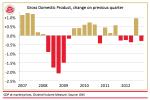
Now we know why David Cameron delivered his Europe speech on Wednesday. It’s time for bad headlines again: the GDP figures just announced show that the British economy is contracting yet again — by 0.3 per cent in the final three months of last year (see above graph). Now, you’ll hear a lot of people tell you today that quarterly data does not matter. The ONS say this is a fallback from the Olympics, which sucked economic growth forward. And they’re right: the ONS usually revises quarterly data, often dramatically. What matters more is the long-term trend, and this is pretty appalling. It now seems inarguable that Britain is going through the worst recovery in history. Slower and longer even than the 1930s.

Will Cameron’s EU speech help his drive for gay marriage?

From our UK edition

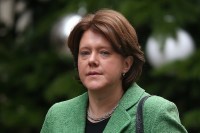
The government's gay marriage bill is published later today, after receiving its first reading in the Commons yesterday. How it's received by the Tory party will be an interesting indication of just how powerful David Cameron's EU speech was this week. When Maria Miller unveiled the 'quadruple lock' to protect the Church of England from being forced to conduct same sex ceremonies, she did so into a febrile Commons. In the tearooms, MPs quarrelled or shook their head at the exodus of stalwart Conservatives from their constituency parties. But the Prime Minister's speech gave the party such a shot in the arm on Wednesday that the atmosphere is currently very different.

Nick Clegg: We made a mistake on infrastructure spending

From our UK edition

The GDP figures for the final quarter of 2013 are out tomorrow morning, and with them will come the usual round of commentary from government and opposition. They're not expected to be good: Citi predicts that the ONS's first estimate will show a contraction of 0.1 per cent in Q4. So perhaps that's why Nick Clegg decided to get in early and taken a shot at his own government's economic policy this evening. Speaking to Paul Waugh and Sam Macrory in the House magazine, the Deputy Prime Minister had the following to say: 'If I'm going to be self-critical, there was this reduction in capital spending when we came into the Coalition government.

Cameron & co relieved by Merkel reaction to speech

From our UK edition

Angela Merkel’s statement yesterday was a big fillip to David Cameron’s European strategy as it suggested renegotiation was possible. One senior government source called it ‘as good as we could have hoped for'. I understand that Merkel and her officials have indicated to the Cameron circle that they want Britain to stay in the EU and are prepared to consider Britain’s concerns. But Merkel does not wish to look like she is interfering in British domestic politics; she doesn’t want to appear to be endorsing the Cameron approach. Secondly, she does not yet know how much room for manoeuvre she has.

After party political porky pies, Number 10 admits debt is rising

From our UK edition

Finally: Number 10 admits that far from 'dealing with debt', the government is seeing it rise. This morning the Prime Minister's spokesman was grilled on the party political broadcast that horrified Fraser last night in which the Prime Minister said 'we are making progress. We're paying down Britain's debts.' Fraser has explained the reality - that Cameron is in fact increasing Britain's debt by 60 per cent - in this post with two unnerving graphs, and the Prime Minister's spokesman conceded that 'the debt as a percentage of GDP has risen'. Asked whether the Prime Minister understood the difference between the debt and the deficit, he said: 'Yes, he does.

Mali is a British concern because it is a European concern

From our UK edition

Aaron Ellis makes a good point: the comparison between Mali and Afghanistan is flawed. But I disagree with him as to why. Afghanistan was a failed state long before al-Qaeda settled there (as a last resort). The pattern is slightly different in Mali: Islamists have further destabilised an already weak country in a strategically sensitive area. Mali has been wracked by unrest, both ethnic and religious, for some time. The country is so poor (as a glance at the CIA World Fact Book’s approximations demonstrates) that is precarious politically; so precarious that it threatened to undermine some of its delicate neighbours along the Sahel (the massive and growing strip where desert meets savannah): Niger, Mauritania and Chad.

Mali is not another Afghanistan

From our UK edition

Why should we worry if jihadists control a poor, landlocked country thousands of miles away? As the French push on with the ‘reconquest’ of Mali, there’s a feeling here that Britain must play its part in preventing a terrorist safe haven on Europe’s southern border. Some compare the situation to pre-9/11 Afghanistan. Back in May, Ian Birrell warned that we ‘have seen the damage caused by a broken, chaotic country – and how Islamist terror groups promising stability can fill the void.’ The ‘shockwaves’ from Mali ‘could be felt far beyond its own borders’ just as the ones from Afghanistan were felt in New York and Washington. Bob Carr, Australia’s foreign minister, has drawn a similar comparison.

David Cameron tells porkies about Britain’s national debt

From our UK edition

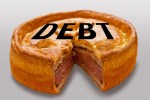
And then David Cameron has to go and spoil it all by telling porkies about what his government is doing to our national debt. The party election broadcast the Conservatives have just released is so astonishingly dishonest that it really would have disgraced Gordon Brown. In it, the Prime Minister tells an outright – how to put it? – untruth. He says:- “So though this government has had to make some difficult decisions, we are making progress. We’re paying down Britain’s debts.” listen to ‘David Cameron: "We're paying down Britain's debts" 23 Jan 13’ on Audioboo David Cameron’s policy is to increase Britain’s debt by 60 per cent, more than any European country. To increase it more over five years than Labour did over 13 years.

The EU renegotiation pantomime

From our UK edition

Today’s midday press briefing at the European Commission was of course dominated by questions about the Cameron speech. This was despite efforts by Pia Ahrenkilde Hansen, Barroso’s spokesman-in-chief. First she tried to downplay the implications of the speech by making an anodyne statement welcoming democratic debate in member states. Then she announced that questions on Cameron’s speech would be limited to three. A growl came up from the press corps that indicated she should think again. So she took more questions. She just didn’t much answer them. I asked Pia if she could describe for me any existing mechanism under present treaties by which Britain could claw back powers which have already been surrendered to the EU.

Tory MP: The public will struggle to believe Cameron’s EU pledge

From our UK edition

Six months ago, the word ‘referendum’ had not even passed David Cameron’s lips. The issue was not on the table. I would, therefore, like to thank the 100 Conservative Parliamentary colleagues who co-signed my letter in June, urging the Prime Minister to commit to a referendum. In a small way, I like to think our efforts helped to change his mind. We can now have a vigorous debate. However, whilst not doubting the Prime Minister’s sincerity, I am concerned his pledge will not be believed by the public. Far too many promises have been broken in the past, such as Blair’s promise on the EU Constitution and the Liberal Democrats’ commitment at the last General Election.