Uk politics

Labour will have to get used to about-turns on policies it opposed

From our UK edition

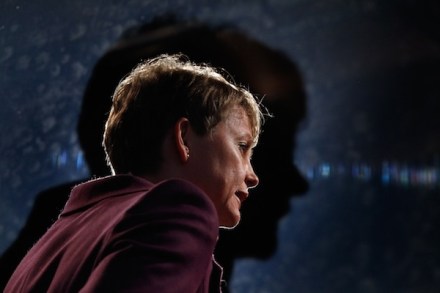
Yesterday Ed Miliband reiterated his party's existing policies on immigration for voters, today Yvette Cooper went into further detail about how Labour would address the policy area in government. Like Miliband's PPB, Cooper's speech speech to IPPR included an acknowledgement that politicians don't like to talk about immigration, and a mea culpa. She said Labour should have been quicker to bring in the Australian-style points-based system, that the party should have kept transitional controls for Eastern Europe, and that as a government it should have 'looked more at the impact, and been ready to talk about problems.

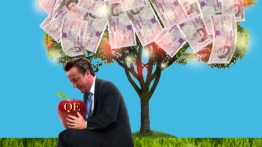
David Cameron DOES have a magic money tree

From our UK edition

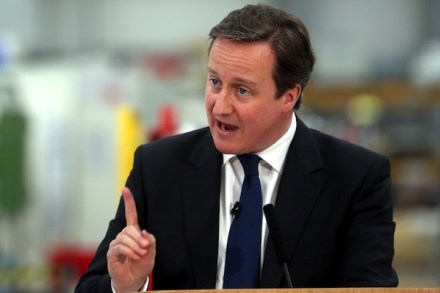
So David Cameron says there is 'no magic money tree'. In his big economy speech today, the Prime Minister said:  'Now of course there are plenty of people out there with different advice about how to fix our broken economy. Some say cut more and borrow less, others cut less and borrow more. Go faster. Go slower. Cut taxes. Put them up. We need to cut through all this and tell people some plain truths. So let me speak frankly and do just that. 'There are some people who think we don’t have to take all these tough decisions to deal with our debts. They say that our focus on deficit reduction is damaging growth. And what we need to do is to spend more and borrow more. It’s as if they think there’s some magic money tree.

The Lib Dems make another personal scandal their party’s problem

From our UK edition

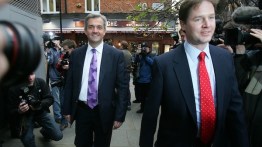
Another evening and another set of headlines opening with the now familiar line ‘senior Liberal Democrats have denied they knew’. Not the allegations about Lord Rennard (which he denies) this time, but whether they had any prior warning in spring 2011 about the coming storm that seems likely to land Chris Huhne and his ex-wife in jail. What should have been a scandal about Chris Huhne could taint the entire senior party. Isabel argues that the political fallout from today’s verdict and next week’s sentencing of Pryce and Huhne will be relatively minor. In the short-term I agree, but in the long-run days like today are occurring a little too regularly for the Liberal Democrats.

Chris Huhne and Vicky Pryce: the politics

From our UK edition

What is the political impact of the Chris Huhne/Vicky Pryce case? It's a question that you'll hear a lot from those who view everything through what Edward Leigh might call the merciless prism of politics. And yet, as James Kirkup points out on his Telegraph blog, this is more about a terrible family breakdown than it is about the Liberal Democrats. However, as we're still holding up that merciless prism of politics, here are a few thoughts. The first is that of course people will discuss this in the bars at the Lib Dem spring conference this weekend. But will it overshadow the event itself? Not really: this has become a story about a broken family and a broken law, not a political party.

Vicky Pryce found guilty

From our UK edition

Vicky Pryce has been found guilty at Southwark Crown Court of perverting the course of justice by taking speeding points for her ex-husband Chris Huhne. Huhne had already pleaded guilty, but Pryce had pleaded not guilty on the grounds of marital coercion. The jury rejected her defence. The pair will be sentenced at a later date. The offence took place over a speeding incident in 2003, and Pryce had claimed she had been forced by her husband to sign a form saying she was the driver of the car, not him. More analysis to follow...

Do public sector job cuts hit women disproportionately?

From our UK edition

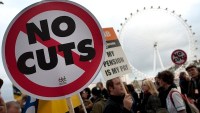
As we move towards the budget we will be hearing more and more warnings about the impact of further cuts in public sector employment. One line, pursued repeatedly by the TUC and the Fawcett Society since Mr Osborne's first budget, is that such cuts will particularly impact on women. As the public sector employs more women than men, it is argued, the cuts mean higher unemployment for women. It has even been suggested that an Impact Assessment along these lines would conclude that public sector cuts breach the Equality Act. I don't know about that. But it is worth pointing out how difficult it is to assess the impact of public sector 'cuts' on unemployment.

The bossy state shouldn’t stop us buying cigarettes with pleasing packaging

From our UK edition

The Government’s bid to make Britain that little bit more like Australia, in a bad way, by requiring cigarettes to be sold in plain white packaging may well be announced on that annual irritant, No Smoking Day, next Wednesday. And for good measure, it may throw in a ban on smoking in cars carrying children under 16. The only upshot of that last one will be to make it that bit more difficult to get a lift for a child. I am not  a serious smoker. I can manage perhaps two or three cigarettes a year, Clinton style, but that’s enough to forfeit a premium rate of life insurance (actually a life insurance computer can’t handle a smoking rate of less than five a week). I don’t care at all for the smell of stale smoke.

Germany realises the limits of the EU project

From our UK edition

Britain isn't the only country whose politicians are getting just a little bit jittery about an increase in Bulgarian and Romanian migrants. In this week's Spectator, Rod Liddle examines the German and Dutch response to the lifting of transitional controls. We were enjoined by the Romanians to believe that our fears of being ‘flooded’ or ‘swamped’, or whatever emotive term you wish to use, were greatly overstated, and that the citizens of Romania would prefer to travel to places with which the home country had historic links. Such as, for example, Germany. But that simply isn’t going to happen, is it? The Germans won’t let it happen.

Vince Cable’s borrowing bombshell

From our UK edition

It is only towards the tail end of his lengthy New Statesman essay on 'the long economic stagnation of post-crisis Britain' that Vince Cable lets off one of his bombshells. He's clearly freelancing, and not at a bad time, either, given it's his party's Spring Conference this weekend. Although it's possibly not enormously helpful for the Prime Minister, who is giving a major speech on the economy tomorrow. The Business Secretary examines misinterpretations of Keynesianism and the effect of the government's deficit reduction programme on the economy before dropping this: 'Nevertheless, one obvious question is why capital investment cannot now be greatly expanded. Pessimists say that the central government is incapable of mobilising capital investment quickly.

1922 Committee: Tory MPs call on Sir David Nicholson to go

From our UK edition

Tonight’s meeting of the 1922 Committee of Tory MPs was dominated by calls for Sir David Nicholson to quit as NHS Chief Executive over the Mid Staffs scandal. Bill Cash, who was the MP for Stafford and now represents the Staffordshire seat of Stone, stood up and asked, ‘is there a single person in this room who thinks Nicholson shouldn’t go?’ Only one person indicated that they disagreed with Cash. I understand that more than 10 MPs followed Cash’s lead and made the case that Nicholson had to go if accountability in public life was to mean anything. Those calling for Nicholson’s departure were emphatically not the usual suspects. Indeed, I understand that ultra loyalist Charlie Elphicke was one of them.

George Osborne’s only plan is to pray for recovery

From our UK edition

What sort of Budget will George Osborne unveil on 20 March? In this week's Spectator, Fraser Nelson predicts that it will be an empty one, devoid of radicalism. The piece outlines one meeting in which the Chancellor explained why he is feeling so cautious: Before every Budget, George Osborne always seeks the advice of various MPs. He usually doesn’t heed it but it’s a good way, he thinks, to keep the troops happy. As the economic headwinds have strengthened, this advice has tended to be increasingly radical and in a recent meeting with the Free Enterprise Group of Tory MPs, the Chancellor made clear he was in no mood for it. ‘Look,’ he told them, ‘I tried radicalism in last year’s Budget, and I had blowback for it.

Tories set Labour in their crosshairs over Mid-Staffs

From our UK edition

After today's slightly confusing PMQs line from the Prime Minister about unidentified 'people' who 'should be thinking of their positions' after the Mid-Staffs scandal, ministers and loyal backbenchers have gone out to bat for the government. After PMQs, the Prime Minister's sources refused to say who these 'people' were who needed to consider their positions. But now Jeremy Hunt has written a piece for ConHome saying 'Labour can and will be held accountable for what happened at Mid-Staffs'. He then warns that the party appears to have learned no lessons at all from the Francis Report and that the public shouldn't trust them again: 'Labour’s reaction to Mid Staffs has been a deafening silence which is shocking both in its arrogance and complacency.

PMQs sketch: Miliband packs a punch, and Cameron punches back

From our UK edition

Whooo that was nasty. Today’s was the most vicious PMQs of the last twelve months. Easily. Ed Miliband started by quoting the case of a Londoner called ‘John’ who was concerned about living standards. ‘John’, however, wasn’t a disabled pensioner but a City fat cat concerned that next year’s bonus might be capped at two million pounds. ‘What’s the prime minister going to do to help him?’ Nifty tactics from Miliband’s team. Cameron might have floundered here but his reply matched the full force of Miliband’s attack. His government, he declared, had cut bonuses to a quarter of what they’d been under Labour. ‘And we aren’t going to listen to the croupiers who were in the casino when it all went bust.

PMQs: David Cameron’s high pay/low benefits problem

From our UK edition

Today's Prime Minister's Questions highlighted the problem Cameron has on high earners and bankers. Ed Miliband chose to attack on George Osborne's opposition to the EU's bonus cap, and he had some pretty good jokes to back it up, too. He started his attack with a case study, which tricked Tory MPs into thinking he was talking about the 'bedroom tax', so they groaned a little. But this wasn't about a benefit cut, it was about a bonus: 'Mr Speaker, I’d like to ask the Prime Minister about an individual case: John works in East London and is worried about what’s happening to his living standards. His salary is £1m and he’s worried that his bonus may be capped at just £2m – can the Prime Minister tell us what he’s going to do for John?

The Great Defence Procurement Rip-Off, Housing Edition

From our UK edition

There's no business like government business. Reacting to Philip Hammond's statement on future army basing yesterday, today's newspapers have led on either the decision to strip the Desert Rats of their tanks or on the broken promises on basing made to some parts of the country. Bringing the army back from the Rhine makes plenty of sense. That is, there's no conceivable need for British troops to remain in Germany. It is, perhaps, remarkable that, following the collapse of the Soviet Union, it will have taken (by the time the move is completed) more than a quarter of a century to achieve this. No-one can accuse the MoD of rushing these things. The Defence Secretary claimed yesterday that basing these troops in the United Kingdom would save £240m a year. Perhaps it will.

Ed Miliband tries to reassure voters on Labour’s immigration policy, without mentioning the EU

From our UK edition

Today is, according to the party's own institutional memory, the first time Labour has talked about immigration in a party political broadcast. As I blogged yesterday, the party struggles to raise its voice when this policy area is debated in parliament because of the mistakes ministers made on migration when in government. Ed Miliband knows this, and so tonight television audiences across England will be treated to this party political broadcast: The first thing that's clear, aside from the emotional backing music that would be more at home on an animal rescue programme, is that this isn't about announcing big new policies. Miliband announced all of these ideas on English lessons, tougher restrictions and a focus on skills for those competing with migrants back in December.

Lib Dems avoid conference grief on NHS

From our UK edition

Norman Lamb's announcement today that the government will re-write regulations on competition in the NHS seals up one source of grief for the Lib Dems ahead of their spring conference this weekend. Activists had been threatening an awkward showdown with the leadership on the section 75 regulations, and instead ministers (its notable that Lib Dem Lamb was sent out to bat for the government today rather than a Conservative) can go to their party and argue that they are keeping check on the Conservatives when it comes to the NHS. But this has a flipside, which is that the row over secret courts will gain more momentum now activists' minds are focused.

David Nicholson’s select committee session: five key points

From our UK edition

Sir David Nicholson didn't deliver the most confident performance before the Health Select Committee this morning, but he didn't leave the session looking fatally wounded. Here are the key points from his evidence: 1. No-one knew what was going on. The NHS is such a big organisation that, as Nicholson admitted, it was perfectly possible for the Strategic Health Authority that he oversaw had no idea that there were concerns about the Mid-Staffordshire Trust. He said: 'We had no idea, the information was never brought to the SHA… we didn't see any of the information that would lead you to believe that this was going on, shocking as it is.' He added that 'there was no culture of sharing information'.