Uk politics

Why the Tories don’t think the Leveson deal is statutory underpinning

From our UK edition

David Cameron has just met Tory MPs to explain the deal he's struck on Leveson. One of the things many of them were anxious to learn was whether the result does really mean the government has accepted the need for statutory underpinning. Hopefully the PM employed a better turn of phrase than his spokesman,  who told hacks this morning that this 'enshrines a non-legislative approach'. The Tories in Number 10 are insisting that this really is the case, that it's not statute at all and that the PM's feet aren't wet from any crossing of the Rubicon. Their argument is firstly that the amendment to the Enterprise and Regulatory Reform Bill is aimed at all Royal Charters, and protects them from further interference.

Ministerial aides demand to support backbench vote on foreign criminals

From our UK edition

All eyes are on what's happening with the cross-party amendments to two bits of legislation on Leveson, but this afternoon in the Commons there could well be another row on the Crime and Courts Bill. As we reported last week, Conservative MP Dominic Raab has an amendment to the legislation which would limit the opportunities for foreign criminals to avoid deportation. It has over 100 MPs signed up to it, including Labour grandees such as David Blunkett. But I also understand that a number of Conservative PPSs have contacted their whips saying that they would like to support this amendment and that they want to be given leave to do so. The whips could refuse and place a three-line whip on the proposal, but that hasn't been clarified yet.

Press regulation: Ceci n’est pas une statute

From our UK edition

The party leaders should finish their discussions on Leveson - by phone - in the next hour or so. We'll then get a statement in the Commons on the outcome of those talks, and it's highly likely that all three leaders will speak as part of that statement. But the big debate now is whether what they have signed up to already constitutes the statutory underpinning that David Cameron was so very keen to avoid. There are two amendments to two different pieces of legislation relevant to press regulation: one on the Crime and Courts Bill on exemplary damages, and one to the Enterprise and Regulatory Reform Bill which prevents politicians meddling with the Royal Charter.

Harriet Harman and Maria Miller both claim victory in Leveson talks

From our UK edition

Who has won in the late-night Leveson talks? Both Harriet Harman and Maria Miller seem to think their own party's Royal Charter has come out tops. And one says they've secured statutory underpinning, while the other says there isn't any underpinning. And again, one says the deal is done, while the other says the parties are 'close' to a deal. This is what Harman had to say on the Today programme: 'There is an amendment going forward into the Enterprise and Regulatory Reform Bill which says that where a Charter says in that Charter it can't be dissolved or amended without a two-thirds majority in both Houses then that should have the force of law.' She added: 'The framework is set up in a Royal Charter, not by statute but in a Royal Charter.

Late night Leveson talks bring parties close to deal

From our UK edition

So it looks as though a deal has been struck on Leveson after late night talks. Oliver Letwin, Nick Clegg, Ed Miliband and Harriet Harman were holed up in Miliband's office until 2.30 this morning, and Labour is now confident that it is close not just to an agreement on press regulation, but an agreement on its own proposals for a Royal Charter, rather than the government's draft. As Coffee House reported on Friday, David Cameron was facing a rebellion of around 20 Tory MPs and a defeat in the House of Commons on his Conservative amendment which introduced the Royal Charter. That threat appears to have concentrated the mind rather.

Afriyie fails the interview test

From our UK edition

The Adam Afriyie leadership speculation has now got to the point where he’s been interviewed by Andrew Neil on the Sunday Politics. His first big broadcast interview as a potential leadership candidate was always going to be a big test for Afriyie and he failed to impress today. Afriyie, who looked like he’d been heavily coached for the encounter, failed to properly answer the questions put to him or to make a case for any alternative vision. He was even unprepared to say whether or not he supported means-testing pensioner benefits. On the whole question of his own ambitions, Afriyie was hugely unconvincing. Moments after declaring ‘I have no ambition to lead my party’ he referred to ‘my team around me’.

The BBC and religion

From our UK edition

It is to David Lammy’s credit that he hasn’t deleted what my Spectator colleague, Hugo Rifkind, describes as his new all-time favourite tweet. For those who haven’t come across it yet, this is how the Tottenham MP responded to the BBC’s coverage of the papal election where it mentioned "white smoke": This tweet from the BBC is crass and unnecessary. Do we really need silly innuendo about the race of the next Pope? twitter.com/DavidLammy/sta… — David Lammy (@DavidLammy) March 12, 2013 There were more solid grounds for criticising the BBC that day: the corporation again showed its problems understanding religion. It managed to find a translator for the Vatican election who didn’t know the Lord’s Prayer.

Bookbenchers: Peter Lilley

From our UK edition

Peter Lilley, the former Cabinet minister and current Tory MP, is this week's Bookbencher over on the books blog this afternoon. He's been sharing some of his favourite books, indulging his love for the Russian classics and revealing the allure of psychedelic fairytales.

Jeremy Hunt continues his quest to make the Tories the party of the NHS

From our UK edition

Jeremy Hunt used his address to the Conservative Spring Forum this afternoon as the next step in his quest to make the Conservatives the party of the NHS, not Labour. His speech was in some ways quite formulaic: it started with good news about health care in this country, then praise for the 'extraordinary' staff working in the NHS. But then it moved on to his duty 'to be honest about the failures' of the health service too. He said: 'If you care about something you don’t try to sweep problems under the carpet – you expose them, sort them out and make things better. And by criticising us when we do that, Labour show extraordinary complacency about the treatment suffered by some of the most vulnerable people in our society.

David Cameron tells Tory Spring conference: Our battle is with “socialist” Labour

From our UK edition

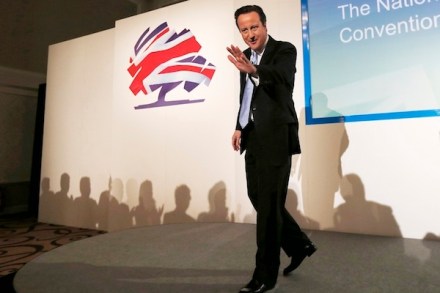
The Tories know that if the next election is a referendum on the current government, it’ll be very difficult for them to win. But if it is a choice between them and a Labour government, then they are in with a good chance. David Cameron’s speech to his party’s Spring Forum today ends with a list of what a Labour government would do in its first 100 days in office. It shows how keen the Tories are to frame the next election as a choice, not a referendum, that Cameron is prepared to publicly contemplate defeat to do this. Interestingly, there's no mnetion of the Liberal Democrats or the coalition in the speech.

HS2 ruling: both sides claim victory

From our UK edition

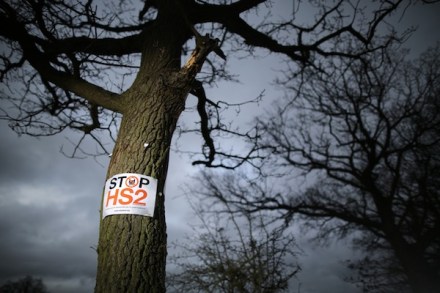
The useful thing about most court rulings in judicial review cases is that both sides can take from it whatever they want and make it into a victory. We had that last month with the work experience judgement, which was apparently both a victory for those who thought the government's scheme was 'slave labour' and for those ministers who thought it was brilliant. And today's HS2 ruling in the High Court had the same effect. The government actually won nine out of the 10 points challenged by campaigners, so Transport Minister Simon Burns could call this a 'green light' to getting high speed rail underway. But according to former Cabinet minister Cheryl Gillan, that 10th point was in fact 'the most serious of all', and shows ministers have been 'cocky'. So what has happened?

Adam Afriyie on Budget 2013: Prepare for ‘bitter disappointment’

From our UK edition

For many people, Budgets are when you find out if your pint of beer or bottle of wine is going up in price. It’s the day you fill up your car just in case fuel goes up again. It’s the day you hope to see a tax cut that puts some more cash in your pocket or helps your business grow. Generally it’s a day the average person lives in hope and prepares to be disappointed. That’s the nature of Budget day. This year is different. They say that this Budget will be highly political. If so, as soon as the doors open, the Commons’ corridors will be buzzing with people feverishly trying to unpack each policy and reverse engineer it. Who was it aimed at? What reaction is it designed to elicit, and from whom?

Parties prepare for Leveson showdown

From our UK edition

The Conservative amendments to the Crime and Courts Bill which introduce their Royal Charter for press regulation proposal are now out, although Labour and the Lib Dems are yet to table all their formal amendments.

Democracy is shooting itself in the foot with this emotional Leveson debate

From our UK edition

The breakdown of cross-party talks today seems to be creating a make or break moment for the basic principle of press freedom. But Cameron’s proposal to hold a vote on Monday is also adding a certain confusion to the brinkmanship. The basic principle is clear: newspapers and other print media are subject to the rule of law but specific laws for the press should remain the tools of authoritarian not democratic and rights-abiding states. There are some (if not enough) public interest defences for occasionally breaking a law but MPs vote on laws, and print media are subject to those laws.

Voters: It’s not Plan A, it’s Osborne

From our UK edition

A fascinating poll result from Ipsos MORI today. They ask, essentially, whether people agree with the government's 'Plan A' or Labour's 'Plan B'. Specifically, they ask: 'People have different ideas about the best way of dealing with Britain’s economic difficulties. Which of the following do you most agree with? A1: Britain has a debt problem, built up over many years, and we have got to deal with it. If we don’t, interest rates will soar. That’s why tackling the deficit and keeping interest rates low should be our top priority. OR B1: Without growth in our economy, we are not getting the deficit down and are borrowing more. We need more government spending on investment to kick-start our economy and a temporary cut in taxes to support growth.

Mid-Staffs scandal: The Tories must beware focusing solely on Andy Burnham

From our UK edition

MPs were debating accountability in the NHS following the Mid-Staffs scandal today, and as part of that, the argument about who - if anyone - should be held responsible continues to rumble on. Charlotte Leslie and many of her Tory colleagues want to see Sir David Nicholson gone (and The Telegraph's Robert Winnett reports that senior government figures are considering a route by which he can exit). But the focus of Jeremy Hunt and other Conservatives is on Andy Burnham instead. Today Hunt said: '[Nicholson] does bear some responsibility. He said himself 'we lost our focus', he has apologised and has been held to account by this House and others. But I don't believe that he bears total responsibility, or indeed personal responsibility for what happened.

Liam Fox, Theresa May and the meaning of conservatism

From our UK edition

Speeches by Theresa May and Liam Fox have produced a surge of interest in what Conservatives stand for. Politics in recent years has become an endeavour by a political class, divided by only superficially different beliefs, to use mass advertising techniques to manipulate public opinion. The emphasis on ‘modernisation’ and detoxification grew out of this narrow, calculating spirit, but it has led the Conservatives away from the ideals that have made this country worthy of allegiance. And yet, readily to hand, there are guiding principles that could stir the heart of many a potential Conservative voter. Many conservatives see themselves as champions of liberty. But what does such a claim imply for the role of government today?

The problem with Mark Carney

From our UK edition

In Washington last week, I encountered amazement that the Bank of England is about to be run by a foreigner. This was not because of any contempt for Mark Carney, the Governor of the Bank of Canada, who will soon succeed Sir Mervyn King, but because Americans could not imagine how a job so pivotal in the national psyche could be bestowed on someone with a different allegiance. The Fed, though far from popular in a country constitutionally suspicious of central power, does have a mythic, incorruptible status. As a result, the chairman, Ben Bernanke, has a tiny (by banking standards) salary. Last year, he was paid $199,700.