Uk politics

Osborne’s pitch to Sun-reading voters caught up in Leveson row

From our UK edition

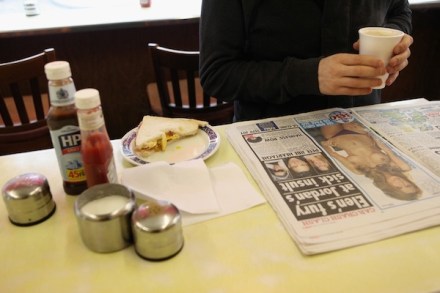
If this was a Budget for Sun readers, then it hasn't quite worked out as well as George Osborne might have hoped. The newspaper sounded pretty cheery this morning with its story about the beer duty escalator. But here's the front page for tomorrow's edition: Now, this is clearly as much about Leveson and the newspaper's industry disgust that it wasn't consulted when the lobbying group Hacked Off was invited to the late night negotiations as it is about the measures announced today. But there's also the point that Fraser makes tirelessly on this blog that politicians like to be lazy at best when it comes to talking about debt and the deficit. One of the bullet points reminds readers that the government isn't 'paying down its debts' as David Cameron has said before: 'Debt!
Budget 2013: Ed Balls sticks to his favourite 50p attack

From our UK edition

Ed Balls has just given his post-Budget briefing in parliament. The striking thing about Balls, no matter how much you might disagree with him, is how much he relishes these occasions. His whole face lights up, like a large Cheshire cat that has spied a snoozing mouse, as he goes in for the kill. He even went through a list circulated by CCHQ of 'questions for Labour'. No wonder some Tory MPs wish they had someone on their side who loves the political game as much as the Shadow Chancellor. Now, Balls had plenty of soundbites: he has calculated that you'd have to drink 50,000 pints of beer a year to make up for the impact on personal income of other tax rises and cuts.

The Budget puts petrol in the Tories’ political tank

From our UK edition

For the opening half of George Osborne’s Budget speech, the Labour front bench was busy waving around copies of the Evening Standard’s front page. This was visibly putting Osborne off; he wouldn’t be human if the fear that another of his Budgets was going to be dashed on the media rocks hadn’t crossed his mind. But by the time he sat down, the storm over the Standard front had died down thanks to a quick and dignified apology from the paper itself. Osborne will also have been pleased by the cheers of his own side as he returned to his seat. For all the speculation got up by the irreconcilables, most Tory backbenchers seemed as pleased as could be expected with a Budget that was delivered against such a grim fiscal backdrop.

Budget 2013: New ‘Help to Buy’ plan is a boost for Eric Pickles

From our UK edition

One of the big measures in today's Budget was the Help to Buy scheme. It answers two demands: the first for the Tories to continue to support home ownership as what George Osborne called 'the most human of aspirations', and the second for the government to do everything it can to get construction moving again. But there's an interesting political point here. In the summer, George Osborne frightened the living daylights out of Eric Pickles and his team at the Communities and Local Government department by putting it about that he wanted further relaxations on planning regulations to encourage economic growth through construction.

Budget 2013: Osborne’s empty budget

From our UK edition

This was, as I suspected, an empty budget. There was the usual whale spray of policies: a penny off beer duty here, petrol tax reduced there. Nowadays, we don’t have to wonder if the Budget will make a blind bit of difference: the Office for Budget Responsibility sees the figures in advance and does the sums. It concludes that the Budget will have 'no impact on level of GDP at the end of the forecast horizon'. To Osborne’s credit, he didn’t try to spin this. The recovery has stalled and he has run out of ideas about how to start it again. It’s difficult to put a gloss on this basic fact. As always, the small steps that Osborne did take were in the right direction. Extending the corporation tax for a year, so it hits 20pc in 2015, is a good idea.

Budget 2013: It’s all about the ‘aspiration nation’

From our UK edition

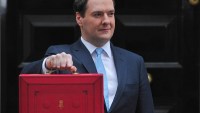
So did he do it? This was a budget with a strong narrative about the 'aspiration nation', and the Chancellor certainly did everything he could to nod to two of those three groups that James identified last week. He had two distinct sections on making Britain competitive in the global race and tackling the cost of living, while dismissing 'those who would want to cut much more than we are planning to - and chase the debt target'. The cost of living section was a careful attempt to please Sun readers who had been so irritated by last year's Budget. And Osborne also took care to spell out the tangible benefits of scrapping the fuel duty increase and the beer duty escalator. He said: 'Today, I am cancelling this September's fuel duty increase altogether.

Budget 2013: George Osborne’s statement in full

From our UK edition

Mr Deputy Speaker, this is a Budget for people who aspire to work hard and get on. It’s a Budget for people who realise there are no easy answers to problems built up over many years. Just the painstaking work of putting right what went so badly wrong. And together with the British people we are, slowly but surely, fixing our country’s economic problems. We’ve now cut the deficit not by a quarter, but by a third. We’ve helped business create not a million new jobs, but one and a quarter million new jobs. We’ve kept interest rates at record lows. But Mr Deputy Speaker, despite the progress we’ve made, there’s much more to do.

Budget 2013: Five boxes George Osborne needs to tick

From our UK edition

We've got just over half an hour until the Chancellor stands up to give his Budget statement in the House of Commons. It's the last Budget, many Tory MPs believe, that he has to make a real difference to the party before 2015. And those who enjoy plotting against the leadership are touting it as one of the last chances David Cameron and George Osborne have to convince their own MPs that they're worth backing for the long run. So what does the Chancellor need to do to emerge unscathed from this bleak Budget? Here are five boxes he needs to tick. 1. Cost of living. A big issue for Conservative MPs, and one that many of them have campaigned on vociferously.

An Antediluvian Tory Press Causes Problems for David Cameron

From our UK edition

Today's papers make dreadful reading for anyone with an interest in modern, reformed conservatism. They are a reminder - if it were needed - that the Tory press is estranged from the Prime Minister. Mr Cameron has played his part in the breakdown of relations (his behaviour over press-regulation has hardly helped) but he is hardly the only guilty party. Today is one of those days you look at the headlines and just wonder what decade it is. An Insult To Stay At Home Mothers screams the Mail. The Telegraph is only modestly more restrained: PM's 'slur' on stay-at-home mothers. Good lord, you may think and wonder, what on earth Mr Cameron has done now? Perhaps he has branded stay-at-home mothers a collection of selfish, workshy misfits?

Why the confusion between debt and deficit?

From our UK edition

Polls show that, depending on how you ask the question, just between 8pc and 12pc of us realize that debt is rising. It’s not hard to work out why: first, politicians – even the Prime Minister – says that debt is falling. They say they get it confused with ‘deficit’. But this morning, I tweeted that blame lies with the BBC and its failure to mention this basic point when reporting on the public finance. Its narrative tends to be one of fast, deep cuts. It tends to use language that no one understands, and not just conflating ‘debt/gdp ratio’ with ‘debt’. Most normal people don’t know what ‘deficit’ means, for example, and nor should they. It’s a Westminster wonk word, not even used in business.

Budget 2013: what the papers say

From our UK edition

The Treasury has largely managed to maintain discipline in the run-up to the Budget, with only controlled briefings in the past few days, rather than last year's public row over tax cuts. Yesterday we were told about the additional departmental spending cuts to fund infrastructure: the pain has already been briefed so that today the £2.5billion raised from cuts can be painted more as gain. There are also some carefully-placed stories on the front pages this morning, too. Last year's Budget didn't have much in it for Sun readers: the pasty and caravan taxes did for any suggestion that the government was on their side while it cut the top rate of tax. And after the Budget, the newspaper sent a model to hand out pasties on the steps of the Treasury.

The quiet global energy revolution

From our UK edition

In all the noise of tomorrow’s Budget, many may not spot a small tweak to the fiscal regime for UK oil and gas. Those of us with a close interest in unconventional oil and gas, however, will be watching closely. Last year the Chancellor announced a consultation on a specific tax regime for onshore shale gas development, the results of which are expected on Wednesday. Press coverage of shale gas is often characterised by myth and hyperbole. For some, it’s the last gasp for fossil fuels; for others, a new source of energy security and the key to bringing down bills for industry and consumers. We are not used to thinking of energy as a diplomatic weapon here, but contrast this with the EU which imports a fifth of its gas from Russia via Ukrainian pipelines.

Labour’s frontbench gets a taste of the welfare battles to come

From our UK edition

The Commons this evening approved emergency regulations for the government's work experience programme so the DWP can avoid repaying benefits to those who were sanctioned for refusing to take part. This wouldn't be a particularly interesting vote, but for an uprising on the Labour benches. This is the controversial 'workfare' programme, where those on Jobseeker's Allowance are required to undertake work experience as part of their benefit claim. A court judgement last month (which was widely misinterpreted) meant the government had to rush these new regulations through. But though Labour made hay with that judgement at the time, its official position this afternoon was to abstain on the vote.

David Cameron under fresh pressure to sack David Nicholson after select committee blunder

From our UK edition

David Cameron is coming under fresh pressure to force out NHS chief executive Sir David Nicholson this afternoon. The health boss has had to apologise to the Public Accounts Committee, after his evidence yesterday was directly contradicted by whistleblower Gary Walker's testimony to the Health Select Committee today. Nicholson told the PAC that Walker 'didn't identify himself as a whistleblower at that moment in time, nor did he raise with me any issues of patient safety'. But today Walker produced a letter which said 'I assume the Department of Health has a policy on whistleblowing and would therefore like this letter to be considered in that context'.

How the Treasury could sell its tax cuts to voters

From our UK edition

One of the big challenges for the government in tomorrow's Budget is how well the Number 10 machine is able to sell some of the positive measures that George Osborne will announce. Some are easy for voters to notice: cancelling the fuel duty rise, for instance. But others, like the personal tax allowance, need a bit more noise. One Tory backbencher is currently trying to push an idea to the Treasury about how to do this: tell voters every time they get paid. Justin Tomlinson, who chairs the All-Party Parliamentary Group on Personal Finance, will raise his idea in the post-Budget debate in the House of Commons on Thursday. Every payslip would tell an employee whether the government has made changes to their tax arrangements, and how much more or less they're getting in pay as a result.

Cabinet ministers told to find an extra £2.5 billion in cuts

From our UK edition

Cabinet this morning can't have been a cheery occasion. The Prime Minister did congratulate all those who had been involved in the Leveson talks, with a little bit more congratulation from the Deputy Prime Minister and Maria Miller. But that was where the backslapping stopped. the Chancellor and the Chief Secretary to the Treasury announced that OBR forecasts tomorrow will show that departments are underspending more of their budgets than the historical average. As a result, departments will now be required to reduce their spending by a further 1 per cent in 2013/14 and 2014/15, which amounts to a further £2.5 billion to fund capital investment projects in tomorrow's Budget. The £1.

Liz Truss: the minister fighting the ‘Where have all the women gone?’ debates

From our UK edition

The government's childcare announcement, fronted by the formidable Liz Truss, is another attempt to appeal to working mothers and to spread privilege by removing some of the barriers for women who want to return to work after having children. Never mind that Labour and a left-leaning think tank complain this isn't as generous for low-earners as it is for those on higher salaries: the intention is to cut back on the staggering cost of childcare with parents claiming back £1,200 per child (the previous scheme was per household). Labour is anxious about this too: the party knows it left government with an extremely expensive childcare offer, and has been hard at work trying to remedy that before 2015. There are two problems with this very welcome announcement.