Uk politics

Labour’s frontbench gets a taste of the welfare battles to come

The Commons this evening approved emergency regulations for the government’s work experience programme so the DWP can avoid repaying benefits to those who were sanctioned for refusing to take part. This wouldn’t be a particularly interesting vote, but for an uprising on the Labour benches. This is the controversial ‘workfare’ programme, where those on Jobseeker’s Allowance are required to undertake work experience as part of their benefit claim. A court judgement last month (which was widely misinterpreted) meant the government had to rush these new regulations through. But though Labour made hay with that judgement at the time, its official position this afternoon was to abstain on the vote. Shadow

How the Treasury could sell its tax cuts to voters

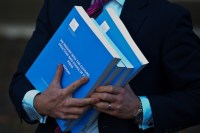
One of the big challenges for the government in tomorrow’s Budget is how well the Number 10 machine is able to sell some of the positive measures that George Osborne will announce. Some are easy for voters to notice: cancelling the fuel duty rise, for instance. But others, like the personal tax allowance, need a bit more noise. One Tory backbencher is currently trying to push an idea to the Treasury about how to do this: tell voters every time they get paid. Justin Tomlinson, who chairs the All-Party Parliamentary Group on Personal Finance, will raise his idea in the post-Budget debate in the House of Commons on Thursday. Every

Cabinet ministers told to find an extra £2.5 billion in cuts

Cabinet this morning can’t have been a cheery occasion. The Prime Minister did congratulate all those who had been involved in the Leveson talks, with a little bit more congratulation from the Deputy Prime Minister and Maria Miller. But that was where the backslapping stopped. the Chancellor and the Chief Secretary to the Treasury announced that OBR forecasts tomorrow will show that departments are underspending more of their budgets than the historical average. As a result, departments will now be required to reduce their spending by a further 1 per cent in 2013/14 and 2014/15, which amounts to a further £2.5 billion to fund capital investment projects in tomorrow’s Budget.

Liz Truss: the minister fighting the ‘Where have all the women gone?’ debates

The government’s childcare announcement, fronted by the formidable Liz Truss, is another attempt to appeal to working mothers and to spread privilege by removing some of the barriers for women who want to return to work after having children. Never mind that Labour and a left-leaning think tank complain this isn’t as generous for low-earners as it is for those on higher salaries: the intention is to cut back on the staggering cost of childcare with parents claiming back £1,200 per child (the previous scheme was per household). Labour is anxious about this too: the party knows it left government with an extremely expensive childcare offer, and has been hard

Ministers avoid awkward vote on foreign criminals as Tories rebel on press damages plan

The Crime and Courts Bill, which contains one half of the government’s response to the Leveson recommendations, has just passed its third reading in the House of Commons. An earlier amendment on exemplary damages, which the Mail’s James Chapman reports this evening has roused the ire of Boris Johnson, saw this group of Conservative rebels troop through the ‘No’ lobbies: Richard Bacon, Christopher Chope, Tracey Crouch, Philip Davies, Richard Drax, Nick de Bois, Andrew Percy, Mark Reckless, John Redwood, Jacob Rees-Mogg, Andrew Turner, Martin Vickers, Charles Walker and Sarah Wollaston. The amendment passed 530 ayes to 13 noes (the list above includes tellers Rees-Mogg and Drax, who are not listed in

Theresa May tries to deter Tory uprising on foreign criminals

MPs are hard at work in the Chamber tonight: once they’ve finished voting on the Leveson amendments to the Crime and Courts Bill, they’ll move on to everything else in this piece of legislation. And everything else includes that amendment signed by over 100 MPs on Tory and Labour benches which limits the ability of foreign criminals to resist deportation. The Leveson debate has been a bit of a gift to ministers, as this big proposal would have enjoyed far greater attention had the Chamber not ben more exercised over press regulation. But that hasn’t stopped a ‘Dear Colleague’ letter going out from Theresa May to Conservative MPs to explain

Newspapers irritated by exclusion from Leveson talks

As he summed up today’s debate on press regulation, the Prime Minister repeatedly stressed that the new system was a voluntary one, with incentives for journalists to join. It marked a shift in the tone from the leaders at the start of the debate: the Prime Minister was now trying to coax the industry to join the new system leaders had agreed on. Perhaps it was this statement from the Newspaper Society that made him a little more conciliatory: ‘We would like to make it clear that, contrary to reports broadcast by the BBC this morning, no representative of the newspaper and magazine industry had any involvement in, or indeed

Press regulation: Tory backbenchers worried by proposals

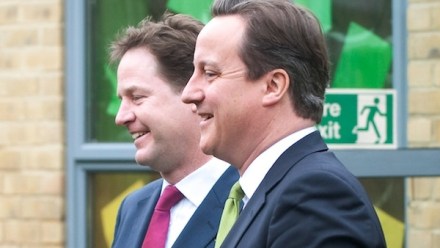
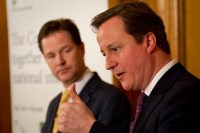
MPs are continuing to debate the cross-party deal on press regulation in the Commons at the moment. The debate has been divided between congratulations for the party leaders and their colleagues who hammered out the deal, and wariness from some Tory backbenchers about what the proposals actually mean. David Cameron insisted during the debate that this wasn’t statutory underpinning, but Nick Clegg said ‘of course’ when asked whether it actually was. Some Tory MPs agree with Nick: they believe this does include statutory underpinning. Perhaps the most forceful speech came from Charles Walker, who started his speech by saying that this country has a ‘pretty revolting’ press, but that he

Leveson Royal charter debate: statutory or non-statutory?

The three party leaders have just opened the debate on the Royal Charter. David Cameron was at pains to stress that this is not a ‘statutory approach’. But this was undermined by the deputy Prime Minister describing the approach as ‘a mix of Royal Charter and Statute.’ It was Miliband, though, who looked most satisfied with the deal. He dished out praise to those involved in securing agreement as if he was the Prime Minister. Labour are still in shock about how Letwin wandered into Ed Miliband’s office to negotiate last night without a political adviser or the backing of any other minister. One of the things that worries me

Number 10: Cameron was awake and available throughout the negotiations

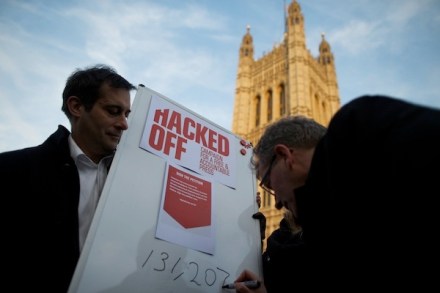
A senior Number 10 source tells me that David Cameron was awake and available throughout the Leveson negotiations. They also point out that Nick Clegg left the meeting at 11.30pm, before the crucial business was done. On the Hacked Off point, they insist that Oliver Letwin ‘very politely’ asked them to leave the room for the sensitive part of the discussions. I’m told that Cameron then chaired a 6am conference call on the result of the negotiations where he declared himself satisfied. He feels that he’s avoided a press law. Downing Street is bristling at the idea that they got the worst end of the deal. They argue that Hacked

Ministerial aides demand to support backbench vote on foreign criminals

All eyes are on what’s happening with the cross-party amendments to two bits of legislation on Leveson, but this afternoon in the Commons there could well be another row on the Crime and Courts Bill. As we reported last week, Conservative MP Dominic Raab has an amendment to the legislation which would limit the opportunities for foreign criminals to avoid deportation. It has over 100 MPs signed up to it, including Labour grandees such as David Blunkett. But I also understand that a number of Conservative PPSs have contacted their whips saying that they would like to support this amendment and that they want to be given leave to do

Press regulation: Ceci n’est pas une statute

The party leaders should finish their discussions on Leveson – by phone – in the next hour or so. We’ll then get a statement in the Commons on the outcome of those talks, and it’s highly likely that all three leaders will speak as part of that statement. But the big debate now is whether what they have signed up to already constitutes the statutory underpinning that David Cameron was so very keen to avoid. There are two amendments to two different pieces of legislation relevant to press regulation: one on the Crime and Courts Bill on exemplary damages, and one to the Enterprise and Regulatory Reform Bill which prevents

Harriet Harman and Maria Miller both claim victory in Leveson talks

Who has won in the late-night Leveson talks? Both Harriet Harman and Maria Miller seem to think their own party’s Royal Charter has come out tops. And one says they’ve secured statutory underpinning, while the other says there isn’t any underpinning. And again, one says the deal is done, while the other says the parties are ‘close’ to a deal. This is what Harman had to say on the Today programme: ‘There is an amendment going forward into the Enterprise and Regulatory Reform Bill which says that where a Charter says in that Charter it can’t be dissolved or amended without a two-thirds majority in both Houses then that should

Late night Leveson talks bring parties close to deal

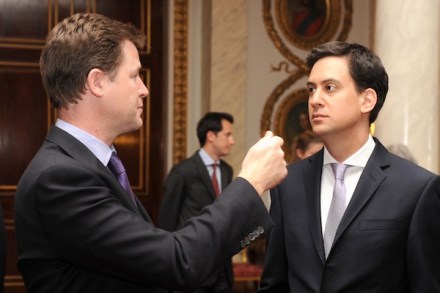
So it looks as though a deal has been struck on Leveson after late night talks. Oliver Letwin, Nick Clegg, Ed Miliband and Harriet Harman were holed up in Miliband’s office until 2.30 this morning, and Labour is now confident that it is close not just to an agreement on press regulation, but an agreement on its own proposals for a Royal Charter, rather than the government’s draft. As Coffee House reported on Friday, David Cameron was facing a rebellion of around 20 Tory MPs and a defeat in the House of Commons on his Conservative amendment which introduced the Royal Charter. That threat appears to have concentrated the mind

Afriyie fails the interview test

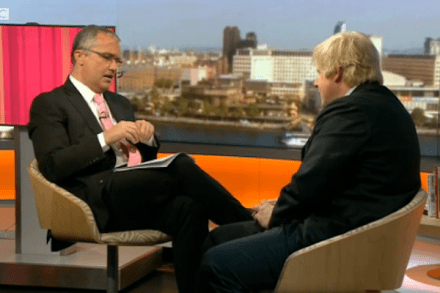
The Adam Afriyie leadership speculation has now got to the point where he’s been interviewed by Andrew Neil on the Sunday Politics. His first big broadcast interview as a potential leadership candidate was always going to be a big test for Afriyie and he failed to impress today. Afriyie, who looked like he’d been heavily coached for the encounter, failed to properly answer the questions put to him or to make a case for any alternative vision. He was even unprepared to say whether or not he supported means-testing pensioner benefits. On the whole question of his own ambitions, Afriyie was hugely unconvincing. Moments after declaring ‘I have no ambition

The BBC and religion

It is to David Lammy’s credit that he hasn’t deleted what my Spectator colleague, Hugo Rifkind, describes as his new all-time favourite tweet. For those who haven’t come across it yet, this is how the Tottenham MP responded to the BBC’s coverage of the papal election where it mentioned “white smoke”: This tweet from the BBC is crass and unnecessary. Do we really need silly innuendo about the race of the next Pope? twitter.com/DavidLammy/sta… — David Lammy (@DavidLammy) March 12, 2013 There were more solid grounds for criticising the BBC that day: the corporation again showed its problems understanding religion. It managed to find a translator for the Vatican election

Bookbenchers: Peter Lilley

Peter Lilley, the former Cabinet minister and current Tory MP, is this week’s Bookbencher over on the books blog this afternoon. He’s been sharing some of his favourite books, indulging his love for the Russian classics and revealing the allure of psychedelic fairytales. 

Jeremy Hunt continues his quest to make the Tories the party of the NHS

Jeremy Hunt used his address to the Conservative Spring Forum this afternoon as the next step in his quest to make the Conservatives the party of the NHS, not Labour. His speech was in some ways quite formulaic: it started with good news about health care in this country, then praise for the ‘extraordinary’ staff working in the NHS. But then it moved on to his duty ‘to be honest about the failures’ of the health service too. He said: ‘If you care about something you don’t try to sweep problems under the carpet – you expose them, sort them out and make things better. And by criticising us when