Uk politics

Is Boris really ready to lead the Tory party?

From our UK edition

Boris needs to pay attention. As James Allen said, 'Circumstances do not make the man, they reveal him.' Given his colourful character, discussion so far about Boris’s leadership potential has focused on the man himself; but politics is about being in the right place at the right time, as Churchill would attest. Unprecedented levels of national debt, a stagnant economy, a healthcare system that isn’t delivering, a Eurozone that may yet collapse into meltdown, a chronic housing shortage, endemic low productivity and a state that has stretched its tentacles into so many areas of people’s lives it is proving extremely difficult to disentangle – these are just a taste of some of the challenges Britain is facing and it’s not clear how Boris would handle them.

Trenton Oldfield: why I disrupted the Boat Race, and what it achieved

From our UK edition

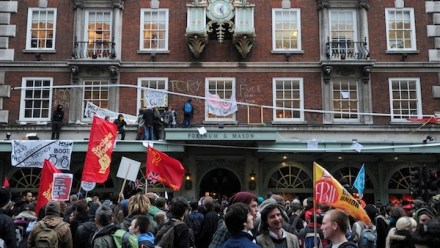
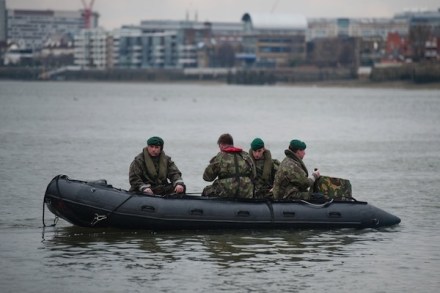
Trenton Oldfield has written in this week's Spectator that he won't be attending today's Boat Race but just in case, we learn today that Royal Marine Commandoes will be patrolling the Thames with thermal imaging equipment to look out for copycat stunt artists. Whatever it cost to imprison Oldfield will be as nothing compared to the cost of discouraging his epigones - real, or imagined. Having made such an impact, what does Oldfield think now? In this week's View from 22 podcast, he has what we can fairly call a sparky debate with Douglas Murray, a contributing editor for the Spectator. It's not for the faint-hearted.

George Osborne won’t be moved

From our UK edition

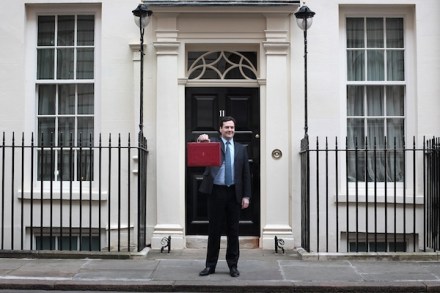
Today’s Sunday Telegraph front page has sparked off a flutter of speculation about whether George Osborne might be moved as Chancellor. I suspect that the short answer to this question is no. Osborne and Cameron are inextricably linked and to move him would be akin to the Prime Minister declaring that both his political and economic strategies have been wrong. He would not long survive such an admission. I also sense that Osborne’s stock in the parliamentary party is recovering from the battering it took with last year’s Budget. The fact that this year’s Budget was doorstep-ready, has survived the Labour and media onslaught and gone down relatively well with the voters has helped him with MPs.

What Tory MPs want and what the Tory party needs

From our UK edition

Matthew Parris’s column in The Times today is a good counter-blast to the idea that all Tory backbenchers are craving more policies that are bolder. As Parris points out, many of those defending seats against Laboour don’t want that. Indeed, if you had left it to these MPs I very much doubt that the government would have cut the 50p tax rate. He is also right that the desire to remove David Cameron—as opposed to grumble about him—is extremely limited. It is, though, as one senior MP pointed out to me earlier, worth noting that most Tory members of the Cabinet are in extremely safe seats. It is hard to imagine Witney going Labour, while Neil Hamilton had to be caught up in cash for questions before Tatton left the Tory fold.

Eric Hobsbawm: a life-long apologist for the Soviet Union

From our UK edition

In last week's Spectator, Sam Leith reviewed Eric Hobsawm's Fractured Times. Our ex-political editor and drink critic Bruce Anderson thinks Leith has missed a basic point about Hobsbawm's career. Here is Anderson's riposte in full: In his review of Eric Hobsbawm's 'Fractured Times' (Spectator, 23 March). Sam Leith misses the basic point: the basic treason. Throughout his career, Professor Hobsbawm was an apologist for the Soviet Union. This was forgivable in the 1930s, During that desperate decade, many thoughtful people despaired of liberal democracy and believed that they had found solace in Moscow. But after 1945, as the evidence mounted, Eric the Red kept the faith.

Scotland’s War on Clothes: Be Careful What You Wear

From our UK edition

Welcome to Scotland, a land where freedoms of expression and other liberties are treated so seriously that the police and prosecuting authorities would never dream of monitoring and judging the clothes you wear. If that sounds like fantasy it's because, alas, it is. Yes, this is now a country in which wearing the "wrong" kind of t-shirt will land you in court and, as likely as not, result in you being convicted of a breach of the peace. For real. I draw your attention toa recent case at the High Court of Justiciary and the opinion delivered by Lord Carloway (a man who, it might be noted in passing, thinks the need for corroboration is a quaint and medieval relic that has no place in a modern justice system). Last August Kevin Maguire was convicted of a breach of the peace. His crime?

Fifty years on from Beeching and Britain’s railways are better than ever

From our UK edition

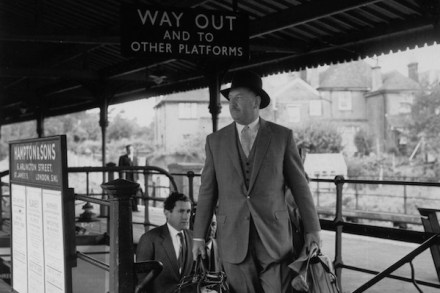
On 27 March 1963, ‘The Reshaping of British Railways’ was published. Better known as the Beeching Report, the paper was a seminal moment for Britain in the twentieth century. Dr Beeching’s report (and subsequent axe) recommended the closure of 5,000 miles of tracks and 2,363 stations, with 67,000 jobs lost. Most of Beeching’s initial suggestions were eventually implemented and our railways were changed forever. Beeching is still a controversial figure. The trade unions, then and now, paint him as a mad axeman who destroyed a noble institution and the livelihoods of thousands of railway men. No wonder one ‘Dr B. Ching’ is still lampooned in Private Eye every week. But serious reforms were needed.

Liberal Democrat spinners spin away the past

From our UK edition

A conundrum for ambitious Liberal Democrats who have seen their CVs blighted by the scandal surrounding former party Chief Executive Lord Rennard. Though the portly peer denies all allegations of sexual impropriety with a stream of female staff, that has not stopped party hacks and flacks, both past and present, tinkering with their résumés. With his all-encompassing role as Chief Executive and general overlord of the party for nearly two decades, a reference from Rennard must have seemed like a golden ticket on CVs in the endless revolving door between politics and lobbying.

Who points the finger? Darius Guppy offers a defence of Boris Johnson

From our UK edition

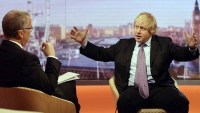
Eddie Mair has more front than Harrods. Consider this: a member of the British Media, Mr Mair, berates another former such member, Boris Johnson, for making up quotes! What planet are you living on, Mr Mair? Making things up is what people in your profession do for a living! The Leveson Inquiry focuses on one particular scandal - but hacking into voicemails is among the least of the crimes committed by a metier which is almost single-handedly responsible for the cultural degradation of an entire nation. Next, Mr Johnson, a politician, is criticised for lying to another politician, Michael Howard, all the while his interviewer feigning horror and surprise. Again, Mr Mair, what brand of glue are you sniffing? That’s what politicians do. Yes, they lie. Just like journalists.

Exclusive: the police have offered to HELP Trenton Oldfield protest at the 2013 Boat Race.

From our UK edition

Trenton Oldfield, the Australian who was fished out of the Thames last year when disrupting the Oxford-Cambridge Boat Race, is now out of prison and has written a piece for tomorrow's Spectator about his experiences. In it he reveals that the Metropolitan Police have offered to help him protest at the 159th Boat Race taking place this weekend. This is what he has to say: 'Throughout the week, via lawyers, I have received some elegantly crafted emails from Scotland Yard’s Liaison Gateway Team (‘a small unit of officers dedicated to facilitating peaceful protest’). They ask how they can help me organise a protest at the university boat race this year. Their ‘total policing’ sometimes includes pre-emptive arrests.

David Miliband quitting UK politics

From our UK edition

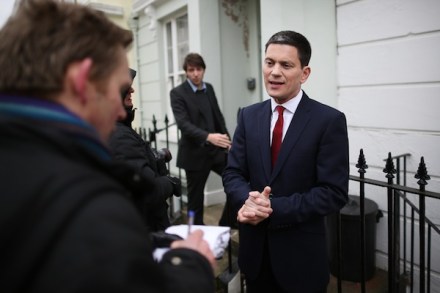
David Miliband is quitting the House of Commons to go and work for the International Rescue Committee in the United States, the Daily Mirror has revealed this evening. Friends of both Miliband brothers have long thought that David, who expected to win the Labour leadership contest in 2010, was not really prepared to serve under Ed. David’s departure confirms that. I also suspect, as John Rentoul points out, that David had realised that he was never going to be Labour leader. Ed Miliband’s position is so secure that it is pretty much a certainty that he’ll lead Labour into the election. It was also always highly unlikely that Labour would replace one Miliband with another.

Could a digital and more transparent NHS prevent another Mid Staffs scandal?

From our UK edition

Digital politics is all the rage. Take what Rachel Sylvester described in today’s Times as ‘digital Bennism’ — an online movement that is becoming increasingly influential to the Labour party’s campaign methods. And in the forthcoming Spectator, I’ve a piece discussing why policymakers are adopting internet-centric ideals to challenge the traditional way of doing things. The government’s digital ventures were discussed at Policy Exchange this afternoon. Rohan Silva — David Cameron’s senior policy advisor — said the government’s digital work is the ‘most radical thing people haven’t heard of’.

Leveson: Don’t be frightened by the state

From our UK edition

If David Cameron had any sense, he would stand up in the Commons and say “I am withdrawing the Royal Charter. The law officers have assured me that Lord Justice Leveson, though a fine judge in many respects, did not understand the Human Rights Act. He failed to see that the courts would almost certainly find that his plans to force newspapers and websites to join his regulator by hitting them with punitive fines were unlawful in practice. My problem is that too many in Parliament cannot see it either. “There is a madness here in Westminster; a fanaticism which I, as a traditional Tory, find distasteful. I do not like officials in the Department of Culture Media and Sport drawing up lists of who must submit to censorship – the Angling Times, no, Hello!

The Scottish Tories Cross Their Rubicon

From our UK edition

Alea iacta est. And not before time. More than a year ago and at the outbreak of this independence referendum virus I wrote an article for this magazine arguing that, crikey, there was just a hint that the Conservative and Unionist party might become relevant in Scotland again. Or, at any rate, there was an opportunity for them to do so. You see, the referendum offered Tories a chance to press the case for something they should have embraced long ago: proper fiscal autonomy within the Union. This might satisfy Scots' evident thirst for real Home Rule without needing to go to all the trouble of winding up the Union after 300 years. And - let joy be allowed to gambol briefly in the winter sunshine - Ruth Davidson today has moved towards embracing this logic.

Cameron sticks to the script at the ’22

From our UK edition

David Cameron has just delivered his end of term address to the 1922 Committee of Conservative backbenchers. The Prime Minister made little news apart from going out of his way to praise Maria Hutchings, making clear he had no truck with efforts to blame her for the party’s poor performance in the Eastleigh by-election. He stuck to the same messages that he had when addressing the parliamentary party the other week, one backbencher left complaining ‘we’ve heard it all before.’ But what should cause some concern Number 10 is how few MPs turned up to hear the Prime Minister. The audience was estimated at between 80 and 100, less than a third of the parliamentary party.

Despite the fanfare, David Cameron still isn’t doing anything on immigration

From our UK edition

Well, it was right not to expect much. The full text of David Cameron’s speech on immigration is here but it can be summarised in one sentence: ‘mass migration has brought some good things, but it has also brought problems so here is some tinkering we propose.’ There are so many problems when our politicians speak on this subject. Not least is that they expect to be congratulated for saying the utterly obvious. For instance, most British people worked out a long time ago that those of us who already live here ought to have priority in housing over people who have just arrived. We also worked out some time back that an NHS which provides for the whole world is unsustainable and that if people haven’t paid into the system then the system shouldn’t pay out.

Momentum grows for EU referendum bill

From our UK edition

One other area besides immigration where Tory MPs want their leader to go further than he feels he can is, unsurprisingly, Europe. There is growing pressure within the party for the Prime Minister to get legislation on the floor of the House of Commons which would guarantee a referendum in the next Parliament. This is what Bernard Jenkin, who favours a referendum sooner than 2015, has to say: 'The Prime Minister's veto in 2011 gave his poll ratings a great fillip, but that veto was just ignored. They just decided to go ahead with the Fiscal Union Treaty anyway but without the UK. And the UK did not achieve any safeguards to protect UK banking and financial services which the PM was then demanding.

What Tory backbenchers want on immigration, and what the PM can give them

From our UK edition

David Cameron knows that immigration is an issue that bothers voters, and that the mainstream parties have snubbed it in recent years to their detriment. So his speech today is partly an attempt to regain ground from UKIP, which fought a campaign in Eastleigh that was all about immigration, bringing every gripe back to that. He also knows, as I explained on Friday, that Tory MPs are preparing for the first dedicated Commons debate on Bulgarian and Romanian migrants, and he wants to take some of the steam out of that by announcing clear measures to reduce the 'pull factor'. Those measures, which the Prime Minister will detail in a speech in Ipswich, include: Cutting access to benefits for non-UK nationals after 6 months.