Uk politics

Things are looking up for the Tories

From our UK edition

There’s a distinct sense of optimism in the Tory ranks today. First, there’s relief that a triple dip recession has been avoided. Dire economic news would have ended the rare outbreak of unity in the Tory party. Second, the changes to Number 10 and the newly announced policy board have gone down well with Tory MPs. Even those who have not been offered a role are pleased at this broadening of the Cameron operation; the recall of Peter Lilley to the colours has gone down particularly well. For the first time, there’s a feeling that Cameron is prepared to consult and listen to his party and that is prepared to be led. If this Tory unity can survive next week’s county council elections, then politics could get very interesting.
GDP relief leaves spotlight on a Labour party under pressure

From our UK edition

Westminster has felt rather muted over the past few weeks: it may well continue to do so today, but for good reasons. That the first estimate of Q1 GDP figures recorded growth of 0.3 per cent means Labour spinners have to work much harder on falls in certain sectors in order to get their points across, and that George Osborne and David Cameron can relax, knowing they've just been gifted more good feeling in their party until at least the local elections. After the building tension over today's figures came a really rather good anti-climax. This means that the spotlight remains on Labour, and not the Conservative party. Len McCluskey's intervention yesterday - slapped down by Ed Miliband as 'reprehensible' - is just one of a number of cracks appearing in the party's unity.

No triple-dip: GDP up by 0.3%

From our UK edition

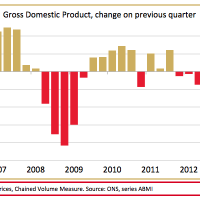
The UK seems to have avoided a triple-dip recession. According to today's estimate from the Office for National Statistics, the economy grew by 0.3 per cent in the first three months of 2013. But it is important to remember that this is just a first estimate, with a margin of error of ±0.7 points. So today's figure could still be revised down to show a triple-dip, or revised up to show stronger growth. This still leaves GDP 2.6 per cent below its pre-recession peak, five years after the downturn hit.

The View from 22 — Sex and success, Conservative vs. Labour unity and the two-wheeled tyranny of cyclists

From our UK edition

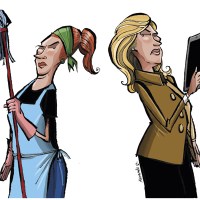
What do Margaret Thatcher, Sheryl Sandberg and Angela Merkel have in common? They are the ultimate alpha-female icons, according to Alison Wolf. In this week's Spectator cover feature, Alison examines the ultra-competitive female elites who are pulling ahead and leaving the rest of the 'sisterhood' behind. On this week's View from 22 podcast, the Spectator's deputy editor Mary Wakefield discusses with Alison what makes an alpha female, why they are only interested in alpha males and how feminism is response for this new divide. Melissa Kite and Gary Lingard also debate whether the world now revolves around cyclists. In this week's magazine, Melissa argues that beautiful country paths should stop be turned into tarmac cycle routes.

A rare mood of unity descends on the Conservatives

From our UK edition

The idea that ‘loyalty is the Conservative party’s secret weapon’ was always dubious. Benjamin Disraeli, for instance, made his name attacking a sitting Conservative prime minister. This, though, did not stop him becoming arguably the party’s most celebrated leader. But in recent years, the ‘loyalty’ adage has become a joke — one that has taunted leader after leader as they struggled to deal with an increasingly rebellious party. The party changed leaders four times in the eight years between 1997 and 2005. In these opposition ‘wilderness’ years, changing a leader was the closest to power that Conservative MPs came. Leadership plotting gave an odd sense of purpose to their presence at Westminster.

My battle with Britain’s mean, ineffective immigration system

From our UK edition

When I first came to this country nearly a decade ago, Britain wanted immigrants like me. Back then you could get a visa just for being creative. It was called the ‘Artist, Writer, Composer Visa’ — a Blairite flight of fancy if there ever was one — and all you had to do was fill out a form proving that you’d made a name for yourself in your country of origin in one of those three disciplines. The application, as I recall, made a point of including conceptual artists and sculptors. I’d published a novel in Canada, so I was in. It was that easy. Thinking about it now makes me want to weep. Back then, Britain was more upbeat. There were jobs in the media and journalists still had expense accounts.

Cameron keeps his friends close, but now he’s drawing his MPs closer

From our UK edition

David Cameron and the Tory party appear to be emerging from a period of marriage counselling that has gone particularly well. The leader is making more of an effort with his backbenchers generally (James examines this in his column tomorrow), and tomorrow's papers bring yet more news of reconciliation. The Prime Minister is beefing up his political policy operation by appointing a panel of bright and impressive MPs to help him, and promoting Jo Johnson to be his head of policy and a Cabinet Office minister. Those MPs aren't just impressive, though: some of them, including Jesse Norman and George Eustice, are also rebels. This is a big gesture to say that the troubles of the past year and a bit should go behind the party now as it gets in shape for 2015.

Do the Americans want Britain to renew Trident?

From our UK edition

What is the point of Britain's nuclear deterrent? If it is an insurance policy it is a remarkably expensive one that might not, in any case, ever be honoured. I suspect that, more importantly, retaining an independent [sic] nuclear capability is a psychological crutch for politicians who fear that leaving the nuclear club would somehow make it harder for Britain to remain a member of the Top Nation club. And perhaps it would. This is not necessarily a trivial thing. It would change the way we think of ourselves and might, in some sense, be considered an admission of defeat or as some kind of retreat. No Prime Minister wants to be the guy remembered as that guy and this, plus other institutional pressures helps make the case for replacing Trident. But at what cost?

How David Cameron is improving his relations with Tory backbenchers

From our UK edition

There has been a rare outbreak of unity in the Tory party in recent weeks. It is the product of several factors - the bonding effect of honouring Margaret Thatcher, the influence of Lynton Crosby and a growing sense on the Tory benches that Labour are beatable. Another important element of it is that David Cameron has found a better way to interact with his own MPs. As one senior Number 10 figure told me, ‘Rome wasn’t built in a day. But for the first time, I think, we have a proper systematic way of engaging with the party.’ One element of this is more serious policy discussions with MPs. Indeed, I understand that Number 10 is now trying to systematically involve MPs in policy making.

Wisecracking May announces new treaty with Jordan for Qatada deportation

From our UK edition

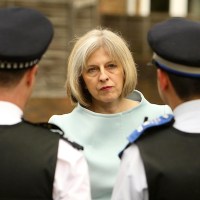
So in spite of great excitement beforehand, Theresa May didn't confirm that the UK will seek a temporary withdrawal from the European Convention on Human Rights. Instead, she announced a new treaty - a mutual legal assistance agreement - with Jordan in order to enable Abu Qatada's deportation. This wasn't nearly exciting enough for Tory MPs, who started demanding that the UK ignore the Convention and jolly well put Qatada on a plane today. May decided the best way to respond to this would be to crack a joke using Mark Reckless' surname while explaining to him why the government must abide by the laws to which it is currently subject.

Theresa May tries to calm Snooping Bill nerves

From our UK edition

It seems the Home Office is growing a little bit nervous about its flagship Communications Data Bill. I understand that Home Secretary Theresa May took time out of an Abu-Qatada-packed day yesterday to ring internet service providers to try to give reassurances about the legislation. As I explained yesterday, there's a growing sense in Westminster that this Bill won't survive. Many backbench Tory MPs tell me of a rumour sweeping their party that it is already dead. Other sources involved in the negotiations suggest that there's a possibility that the Home Office might jettison the more controversial parts of the legislation in order to get the darned thing through.

Ministers mull dramatic measures to succeed in Qatada battle

From our UK edition

When Theresa May makes her statement on Abu Qatada to MPs today, she will be expected to give further details on plans reportedly mooted by the Prime Minister to temporarily withdraw Britain from the European Convention on Human Rights. This is a high-risk strategy for two reasons. The first is that by so clearly involving himself in the process, the Prime Minister risks being damaged by the fallout from another failed attempt to get Qatada out. The second is that a temporary withdrawal from the Convention, even to remove a hate preacher than all agree should have left this country long ago, will send Cameron's Liberal Democrat coalition partners into orbit. The PM held a meeting with May, Justice Secretary Chris Grayling and the Attorney General Dominic Grieve yesterday.

How the Snooping Bill could end up dead in the water – sooner or later

From our UK edition

When Cabinet met this morning, ministers didn't discuss the Communications Data Bill, which the government hopes to get into the forthcoming Queen's Speech. But there is a growing sense in Westminster that it won't make it out of the Commons alive - if it even manages to make it into the Commons. Here are three different scenarios for what could happen to this controversial piece of legislation: 1. The Bill fails to make it into the Queen's Speech. Discussions about the legislative programme for the next parliamentary year are taking place at the moment.

No-one does anti-politics stand-up like Nigel Farage. But what about that tax policy?

From our UK edition

Nigel Farage joined lobby journalists in Parliament for lunch today. Like many of his hustings, it was a box office event, and indeed like many of those campaign trail appearances, he made plenty of the same jokes that those who follow him about have heard many times before such as the one about being married to a foreigner, and about the problem with the Westminster bubble: 'They look the same, they sound the same, God! They're dull! I mean, they are not much fun to be with.' Farage, of course, is fun to be with.

PM and Osborne prefer their ‘own words’ to describe miserable economy

From our UK edition

George Osborne might have used Justin Welby's comments on the problems with the banks this morning as a sign that he has at least one ally out there, but this afternoon, the Prime Minister's official spokesman distanced the government from the Archbishop's use of the word 'depression' to characterise this country's current economic circumstances. He said: 'The Prime Minister agrees with the point the Chancellor of the Exchequer was making when he was asked that question this morning. What the Chancellor said was that he agreed with the Archbishop's analysis that we have a slow and difficult recovery because of the problems in the banking system and those are the problems that need addressing.

Are the SNP’s plans for a currency union a) Expedient, b) Sensible, c) Dangerous or d) All of the Above

From our UK edition

Even if George Osborne is right about the problems of a currency union between an independent Scotland and the rest of the UK he possesses the uncanny knack of being right in such a disagreeable fashion that one's loath to give him any credit at all. Still, as an attack dog he has his uses and he has picked an interesting day - St George's - to come to Scotland to noise up the Jocks. I don't know if the SNP will mind this too much. The nationalist view, I think, is that people will concentrate more on Osborne's manner than on the substance of what he is saying. This may be correct but it is also the case that it does remain possible for something to be said by George Osborne and still have some measure of truth. Even so, the bank note question is a red herring.

Deficit falls by 0.3%… maybe

From our UK edition

George Osborne will be breathing a sigh of relief this morning. The boast he made in his Autumn Statement in December — 'the deficit is coming down this year, and every year of this Parliament' — appears to have held up. But only just. The figures from the ONS today show that the government borrowed £120.9 billion in 2011-12 and £86.2 billion in 2012-13. But that 2012-13 figure is artificially lowered by £28 billion by the Royal Mail pension transfer, and by a further £6.4 billion by the cash transferred to the Treasury from the Bank of England's Asset Purchase Facility. Strip out those two effects and borrowing in 2012-13 was £120.6 billion — still lower than 2011-12, but only by £300 million, or 0.3 per cent.