Uk politics

Lord Lawson doubts David Cameron’s EU power

From our UK edition

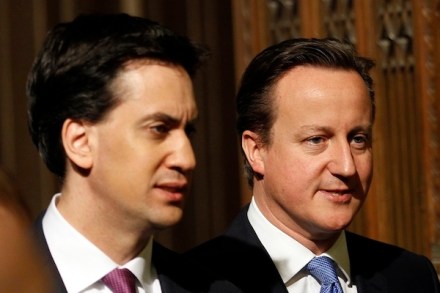
The most damaging element of Lord Lawson's intervention on Europe in today's Times is not so much his decision that the facts have changed and that he would vote to leave the European Union in a post-2015 referendum, but his lack of faith in David Cameron's ability to secure any notable reforms. He writes: 'We have been here before. He is following faithfully in the footsteps of Harold Wilson almost 40 years ago. The changes that Wilson was able to negotiate were so trivial that I doubt if anyone today can remember what they were. But he was able to secure a 2-1 majority for the 'in' vote in the 1975 referendum. 'I have no doubt that any changes that Mr Cameron - or, for that matter, Ed Miliband - is able to secure will be equally inconsequential.

Ministers made a poor use of Parliament on press regulation

From our UK edition

The government's decision to delay signing off the Royal Charter for press regulation was initially heralded as a dramatic change of heart, before being re-sold by those involved in the process as just a box-ticking exercise to avoid legal action. Either way, there is a growing noise not just about the rival charters now on offer, but also about the way the government's deal was brought before parliament. Shami Chakrabarti's disquiet over the proposals was widely picked up at the weekend. But there is also a growing unease in the Conservative party about the way Parliament voted on the legislative aspects of the new plan at such short notice. 'We were bounced into it,' one MP told me recently. 'If we'd had time to think about it, there would have been uproar.

Government caution makes Help to Buy warning all the more worrying

From our UK edition

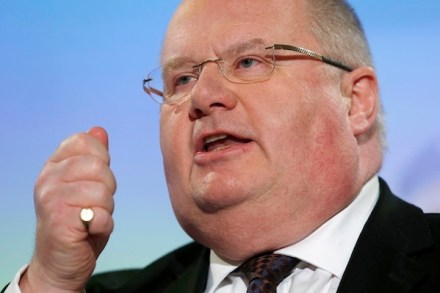
The introduction of the Help to Buy scheme was the only very small bone of contention in this year's successful Budget (successful politically, that is, in that no-one talks about it a month and a half later). The announcement itself was a political win for Communities Secretary Eric Pickles, who believes that the only problem left now is access to credit, over those in the Treasury who had, at one point at least, hoped to re-open the debate about planning regulations in order to increase supply. It is too soon to tell, of course, whether the scheme itself will be a roaring success: it only celebrated its first completion a week or so ago.

The Tory party holds its nerve – for now

From our UK edition

The dust is settling from the County Council elections and, crucially, the Tory party seems to have stayed steady. Yes, David Davis has had a pop at the number of Old Etonians surrounding the PM and 20 MPs have called for a mandate referendum. But there is no sense of mass panic or revolt. Partly this is because David Cameron had already started doing the things he was going to be told to do after this result. As one Downing Street source remarks, ‘the shift is already well under way.’ He points to the tougher measures on immigration and welfare coming up in the Queen’s Speech and Number 10’s new efforts to involve Tory MPs in policy-making. Another thing steadying the Tory party’s nerves is that Labour did not do that well on Thursday.

The coalition should have extended anonymity on rape cases

From our UK edition

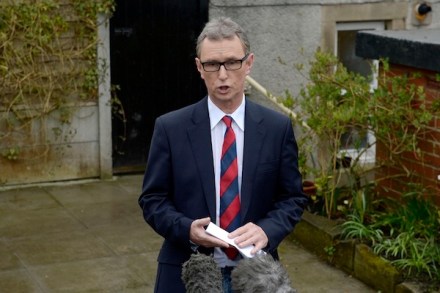
No one can ever recover from being wrongly accused of sexual assault, which is why I welcomed the government’s plan to 'extend anonymity in rape cases to defendants'. Turns out that Coalition Agreement pledge was a blunder: the Tories thought it was a Liberal Democrat idea and vice versa. When they worked out that neither of them wanted it, the idea was dropped – even though three-quarters of the public back it. Had this policy been introduced we might not know that Nigel Evans, a Tory MP and deputy speaker, was last night released on bail after being held on suspicion of raping one man and sexually assaulting another. He has not been charged but a man publicly accused of such an offence can expect his life, as he knew it, to end.

David Davis and the Tories’ class war

From our UK edition

To the relief of Conservative Campaign Headquarters, relatively few Tory MPs have taken the opportunity of the County Council election results to sound off. The most prominent exception to this rule is David Davis. Now, a DD intervention doesn’t have quite the same purchase as it used to—he’s made rather too many of them in recent years. But his comments are revealing of the huge amounts of class tension inside the Tory parliamentary party. He complains that the rebellions of Jesse Norman and Nadine Dorries have been treated differently because one went to Eton and one to state school. I suspect, though, that the actual explanation is that Dorries crafted hers to cause as much personal and political damage to the Prime Minister as possible.

Local elections 2013: in numbers

From our UK edition

335: total councillors lost by the Tories 291: seats gained by Labour 124: losses sustained by the Lib Dems 139: seats gained by UKIP 147 UKIP council seats after today's results 10 councils lost by the Tories 2 councils gained by Labour 13 councils now in overall control, up 8 17: the largest gain by UKIP in any council, in Kent 24: the most councillors gained by Labour in one local authority, in Durham 6,505: Emma Lewell-Buck's majority as the new Labour MP for South Shields, down from 11,109 achieved by David Miliband in 2010.

The backbench Tory plot to get a referendum bill into the Commons – and the row that will surely follow

From our UK edition

John Baron and  Conservative backbench colleagues have been out and about insisting that today's results underline the need for legislation in this parliament for a referendum on Britain's membership of the EU after 2015. But Tories and Lib Dems in Number 10 were clear yesterday that this can't come as a government bill because of the realities of Coalition. But there will be a bill that comes forward. And it looks like it will cause its own almighty row. Those around the Prime Minister have been dropping pretty hefty hints to Tory MPs that though there won't be a government-sponsored bill, if there is 'any other way' of bringing legislation before the Commons, they would be sympathetic. There are two routes by which this can happen.

Tory MP suggests Nigel Farage takes Nick Clegg’s place in 2015 debates

From our UK edition

Today's results for UKIP have re-opened the question of whether Nigel Farage should join the three political leaders in the live TV election debates in 2015. David Cameron's allies are clear they don't want that, and Nick Clegg was very dismissive when asked about this on the BBC. He said: 'I'm not going to start making up the minds of the broadcasters. I think the next general election will be all about who are the parties who can actually govern this country in Westminster. We've been here before where UKIP has done well and then not done well in subsequent general elections.' If Clegg doesn't fancy being savaged live on TV by Farage, then his ever-helpful friend Peter Bone has a solution.

English patriotism is one of the overlooked reasons for UKIP’s rise

From our UK edition

What can account for UKIP’s remarkable surge in support in these elections? The conventional wisdom is that UKIP is now the ‘go to’ party for protest voters. Angry over Europe and immigration? Vote UKIP. Fear for your job and the future of the economy? Vote UKIP. Feel the main parties are ‘all the same’, run by metropolitan elites who don’t know how ordinary people live? Vote UKIP. There is doubtless something in all of the above, but there is perhaps another explanation – overlooked until now - for UKIP’s rise: the growing tide of English patriotism. Earlier in the year, figures from the 2011 census showed there had been a dramatic strengthening of English national identity in the last decade.

Sources tell Coffee House Cameron will mark an end to ‘fruitcakes’ name-calling

From our UK edition

We could see a further tightening of the reconciliatory line that the Tories seem to be adopting on UKIP when the PM gives his response to the local elections later today. I hear from very well-placed sources in the Tory party that David Cameron plans to mark an end to the name-calling, acknowledging that it is time to take seriously the concerns of those who decided to vote UKIP yesterday. The Tory lines to take - reported by Guido - include this quote: 'Of course we understand why some people didn't vote for us - we need to focus even more on the things that matter to hardworking people: turning the economy around, fixing welfare, helping with the cost of living and controlling immigration.

Lib Dems try to avoid their own local election jitters

From our UK edition

The dominant narrative in the build-up to these local elections has been all about UKIp vs the Tories, with a bit of angst about Labour's southern mission thrown in. The Lib Dems didn't really get a look in. They had moved to a reasonably stable position after romping home in the Eastleigh by-election, but today's results could change that. Their awful showing in South Shields - coming 7th - will shake the party, but so will any surprise big losses. The party has already failed to take control of Somerset County Council, which was one local authority it had focused a great deal of effort on. Sending out Tim Farron to do the expectation management hard work this morning was a good attempt at maintaining party unity.

Welcome to Ukipland: where Nigel Farage’s dreams come true

From our UK edition

‘Where do you expect to do well in these local elections?’ I asked the Ukip spokesman. ‘England!’ he boomed down the phone. On Wednesday afternoon, this seemed typical of Ukip's bullish exuberance but judging by their predicted ‘phenomenal performance’ parts of Britain (like Boston) have become Ukipland overnight. Yesterday, I went to find some real Ukip voters in the Home Counties and discover why they have abandoned the three main parties. Nigel Farage stood in Buckingham at the 2010 general election and received just 17 per cent of the vote against Commons speaker John Bercow.

Tories now see ‘fruitcakes’ and ‘clowns’ as serious voters impatient for change

From our UK edition

We've only had a few results through in the local elections, but already the parties are giving their verdict on the way last night worked for them. One thing to watch today is the development of a Tory line on UKIP. There hasn't been one in the run-up to polling day, but will there be a concerted effort from the Conservative leadership to produce a clear message about what Nigel Farage's success means for the Tories? Grant Shapps certainly managed to stick to the Tinkerbell strategy of trying not to say 'UKIP' or 'Nigel Farage' in his Today programme interview. But he also stuck to the sympathetic portrayal of those who vote UKIP - rather than its candidates and now elected representatives - as people 'impatient for change'. He also told voters 'this is a loud and clear message.

Nigel Farage, the anti-politician

From our UK edition

Nigel Farage was in full anti-politics mode this morning on the Today programme. He railed against ‘three frontbenches that look and sound the same’ and ‘haven’t done a proper day’s work in their lives.’ Farage is determined that Ukip be can both a protest party and a party with policies. He wants to offer himself to anyone who is fed up with the established order and wants to stick two fingers up at the main political parties. But he also wants to advance a radical policy prospectus. Interestingly, he said he wasn’t a Tory but he had been a supporter of eighties radicalism. So far, the Farage approach appears to be working; even those in Number 10 expect Ukip to top the poll in the European elections.

Local elections: UKIP’s ‘phenomenal performance’

From our UK edition

What few results there have been so far suggest that UKIP has scored about a quarter of the vote and gained more seats than Labour.  A 'phenomenal performance' says Prof John Curtice. Nigel Farage now looks like the main winner, suggesting that his party is mutating from an EU protest party into a being broader party of the working class. The local elections have nothing to do with the European Union so there's no rational reason that one-in-four voters would chose UKIP — unless they believed the party was addressing their concerns on wider issues. The reason that David Cameron's referendum pledge did not shoot the UKIP fox is that Farage has adopted a broader agenda, and one he has successfully communicated to millions of voters.

The arts, the Ancient Greeks and Maria Miller

From our UK edition

The Culture Secretary, Maria Miller, has said the arts world must make the case for public funding by focusing on its economic, not artistic, value; it must ‘hammer home the value of culture to our economy’. The ancients would have wondered what she was taking about. There was no concept of ‘the arts’ in the ancient world; nor any concept of ‘art’, at least among the Greeks. What we call ‘art’ was, in Aristotle’s definition, ‘the trained ability to make something under the guidance of rational thought’. It was, in other words, craftsmanship. So ‘artists’ were regarded rather as we would regard car mechanics or dentists.

Labour hold South Shields with Ukip 2nd and Lib Dems 7th

From our UK edition

The result is now in from South Shields. As expected, Labour have held the seat. Ukip have come second, with the Tories third and the Liberal Democrats a spectacularly bad seventh. Ukip’s second is more impressive when you consider that they didn’t even stand in the constituency in 2010. It is a sign that they are fast becoming the default protest party across England. Only a handful of county councils are counting overnight, and they are all Tory controlled. But John Curtice, the elections expert, has already told the BBC that Ukip looks like doing as well as the polls suggested. At 12.15am, Ukip is averaging 26% in the BBC’s key wards.