Uk politics

Childcare row becomes more about Coalition and less about the policy itself

From our UK edition

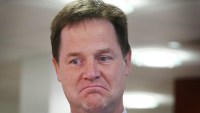
It is not an enormous surprise that Nick Clegg has confirmed that he will block the government's plans to relax ratios for childcare providers. The Tories working on the plans seemed entirely resigned to losing them a month ago. But what is interesting is that this row is becoming the new boundary reforms for the Coalition. It might not have long-reaching political effects like the demise of those changes to constituencies, but this is now an argument about process, who-did-what-when, and who-definitely-didn't-say-that-at-all. The Tories are annoyed, once again, that the Lib Dems are briefing the demise of these proposals before the whole package to reduce the cost of childcare has been finally agreed.

Want to know what the next election will be like? We saw this week…

From our UK edition

Tory MPs were in buoyant mood as they dashed off to the 7 p.m. vote on Monday night. They shouted out hearty greetings to each other, slapped backs and had a spring in their step. They were buzzing in the way a fielding team does just after the fast bowler has hit a star batsman a painful blow on the body. The cause of this excitement: No. 10’s display of brute political force over the lobbying bill. When news first broke of Patrick Mercer’s troubles, the Cameroons could barely conceal their schadenfreude. They were not going to mourn the political demise of Cameron’s most vituperative backbench critic. But the headlines were still about Tory sleaze. Labour began demanding to know why the government had abandoned plans for a statutory register of lobbyists.

Take it from a former barrister: Chris Grayling is right to reform legal aid

From our UK edition

Shakespeare took it a little far in Henry IV, Part II, when Dick the Butcher said, ‘Let’s kill all the lawyers.’ Chris Grayling hasn’t made the same proposal but you could be forgiven for thinking otherwise, listening to the howls of anguish and indignation coming from the Inns of Court. Grayling, the first non-lawyer to be made Lord Chancellor since the 17th century, has simply said he wants to make some savings in the legal aid bill. To the lawyers, unaccustomed to having their privileges and subsidies challenged by anyone, this means war. Already, 90 millionaire QCs — poor, impoverished Cherie Blair among them — have written a letter to the Telegraph attacking legal aid cuts for judicial review cases.

How social media helps authoritarians

From our UK edition

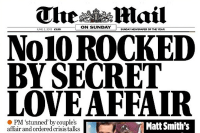
Have you heard? Do you know? Are you, as they say, ‘in the loop’? When the Mail on Sunday said a ‘sensational affair’ between ‘high profile figures’ close to Cameron had ‘rocked’ No. 10, did you have the faintest idea what it was talking about? I did, but then I’m a journalist. Friends in the lobby filled me in on a story which had been doing the rounds for months. I even know which law stopped the Mail on Sunday  following the basics of journalism and giving its readers the ‘whos’, ‘whats’, ‘whens’, ‘whys’ and ‘hows’. (Although with most affairs the ‘whys’ are self-evident.

Why did my old friend Patrick Mercer fall for a sleaze sting? I’m pretty sure I know

From our UK edition

It’s sleaze time again in Westminster. A few good stings by the broadcasters and the press and we see his lordship ‘Nuclear’ Jack Cunningham coining it by asking for £12,000 per month to make use of his extensive contacts and also his ability to get a table on the terrace of the Lords. £12,000 a month! His dad, Alderman Andrew Cunningham, did three years in chokey for his role in the Poulson affair, back in the 1970s. Two other members of the Upper House were filmed similarly grasping at the loot on offer from the Sunday Times. And then there’s Patrick Mercer MP, who has resigned the government whip and will not be standing again in Newark.

The Syrian quagmire

From our UK edition

What will it take before the UK decides to supply the Syrian rebels with arms? Many are cautious about whether this measure would really make the conflict any better, but William Hague has made it clear that he believes there is a strong case for at least threatening to do so. Further evidence of chemical weapons usage by the regime against the Syrian people suggested again this week that the 'red line' for action has definitely been crossed, but today Number 10 tried to spell out the thinking behind an apparent delay in acting. The Prime Minister's official spokesman said that the decision to not renew the EU arms embargo was part of a 'very clear, concerted approach that is designed to send a clear and unambiguous signal to the Assad regime.

The political centre just moved, to the right

From our UK edition

Today must count as one of the most encouraging days for the centre right in British politics in recent times. Labour’s apparent abandonment of universal child benefit is a massive blow to the 1945 settlement. It is akin in significance to when Labour began to accept the privatisations of the Thatcher era. Now, there’s no intellectual difference between declaring that better off pensioners won’t receive winter fuel payments and that better off mothers won’t receive child benefit. But in symbolic terms, the difference is huge. The winter fuel payment is a recent addition to the welfare state, introduced by the last Labour government. It is not fundamental to it.

Prime Time for Nationalists: STV screens a 60 minute advert for the SNP

From our UK edition

Until now, television coverage of Scotland's independence referendum has largely been confined to news bulletins and specialist, late night, political programmes unwatched by most of the general public. In that sense, then, the campaign has hardly actually begun. It has not yet found a mass audience. But it will and moving the campaign to prime-time will change it too. That process began last night as STV broadcast the first episode of a three part documentary titled Road to Referendum (viewers in England can watch it here). It offered a potted political and social history of Scotland from 1945 to 1974. (The next episode will focus on the Thatcher Dragon and the final part, one supposes, upon Holyrood's short history.

How Labour’s change of heart on welfare will help the Tories

From our UK edition

That Labour wouldn't scrap the Coalition's cuts to child benefit for higher earners isn't a surprise. It is just one of the many admissions that the party will need to make in the next few years about policies it has bitterly opposed. This week's admissions that the party couldn't safeguard winter fuel payment and that it will also introduce a cap on AME welfare spending don't just represent an attempt to face up to reality, and to show voters that it is prepared to do so. They are also an attempt to see how far the rest of the Labour party can be pushed before the open revolt that everyone has been muttering darkly about begins. So far, the response hasn't been too bad.

Peers reject gay marriage ‘fatal’ motion

From our UK edition

So peers have backed the second reading of the marriage (same sex couples) bill, and against an amendment from Lord Dear calling for the legislation to be dropped. Dear's attempt to kill the bill was defeated 390 votes to 148, and the second reading passed without a vote. I've blogged before that the House of Lords may yet prove to be a more liberal place than it seems on this issue, but those in favour of gay marriage shouldn't breathe a sigh of relief just yet. The defeat for Dear's amendment is a blow for opponents of equal marriage, but committee stage and report stage will offer plenty of opportunity for them to table wrecking amendments: remember it was at report stage in the Commons that Tim Loughton's amendment was considered such a threat to the Bill's security.

Government the easy way: blame the people, not the system

From our UK edition

There's something about taking on a government role that makes even the most sensible man fancy himself as a vicar. It's easy to get confused: you find yourself lurking around Parliament, which looks a bit like a church, you can give speeches that drone on a bit like sermons, and in the Commons, prayers are held at the start of each sitting. You end up preaching a little bit, not about how you want to reform the system, but about how people should run their own lives. The confusion even seems to extend to those unelected 'tsars' that modern governments love appointing, with James Caan starting his job as social mobility tsar by giving parents a lecture about how to bring up their children.

The Mike Hancock imbroglio

From our UK edition

Mike Hancock last night resigned the Lib Dem whip to fight a court case that includes serious allegations about his conduct. He resigned after a meeting with the chief whip and the party's deputy leader Simon Hughes about the claims, which he strenuously denies. A party spokesman said last night: 'Mike Hancock strenuously denies the allegations made in the civil case and intends to clear his name in court.' But as The Spectator reported, the party has been aware of allegations about Hancock's behaviour for a number of years.

Michael Gove gets his way with GCSEs…in the end

From our UK edition

You just can’t keep Michael Gove down. After beating a very public retreat by u-turning on plans to replace GCSEs earlier this year, he’s announced today the all-new I-level qualifications. I-Levels will be graded 1-8 — with a current A* roughly equal to a 7 — and will take on much of his English Baccalaureate plans, including a greatly reduced significance on coursework and limited resits. The Baccalaureate was a rare defeat for the most fervent of cabinet ministers. Back then, he told the Daily Mail his exam reforms were a ‘step too far’, but it now appears Gove was still determined to get his own way. Following the GCSE English marking disaster last summer, the secondary exam systems has been waiting for a radical rethink and toughening up.

Why is the NHS spending public money on inferior treatment, and why don’t patients know about it?

From our UK edition

The NHS reform debate remains fixated with money. Budgets, we are led to believe, are directly related to the quality of treatment a patient receives. But in too many areas the same spending in comparable areas is producing widely differing results. Most patients remain in the dark, thinking that if a treatment is available locally, then a national service will deliver similar outcomes. Yet the NHS' own data shows this is untrue. Take mental health. Both North Tyneside and Gateshead have similar health characteristics. They spend similar sums per head on a course of treatment -£214 in North Tyneside and £215 in Gateshead - both above the national average of £205.

The political battle over A&E will get nastier before the problem is solved

From our UK edition

Today's row about Accident and Emergency has little to do with the issue itself, and far more about one party trying to prove a point about the other. Those rows are the most vitriolic, the most hard-fought, and to the outside world, the most pointless. The King's Fund today finds waiting times are at their worst level for nine years. What's going wrong? Each side has its own theories. But what's significant is that each side is trying to use this row to steal that coveted 'party of the NHS' title. This was abundantly clear from Andy Burnham's response to the report, written in what appears to be a spitting rage.

Mike Hancock resigns from Lib Dems

From our UK edition

Lib Dem MP Mike Hancock has resigned from the party to fight 'very serious allegations' about his conduct. He took the decision to do so after a meeting with the chief whip. The party this evening released a statement saying: 'Mike Hancock has chosen to resign the party whip while he defends himself against very serious allegations in a High Court civil action. Mike Hancock strenuously denies the allegations made in the civil case and intends to clear his name in court.' In a letter to party chief whip Alistair Carmichael, Hancock wrote: 'I can assure you that I will continue to vigorously defend my position and that I completely refute the allegations made against me. I'm doing this in the best interests of the party nationally and in Portsmouth and for my family.

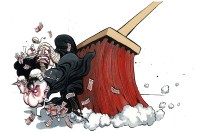
A register of lobbyists has nothing to do with “clean” politics; it’s about protecting stupid MPs

From our UK edition

So, just so we're clear about this: people pretending to be lobbyists appear to be able to persuade parliamentarians to do their bidding (for cash, natch) and this therefore justifies introducing a statutory register of lobbyists. You need no diploma in cynicism to perceive that this is aimed at protecting stupid and greedy politicians rather more than it is a serious attempt at "regulating" lobbying or access to politicians. It's a means of helping MPs avoid embarrassment. Now they can check to see if the people paying them are real lobbyists! Result! Which is fine (and the coalition gains bonus Urquhart points for using the measure to stiff the Trades Unions too). But let's not pretend that it's actually about "cleaning up politics".