Uk politics

Three questions for William Hague on PRISM

From our UK edition

William Hague will come to the House of Commons today to offer some answers on the US National Security Agency's PRISM programme. Here are three key questions MPs will want answered: What can he tell the Commons about how such an exchange of information could work? Douglas Alexander told Today he will be asking for information on the legal framework governing the UK access to information from the programme. Hague said yesterday that he could neither confirm nor deny that he was aware of PRISM, but he will still be asked about how interactions between the intelligence agencies are regulated. Are they able to circumvent British law by approaching the US authorities instead?

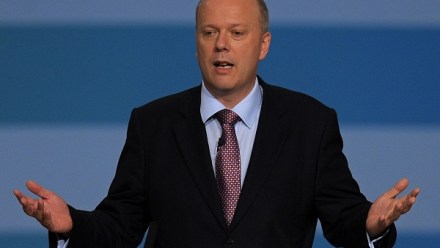
Harry Mount is wrong: Chris Grayling’s legal aid reforms will damage justice

From our UK edition

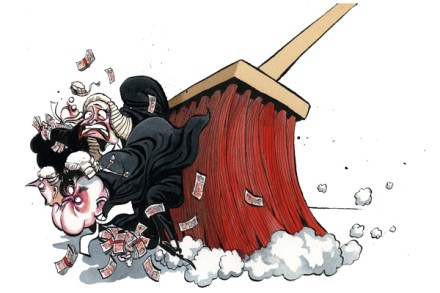
I just wonder how long Harry Mount has been waiting to put his boot into the Bar. Having a first-class degree from Oxford, membership of the Bullingdon Club and then getting a pupillage in a top class set of chambers, it must have been devastating to his well-nurtured ego to have been turned down for a tenancy. His piece in this week's Spectator was a masterpiece of bitterness and bile. It was a travesty of what is really happening. There are no fat fees at the criminal Bar. Far from spiralling out of control the criminal legal aid budget has been cut by a third from 2006/7 and fees  between 46 and 36 per cent, depending on the type of case. And as for the 90 QCs who are millionaires? Don't look to the criminal bar to find them.

Ed Balls: Labour will include pensions in its welfare cap

From our UK edition

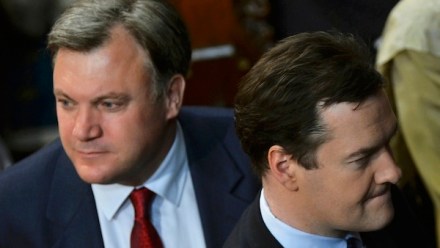
Ed Balls has just told Andrew Neil on the Sunday Politics that Labour will include pensions in their welfare cap. This opens up a major dividing line with the Tories who have been clear that George Osborne will exclude pensions from his spending cap. I suspect that Balls and Ed Miliband will now be badgered with questions about whether, if necessary, they’ll cut pensions — or not up-rate them — to meet the cap. Given the power of the grey vote in British politics (Labour estimates that one in every two voters in 2010 was over 55) they are going to come under massive pressure to rule this out. But, strikingly, Balls was not prepared to do this on  Sunday Politics. He even drew attention to the amount of welfare payments which go to the over-60s.

Tim Yeo pulls out of media appearances after Sunday Times sting

From our UK edition

Tim Yeo was due to appear on Sky News' Murnaghan programme, and on the BBC's Sunday Politics this morning. But he's just pulled out of both interviews, where he would have been asked about the Sunday Times' story alleging that he coached a witness to his own select committee on the right answers. Yeo denies that he behaved improperly and told the newspaper that he had never offered parliamentary advice or advocacy. What will be interesting about the fallout from this latest round of allegations is whether politicians use it to advance their own pet theories about how parliament needs reform, or whether they examine what the particular allegations were.

First Mercer, now Yeo – isn’t it time politicians tried to entrap journalists?

From our UK edition

Now that it has become commonplace for the press to entrap MPs and peers, why don’t our legislators try to turn the tables? I suggest that ministers sidle up to journalists (secretly filming them the while) and offer them honours. They should hint that the honour is conditional on favourable coverage, and agree to meet again in six months. In between, they should track what the journalists write, and then, when they have trapped their victims, expose the pattern. Another trick would be for politicians to get friends to pretend to be businessmen offering journalists money or freebies to place products in their stories and features. These tactics would get interesting results. The latest Sunday Times sting can be read here (£).

Prism controversy will deepen coalition divisions over the snooper’s charter

From our UK edition

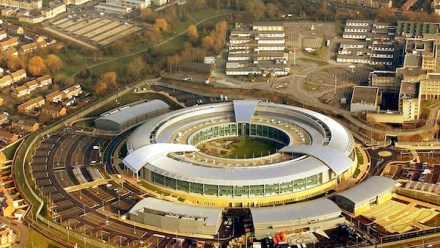
GCHQ’s use of the US monitoring system Prism is threatening to turn into a major political row. Douglas Alexander is demanding that William Hague come to the House of Commons to explain what GCHQ was doing and what the legal basis for it was. But this controversy is going to have an effect on coalition relations too. It is going to intensify Liberal Democrat opposition to the measures included in the Communications Data Bill. This comes at a time when David Cameron has decided, as he made clear in the Commons on Monday, that the measures in it are needed. In the United States, the Obama administration is pushing back against criticism of the programme.

Let’s get fracking

From our UK edition

Great news on the fracking front. A company called IGas says it’s sitting on a huge shale gas reserve deep below Cheshire. Given the company’s ‘most likely’ estimate of 102 trillion cubic feet of gas, and a potential extraction rate of around 15 per cent, that could fulfil five years of UK gas demand, which runs at three trillion cubic feet per year — half of it currently imported. The other leading player in this field, Cuadrilla, has already claimed reserves of 200 trillion cubic feet in Lancashire, so all told (and subject to lots of caveats) that could be 15 years’ worth of fuel to keep us going until new nuclear stations get built and someone designs a wind turbine that works in the lightest of English breezes.

The snoopers’ error

From our UK edition

Eeek! The snooper’s charter is back from the dead! And still, for some reason, its advocates don’t seem able to grasp that the objections stem not from what they want to do, but from the manner in which they wish to do it. It’s not about your web history, they say, or your browsing habits or anything like that. Rather, again and again, they use the analogy of telephones. The idea is that the law currently facilitates monitoring when terrorists or criminals ring each other, but not when they Skype each other or send emails. And, as Theresa May keeps telling us, all they want to do is bring the latter into line. I believe her. But internet communications traffic is not distinct from other internet traffic.

David Cameron is no longer more popular than his party

From our UK edition

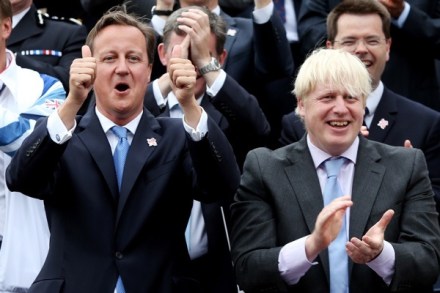
For the first time, David Cameron is trailing behind his party, according to the latest polling from Lord Ashcroft. Labour has long struggled with this problem, but as the charts below show, voters now also feel more favourable towards the Conservatives than they do to Cameron himself: The PM's allies within the party have long argued he is their greatest electoral asset, and this would make any attempt at removing him a folly. Now this is no longer the case, the dissenters have a whole new round of ammunition to fire at the leadership. Cameron need not utterly despair — he’s still the preferred option to Miliband as Prime Minister at 57 per cent. Just 30 per cent would to see prefer Miliband living at No.10.

Ed Miliband’s welfare plans will hit young people. Here’s how he could fund them fairly

From our UK edition

Ed Miliband thinks a contributory principle in welfare is the way to show voters that his party supports a 'something-for-something' approach. Yesterday he proposed to restore that principle, with higher entitlements for those with good records. This was at the heart of the Beveridge settlement, but has been diluted by successive governments, the current one included. Labour has to show that it can pay for this sort of system, though, and Miliband's answer is to raise the hurdle for contributory welfare, so that claimants must have worked longer than the current two-year period to qualify for the contributory benefit. The implication is that more people will go straight through the means test. Fewer people will be eligible, so the system can afford to be more generous.

Childcare for all: a necessity not a luxury

From our UK edition

How many small children do you think you could look after? Three? Four? Maybe not even one without someone else on hand? It’s a question Liz Truss says she is asked regularly, although as she points out, no one asks her Department of Health colleagues whether they could perform keyhole surgery. That’s the problem with the current debate around childcare: it’s too emotional. Tired parents, nerves frayed from watching their brood run riot throughout the house ask themselves 'how could anyone look after a group of small children all day?' Feeling overtakes fact, which makes reasoned discussion impossible. Take this comment by Justine Roberts, Mumsnet Founder and CEO: 'There's a lot of concern among Mumsnet users about the Government's plans to relax childcare ratios.

Labour’s localism epiphany

From our UK edition

Just because Labour has been taking a big dose of reality this week doesn't mean the party is now refusing to make the most of any botch job by the Coalition. So we've come to the funny situation where the Opposition party famed for its centralised approach to planning which failed to build enough homes in any year is taking the high ground on housebuilding. The Telegraph reports that Shadow Communities and Local Government secretary Hilary Benn now believes 'local communities should decide where they want new homes and developments to go and then give their consent in the form of planning permission' and that 'we have to make localism work'. Labour would tear up the Coalition's hated National Planning Policy Framework, Benn told the newspaper. This is extraordinary.

How Ed Miliband avoided open warfare on welfare

From our UK edition

For months, right-wing politicians and commentators have been licking their lips waiting for the Labour party to face up to reality. We all assumed that the sort of speeches delivered by Ed Balls and Ed Miliband this week, in which the two men abandoned the party's commitment to universalism and promised to cap welfare spending, would send Labour into orbit. There was even a revolt in the Commons which appeared to be a harbinger of doom about Labour and welfare. So where's the open warfare? Sure, Peter Hain spent most of Monday having a grump into various cameras and microphones about the winter fuel payment. But the party has stayed remarkably peaceful. The answer is the amount of groundwork that Ed Miliband and his team did for this speech.

This poster is why Number 10 is so confident Clegg will stay solid on union curbs

From our UK edition

Given all the coalition tensions over Clegg supposedly reneging on his promise to back childcare reform, it is surprising how confident Number 10 is that he’ll stay the course on the curbs on the trade unions in the lobbying bill. When I asked one senior figure there why they were so sure that the Lib Dem leader wouldn’t change his mind, I was told to remember that every time Clegg went back to Sheffield and his constituency he was met by a Unison-backed poster branding him as ‘Cleggzilla’. This source continued, ‘If you’re on the receiving end of that you’re all too aware of union power. That pain is very real.

How Equality will do for the Right in the end

From our UK edition

As the Same Sex Marriage result shows, the doctrine of Equality now carries all — family, religion, tradition, freedom — before it. Lots of Conservatives prate in favour of it without realising that Equality is the most essentially left-wing of all doctrines and will do for them in the end. Watching the Derby on television on Saturday, I found myself treated to ten minutes of how wonderful Emily Davison was for throwing herself under the King’s horse at Epsom 100 years ago. Dr Helen Pankhurst, of the suffragette dynasty, was interviewed at the racecourse by Clare Balding.

Billy Bragg may not like it, but the Conservatives are the new workers’ party

From our UK edition

Ed Miliband argued this morning that the Labour party ought to be more focused on people working. 'The clue’s in the name,' he said. The irony is that Labour gave up on working people some time ago, and used the boom to keep five million Brits on out-of-work benefit while foreign-born workers accounted for 99.9% of the rise in employment. The Conservatives, with their revolutionary Universal Credit, want to make work pay - and save lives rather than save money. I tweeted earlier on today that the Conservatives can be seen as the new workers’ party. This drew a response from the two of the left-wingers I most admire: Polly Toynbee and Billy Bragg. Like many 40-year-olds, I grew up with Billy’s music.

Syria: What has changed to make western intervention a necessary or realistic policy?

From our UK edition

Peter Oborne is back in his David-Cameron-is-not-Disraeli-he's-mad mode this week. He accuses the Prime Minister of losing the plot over Syria. As always, the ghosts of Iraq stalk this debate even though the two problems are scarcely comparable. For that matter, I'm not sure it is fair on Cameron to suggest that, after Libya, the Prime Minister has become war-crazy. Yet I was also struck by something the estimable Tim Shipman reports today: Mr Hammond was recently present when backbenchers suggested that the Tory leadership could do with ‘a small war’ to distract attention from party discontent over Europe and gay marriage. ‘It had better be a very small war,’ the Defence Secretary said. Needless to say, this is a very silly way of talking. Even in jest.