Uk politics

Audio: Cameron, Clegg and Miliband on Syria and what their statements tell us

From our UK edition

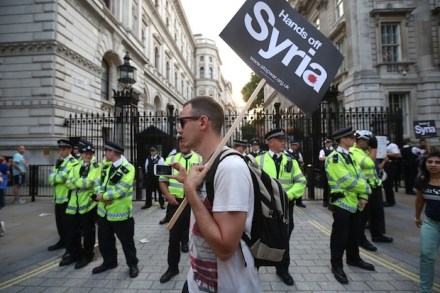
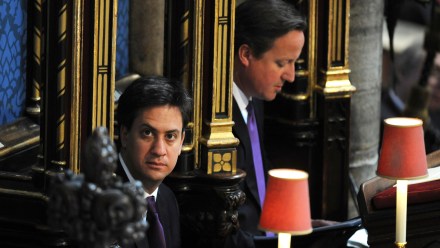
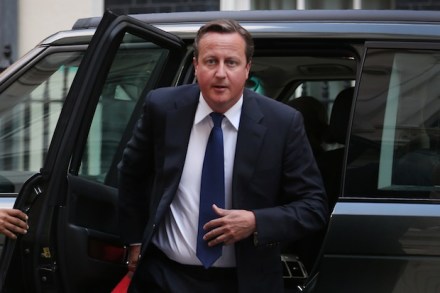
David Cameron, Nick Clegg and Ed Miliband this afternoon gave statements on Britain's response to the use of chemical weapons in Syria. There were important similarities between the statements which are worth examining. Here is what we learned: 1. The action must be legal. Miliband told the cameras after the meeting that 'when I saw the Prime Minister this afternoon I said to him that we the Labour party would consider supporting international action, but only on the basis that it was legal'. Meanwhile Clegg and Cameron both insisted that the measures being considered were legal. Clegg said: 'Any steps we will take will have to be legal. This Government, this Coalition Government, of course is not going to act outside the remit of international law'. 2. The action must be proportionate.

Michael Gove’s not-so-gentle reminder to Ed Miliband

From our UK edition

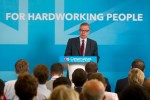
Surprise, surprise — Michael Gove doesn’t think much of Ed Miliband. To keep up the momentum on Labour's summer of discontent, the Education Secretary gave a speech at Conservative HQ this morning, focusing on Labour's troubled relationship with the trade unions — again. He was clearly enjoying himself as he compared the Labour leader's present position to two of the party's moderate forces: ‘And if anyone thinks I am asking too much I ask simply this - what would Blair do? Indeed, what would even Kinnock have done? ‘The sad truth is that - charming, intelligent, eloquent, thoughtful, generous and chivalrous as Ed Miliband may be - in this critical test of leadership he has been uncertain, irresolute, weak.

Breaking: Parliament will be recalled for a vote on Syria

From our UK edition

David Cameron has just confirmed that Parliament will be recalled on Thursday for MPs to vote on a government motion regarding the response to the chemical attacks in Syria. In reality, it would have been very difficult for the government to do anything else. But the question now is whether the statement that is offered to MPs is enough firstly to convince wavering coalition MPs of the case for intervention (and the case for the specific intervention chosen) and secondly to convince the Labour party not to whip its MPs against the vote: something Douglas Alexander this morning warned could happen.

Graeme Wilson of The Sun to be new Downing Street press secretary

From our UK edition

The Cameron operation’s effort to move onto an election footing continues with a set of new appointments to the Number 10 political operation. Gabby Bertin, who has been with Cameron since he became Tory leader, will return from maternity leave to become director of external relations. Bertin, who was previously Cameron’s political spokeswoman, will be responsible for forging – and maintaining Downing Street’s – relations with business, pressure groups and charities. The appointment of one of his most trusted aides to this role is a sign of how imperative Cameron believes it is to prevent Labour from securing business support at the next election.

How will Cameron consult Parliament on Syria?

From our UK edition

It would be a surprise if, when the Prime Minister and colleagues make their decision on consulting Parliament on intervening in Syria, they don't settle for some form of debate. An early day motion by Graham Allen demanding a recall of Parliament has swiftly accrued signatures from MPs of all parties, including Douglas Carswell, Stewart Jackson, David Davies, Graham Stuart, Philip Davies, Martin Vickers, James Gray, and Adam Holloway. But the question is how Parliament will be consulted. A vote on action would still be dangerous.

William Hague: We can act without UN security council unity

From our UK edition

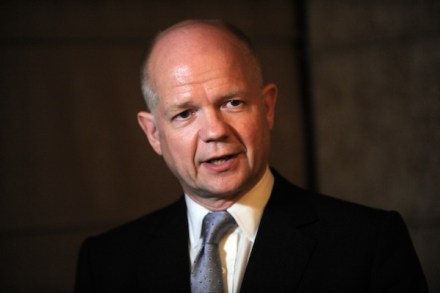
William Hague is keeping his options open on Syria: not just on what the response will be to last week's chemical weapons attack, but on whether (and how) Parliament will be consulted on any intervention. What is clear is that there will be some form of response, regardless of whether the United Nations Security Council unites over what that response is. Hague said: 'So, is it possible to act on chemical weapons, is it possible to respond to chemical weapons without complete unity on the UN Security Council? I would argue, yes it is. Otherwise, of course, it might be impossible to respond to such outrages, such crimes and I don't think that is an acceptable situation.

Pressure grows for recall of Parliament on Syria

From our UK edition

David Cameron and his colleagues have made fairly carefully-worded pledges on whether or not Parliament should be consulted if the government starts planning for a military intervention in Syria. They could feasibly stick to the precise wording of those pledges this week without recalling MPs for a debate, but this will be a very difficult position to maintain as pressure is growing on all sides for a recall. Labour's Shadow Foreign Secretary Douglas Alexander said this evening: 'If, in reality, the Prime Minister is now considering military options involving UK personnel then of course I would expect him to seek a recall of Parliament and to come to the House of Commons and make his case in advance of a decision being made.' It's not just the opposition pushing for a debate, though.

Cameron and Obama warn Assad of ‘serious response’

From our UK edition

David Cameron spoke to Barack Obama yesterday about the situation in Syria. A Number 10 spokesman gave the following read-out of the call: 'They are both gravely concerned by the attack that took place in Damascus on Wednesday and the increasing signs that this was a significant chemical weapons attack carried out by the Syrian regime against its own people. The UN Security Council has called for immediate access for UN investigators on the ground in Damascus. The fact that President Assad has failed to co-operate with the UN suggests that the regime has something to hide. 'They reiterated that significant use of chemical weapons would merit a serious response from the international community and both have tasked officials to examine all the options.

Ed Balls: ‘There is no blank cheque for HS2’

From our UK edition

Labour could use HS2 as an opportunity to show voters that it is fiscally responsible by announcing that as the project's costs have spiralled out of control, it cannot back it. So runs the argument in favour of Ed Miliband dropping his party's support for the project. The party's transport shadow Maria Eagle has insisted today that high-speed rail remains a manifesto commitment for Labour, but Ed Balls has appeared on BBC News to drop what many are reading as some fairly heavy hints that his own support isn't quite so rock-solid.

It’s time to end slavery in Britain – again

From our UK edition

Today is the United Nations day for he Remembrance of the Slave Trade and its Abolition – and the school packs have been readied to tell pupils about Britain’s part in this great evil. But the way we tend to remember (and, occasionally, apologise for) slavery has two main problems.  Yes, British traders played a full and shameful part in the slave trade. But what marks Britain out is out objection to it. As Thomas Sowell has pointed out, slavery was a worldwide institution for thousands of years – yet nowhere in the world was slavery controversial until the 1780s when some Brits started kicking up a fuss about it. White slaves were being sold in the Ottoman empire long after American slaves were freed.

Now is the perfect time for George Osborne to stop wasting money on HS2

From our UK edition

It's not just Ed Miliband who’s facing pressure over HS2. George Osborne’s famous political antennae must be twitching furiously by now  — does he really want to be the last man in England backing this? Alistair Darling’s case (£) reeks of cold logic: he has become the latest public figure to withdraw support for HS2 because the costs now outweigh the benefits. The facts changed; he changed his mind. This is what rational people do. Unless you’re ideologically wedded to the idea of HS2, then there’s now not much grounds for supporting it – as a glance at the latest the Institute for Economic Affairs report attests.

For the middle classes, things can only get worse

From our UK edition

In this week’s magazine Fraser Nelson and I look at the breaking of the English middle class, a subject so scary you’ll want to hold someone’s hand when reading it. The frightening thing is that in Britain, as in the United States, the middle class is not just squeezed but shrinking and sinking. Even before the Great Recession began, middle-class jobs in the law, media and accounting have been melting away, outsourced, unprofitable or obsolete, while salaries are falling behind prices. This is not a product of the credit crunch, and it will not be going away. Median hourly income in London is now below 2002 levels, real wages in Britain have not risen since 2005, and the median income has been static or in decline since 2004.

The answer to the West Lothian Question is to stop asking it

From our UK edition

Here we go again. It's time for an English parliament! Actually, it's time for a new Act of Union! Says who? Says Michael Fabricant in today's Telegraph. Mark Wallace at ConservativeHome agrees.  English votes for English laws!  Well, fine. It's a respectable, even laudable, view. But, as we shall see, it is not a very conservative view at all. It may be rational but that alone should be make Tories sceptical of its merits. At best the creation of an "English parliament" within Westminster solves one small anomaly at the cost of creating another, much larger, one. In any case, Fabricant has his history wrong.

George Galloway blames Israel for the use of chemical weapons in Syria

From our UK edition

Say this for George Galloway: every time you think he cannot sink any lower he finds new ways to surprise you. His latest contribution to Press TV, Iran's propaganda station, speaks for itself. Parody is pointless. Given his history and his paymasters, we would expect him to defend the Assad regime in Syria. Even so, under-estimating his ability to sniff out the true villains is never sensible. Here's his "analysis" of the use of chemical weapons in Syria: "If there's been any use of nerve gas it's the rebels that used it. [...] If there has been a use of chemical weapons it was al-Qaeda who used chemical weapons. Who gave al-Qaeda chemical weapons?

Advice for Ed Miliband, part 567

From our UK edition

There is now so much advice coming in for Ed Miliband that it needs classifying. There's the Miliband-must-behave-like-this advice from all and sundry: he should talk more about the economy, talk less about the economy, shout a lot about things, talk more about policy, complain more about this and that and so on. The advice is so diverse that Miliband would end up looking like Francis Henshall in One Man, Two Guvnors if he tried to fulfil it all. But there's a second species of advice, which is on what big policy issue Miliband should back or oppose, partly out of principle and partly to make life very difficult for the Coalition.

As high speed rail is being dropped in California and France, it’s time for Britain to take the hint

From our UK edition

In June last year I predicted in these pages that the government would allow High Speed 2 to die a quiet death. Although the government has since reaffirmed its commitment to the proposed railway line, I am sticking to my prediction. Indeed, if the line is ever built I will book a ticket on the first train out of Euston and consume my hat in the dining car. How can I be so sure? Because the projected costs of the project are now so ridiculous that it cannot possibly go ahead. Even before George Osborne, in his spending review in June, added another £8 billion to the estimate cost of HS2, the project had a feeble and a deeply flawed benefit-to-cost ratio of 1.4:1.

No need to fret Stephen Twigg, Gove is already tackling multiple exam entries

From our UK edition

At last, something Michael Gove and Stephen Twigg agree on. Both the Education Secretary and his opposite number agree that efforts need to be made to tackle pupils entering the same exams multiple times, sometimes even through multiple exam boards. There are often legitimate reasons but the practice has become more c used to boost grades. In light of today’s GCSEs results, the shadow Education Secretary has urged Gove to target schools that are gaming the system; to ensure ‘the system is robust, so students only need to take the exam once.' Good idea, except the Education Secretary has already recognised the issue and taken steps to address it.

The silly season that never stops: the weird demands from constituents to their MPs

From our UK edition

MPs are currently in hiding in their constituencies from the silly season. But that doesn't mean they aren't encountering some rather silly behaviour themselves as they hold surgeries. Constituency surgeries are normally quite doleful affairs, with local people in dire straits turning to their MP for help with an impossible housing situation, a tangled immigration case, or a row with social services. Depending on the sort of MP you are, you either love your constituency casework so much that it's the main reason you're in Parliament, or you secretly think it a bit of a bore and long to return from a lengthy discussion about the bad smell from the local sewer (a favourite topic of angry local tweets from MPs of all leanings) to the safety of Westminster.