Syria, schools, David Frost and Universal Credit – this week in audio
From our UK edition
It's been a varied week on Coffee House, with domestic matters rearing their head once again while Syria continues to dominate the news agenda.
From our UK edition
It's been a varied week on Coffee House, with domestic matters rearing their head once again while Syria continues to dominate the news agenda.
From our UK edition
After going all out over the Falkirk selection row, Labour rather quietly issued a statement this afternoon conceding that neither Unite's candidate Karie Murphy, nor constituency party chair Stephen Deans, nor the union itself were guilty of any wrongdoing. The party's statement said: 'The Labour Party began an internal process to examine the controversy surrounding the selection of a parliamentary candidate for Falkirk. At each step Labour’s general secretary and NEC have acted quickly to protect the interest of the party. 'Since Labour began its internal process key evidence has been withdrawn and further evidence provided by individuals concerned. Karie Murphy and Steve Deans, who were suspended, will now be reinstated as they have not been guilty of any wrongdoing.
From our UK edition
There are a number of obvious differences between last week's vote in Parliament and the forthcoming Congressional vote on Syria. But today when he gave his closing statement at the end of the G20 summit, Barack Obama highlighted another very interesting divergence in the way he is approaching the vote. Asked whether he understood the concerns of members of Congress who will have to vote against the will of their constituents, Obama replied: 'Now with respect to Congress and how they should respond to constituency concerns, I do consider part of my job to help make the case and to explain to the American people exactly why I think this is the right thing to do.
From our UK edition
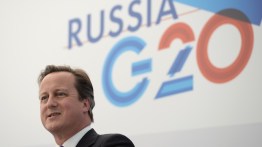
As well as having another extended Hugh Grant moment about how great Britain is (excluding David Beckham's feet, but including One Direction), David Cameron got his chance to hit back at Russia's intransigence on Syria this afternoon as the G20 summit drew to a close. Nodding to the lengthy declaration issued by the leaders - which fails to mention Syria or Assad - the Prime Minister emphasised that 'this summit was never going to reach an agreement on what action is needed on Syria'. When Barack Obama spoke later, he said the discussions had reached unanimity that 'chemical weapons were used in Syria, there was a unanimous view that the norm against using chemical weapons has to be maintained', but that only the majority had agreed that Assad was responsible.
From our UK edition
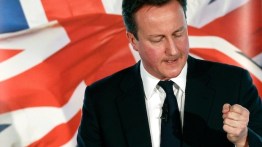
In response to some snarky comments from Russia about Britain, the Prime Minister has just released this bizarre statement on his Google+ page about how he feels about our country: 'Britain may be a small island, but I would challenge anyone to find a country with a prouder history, a bigger heart or greater resilience. 'Britain is an island that has helped to clear the European continent of fascism - and was resolute in doing that throughout World War Two. 'Britain is an island that helped to abolish slavery, that has invented most of the things worth inventing, including every sport currently played around the world, that still today is responsible for art, literature and music that delights the entire world.
From our UK edition
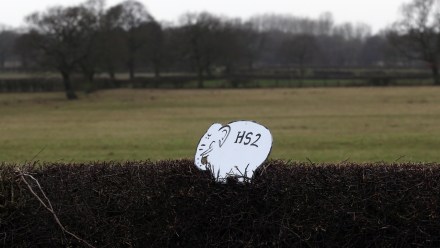
Another day, another promise that a government project will be in time and on budget. Yesterday it was universal credit, today it's High Speed Rail, with a letter from the construction companies behind the project in the Telegraph. The letter, signed by chief executives and chairmen of Arup Group, Atkins UK, Balfour Beatty, Kier Group, Laing O'Rourke, Moot MacDonald Group and Skanska UK, dismisses 'artificially inflated figures' on the project's cost. It says: 'We gladly accept the challenge of completing Phase One of HS2 on schedule - and for less than the Government's target of £17.16 billion. 'We applaud the Government's support for investment in infrastructure and in particular HS2, which addresses a looming capacity crunch on rail and road networks.
From our UK edition
It is now a truism in Westminster to argue that banks are failing UK businesses, especially smaller ones, by reining in lending, thus thwarting growth. The problem with this truism is that it isn't, er, true. And it also distracts attention from the real funding problems that businesses struggle with, which means government policy consistently misses the point. This myth about banks refusing to lend is based partly on anecdote and partly on the sharp decline in the stock of lending to small and medium-sized enterprises since the credit crisis.
From our UK edition
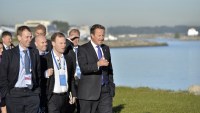
Universal credit is having a bumpy ride: but whose fault is it? Yesterday's Commons urgent question on the National Audit Office report turned into a bit of a blame game, with Iain Duncan Smith saying rather bitterly that he had expected his department to meet the challenge of delivering this big reform. His response to Bernard Jenkin on the importance of a good civil service was one of the most telling of the whole session: Bernard Jenkin: Is my right hon. Friend aware that the Public Administration Committee will produce an important report tomorrow about civil service reform?
From our UK edition
Even though Vladimir Putin slotted Syria into the G20 agenda last night, no-one seriously thought that this meant the world leaders would come to a proper agreement on what to do about the conflict. In the last few minutes, David Cameron has told journalists covering the summit that 'divisions are too great' for a deal, and that Russia wants further evidence that the Assad regime was behind the terrible attack in August. George Osborne was on the Today programme earlier discussing the summit. He said: 'We've set out what we think is the right response, obviously President Obama has set out what he wants to do and there is a disagreement around the table, I don't think there's any secret about that.
From our UK edition
Isabel Hardman of this parish explained after last week’s government defeat that a deluded theory among the party leadership had held that Tory backbenchers were now self-whipping. When she aired this opinion on Radio 4, Michael White of the Guardian did a Frankie Howerd-style, ‘Ooh, Missus!’ routine. Surprisingly, self-whipping is no neologism. The satirical Nonconformist clergyman Robert Wild, in a poem on Charles II’s declaration of indulgence in 1672, refers to the ‘self-whippings, of the Popish Priests’. He meant the use of the discipline for ascetic motives. This was equally frowned upon by the Quaker poet John Greenleaf Whittier.
From our UK edition
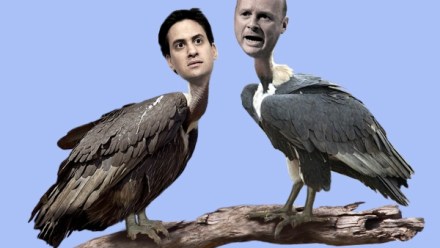
David Aaronovitch's furious Times column this morning described Ed Miliband as a vulture, swooping down on problems caused by this government rather than leading. If he wanted another example of how this leadership style has affected the rest of the Labour party, he could have done worse than to attend the Commons urgent question on universal credit this morning. There, Liam Byrne attacked Iain Duncan Smith's handling of the project, saying: 'What I want to say to the Secretary of State, however, is this: he has let this House form a picture of universal credit, which the nation's auditor's say is wrong. The most charitable explanation is that he has lost control of the programme and lost control of the department. He must now correct the record.
From our UK edition
With the upcoming teaching unions' strikes, is Michael Gove battling the teachers? Just days after the new school term has begun, the unions have announced the dates of the strikes — including one in the middle of the Tory conference — while blaming the Education Secretary for not listening to the concerns of their members.
From our UK edition
Iain Duncan Smith was in an aggressive mood when he appeared before MPs this morning to explain the latest awkward report on universal credit to the Commons. He combined his anger with a plethora of jargon. This made for an interesting debate, as it's very difficult to sound punchy and angry while talking about 'agile processes', 'roll-outs' and 'pathfinders' (although mercifully he didn't use 'pathfinder as a verb', as he and other colleagues have in the past). listen to ‘Iain Duncan Smith defends his welfare reforms in the Commons.
From our UK edition
In this week's Spectator, columnist Toby Young toys with the idea of standing as a Conservative candidate in in Hammersmith. He examines the factors stacked against any chance of success, and the reasons he has for standing: Suppose I won. Then what? I’d be faced with the pride-swallowing siege that is the life of a newly elected MP. Forget about affairs of state. The only decision I’d have to make would be who to suck up to more, George Osborne or John Bercow? Neither prospect fills me with joy. Being a backbench MP is drudge work for the most part and I’d have to take a salary cut to do it. Once upon a time, MPs could expect a little respect for devoting themselves to public service, but not any more.
From our UK edition
They should have seen it coming. A government defeat on an issue of war may be unprecedented, but defeat on the Syria vote did not come out of the blue. You can certainly blame poor party management, failure to prepare the ground, underestimating the poisonous legacy of Iraq — but such failings are common enough. The biggest single factor is one that ministers, the media and MPs themselves have failed to understand: Parliament has changed. The consensus has long been that Parliament no longer matters. It is assumed to be the docile creature of the government, full of spineless or ambitious MPs who are the slaves of the party whips. In fact, unnoticed and under our noses, that has been becoming progressively less and less true throughout my 30 years in Parliament.
From our UK edition
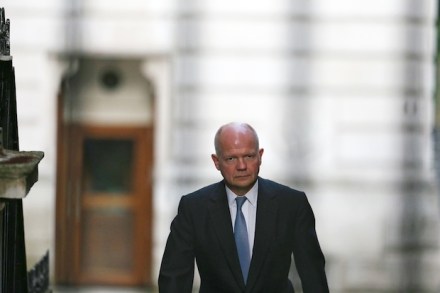
William Hague’s appearance at the 1922 Committee has underlined the fact that the Tory party is now split on foreign policy. I’m told that the questions that the Foreign Secretary received were pretty much evenly split between the passionate supporters of intervention in Syria and its passionate opponents. Those present calculate that the room was evenly split between the two factions. Hague, I understand, made a robust case for why Britain needs to remain an outward looking nation that is prepared to use its military forces. But he did say, when asked, that ‘lessons will be learned’ from how the Syria vote was handled. This answer will fuel Westminster speculation that Hague was unhappy with the decision to recall Parliament.
From our UK edition
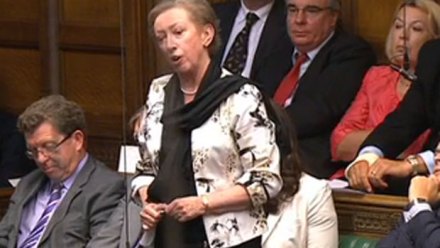
There's nothing wrong with the Prime Minister turning up to PMQs with a snappy line that he wants those watching to remember. But sometimes as the exchanges wear on, the risk grows that the clever line isn't going to get a showing because the questions haven't been quite right. And so the line gets shoehorned into an answer that isn't quite relevant. Take today's question from Margaret Beckett on the lobbying bill that last night some Tory MPs decided to vote against. Beckett asked: 'Why does the PM believe that his plans to restrict lobbying are opposed by organisations from the Salvation Army, Countryside Alliance, Oxfam, the British Legion and so on, right through to ConservativeHome?
From our UK edition
Jesse Norman's departure from the policy board hasn't come as a huge surprise to many Tory MPs: I was with one after the vote who was subjecting his twitter feed to a lengthy examination to work out whether Norman was stranded overseas. The only evidence available was that Norman went to a beer festival on 26 August and found out about the recall from the BBC and Easyjet. 'I love beer festivals, but I also know when to turn up,' grumbled the MP. It would have been a terrible message to send to other backbenchers if Norman hadn't been moved from his job. This is a sign of Number 10 applying a bit of an Andy Flower strategy to MPs: and that is a good thing for party management in general. But one Tory colleague I've spoken to this morning disagrees.
From our UK edition
Jesse Norman is to leave the Number 10 policy board after abstaining in last week's vote on Syria, I have learned. It was made clear to the Tory MP, who is known to have disagreed with the government's position on Syria, that this was an inevitable consequence of avoiding a three-line whip vote. But I understand that the decision was made more in sorrow than in anger, and sources hope the path back for Norman will be a quick one. An announcement on his replacement will be made shortly. The policy board hasn't, as I revealed in the politics column last week, gelled brilliantly yet, but colleagues found Norman impressive to work with. He is unlikely to be on the backbenches for long. P.S. Norman is sixth on the Order Paper for today's PMQs. Which will be interesting.
From our UK edition
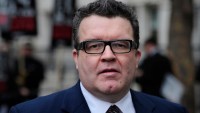
Ed Miliband needs to reassure his backbenchers that he does indeed have a good plan after the GMB union announced it was cutting its affiliation funds to the party by 90 per cent. But someone else already has a plan: and it looks strangely like one that will cause the Labour leader a bit of grief. Tom Watson has this morning written a blog in which he suggests that ending the link between the party and the unions 'is a very serious development that threatens a pillar of our democracy that has endured for over one hundred years'. He writes: 'Over the next year we have been asked to consider a change to the constitution of the Labour party, though no detailed proposals have been revealed.