Uk politics

Tristram Hunt tries to needle Lib Dems with troublemaking teacher debate

From our UK edition

Opposition Day debates from Labour are often rather boring, with a frontbencher getting very angry about energy bills (one of their favourite topics for opposition day debates), and three backbenchers pulling stern faces at the lonely minister whose job it is to reply. But tomorrow's debate is being billed as a 'box office' encounter (which says a lot about the sort of thing people in Parliament get excited about) between the party's new Shadow Education Secretary Tristram Hunt and Michael Gove. Up to this point, Labour attempts to attack Gove have been about as effective as trying to scratch a diamond with a pin.


Do we really need HS2? I’m not convinced

From our UK edition

The Secretary of State for Transport asked for my views on the capacity argument for HS2. I thought I would share them with you. To establish that HS2 is needed on capacity grounds the government has to be able to demonstrate three main points. Firstly, that the current West Coast Main Line (WCML) is full or nearly full. Secondly that there are no easier or cheaper ways of adding significant capacity to the WCML or providing an alternative to tackle any future capacity problems. Thirdly, that the high forecasts of likely passenger growth and use of HS2 are realistic. I remain to be persuaded on each of these three matters. The government has been coy about current usage of the WCML.

Ministers need to re-energise wavering Tories on HS2 as well as Labour

From our UK edition

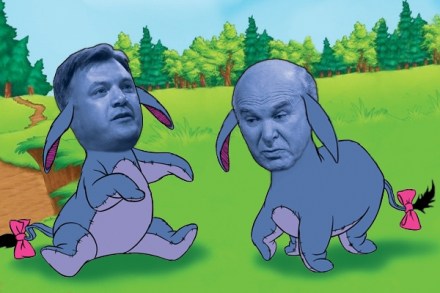
Ministers' attention is now firmly focused on arguing that to abandon HS2 would be a sign that Labour is 'playing politics with prosperity', as Transport Secretary Patrick McLoughlin is set to say later today, or 'abandoning the North'. Yesterday the Prime Minister slipped in a joke about Ed Balls being absent from the Commons because he was trying to work out what his party's policy should be on the new line. Today Julian Smith is batting for CCHQ, predicting that 'if Labour oppose HS2 they'll be dismissing the long-term future of the country for a short-term political gamble'. As James explained last night, this is all part of an attempt to 'smoke out' the Opposition.

Life after Scottish Independence: lower taxes, lower spending, no free lunches

From our UK edition

Every so often a report is published that cheers you up. Not because it contains any particularly good news but simply - that is to say, selfishly - because it appears to support notions you've held for some time. So trebles all round for the Institute for Fiscal Studies whose latest report on life in Scotland after independence is published today. Sponsored by the Economic and Social Research Council, the report concludes that 'an independent Scotland could face pressure between [a] need to lower tax rates and [the] need to fix its public finances'. Well, yeah. Some of us have been making this kind of case for some time now. It's just scaremongering, apparently. Except, of course, it is not. I've never supposed an independent Scotland must fail.

European Council statement: Leaders seize opportunity for economic ding dong

From our UK edition

Why did the Prime Minister give a statement in the Commons on the outcome of last week's European Council summit? Though he is expected to report back to MPs each time one of these jamborees takes place, David Cameron didn't really have a great deal to tell them other than the tantalising suggestion that the leaders had made progress on cutting red tape and the declaration that 'the EU is changing'. It was hardly one of those statements where Cameron can wave a budget cut or some other great policy victory at MPs.

Off colour Ofgem?

From our UK edition

Ofgem is the energy market regulator that is supposed to be examining what it is that is going well or badly in the market. But it doesn't seem to be doing the greatest job. This week we will hear more details about the annual competition test announced by David Cameron at PMQs last week, but the problem is that Ofgem has only just concluded an examination of this anyway. That review of the retail energy market took two years and published a series of rule changes in June 2013. The changes were designed to address 'widespread consumer confusion over energy tariffs, poor supplier behaviour and lack of transparency which is stifling competition'.

Can you trust a government report on the alternatives to HS2?

From our UK edition

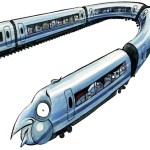
As Britain's train lines suffer in the wake of St Jude, the political storm over high speed rail continues to rage. The government and Labour are playing footsie with each other. Labour's somewhat left-field idea to re-open the Grand Central Railway — at an estimated cost of £6 billion, compared to £43 billion for HS2 — has been matched by a fear-mongering government statements about the implications of not building a high speed rail line. The coalition's 'updated business case' claims that, if Britain did not pursue the high-speed solution, a 'patch-and-mend job' would be necessary, which would be almost as expensive and mean 14 years of weekend closures.

Russell Brand: an adolescent extremist whose hatred of politics is matched by his ignorance

From our UK edition

So, I recommend a trip to Sri Lanka. Wonderful place. Go now before everyone else does. Being (almost entirely) offline for a couple of weeks is a blessing too. But even good things come to an end. Which brings me to Russell Brand. Fair play to the New Statesman. Their decision to ask Brand to "edit" an issue has brought them all the publicity they could have hoped for. It would be churlish to begrudge the Staggers that. Celebrity sells. Or, at least, wins attention. Which is fine. Plenty of people seem quite enthused by Brand. Even if they disagree with his diagnosis of contemporary ills they enjoy the sight of a "professional commentariat" that is supposedly discombobulated by Brand's invasion of their turf.

Energy competition heats up

From our UK edition

Now that ministers are nearing a deal on those green taxes and levies, they are also trying to highlight their efforts to improve the energy market in general. Privately there were a number of Conservative MPs of a similar persuasion to John Major who I spoke to last week who sympathised with the former Prime Minister's windfall tax proposal. They argued that the energy companies are benefitting from a broken market, and this tax would simply be a tax on the extra benefits of that broken market. But Greg Barker this morning argued that it would damage investment.

Coalition parties near a deal on energy bills

From our UK edition

The good news for the Cameroons on energy is that it looks like they’ll get an agreement by the Autumn Statement to take at least some of the green levies off energy bill. The bad news is that this means that the debate sparked by Ed Miliband’s pledge to freeze energy prices for 20 months if elected is going to continue until, at least, December 4th. An agreement between Cameron and Clegg on energy bills does now appear to be close. The Lib Dem anger at Cameron using PMQs to try and bounce them into a set of concessions has been replaced by a fast-moving negotiation. As one senior Number 10 source says, ‘There’s lots of shouting and public posturing, but 12 hours later Clegg is signalling that he’s prepared to do business.

‘Abandoning the North’: the new emotional HS2 debate

From our UK edition

David Cameron insists that a project like high-speed rail needs cross-party support. That may well be sensible, but his desire for Labour to retain its support for the new line is founded more on the necessity of getting the legislation through Parliament, rather than a great belief in parties working together on the big things. The fact is that Cameron needs Labour votes because yet again he cannot rely on his own party, the party of government, to push the bills through. Labour obviously scents blood, not just because there's sport to be had in making a Prime Minister squirm and plead for the Opposition's votes, but also because dropping support for HS2 would lend the party some useful credibility.

Simon Stevens could turn out to be Jeremy Hunt’s Mark Carney

From our UK edition

Remember the name Simon Stevens. He’s is the new chief executive of the NHS in England and is going to be absolutely crucial to whether the government can make its health reforms work. Stevens is a former Labour special adviser. However, he comes from the reformist wing of the party. He used to advise Alan Milburn and Tony Blair on the NHS. But a profile in today’s Guardian reveals just how impressively radical Stevens is. Denis Campbell writes that Stevens favours local pay in the NHS. He is also, Campbell says, keen on the idea of independent GPs competing with existing GP surgeries for patients, in the hope that this competition would drive up standards.

Who feels grumpier about the recovery?

From our UK edition

The Tories were expecting Ed Balls to be a little grumpy today after the ONS' latest figures showed the economy was growing at its fastest rate in three years. And the Shadow Chancellor didn't sound his cheeriest when he popped up to respond. In his official response, Balls said: 'After three damaging years of flatlining, it's both welcome and long overdue that our economy is growing again. But for millions of people across the country still seeing prices rising faster than their wages this is no recovery at all.' And on the World at One, he said: 'For people who are seeing their living standards falling, being told that somehow it’s now turned and it’s going well, just jars with people’s own experience.

Breaking: Economy grew by 0.8 per cent in Q3

From our UK edition

As ministers had hoped, today's first estimate of GDP figures from the Office for National Statistics shows that the economy grew by 0.8 per cent in the third quarter of 2013. Citi had predicted 0.7  per cent, and while the economy is still 2.5  per cent below its pre-recession peak, ministers now have evidence of an upward trajectory, or, as the Treasury is describing it this morning, 'real momentum'. The Tories will use this now to argue that Labour has got it wrong on everything, while Labour sticks to its line of welcoming the growth but pointing out all the other bad things.

Three Tory whipping operations prepare for HS2 revolt

From our UK edition

Critics of HS2 are scenting blood on all sides now. As the Sun reports, giving Ed Balls the final say on the project is another sign that the Labour party is at least constructing a coffin for the project, even if it isn't driving the nails in just yet. Meanwhile, on the Tory side, I understand that there are three whipping operations springing up around the report stage and third reading of the preparation bill next week. The PM's backbench envoy John Hayes and his PPS Mel Stride are the most active from the government side, even though Hayes is not a whip. One Tory MP observing these things tells me: 'Whenever the chips are down, he goes around drawing up lists of possible troublemakers and working out how to get alongside them.

The ‘gangbusters’ economy

From our UK edition

Tomorrow’s GDP figures are expected to show that the economy is no longer bouncing along the bottom but is now in steady recovery with a second successive quarter of robust growth. It is all very different from the start of the year when the country appeared to be on the verge of a triple dip recession. As I say in this week’s magazine, when in early February the Chancellor’s chief economic adviser Rupert Harrison told a crunch Downing Street meeting that the economy would be going ‘gangbusters’ by late summer, early autumn, the Prime Minister’s chief of staff Ed Llewellyn was so taken aback by the confidence of the prediction that he insisted on taking a note of it. Growth, though, is necessary but not sufficient for the Tories.

The HS2 fight back begins next week. But will it work?

From our UK edition

Ministers are increasingly aware of an uphill struggle on HS2. Next week, they will try to make the case for the line again, in the face of increasing opposition, with the publication of the Department of Transport's strategic case paper, which will respond to criticisms from the Public Accounts Committee and National Audit Office on the viability of the project. Giving up on trying to win the economic case for HS2 (which has been widely lambasted), the government hopes to turn the tide by instead focusing on the capacity arguments. As James reported last month, the DfT will attempt to shift the HS2 debate to why we need a new line, instead of patching-and-mending the existing West Coast railway.

MPs still fracked with nerves about shale gas incentives

From our UK edition

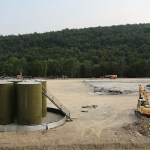
In the days before Ed Miliband went all Marxist/brave on energy (delete as tribally appropriate), the debate around energy was more about fracking than it was about freezes. Shale gas has taken a back seat while ministers wonder what on earth they can do about bills to take the wind out of the Labour leader's sails. But the political problems haven't gone away. The debate is still about whether the incentives on offer are enough for local communities to accept fracking pads in their area. MPs whose constituencies sit atop the Bowland Shale don't think the government is offering enough, and have continued to tell the Prime Minister that. He recently held a meeting with MPs interested in fracking, but those who attended complain that they got little out of it.