Uk politics

Why Cameron’s NHS lines didn’t quite work at PMQs today

From our UK edition

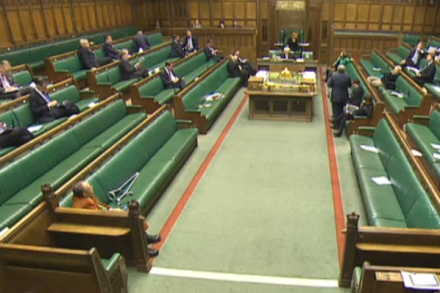
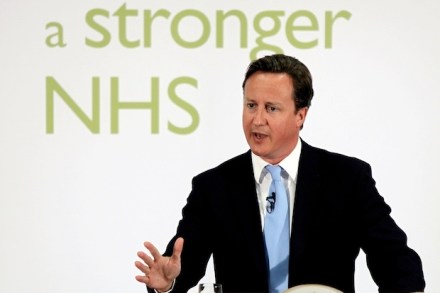
Though the NHS made a welcome change from endless bickering about energy bills at today's PMQs, the exchanges were just as unedifying. There is very little gain in the sort of fact war that David Cameron and Ed Miliband tried to indulge in, as there is no killer fact that can silence an opponent on the NHS. Instead, the exchanges descended very quickly into 'let me give the right honourable gentleman the facts about the NHS under this government', 'we have a Prime Minister too clueless to know the facts' and 'once again, the right honourable gentleman is just wrong on the facts'. Each man used his own 'simple facts' that he claimed either showed the NHS was safe in the Tories' hands or that it was being killed by the Tories.

Russell Brand is right about one thing: he is a twerp.

From our UK edition

Oh for the love of God, he's back. Russell Brand, Britain's sophomoric revolutionary-in-chief, has written another call-to-something. At least this one is shorter than his previous manifesto. Alas it makes no more sense. What is interesting about Brand is not novel and what is novel is not interesting. Tom Chivers is right to note that: But those of you who are bothered, the Russell Brands and Occupy Wherevers of the world, don't pretend that the political system doesn't offer anything for you. It does. It offers lots and lots of things. The trouble is, most people don't want it.

I see no ships (on the Clyde)

From our UK edition

The sorry truth of the matter is that Glasgow has been in decline for a century. 1913 was the city's greatest year. Then it produced a third of the railway locomotives and a fifth of the steel manufactured anywhere in Britain. Most of all, it built ships. Big ships and many of them. A ship was launched, on average,  every day that year. In 1913, 23% of the entire world's production of ships (by tonnage) was built and launched on the river Clyde. It was an astonishing achievement and the high-water mark of Scottish industrial prowess. Ship-building, more than any other industry, became part of Glasgow's essence. The locomotives and the steel and the cars and the sewing machines might all disappear but so long as ships were still built on the Clyde something would remain.

Another rotten culture, another political risk on the NHS

From our UK edition

The allegations of a cover-up at Colchester General Hospital suggest something rotten in a culture, once again. The police have been called in by the Care Quality Commission to investigate claims that documents about patients' care were falsified and that managers bullied staff into doing this so that cancer care at CGH could meet its targets. Bernard Jenkin, the local MP, placed great emphasis in his interview on Today on the problems with culture in the NHS, which Health Secretary Jeremy Hunt is trying to resolve with a series of reforms to NHS leadership. But there will inevitably be a row about the role of targets in this scandal as well, given the allegations centre around falsified documents to give the impression CGH cancer care was meeting its targets.

Tea at 22: An exclusive glimpse inside the Number 10 policy board with Margot James

From our UK edition

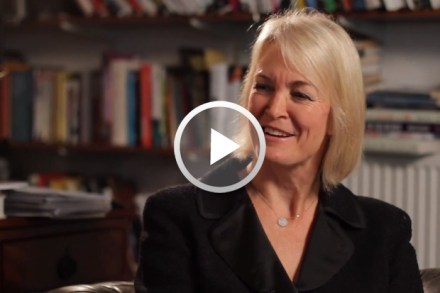
I am delighted to reveal the first of our 'Tea at 22' films: a series of short video interviews with Westminster personalities in the Spectator's 22 Old Queen Street offices. This week I spoke to Margot James, member of the Number 10 policy board and one of the stars of the gay marriage debate, about how the party is developing its manifesto. Here are some key points: James denied Westminster rumours (revealed in the Spectator's politics column) that the policy board members weren't getting along, and explained how the board develops manifesto and government policy. She revealed that she is currently working on ideas to improve ailing town centres.

Labour stays stubborn over Falkirk

From our UK edition

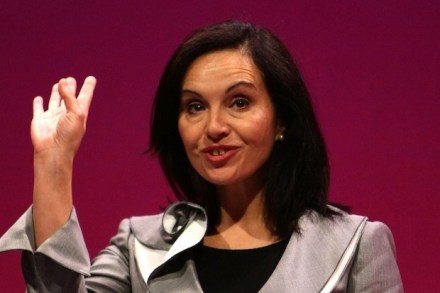
Labour is standing firm over Falkirk, even though senior figures such as Johann Lamont and Alistair Darling are sufficiently worried by the allegations still emerging to call for a new investigation. This morning Caroline Flint was sent out in a stern mood to bat for the party, with the Shadow Energy Secretary telling Radio 4's Today programme that the party wouldn't publish its internal reports, but that it had already taken 'firm action'. She said: 'The current position is this: when reports were made to the party about concerns about the Falkirk selection, the party was suspended and put in special measures. Ms Murphy, who was one of the candidates at the heart of the process, withdrew her nomination from the process.

Why Boris Johnson’s ‘slow and feeble’ attack on aviation policy isn’t so bothersome

From our UK edition

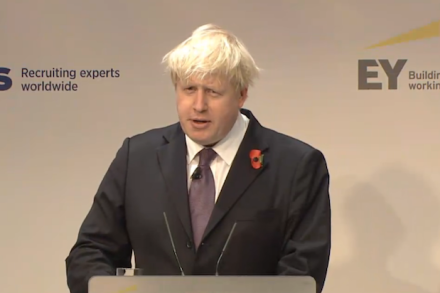
'Let's have it every 90 seconds!' shouted Boris to the CBI this afternoon as he played a series of clips of loud and quiet plane engines. He wanted to illustrate that 'quiet' planes would not make another runway at Heathrow palatable, and he used his customary strong language in attacking the government's position on aviation policy. 'End the dither, cut the cackle,' the Mayor of London told the conference, urging the government to rule out a 'toxic' third runway by Christmas. While he's trying to be loyal, the Mayor seems to have a special licence to attack the government on aviation. Today he said that 'you can't blame British business for failing to get into new markets if the British government is so slow and feeble [on aviation]'.

Sir Gerald Howarth asks Theresa May to ban the burka so it can’t be used as a disguise

From our UK edition

When the Prime Minister's spokesman said this morning that 'we will look at whether there are lessons that we can learn from' the disappearance of Mohammed Ahmed Mohammed, what he probably didn't mean was that the Home Office should consider banning all things that can be worn as disguises. Sir Gerald Howarth clearly did, telling the Commons this afternoon that the Home Secretary should ban the burka partly because it had enabled this suspect to disappear.

Theresa May has taken the heat out of Home Office rows

From our UK edition

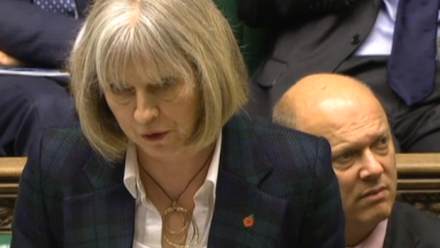
Theresa May will give a statement to the House of Commons this afternoon on the disappearance of terror suspect Mohammed Ahmed Mohammed. The Home Secretary has earned a formidable reputation over the past few years for emerging unscathed from a variety of Home Office rows, and Labour has struggled to lay a finger on her. But this afternoon May will face a grilling from Yvette Cooper over the TPIM arrangements for Mohammed Ahmed Mohammed, and Labour wants to use this incident as a way of claiming that the Home Secretary's own policy is flawed.

Ed Balls’ credibility mission

From our UK edition

The never-ending slew of messages from Labour figures about the party's 'clear' position on high-speed rail was part of an attempt by the party to show that it is a credible opposition that scrutinises policies rather than blindly supports them. But this got rather confusing last week as each 'clear position' was a little different to the last. So today Ed Balls tried to set out Labour's clear position more clearly when he spoke to the CBI conference. And it turns out that this position is the same as it was at the party's conference. Here is the section on the new line in the Shadow Chancellor's speech: 'Labour supports HS2 and the idea of a new North-South rail link because of capacity constraints on the existing rail network. But our support for it is not at any cost.

Cameron aims to set agenda again on HS2

From our UK edition

Even though a significant number of Conservative MPs oppose the new high speed rail line, the focus for the past few weeks has been on what Labour plans to do about it, with a new 'clear' position coming from the party almost every day. Labour support now looks a little more likely given the language used by Mary Creagh at the report stage and third reading of the preparation bill last week. And while the fuss about Labour has died down a little, David Cameron is wisely seeking to wrestle back the agenda on this project from the Opposition. In a speech today to the CBI, Cameron will use one of his favourite lines at the moment: the accusation that Labour would be 'betraying the North' if it didn't support the new line.

The big question with Ed Miliband’s living wage pledge isn’t whether it will work

From our UK edition

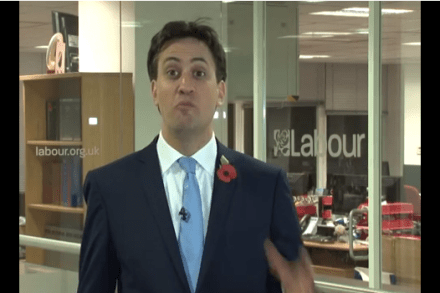
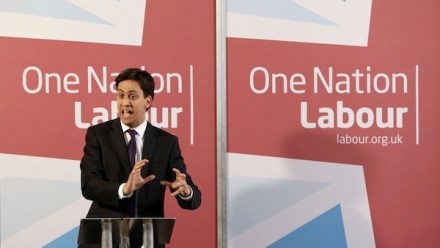
Will Ed Miliband's pledge on the Living Wage, made in today's Independent on Sunday, work? Actually, that's not really the most important question: the experience of the weeks following the autumn conference season is that you don't actually need a workable pledge to be able to set the terms of debate. The Labour leader's plan is for private and public sector employers to receive a tax rebate - on average £445, but up to £1,000 - for 12 months for every employee whose pay is lifted to living wage level of £7.45 an hour. He says this will be paid directly through increased tax and national insurance receipts. The big question now is how the Conservatives respond to this.

How the Tories will write their manifesto

From our UK edition

This week, David Cameron will announce the creation of a series of policy commissions charged with drawing up policies for the next Tory manifesto. Strikingly, every commission will include on it the chosen representative of the Tory backbenches. The groups will, as I say in the Mail on Sunday, be made up of the relevant Cabinet Minister, a member of the Prime Minister’s policy board and the MP in charge of the 1922’s policy work in this area. The Downing Street Policy Unit will provide the secretariat. Number 10’s hope is that by bringing MPs into this process, they’ll feel more loyal to the manifesto once it is produced. As one source puts it, Cameron is 'reaching out and hugging people close’. But this strategy is not without its risks.

Why do the Tories lead on the economy and leadership but trail overall?

From our UK edition

One of the odd things about the polls at the moment is that the Tories lead on economic competence and leadership, traditionally the two most important issues, yet trail overall. There are, I argue in the column this week, three possible explanations for this polling paradox. The first possibility is that Ed Miliband is right, that the link between GDP growth and voters’ living standards is broken. A consequence of this is that voters put less emphasis on economic management in the round. Instead, they want to know which party will do most to help them with their cost of living. Then, there’s the possibility that the traditional political rules don’t apply in this era of coalitions and four party politics in England.

Police drop investigation into Grant Shapps’ former business

From our UK edition

One of the stranger rows since the Coalition formed has been over Tory chairman Grant Shapps/Michael Green, and whether or not businesses he ran before entering politics were engaged in unlawful activity. How To Corp, which Shapps founded before passing his share to his wife in 2008, sold a software called TrafficPaymaster, which copied content from other websites so that clients could make more money from Google advertising. Labour MP Steve McCabe complained about the firm to Director of Public Prosecutions Keir Starmer and the Metropolitan Police, and today the Met have responded.

The next bitter battle over the NHS is looming

From our UK edition

It's been a while since we had a nice big fat NHS row, but those who enjoy watching Andy Burnham and Jeremy Hunt fight over the 'party of the NHS' crown can rest assured that there's a really bitter one coming up this autumn. NHS England has spent the past few months consulting on a change to the way clinical commissioning groups are funded that could end the current arrangement where more money per capita is spent on patients in deprived areas. The formula currently being considered would make the number of elderly people in an area a more important factor in the size of the grant that each CCG receives. You can probably already guess how this will play out in the political arena, but firstly, here's the argument behind changing the formula.

Nigel Farage wins The Spectator’s HS2 debate — but will the green belt be destroyed? (with audio)

From our UK edition

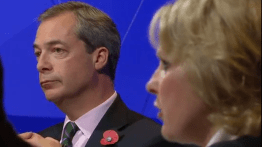
HS2 was given an emphatic vote of no confidence at The Specator’s debate last night, where Matthew Parris and Nigel Farage led their respective teams into battle. This was the debate that Westminster will not have (all parties are officially agreed on the project) which is all the better for us. Farage claimed he loves infrastructure projects in general but hates HS2 as it’s a Westminster vanity project. Farage attempted to marry Ukip's (inconsistent) support for high speed rail with his ardent opposition to HS2: 'There are so many things we could do. And yes, let's look at the Great Central railway project…we are not luddites, we are not backwards. I want Crossrail, I want to build some new motorways.