Uk politics

Paul Sykes boosts Ukip’s coffers but is he helping to split the right?

Ukip’s treasurer will be beaming this morning, thanks to Paul Sykes. The Yorkshire millionaire — whose wealth is estimated to be over £600 million — has, according to Philip Johnson in today’s Telegraph, promised to ‘do whatever it takes’ to ensure that the party tops the polls at the 2014 European elections. The Tories won’t be thrilled at the news; but Sykes is not a new problem, more of a recurring headache. He supported the Tories for many years; but left the party following the Maastrict Treaty, and campaigned instead for James Goldsmith. He rejoined the Tories in 2001 under William Hague before being expelled. Sykes donated £1.5 million to Ukip in 2004, and looks set to make another substantial contribution.

What the Ed Balls is a ‘nightmare’ emails tell us

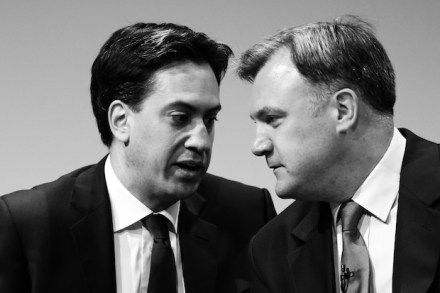
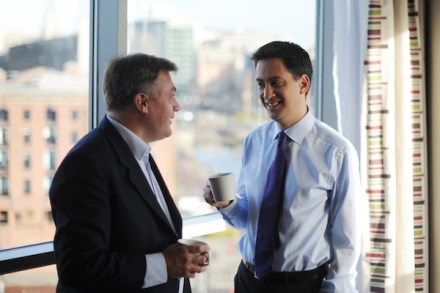
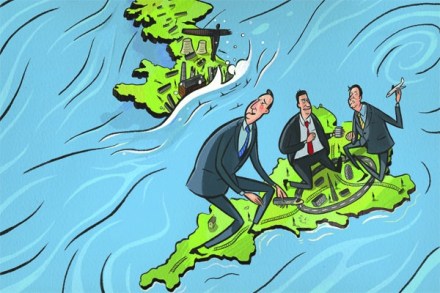
It has long been suspected that there are tensions between Ed Miliband and Ed Balls. The pair fell out badly over the third runway at Heathrow in government and when Miliband was elected leader, he conspicuously didn’t offer Balls the job of shadow Chancellor. But since Balls became shadow Chancellor the pair has largely succeeded in keeping their differences under wraps. But the leaked emails revealed by Simon Walters in the Mail on Sunday today, show what Miliband’s team privately thinks of Balls. Torsten Bell, one of Miliband’s most influential aides, calls Balls a ‘nightmare’ and complains about how complicated his message on the economy is. Tellingly, he isn’t rebuked for his tone by the other Miliband advisers on the email.

There’s no point in just outsourcing our CO2 emissions

The global warming question is back on the political agenda with David Cameron likening cutting greenhouse gas emissions to house insurance. His argument is that if there’s a risk that they may be harmful, you want to guard against it. But given that ‘global warming’ is no respected of national boundaries, one thing that isn’t sensible is to simply send energy intensive industries and their jobs and profits overseas. But this is just what the EU is doing, according to Bjørn Lomborg. He reports that: ‘From 1990 to 2008, the EU cut its emissions by about 270 million metric tons of CO2. But it turns out that the increase in imports from China alone implied an almost equal volume of extra emissions outside the EU.

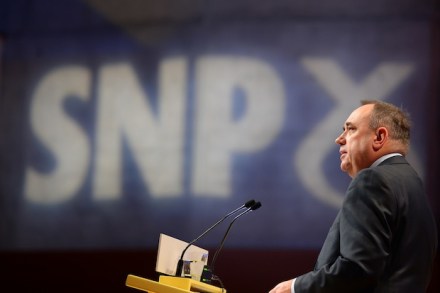
Scottish independence: the Union is endangered by premature and misguided complacency

Somehow I managed to miss Iain Martin's praise for the manner in which David Cameron has "handled" the referendum on Scottish independence. Happily, John Rentoul has prompted me to take a keek at Iain's article which, somewhat uncharacteristically, concludes that the Prime Minister has "played a blinder". This, as Mr Rentoul cautions, is premature praise. We are asked to believe that Cameron has pursued a policy of masterly inactivity. It is also suggested that securing a single-question referendum was a masterstroke rather than, well, the obvious outcome of a negotiating process between Edinburgh and London that was much less dramatic, and much less important, than everyone agreed at the time to pretend it was.

Farewell WebCameron, and the legacy of Steve Hilton

The Tories’ attempts to erase their own online history are wider than first thought. After ‘cleaning up’ their website by hiding pre-2010 speeches and announcements, The Guardian’s Alex Hern reveals that the WebCameron videos have been made private on YouTube: ‘Now it has emerged that every video on the Conservatives' YouTube page that dates from before 2010 has been removed or marked as private. Videos such as Ask David Cameron: Shared ownership, EU referendum, PMQs are now marked as unavailable on YouTube. Others, such as Boris Johnson at the pre-election rally in Swindon, and David Cameron down on the farm, are now unlisted, ensuring that only users with a direct link can see them.

The Tories are still stuffed in the North

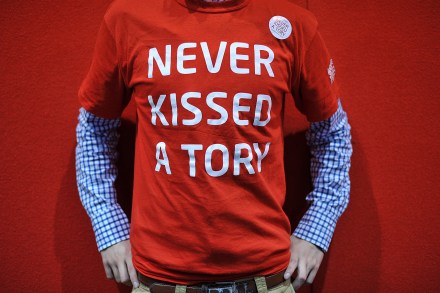
Voters in the North love Tory policies but hate the Tories. That’s the headline from some new YouGov polling on what voters in different parts of the country feel about the political parties and their policies. An overwhelming majority of voters in the North support cutting net immigration, same-sex marriage, the benefits cap, Help to Buy and raising the income tax allowance — all policies enacted by Conservatives in government. But, when asked which party they would consider voting for, 39 per cent of respondents in the North said that they would never consider voting Tory: Why do some many people in the North detest the Tories?

Why have the Tories purged their website?

Remember Cameron's hug a husky speech? Or his lecture on 'the need recast politics for the digital age?' Well, good job you do because the Tory party has been trying to purge their online history, according to Computer Weekly. As Mark Ballard explains, someone at CCHQ has used a robots.txt file to block Google (and other search engines) from indexing the files: ‘...the Conservative Party has removed the archive from its public facing website, erasing records of speeches and press releases going back to the year 2000 and up until it was elected in May 2010. 'It also struck the record of their past speeches off internet engines including Google, which had been a role model for Cameron and Osborne's "open source politics".

Why can’t Labour talk sensibly about immigration?

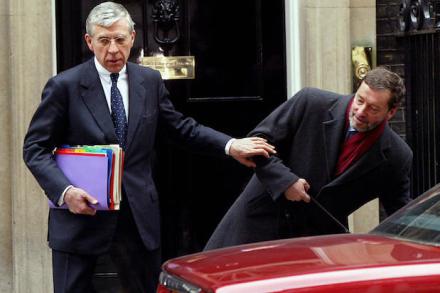
The public still doesn’t trust Labour and Ed Miliband on immigration. His speech last year — admitting 'the last Labour government made mistakes’ — was aimed to draw a line under the past and start afresh. How helpful for him to have two key figures of the New Labour era popping up again to remind Britain of where Labour went wrong. First, David Blunkett told the BBC yesterday that an influx of Roma migrants could potentially lead to riots, akin to Oldham and Bradford in 2001: ‘We have got to change the behaviour and the culture of the incoming Roma community – because there’s going to be an explosion otherwise…if everything exploded, if things went wrong, the community would obviously be devastated.

When 50,000 Irishmen gathered to commemorate the First World War

As I wrote last week, I had not thought commemorating the centenary of the First World War need be a matter of controversy. But one of the reasons why it is worth doing - and worth doing properly and on a large scale - is that the First World War is complicated. Consider the photograph at the top of this post. It was taken on Armistice Day in 1924. In Dublin. Yes, Dublin. The Union Flag is flown. The National Anthem - ie, God Save the King - is sung. A Celtic Cross is erected on College Green prior to its transportation to France where it would serve as a memorial to the 16th Irish Division. Some reports estimate as many as 50,000 Irishmen attended the commemoration. (There is British Pathe footage of it here).

Michael Heseltine: HS2 is about more than mumbo-jumbo economics

The government is trying to pick up steam on High Speed 2 (again) by wheeling out Michael Heseltine to make the case for the project. Tonight at the Royal Town Planning Institute, the former Transport Secretary will argue that the new line is about spreading prosperity and doing 'the right thing' for our country: 'HS2 is about our country’s competitiveness for a half century or more. It is about so many more people sharing growth that has, for too long, been concentrated on London and the South East. It’s all about drawing together our economy as a whole as well as improving our access to the enlarged, and enlarging, home market of Europe. It is not about 30 minutes off London to Birmingham.

Sir John Major is right about education and privilege in modern Britain

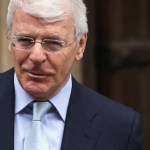
Sir John Major is, of course, correct. It is depressing, though perhaps not surprising, that the British upper-middle-classes - that is, those educated privately - still dominate what he termed the "upper echelons" of "every sphere of British influence". Depressing because no serious person can sensibly believe that talent is restricted to the minority of people educated in Britain's excellent private schools. But unsurprising because elites - I use the word dispassionately - have a natural tendency to do whatever it takes to maintain their elite status. Ed West is right about this. Still, Major's remarks were hardly, as has been claimed in some right-of-centre quarters, "an attack" on private education.

Can the Tories become a mass membership party again?

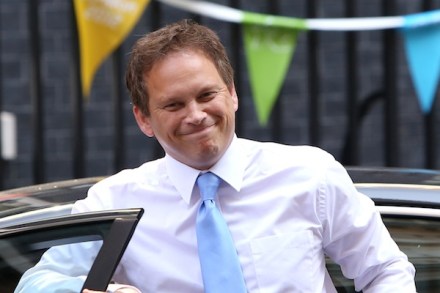
In the average Tory seat, only around 0.5% of Tory voters are Tory members. Grants Shapps, the Tory chairman, wants to change this. He’s written to every Tory MP asking them to take charge of a push in their seat to raise this percentage to 3. If this drive succeeds, Tory membership would rise to 800,000 plus. Opinion among Tory MPs on this move is divided. Some think that the era of the mass membership political party is over. Others, though, argue that increasing membership is doable—even if Shapps target is a tad too ambitious. There is also the issue of how the Tories can increase their presence in areas which they have been absent from for t0o long. At the moment, only two Tory members have associations which pass the Shapps’ size test.

Rebutting #govevreality — a video of untruths and lazy thinking

The blob strikes again. A video called Gove vs Reality is doing the rounds, taking pot shots at Michael Gove’s education policies, or ‘challenging his assumptions and the evidence he advances to support his approach’ as the producers put it. It’s had nearly 50,000 views so far, but is there any truth in it? With absurdly dramatic music, handpicked headlines and sound bites from the likes of Tom Watson, one might think that Michael Gove has been a complete disaster. Well, not surprisingly, there are a few untruths in the video: Gove has taken too many 'urgency pills' — shock, a minister who wants to get something done!

How ‘Help to Buy’ helps the Tories

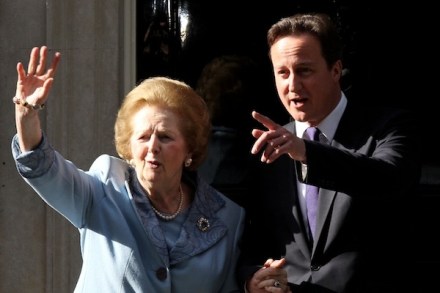
Few images are more seared in the Tory consciousness than that of Margaret Thatcher handing over the keys to people who had brought their council house under ‘right to buy’. The image seemed to sum up the aspirational appeal of Thatcherism. I suspect that there’ll be a slight homage to these images when Cameron meets some of those that the government’s ‘Help to Buy’ scheme is helping onto the housing ladder tomorrow. Number 10 wants to show that the full scheme, which has only been running for a month, is already being used by a large number of people. The economics behind ‘Help to Buy’ might make many on the right nervous; even some Cabinet ministers are worried about it stoking another housing bubble.

There mustn’t be a north / south divide when it comes to fracking

Michael Fallon, who among his many roles is the minister in charge of fracking, has told the Telegraph’s Jame Kirkup that ‘right across the South’ people should prepare for fracking coming to a neighbourhood near them. Considering that fracking will bring with it jobs, growth and cheaper energy this is good news. But it is also good news because it should prevent a north / south fracking divide. There was a danger that fracking would appear to be something that the Tories were happy to have happen in the north but not in their own southern backyards. The former Tory Cabinet Minister Lord Howell’s call for fracking to be concentrated in the ‘desolate’ north was particularly damaging in this regard.

Friday fury in the lobbies

MPs have just voted on the first set of amendments to James Wharton's #LetBritainDecide bill. There is still a great deal more debate to be had in the Chamber, but based on this morning's offering, it's not worth clearing your diary for this report stage, unless you enjoy filibustering and mischievous use of obscure parliamentary procedure to delay a bill. This morning we had a geography lesson from Mike Gapes about the populations of each of the overseas territories, an account of the 'grilling, gruelling' debate that Martin Horwood enjoyed at a school in his constituency, and a debate about what it is that the people of Gibraltar take joy in.

Commemorating the First World War is not a festival of British Nationalism

You should never, these days, under-estimate peoples' ability to be outraged - outraged, I tells you - by the most innocuous event. Never. There are, after all, a depressing number of chippy morons in this country. Even so, I confess to being surprised by the hostility with which plans to commemorate the First World War have been met. At least in some quarters. I had thought, naively it is now clear, this commemoration would be uncontroversial, what with the First World War being, by any reckoning, an episode of some seriousness and consequence. That's hardly to say that the war's arguments have been settled. Far from it. Interpreting or understanding the First World War remains a complicated, delicate, business.

Is Nigel Farage losing his touch?

Is Nigel Farage’s magic disappearing? On Question Time last night (his 15th appearance in four years) the Ukip leader was taken to task by an audience member who asked him to 'stop scaremongering the majority of people' — followed by the kind of rousing cheer that Farage himself used to draw. The Tory defence minister (and former TV anchor) Anna Soubry finished off the attack with an impassioned defence of immigration, in language that Farage usually uses to attack it. This left him flummoxed. Here’s what she had to say: 'You do not talk facts, you talk prejudice. You scaremonger, you put fear in people's hearts. Times are tough, we know that.

How Tory Euroscepticism has changed

In just over half an hour, MPs will flock to the Chamber to watch the report stage and third reading of the Wharton Bill. I explained yesterday that there will be a chunk of Tories  who find themselves forced to support Adam Afriyie's call for an early referendum because it is a UKIP 'red line', but there is little good feeling about it. One MP, who was going to back the amendment for those reasons, told me this morning that he'd decided to abstain because the amendment does not help the eurosceptic cause at all. Before #LetBritainDecide reaches fever pitch in the Commons, though, it's worth considering how that eurosceptic cause has changed recently.

Tory MPs flee dreaded ‘Europhile’ tag to Adam Afriyie referendum bill bid

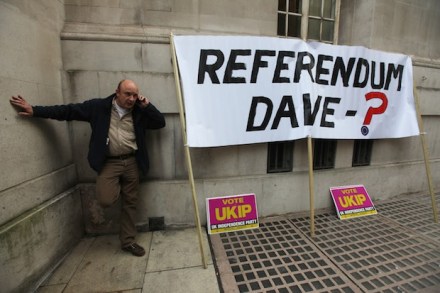
In case you've been wondering what that strange feeling of tension in the air across the country is, the #LetBritainDecide bill returns to the Commons tomorrow for its report stage and third reading. There is, actually, rather a lot of valid tension - in as much as a backbench bill that will never become law can create valid tension - over the legislation this time around. The first reason is that Labour's Mike Gapes has tabled a fantastic series of amendments to try to wreck the bill, which join his fantastic series of amendments that he tabled at committee stage. The second is that there are many more Tories planning to vote for Adam Afriyie's beleaguered amendment than the whips had initially assumed.