Uk politics

The Dumbest Dog in the World

From our UK edition

That's Duggy Dug, the latest champion of the campaign for Scottish independence. For some reason Brian Cox - the actor, not the physics professor - has decided to put his voice to this cringetastic calamity. Duggy Dug (even the name is grim) is not, mercifully, part of the official Yes campaign which, given his plainly limited mental capacity, is probably just as well. His argument is so stupid - and misleading - that one wonders if Duggy Dug is actually a Unionist fifth columnist. Then again, he's not much more embarrassing than some of the members of the Scottish parliament whose grasp of elementary concepts would be considered astonishingly weak if such disappointments still had the power to disappoint or astonish.

Five things you need to know about Ipsa’s final report on MPs’ pay

From our UK edition

The Independent Parliamentary Standards Authority has released its final report on MPs' pay today. It's pretty much what was expected — a big salary bump, paid for by cutting back expenses and pensions, to start in the next Parliament. This is what you need to know: MPs' pay will a take one-off hike to £74,000. Ipsa says this is to 'address the historic shortfall’. This is a 11 per cent rise based on what they’re paid today, or 9.26 per cent on top of a previously announced inflation-linked pay rise. After this, MPs’ pay will track average earnings — going up or down based on what's going on rest of the country. Less generous pension scheme.

The first two years of life are more important for social mobility than schooling

From our UK edition

Much is prattled on about social mobility. Practically the whole emphasis, however, is put on schools. Yet by the time most children reach school, life’s race for many of us has been determined. The report I wrote for the Prime Minister published in December 2010, The Foundation Years: preventing poor children becoming poor adults, had this as its main conclusion. Drawing on all the evidence we have available to us, the report suggested that the very first stages of life, in pregnancy, and during the first two years, are crucial as to where most children will end up in adult life. Using one of the national cohorts, Leon Feinstein showed that, probably at 3, but certainly at 5, the life destinations of children are clearly marked.

Adam Afriyie’s fantasy government

From our UK edition

It's a shame that Adam Afriyie now seems to be a busted flush when it comes to his leadership ambitions. The Tory MP had succeeded not just in designating his fantasy cabinet, but also the lower ministerial ranks. Mr Steerpike hears that at the height of his plotting, he sidled up to fellow Conservative James Gray in a lift to tell him that his talents were not being appreciated by the Prime Minister. Then he added, comfortingly, that though he couldn't offer him a place in his Cabinet, he'd definitely be able to do something at Minister of State level. Gray did not want to give a comment to Mr Steerpike, but presumably he was delighted to have been considered at all by the great man.

Labour denies Heathrow U-turn

From our UK edition

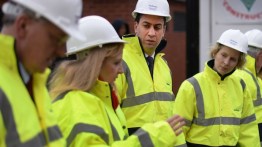
Spectator readers won't have been particularly surprised by the FT's story that Ed Miliband is dropping his opposition to a third runway at Heathrow: James reported that the Labour leader was softening his stance on aviation back in November: 'Miliband is also determined to avoid a head-on collision with his shadow chancellor. Having put Balls back in his box over HS2, he now seems to be softening his opposition to a third runway at Heathrow. This extra runway is something which Balls regards as vital to Britain’s economy and which the pair fell out over in government.' But if that softening is continuing apace, Labour isn't ready to go public with it. I've spoken to a party source this morning who said: 'FT suggestion Labour is changing its position on Heathrow is wrong.

It’ll take more than one vote for Britain to leave the EU

From our UK edition

What would the exit negotiations look like if Britain voted to leave the EU? Well, Open Europe tried to give us an idea today hosting a war game sketching out what would happen next. (Seb wrote about their work on the renegotiation earlier). It left me with the view that there would be a second vote on the proposed exit terms. If Britain does vote out in a referendum, it is then—under Article 50—a member of the EU for two years while it tries to negotiate an exit deal. I suspect that the package would be, despite the UK’s trade surplus, relatively ungenerous.

War gaming a better EU deal for Britain

From our UK edition

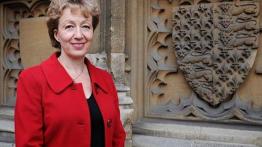
What will happen when Britain sits down to negotiate a new relationship with the European Union? The Open Europe think tank decided to find out with ‘war games’ in Westminster this morning. Expert negotiators representing the UK, EU Commission, Germany and France among others tried to figure out how a new Europe could be built that works for everyone. Tory MP and member of the No.10 Policy Unit Andrea Leadsom ably batted for the UK, based on the principles in her Fresh Start manifesto. Not surprisingly, she clashed with France, Germany and the EU Commission representative John Brunton.

PMQs sketch: The snarling between Cameron and Balls enters fresh territory

From our UK edition

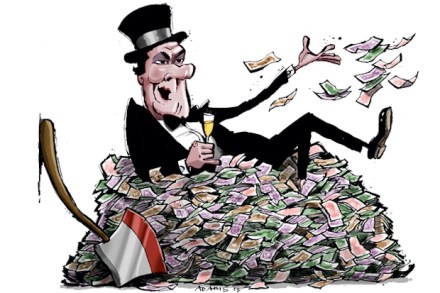
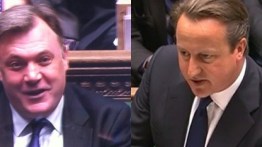
Christmas is here. And Ed Miliband’s script writers have already got their present. The sack. Really, he seems to have let them go. At PMQs he was reading out insults that pre-date Nicholas Parsons. Out of touch, complacent, the plaything of millionaires. Cameron can fight off such jibes his sleep. Tory backbenchers asked questions full of happy economic tidings. Conservative constituencies are alive with commercial euphoria. New investment, new apprentices, new customers. It’s all thanks to this wise and decisive government. Cameron duly lapped up the credit. Peter Lilley revealed his personal remedy for the proposed pay hike for MPs. ‘Re-table the Boundaries Commission report!’ he advised. In other words fewer MPs with higher salaries.

Shock as Government agrees with Bill Cash

From our UK edition

Something extraordinary happened on the Committee corridor in Parliament today. A government Secretary of State turned up to a session led by veteran troublemaker Bill Cash to accept a bill that the Tory MP was pushing. More extraordinary still to those unfamiliar with the range of subjects that Cash takes an interest in is that this had nothing to do with Europe: it was his Gender Equality Bill. Cash has been plugging away at this Bill, which lays a statutory duty on the International Development Secretary to ensure that women and girls are supported and promoted through UK aid.

Scottish Nationalism’s Dangerous Cult of Victimhood

From our UK edition

Danny Finkelstein's column in the Times today is characteristically elegant and incisive. In politics as in life he writes, "whatever apparent power and temptation lies with the adoption of the identity of victimhood it is ultimately destructive". Since Finkelstein is pondering lessons that may be drawn from the life of Nelson Mandela it may not be immediately obvious that the conclusion he reaches has some relevance to the campaign for Scottish independence. I better elaborate, then. Much has been said about how and why Unionists need a better "narrative" when making the case for Scotland as part of the United Kingdom. This is true. There is a need for a positive, optimistic, case for the Union. This is also true.

What the National Audit Office really said about free schools

From our UK edition

Is the free schools project unnecessary and costly? If you take your news from the BBC, then you might be forgiven for answering 'yes': the Beeb's reporting on the National Audit Office's latest report on Michael Gove's pet policy suggests that the whole thing has been an expensive vanity project. The report itself doesn't seem to say quite the same thing, though: it argues that the Education department has 'achieved clear progress on a policy priority' and that ministers face a 'rising capital cost trend' in spite of much lower average construction costs than previous programmes (free schools often use existing buildings, while the department allows smaller space standards and reduced building specifications to create an average reduction in construction costs of 45%).

No, David Lidington: EU subsidiarity is not a ‘new principle’

From our UK edition

David Lidington’s letter to Conservative Party members on ‘reform in Europe’ tells us not very much about almost nothing at all. It is measured, upbeat and polite, but that is the essential optimism and generous disposition of the man himself. The only interesting glimpse it offered into current thinking was confirmation of his ignorance of the Maastricht Treaty. Perhaps, like Kenneth Clarke, he hasn’t bothered to read it. The Europe Minister wrote: ‘I’m sure [members] will be pleased to know that in their Subsidiarity Review, the Dutch Government proposed a new principle: ‘at European level only when necessary, at national level whenever possible’.

May’s Brussels-blocking gesture to Tory right

From our UK edition

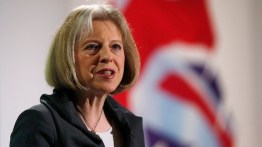
Why is Theresa May stalling on the publication of the Balance of Competences review? The Times is reporting that the Home Secretary feels the review underestimates the extent of benefit tourism, which would certainly chime with what's been published so far - the last tranche of review documents made the European Union sound like something no sensible person could ever find fault with. But aside from the policy issue, which is becoming more and more sensitive as the deadline for the lifting of transitional controls on Bulgarian and Romanian migrants approaches, there could be another reason the Home Secretary wants to be seen to be delaying on this review.

David Cameron interview: tax, ‘green crap’ and #TeamNigella

From our UK edition

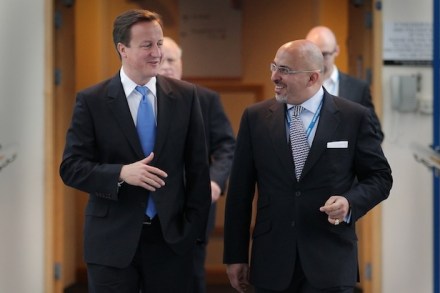
A sneak preview from The Spectator's bumper Christmas issue, out this Thursday... It’s 9.30 a.m. on a Friday and David Cameron is about to head for his Oxfordshire constituency and work from home. This is precisely the habit that his Cabinet Office minister, Francis Maude, is trying to beat out of the civil service, but the Prime Minister has a reasonable claim to some downtime. In the past five days he has met 150 businessmen and toured Chinese cities. This morning, he has paid a visit to Tech City, London’s answer to Silicon Valley, and travelled to South Africa House to pass on his condolences following Nelson Mandela’s death. His last appointment, which will last for as long as it takes to drive to Beaconsfield service station, is an interview with The Spectator.

Border Force ‘neglecting duties’ and ‘weakening’ security – MPs

From our UK edition

Is the Border Force fit for purpose? At one point it became a model for reform with ministers arguing that its performance had improved significantly since it was split from UKBA in March 2012 into a separate law enforcement body. But today the Public Accounts Committee suggests the Border Force isn't quite fighting fit: more puffing at the back of the line and a bit paunchy. The PAC's report points to weakened security at the border as the Border Force is forced to prioritise passenger checks over checking freight for illicit goods or illegal immigrants, gaps in intelligence on those coming into the country, and 'inadequate IT systems'.

Pathfindering and lobster pots: IDS defends Universal credit

From our UK edition

If you'd judged the success of universal credit purely on Iain Duncan Smith's tone at the Work and Pensions select committee this afternoon, you might conclude that things weren't going very well at all. IDS was in a fabulously grumpy mood this morning on the Today programme, muttering about the presenters trying to find fault, and he didn't seem to have cheered up by the time he arrived in the Wilson Room for his select committee grilling, accusing Labour MP Debbie Abrahams of 'moaning' and Glenda Jackson of 'conflating so many issues here, it's almost becoming risible'. So what did we learn? IDS insisted that 'in essence it will be delivered by 2017': his plan was still the same as the original one he'd outlined to them in September.

Hypocrisy alert: big tech firms complain of data intrusion

From our UK edition

It’s time to reform government surveillance, so say the internet's tech giants. Following the stream of NSA spying revelations from The Guardian; AOL, Apple, Facebook, Google, LinkedIn, Microsoft, Twitter and Yahoo have joined forces to urge Barack Obama and the US Congress to tighten the laws regarding spying on individuals. In an open letter released today, they state: ‘We understand that governments have a duty to protect their citizens. But this summer’s revelations highlighted the urgent need to reform government surveillance practices worldwide. The balance in many countries has tipped too far in favor of the state and away from the rights of the individual — rights that are enshrined in our Constitution. This undermines the freedoms we all cherish.