Uk politics

Standard Life intervention in independence debate suggests business nerves about chance Scotland could vote ‘yes’

From our UK edition

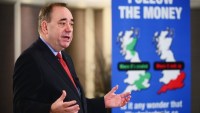
The Yes campaign's response so far to the story that Standard Life would consider transferring some of its operations to England from Scotland in the event of a 'Yes' vote has been to argue that what the company wants is 'exactly what the Scottish government has proposed'. Some Nats think this is another example of bullying from 'monied elites', but so far the official campaign has wisely blamed the 'No' campaign for creating uncertainty for businesses. After weeks of arguing about bullying and 'campaign rhetoric' from Westminster politicians, perhaps the SNP realises that making the same accusation of a business for setting out contingency plans would be going overboard (but you never know).

Nature belongs at the heart of school life

From our UK edition

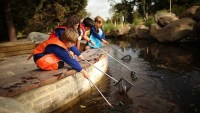
History, Edmund Burke wrote, is ‘a pact between the dead, the living and the yet unborn.’ Nowhere is this pact more important than in our relationship with nature. Conservative governments have always sought to protect and enhance the natural environment – whether through Disraeli’s Public Health Act, which sought to limit the environmental impact of the industrial revolution; or Eden’s Clean Air Act, which helped lift the London smog.  We shouldn’t forget it was Margaret Thatcher’s drive to cut sulphur emissions that stopped the acid rain which was damaging our woodlands and killing the fish in our lakes and rivers.

Gove: Lib Dems think we’re anti-apple pie, cream and custard. Clegg: We’re being grown up about Coalition

From our UK edition

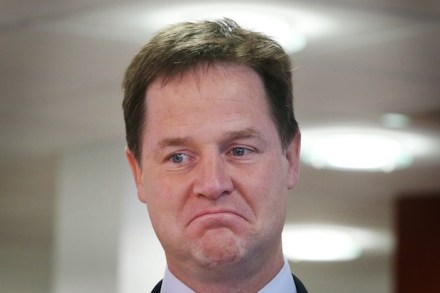
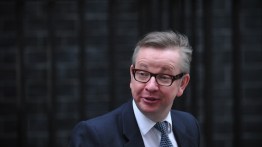
The Coalition is merely cohabiting now - that much has been clear for a while. But one partner doesn't seem to acknowledge quite how unreasonable its behaviour is. The Lib Dems have been cheesing off the Tories with what have appeared to be an increasing number of increasingly heated attacks: from David Laws wading into the Ofsted row to Ed Davey attacking 'diabolical' and 'wilfully ignorant' Tories, and from even 'native' Danny Alexander making dire (but specific) threats about his dead body and taxation to Nick Clegg describing George Osborne's call for further cuts in welfare spending after 2015 as a 'monumental' mistake. But today at his monthly press conference, Clegg denied that his party was pursuing an aggressive policy of differentiation.

Tory greens make hard-headed pitch for environmentalism

From our UK edition

Something strange is happening in the world of green Conservatism. After the PM decided to take out the 'green crap' last year, greeny Tories might have been forgiven for beating a bit of a retreat and licking their wounds. Well, if they did, they didn't take much time to do it: now they're fighting hard with a new vision for Green Toryism. Today the Conservative Environment Network re-launched with a pamphlet called Responsibility and Resilience which argues that true Conservatism is the best worldview for environmental policy. It contains quite an interesting mix of voices, from Zac Goldsmith to Environment Secretary Owen Paterson, who has written an essay on natural capital.

Low Pay Commission backs 3% rise in minimum wage

From our UK edition

So after all the to-ing and fro-ing over whether the minimum wage will get a big fat rise, the Low Pay Commission has recommended that the rate rise by 3 per cent to £6.50 an hour from October 2014. George Osborne had said that he wanted to 'see an above-inflation increase in the minimum wage', pointing out at the same time that 'if, for example, the minimum wage had kept pace with inflation, it would be £7 by 2015/16' (full quotes and audio here, if you need a reminder). If he did want it to rise to £7 by 2015/16, that would mean a much bigger rise from the LPC next time round, which is possible. This is a reminder of a problem politicians have encountered in a completely different policy area over the last few weeks: they don't have much power any more.

The Workers’ Party?

From our UK edition

Much hilarity among those of a leftish persuasion in Westminster that the Conservatives might dare call themselves the Workers' Party, as Grant Shapps enthusiastically did yesterday. Mind you, when Shapps gave his speech making this claim alongside Sir John Major yesterday, journalists were excluded, so he might not have said it at all. But assuming he did, there's no reason why the Conservatives should provoke any more hilarity than any other Westminster party when they make this claim. There are, though, two warnings that if not heeded, could make this new tag seem as hilarious to voters as previous attempts at rebranding. The first comes from David Skelton, whose campaign Renewal is pushing for the Tories to do more to appeal to working class voters.

Tory MPs dismiss minority govt hints as lacking ‘solid logic’

From our UK edition

While Number 10 is pouring cold water on suggestions that the Prime Minister might rule out a second coalition in the 2015 manifesto, his MPs have given it a rather icy reception. If the hints about him preferring a minority government to governing with the Lib Dems were supposed to reassure those on the Right that he does love them more than he loves Nick Clegg, they seem to have backfired rather. Instead, Conservative MPs I've spoken to today are annoyed for a variety of reasons. The first is that backbenchers feel any plan to rule out a coalition in the manifesto is counterproductive. It's worth noting that Number 10 sources are insisting that 'our manifesto is about policy' rather than giving any suggestion that there would be a commitment on minority government in the document.

How helpful can Angela Merkel be?

From our UK edition

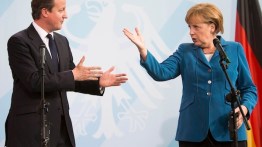
Angela Merkel is, as James explains in this week's magazine, central to David Cameron's hopes of getting anything meaty at all from his renegotiation and reform of the European Union. Her address to Parliament later this week will be scrutinised for every hint that she might support one reform or another - and for her enthusiasm for supporting Cameron in his quest. So it would be helpful if Merkel said some encouraging things in her speech. But can the Prime Minister suggest anything that would be particularly helpful for the German Chancellor to say?

Minority government hint is boost for backbenchers – if they believe it

From our UK edition

That David Cameron is reportedly considering committing to minority government above coalition is a strong message to his backbenchers that he's not preparing to hop back into bed with Nick Clegg and co in 2015. They have been growing a little feverish about the idea, and ministers have made it known in the party that they would vote against a coalition in any secret ballot on a new deal (provided, of course, that there is a secret ballot). This is good for party relations in the straightforward sense that Cameron is signalling to his backbenchers that he doesn't like the Lib Dems as much as they suspect he does, but also because he is to a certain extent signalling that he is prepared to do business with his own MPs, even though that will not be a walk in the park.

David Cameron’s ‘unremittingly positive’ case for the Union

From our UK edition

David Cameron says he wants the case that he makes for the Union and against Scottish independence to be 'unremittingly positive'. Is it? In an interview with BBC News, the Prime Minister said: 'That’s my whole argument, which is go back to the big picture, and I think this family of nations is better off together. Not just is better off in the United Kingdom, but we in the rest of the United Kingdom think we’re better off with Scotland that we want you to stay. That argument is one that is unremittingly positive about the success of this family of nations and how we should keep this family together.

Coffee Shots: Ministers visit Scotland to point at things

From our UK edition

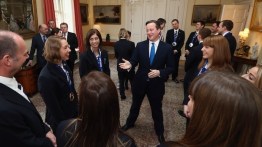
Today's Cabinet meeting in Aberdeen, now underway, has given ministers plenty of opportunity to stare earnestly at Scottish things while trying to make the case for the Union. Here are some of Mr Steerpike's favourites. [caption id="attachment_8719911" align="alignnone" width="620"] Image copyright The Cabinet Office[/caption]   All captions gratefully received in the comments...

The Etonian, the SNP and the Black, Black Oil

From our UK edition

You will recall that, according to the greatest account of England's history, every time the English thought they had solved the Irish Question, the Irish changed the Question.  Something similar afflicts David Cameron's grapplings with the Scottish Question. The poor man is damned if he does and equally damned if he doesn't. The other week he was lambasted for his effrontery in giving a speech about Scotland in, of all places, London. Today he is lambasted for bringing his cabinet to Aberdeen. How dare he lecture us from afar; how dare he venture north like some touring proconsul! The optics, as the pros say, are not very good for the Prime Minister. The cabinet very rarely comes to Scotland. Drawing attention to that fact may not help Mr Cameron's cause.

Salmond attacks credibility of ‘No’ campaign threats

From our UK edition

There's not much the Cabinet can do about accusations by the SNP that today's visit to Aberdeen is a typical Westminster attempt to bully Scots by flying up to make yet another tranche of negative announcements about the consequences of independence, focusing this time on North Sea oil. If Cabinet ministers didn't make this trip, they would be accused of being feart. On balance, it's better to engage than cower, even if today's offensive by Ed Davey and others hardly helps the impression that the 'No' campaign is wholly negative.

Tory call to rebrand National Insurance is politically smart

From our UK edition

The government's legislative programme is pretty light at present. But the Bill that is going to spark the most interest this week is destined to go nowhere at all. It's a Ten Minute Rule Bill, introduced by Tory MP Ben Gummer this Tuesday, and calls for National Insurance to be renamed the 'Earnings Tax'. What's in a name? Well, there are two good reasons why this Bill which won't go anywhere (Ten Minute Rule motions are simply used as a way of making a point and drawing attention to an issue) has, as I understand it, already gained a great deal of attention and sympathy at the highest levels of government. The first is the reason that Gummer cites for introducing the motion in the first place: transparency.

Ed Miliband: Children behave better than MPs at PMQs

From our UK edition

A rite of passage for any Opposition leader these days is to promise to make politics more decent and connected to people's lives. One recent Opposition leader said this, for example: 'And we need to change, and we will change, the way we behave. I'm fed up with the Punch and Judy politics of Westminster, the name calling, backbiting, point scoring, finger pointing.' David Cameron, who said this in his leadership acceptance speech in 2005, now has a team of MPs who help heckle Labour in the Commons during Prime Minister's Questions. This was mainly in response to Labour being much better at heckling, with Ed Balls gesticulating and sledging away on the front bench, and Michael Dugher and Sadiq Khan doing similar dirty work on the steps on the Labour side of the house.

Would ending unpopular benefits test contract really solve the problem?

From our UK edition

What will happen to the much-maligned contractor that carries out the government's work capability assessments which determine whether a sick or disabled person is fit for work or needs long-term disability benefit? Atos Healthcare is reported to be seeking an early end to its contract with the Work and Pensions department, which certainly won't dismay ministers who have been privately unhappy with the company's performance for a while. Although DWP isn't commenting beyond the statement below, it now looks as though it won't be difficult to end the contract mutually. 'Atos were appointed the sole provider for delivering Work Capability Assessments by the previous government in 2008.

Who would benefit from a ban on FOBTs?

From our UK edition

I wrote a piece about the Fixed Odds Betting Terminals uproar in the magazine this week, and it has prompted some angry responses by email and over social media. I'm told that I didn't treat problem gambling with sufficient seriousness. I'm not sorry about that, I'm afraid: I think it's silly to be too serious about the vices of others. My point was that the political and the media classes are having something of a moral panic about FOBTs  — and as always with moral panics, the political and media classes don't really know what they are talking about. I doubt Ed Miliband or Tom Watson, who both seem dead against FOBTs, have ever spent more than 10 minutes in a bookie.

Food banks: What would Labour do?

From our UK edition

Was the church right to intervene in the debate about food banks and benefit cuts? I argue in my Telegraph column today that it was - but that the way the 27 bishops (more have since spoken out to support the letter to the Mirror - and Justin Welby has agreed with their argument that benefit cuts are pushing up food bank demand) intervened says a number of interesting things about the Church of England today. But there is another interesting question worth asking, which is not what would Jesus do but what would Labour do? As I explained earlier in the week, the party finds these attacks from church leaders very useful at the moment as it feeds into the Opposition narrative about government failure. But how will Labour deal with food banks if it is elected into government in 2015?