Uk politics

Want to make welfare a ‘moral mission’? Stop toting it as a weapon.

From our UK edition

Quite naturally, a piece from the Prime Minister claiming that welfare reform is 'at the heart… of our social and moral mission in politics' is provoking hilarity from those who've never backed that moral mission in the first place. David Cameron is writing in the Telegraph as a response to the Archbishop of Westminster Vincent Nichols' comments in the same paper at the weekend that the government's welfare reforms were a 'disgrace'. He argues: 'Of course, we are in the middle of a long and difficult journey turning our country around. That means difficult decisions to get our deficit down, making sure that the debts of this generation are not our children’s to inherit.

Who are the real bullies in the Scottish independence debate?

From our UK edition

Stewart Hosie, the SNP's finance spokesman at Westminster, said something unwittingly revealing last night. Taking part in the latest of BBC Scotland's referendum debates (you can catch it here), he observed that: There is a plan from the Scottish government and the Yes side… What we don't have is a plan a from the No people about what happens in the event of a No vote. So I want them to explain to you today when are they going to cut £4bn from Scotland's budget? [...] There is precisely nothing from the No camp to explain what they're going to do to Scotland in the event of a no vote. Give Hosie marks for honesty. You don't often get it as clear as this. I don't think Hosie mis-spoke here. Not when he's inventing a phantom threat to the Scottish block grant.

How much does a degree improve your lifetime earnings?

From our UK edition

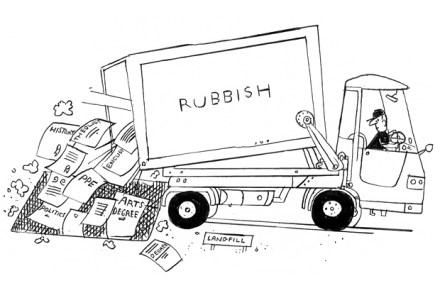
What do you say to an arts graduate? Hamburger and fries, please. It’s an old joke but one that still rings true as students consider the value of a university education. A new survey from the graduate recruitment site Totaljobs.com today suggests that 40 per cent of graduates are still looking for work six months after graduating, whilst a quarter are still unemployed a year later. The news isn’t much for those who manage to bag a job – the latest ONS’ employment figures suggest that nearly half of graduates who have found work are in jobs that don’t require degrees. But even if the student of today takes the jump into higher education, should they consider how much going to university will affect their earnings over a working lifetime?

Cooper’s stop-and search intervention shows danger of giving ground

From our UK edition

David Cameron and his political aides are reportedly stalling over reform of stop-and-search powers because they fear it will dilute the Tories' tough-on-crime message. But this means that Labour, circling like vultures for any waft of political roadkill, have swooped. Yvette Cooper has written to Theresa May offering Labour's support in getting reform of the powers. Cooper says: 'I hope that you will not give in to the Prime Minister’s opposition to change. Everyone agrees that the police need to have powers to stop and search individuals suspected of crime or to prevent a serious threat. Intelligence-led targeting of suspected criminals helps to cut knife crime and youth killings. This is the problem with dithering.

Why Nick Clegg is so keen to pick a fight with Nigel Farage

From our UK edition

Before the European Elections in May, don’t expect either David Cameron or Ed MIliband to engage with Nigel Farage. Both the Tory and Labour leaders think that the best strategy for dealing with Ukip and its leader is to deny them the oxygen of publicity. Nick Clegg, by contrast, is desperate for a scrap with the Ukip leader. Clegg’s rationale is that the more fights he can pick with Farage, the more he can turn the European Elections into a fight between In—led by Clegg and the Liberal Democrats—and Out, championed by Farage and his party. Clegg hopes that this polarised contest will prevent a total wipeout of Lib Dem MEPs. Being pro-European might, to put it mildly, not be the most popular cause in Britain but it is a lot more popular than the Liberal Democrats.

Tory candidate: Conservative party not doing enough to convince minorities it is not racist

From our UK edition

Is the Conservative party doing enough to attract ethnic minority voters? We've reported previous pushes by Chairman Grant Shapps and Home Secretary Theresa May to appeal to groups who have centre-right values but are turned off the Tories. But the FT today suggests that the top of the party is struggling to show enthusiasm, with one party insider claiming that Lynton Crosby feels it 'muddies the message' to move away from economy, jobs, welfare and immigration. The party's candidate in Dudley North, Afzal Amin, agrees that the Conservatives are failing to communicate properly with ethnic minority voters.

Alex Salmond attacks ‘campaign rhetoric’ with a ‘George Tax’

From our UK edition

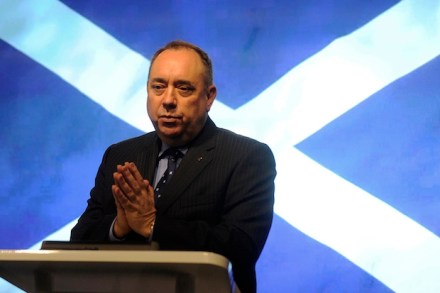
After a couple of weeks of something frightening and bad called 'campaign rhetoric' from Westminster politicians, Alex Salmond today tried to reassure Scots that everything would be OK if they did vote for independence. 'The rest of the UK will never be foreign' to an independent Scotland, he insisted, sounding rather in favour of another aspect of the Union (alongside the Queen, the pound and so on). And this 'campaign rhetoric' about the currency union was wrong - and dangerous to the rest of the UK, said Salmond.

Revealed: the Salmond-Osborne Tapes

From our UK edition

A recording of a conversation between Alex Salmond and George Osborne has been leaked* to The Spectator. An edited extract follows: Alex Salmond: Scotland and England are different countries. So different, in fact, that we should no longer live together. Our interests have diverged and so must our futures. George Osborne: I do not think that is the case. Nor, by the way, do I hope it is. Alex Salmond: But it is! George Osborne: [wearily] Perhaps you are right. Very well; if our interests and futures diverge then perhaps, as you suggest, present arrangements will no longer prove as satisfactory as once we thought they were. Alex Salmond: I knew you would see the light.

Nick Clegg softens his language on Labour

From our UK edition

Nick Clegg's comments on Radio 4 about the possibility of a coalition deal with Labour in 2015 are significant, not because the Deputy Prime Minister is airing the possibility of the Lib Dems striking a deal with the left rather than the right, but because of his shift in rhetoric. Clegg was perfectly clear in his 'No, no, no' speech at the party's 2013 autumn conference in Glasgow that the Lib Dems could do a deal with either party and would tone down the excesses of a Tory or Labour-led government. But his language back then annoyed some people. He said: ‘Labour would wreck the recovery. The Conservatives would give us the wrong kind of recovery.

Now Scots know: an independent Scotland won’t be Salmond’s ‘same-but-slightly-different’ vision

From our UK edition

Personally, I’m now waiting for the Queen to get involved. After all, there’s not much left of Alex Salmond’s independence-but-not-independence blueprint that is left intact. First it was his ‘we’re going to share the pound in a Sterling zone’ claim. That was ruled out by George Osborne (and Ed Balls and Danny Alexander) last week. Then it was his ‘independence in Europe’ claim, and that was dismantled by Jose Manuel Barroso today. The only pillar of Salmond’s grand ‘everything’s-going-to-remain-the-same-only-different’ scheme which remains in place is a shared monarchy. So it can’t be long before Her Majesty also intervenes and says: 'Do you know what?

Jose Manuel Barroso: “Extremely difficult, if not impossible” for a separate Scotland to join the EU

From our UK edition

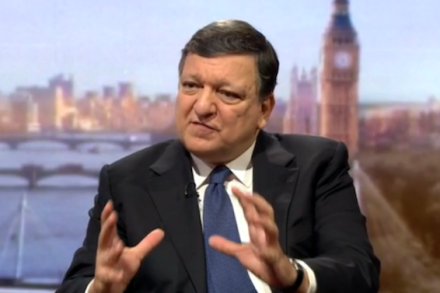
Jose Manuel Barroso has said before that Scotland would have to apply separately to join the EU if it became independent. But his remarks today on the Andrew Marr Show were far more pessimistic about the prospects of that application being successful. After the three main Westminster parties blew a hole in the reassuring argument that Alex Salmond has been making so far that Scotland could keep the pound, Barroso effectively reminded Scots this morning that a 'Yes' vote won't just mean 'Yes' to independence, it will mean 'Yes' to leaving the EU too. He said: 'First of all, I don’t want now to go into hypothetical questions.

Tory Wythenshawe response suggests inertia over blue collar vote

From our UK edition

The Conservatives were never going to win the Wythenshawe and Sale East by-election. But the way the party has spun its third place is slightly depressing. The Times today quotes a party source saying: 'This is a safe Labour seat with the largest council estate in Europe. It's not on our marginal list.' Now, this is an understandably pragmatic way of viewing a by-election. It wasn't expected, as it was prompted by the tragic and untimely death of a respected Labour MP, Paul Goggins. So the Conservatives were not embedded in the constituency in the way that they were in Eastleigh, for instance. Labour moved the writ for a short by-election campaign, which also meant that Ukip didn't have as much time to make its case, particularly to postal voters, as it would have liked.

MP tries to remove the poison from the food debate

From our UK edition

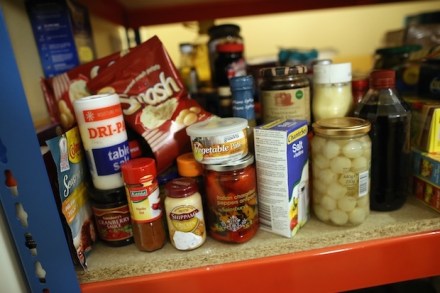
One of the more unpalatable news stories of the week was the survey by West Yorkshire councils that seemingly innocuous food was made up of all sorts of things that either weren't what they claimed to be, or weren't very much like food at all. It's another sign of the food problems that this country faces, on top of food banks and poor diet. Recently, though, the food debate has become as poisoned as vodka made from antifreeze, with politicians using food banks in particular as a political football to prove their own points, rather than bothering to examine the complex problems behind them. But one of the MPs who has spent some time thinking about food in 21st century Britain is now trying to encourage independent study of how to improve the food system in this country.

Boris and ballots: what might happen to the Tory party in 2015

From our UK edition

What are Boris Johnson's real chances of becoming Tory leader? I examine the Mayor of London's standing with Conservative MPs in my Telegraph column today - and it is fascinating how polarised opinion is about the Mayor in the Tory party. His supporters insist he is the only hope for the Conservative party, while those who don't want him to lead really, really don't want him to lead and display a fair bit of personal hatred when talking about the Mayor. But the problem that those in the anti-Boris camp have is that they can't see who else from the current group of well-known leadership hopefuls would enjoy the same sort of cut-through. As for when he might come in, my sources among those who are actively promoting Boris in the Commons are adamant that this is about 'post-Dave'.

Ukip beats Tories in Wythenshawe as Labour hold seat

From our UK edition

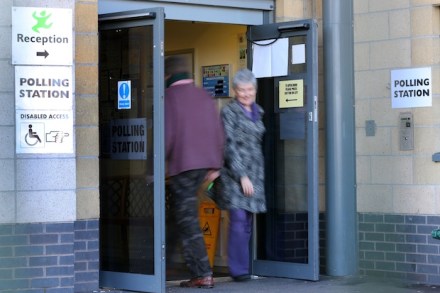
So Ukip did come second in the Wythenshawe by-election (and Labour won, of course). David Cameron says the 4,301 votes (17.95% of the vote and a 14.5% swing) that John Bickley won wasn't 'the sort of break through that people were talking about'. The Prime Minister, who saw his own party pushed into third place with 14.5% (3,479 votes), did also say that 'obviously messages are sent, and signals are sent and protests are made and governments should always listen to those things and I always do'. Now, the usual caveat that you can't extrapolate very much from a by-election in one constituency applies. But Ukip can reasonably claim that it is becoming the official opposition in the north when it comes to by-elections at least.

If David Cameron can’t get the floods right, all his hopes will wash away

From our UK edition

[audioplayer src="http://traffic.libsyn.com/spectator/TheViewFrom22_13_February_2014_v4.mp3" title="James Forsyth and Isabel Hardman on how the floods will define the PM's legacy" startat=1218] Listen [/audioplayer]It is all hands to the pump in Downing Street. The entire No. 10 operation from the Prime Minister down to the Policy Unit is focused on the floods. ‘We are all on a war footing,’ declares one official. David Cameron is spending his time poring over maps of the affected areas. ‘It is quite remarkable,’ says one minister who attends the Cobra meetings on the floods, ‘to hear the Prime Minister asking Gold Command about individual farms.’ Cameron knows that the floods will be a defining moment for his government.

Britain needs small government, not weak government. That means strong flood defences

From our UK edition

[audioplayer src="http://traffic.libsyn.com/spectator/TheViewFrom22_13_February_2014_v4.mp3" title="Christopher Booker discusses the failures behind the floods" startat=61] Listen [/audioplayer]There is nothing inevitable about the by now familiar sight of residents being towed away from flooded homes, of shops and businesses submerged, and all the misery and economic turmoil which follows. A short hop across the North Sea is a country which has been having much the same weather as we have recently and has even more low-lying land vulnerable to flooding. Yet there has been a remarkable lack of footage of Dutch homeowners being forced to gather their possessions and flee their homes. Why?

Cheat sheet: George Osborne’s speech on the pound

From our UK edition

‘If Scotland walks away from the UK, it walks away from the pound’, the Chancellor said this morning. In a speech aiming to blow a hole in the SNP’s campaign, George Osborne has set out why sharing the pound isn’t on the cards for an independent Scotland. Here are the key points from his speech, the reactions and why a currency union with the rest of the UK won’t happen 1. The Tories, Lib Dems and Labour have united on a technical fight It’s very rare that George Osborne, Ed Balls and Danny Alexander can find something to agree on. The fact they’ve publicly united against a currency union with Scotland shows how pressing the matter is.

Theresa May turns to deaths in custody after stop-and-search row

From our UK edition

One of the risks for Theresa May in her battle with Number 10 over reform of stop-and-search powers is that the Home Secretary loses some of the capital she has built up with BME voters over the plans. Last summer, black newspaper The Voice ran an edition suggesting that Labour could be losing the black vote and specifically pinpointed May's work on stop-and-search as a sign that the Tories were starting to appeal to groups they'd previously alienated. But this week May is back in The Voice with an op-ed on deaths in custody. You can click on the image to view the article in full. It is significant, though, that the Home Secretary is unable to mention her work on stop-and-search reforms.