Uk politics

Ed Miliband rules out EU referendum

From our UK edition

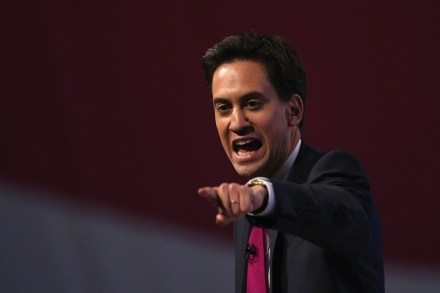
Why is Ed Miliband going to rule out a referendum on Britain's membership of the EU in a speech tomorrow? The Labour leader has written in the FT that he would legislate for a new referendum lock which would force an In/Out referendum if there was another transfer of British power to Brussels, which essentially means he supports the current situation under the Coalition. And he says in the piece that the transfer is unlikely in the next Parliament. Which means no referendum. He writes that Labour's position on Europe... "… is clear and principled: we strongly believe Britain’s future is in the EU. And my priorities for government after the next election are very different from those of the Conservatives.
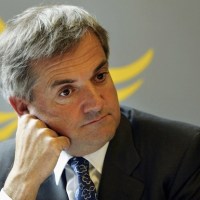
Alistair Carmichael: Chris Huhne put the ‘T’ in Cancun

From our UK edition

Jovial Lib Dem Scottish Secretary Alistair Carmichael addressed lobby journalists over lunch today. Speaking from his experience as the party's former chief whip, he managed to praise the discipline of his party in the Coalition. But he also recalled a rather tense episode with Chris Huhne refusing to return to the UK to vote: 'One thing which I was thinking about recently was that Chris Huhne, in the interests of tackling climate change, had managed to be at some big summit in Cancun, so was not available to take part in the division on the day and it was one of the features of Chris's political operation that when the really difficult days would arrive, somehow or other he always seemed to be somewhere else.

Renewal offers a vision for a Tory workers’ budget

From our UK edition

How can the Tory party broaden its appeal? Renewal, a group founded to do just that offered its answer at a packed Westminster pub yesterday evening. With just eight days to George Osborne’s 2014 budget, Robert Halfon MP and Renewal’s David Skelton offered their vision of a ‘workers' budget for the Workers’ Party.' Arguing that ‘what happened in Scotland [to the Conservative party] is slowly happening in the North’, Halfon outlined why he believes the Conservative Party needs to change its narrative, mission and structures to go beyond its traditional reach, particularly with working class and ethnic minority voters.

Bob Crow, 1961-2014: An old-fashioned trade unionist

From our UK edition

Bob Crow's death is a shock - he was only 52 - but it also signals the end of old-school style union operating. Crow was a real old-fashioned union boss. He cared only about the deals for his workers, not the wider party political machinations that other leaders such as Len McCluskey and Paul Kenny like to embroil themselves in. As Ed wrote in March, he focused on the interests of working people without much regard to anything else, including regular rage from commuters. His union was the first to be booted out of the Labour party after a series of rows which culminated in RMT refusing to sever links with the Scottish Socialist Party in 2004. Thus RMT became even more focused on its members and less on party politics.

Powys County Council reaches dizzy new heights

From our UK edition

This must count as the most bizarre government decision in a long time. But from 31 March, Powys County Council will take over the Office for Fair Trading's role as the lead enforcement body for all UK estate agents. When I was first told this, I assumed it was a joke. Powys County Council might have many strengths but one struggles to see how they are qualified to be the lead enforcement agency for estate agents in London or Birmingham or, frankly, anywhere other than Powys. But when you check Hansard, it is confirmed by the relevant minister the Lib Dem Jenny Willott: 'The Office of Fair Trading has a duty to supervise the working and enforcement of the Estate Agents Act 1979.

The British constitution has never made sense or been fair. Why expect it to do so now?

From our UK edition

Well, yes, Hamish Macdonell is correct. A coherent devo-max option could win the referendum for Unionists. Some of us, ahem, have been arguing that for years. There were, of course, good reasons for insisting that the referendum vote be a simple Yes/No affair. A single question cuts to the heart of the issue and, notionally, should produce a clear outcome. Nevertheless it also greatly increased the risk - or prospect, if you prefer - of a Yes vote. A multi-option referendum would have killed a Yes vote. But if Hamish is correct I am not, alas, so sure the same can be said of Comrades Forsyth and Nelson. James writes that: The lesson of devolution is that we tamper with the constitutional framework of the United Kingdom at our peril.

Jeremy Browne: Some bosses are a bit ‘control freakish’

From our UK edition

What makes a good Secretary of State? Today Jeremy Browne was interviewed on the Daily Politics about what it's like to be a junior minister, from his experience of working in both the Foreign Office and Home Office. Towards the end, Jo Coburn asked whether it was true that he'd been given more freedom at the Foreign Office than he had when working for Theresa May at the Home Office. He said: 'Well that would be telling tales, but I think… anybody who's ever been in any workplace will know that some bosses are willing to give you a little bit more freedom and discretion and others are a bit more control freakish.

Number 10 tries to defend Brokenshire speech

From our UK edition

What fortunate timing it is that Home Office questions falls this afternoon, during the aftermath of one of the worst debut speeches a minister has managed in this Parliament. Doubtless Labour will have a great deal of fun with James Brokenshire's 'metropolitan elite' speech which appears to have been rather disowned by figures in Number 10 over the weekend. Today at the Number 10 lobby briefing, the Prime Minister's official spokesman said: 'The speech was setting out the government's approach to immigration policy, it's a policy the Prime Minister very much supports. We want to attract the brightest and the best, people who want to work hard and get on, that needs to be done within a policy of controlled migration.

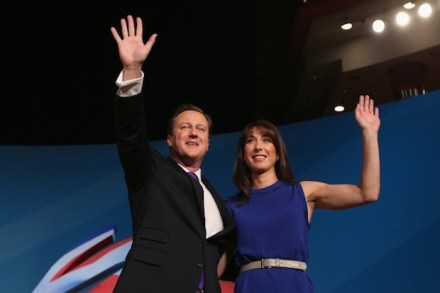
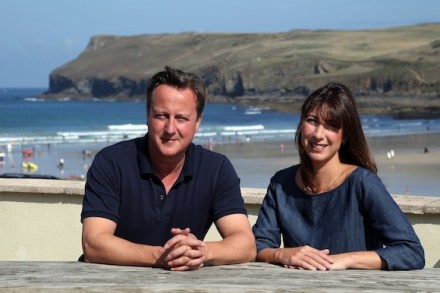
I’m not surprised at David Cameron’s Nepalese nanny

From our UK edition

Why the surprise? Of course the Prime Minister would employ a nanny from somewhere like Nepal. David Cameron is simply taking part in the familiar upper-middle class game of 'Exploited Third World Labour Top Trumps'. The more backward, far-flung and desolate the country of origin, the higher your nanny scores. And, incidentally, the cheaper she is likely to be. Nepal scores a very commendable fifty points. Right now I’ll bet Osborne is trying desperately to source a skivvy from Kyrgyzstan, or perhaps a member of the Melpa tribe from Papua New Guinea, with their strange binary counting system and facility for pig-rearing. Nick Clegg has gone for easy points with a Belgian (thirty points for a Walloon, fifteen for a Flem).

Nick Clegg’s ‘I love Britain’ speech: full text

From our UK edition

Since I became the Deputy Prime Minister I have had the privilege of spending a bit of time representing Britain’s interests in other parts of the world. I have visited Latin America and Asia to boost exports. I have been to Africa, where we are building better education systems as well as helping fight corruption, poverty and disease. I have travelled to different parts of Europe and the United States to promote British trade. And while each trip varies from the last, there is a thread which runs through them all: you get to see Britain through other people’s eyes. Everywhere I have been – every nation around the planet – has its own story about Britain.

Iain Duncan Smith ties himself into universal knots over welfare reform

From our UK edition

Will Universal Credit ever become universal and will the lowest paid still face an effective tax rate of a sometimes outrageous 76 per cent? Iain Duncan Smith took a grilling over his plans for welfare reform on the Sunday Politics today, but didn’t give a clear answer to either of these questions regarding his reforms. Firstly, on the progress of implementing Universal Credit, the Work and Pensions Secretary claimed that ‘Universal Credit is already rolling out and the IT is working’, despite just 6,000 people currently on the ‘Pathfinder’ stage. In his initial plans, a million people claiming six existing working-age benefits were due to be on the Pathfinder stage by April 2014.

David Cameron pays the price for another lazy shuffle

From our UK edition

The Tory leadership is not best pleased with James Brokenshire, the Immigration Minister whose ill-judged speech turned a media spotlight onto the Cameron’s nanny. There are mutterings in Downing Street about the speech having being submitted for clearance very late. But Number 10 can’t escape its share of the blame for this fiasco. First, the speech should never have been cleared. The problems it would cause were obvious, which is why one Lib Dem tells me ‘we all fell out about laughing when we read it.’ Second, Brokenshire should never have been appointed to this job.

Number 10 to clarify Cameron nanny row

From our UK edition

Great excitement in Westminster today over David Cameron's Nepalese nanny (as a member of James Brokenshire's metropolitan elite) and whether the Prime Minister had a role in Gita Lima obtaining British citizenship. At this morning's lobby briefing, a Number 10 spokesperson was asked whether Cameron had played a role in getting Lima a British passport. The spokesperson replied that they were 'not aware' of any involvement from the PM. Now I understand that Number 10 have checked the relevant documents and are shortly to release a statement confirming that the Camerons did not write a letter in support of their nanny's passport application. Samantha Cameron was simply named as the nanny's employer on the application form, as is required.

The end of High Speed 2?

From our UK edition

Haters of HS2 rejoice: the project has an even better chance of failing now. Following James’ revelation that the Transport Secretary doesn’t believe the Hybrid Bill will pass through Parliament before the next election, there are several scenarios on how the parties may change their stance on the project. If a cross-party consensus falls apart, HS2 will run into severe difficulties. Nearly all of the possibilities pose a threat to the line actually being built: 1. David Cameron remains Prime Minister James played out this scenario in his blog yesterday, explaining why it matters that HS2 will be a big issue at the next general election.

Bickering about bickering

From our UK edition

Lib Dems are excitedly travelling to their Spring conference in York, which kicks off this evening with the traditional rally (hopefully a stand-up free one, though). Vince Cable and Tim Farron will be cheering the troops at tonight's event, with Nick Clegg offering a Q&A tomorrow and his main speech on Sunday afternoon. Party figures expect the conference to be reasonably serene: there are no party rows this year, and the only real bickering is manufactured Coalition stuff, rather than a genuine crisis. As I explain in my Telegraph column today, one of the things the Lib Dems are increasingly keen to do is to argue that key policies and government victories are all down to them.

Why are links with violence-justifying Republicans something to be proud of?

From our UK edition

Last week, John Downey, the former IRA man, avoided trial for the Hyde Park bombings of 1982. One who stood bail for him was Roy Greenslade, the media pundit of the Guardian. Since Mr Downey has not been proved guilty, we must presume him innocent, but isn’t it extraordinary that Greenslade can cosy up to such a man without suffering in reputation? Suppose I were to stand bail for, say, Nick Griffin of the BNP (who, so far as I know, has never been accused of a terrorist crime), or for some loyalist oaf. I would rightly be shunned in my trade. Yet a link with extreme, violence-justifying, anti-British republicans is worn with pride. This is an extract from Charles Moore's Notes in this week's Spectator.

Five things you need to know about the ‘suppressed’ immigration report

From our UK edition

With a mere whimper, the government has released its controversial report (pdf) on the effects of immigration on ‘native UK employment’. Following Newsnight’s revelations that the report was being ‘held back’, Labour demanded its release. 24 hours later, it was put online while Theresa May was informing MPs of an inquiry into undercover policing after revelations about the treatment of Stephen Lawrence's family. Here are the top five things you need to know from the paper: 1. There’s minimal evidence of migrants taking British jobs The Home Office report titled ‘Impacts of migration on UK native employment' reveals there is ‘relatively little evidence’ of British workers being displaced — i.e.