Uk politics

I’m exposing Clegg’s gimmicks to stop him interfering with schools

From our UK edition

Simon Jenkins has written a bizarre piece in the Evening Standard. As well as answering that, I’ll explain a few others things about it. Unfortunately, he has completely misunderstood the basics of the universal free school meals fiasco. He writes: ‘Gove decided, by a deal with Nick Clegg, that running every school meant insisting every child have a “proper meal”. The order went out over Christmas. Gove would be first to admit he has never run a whelk stall and was surprised to discover that schools were having trouble becoming Jamie Oliver academies overnight… Comrade Stalin himself would have warmed to the tears of gratitude.’ Where to start?!

Viviane Reding’s next trick

From our UK edition

Viviane Reding is a bit of a favourite among UK ministers. The European Commissioner for Justice has a knack of making such a good case for reform of Europe with her interviews and policies that Conservatives - and indeed Ukippers - are quite content for her to intervene as often as possible. This week, she's got another cunning plan that eloquently makes the case for reform of Europe - and ministers will be standing up to her again. Reding is expected to publish the second annual EU Justice Scoreboard on Monday:  it's a league table of all the EU member states' justice systems. At first glance, this sounds like a nice idea: compare the independence and efficiency of different justice systems to encourage under performing countries to improve.

Former Labour minister Tony Benn dies – reaction

From our UK edition

Ed Miliband, leader of the Labour party: 'The death of Tony Benn represents the loss of an iconic figure of our age. 'He will be remembered as a champion of the powerless, a great parliamentarian and a conviction politician. 'Tony Benn spoke his mind and spoke up for his values. Whether you agreed with him or disagreed with him, everyone knew where he stood and what he stood for. 'For someone of such strong views, often at odds with his Party, he won respect from across the political spectrum. 'This was because of his unshakeable beliefs and his abiding determination that power and the powerful should be held to account. 'He believed in movements and mobilised people behind him for the causes he cared about, often unfashionable ones.

Tony Benn 1925 – 2014: a politician who actually believed in people

From our UK edition

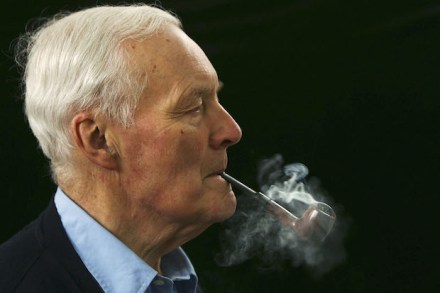
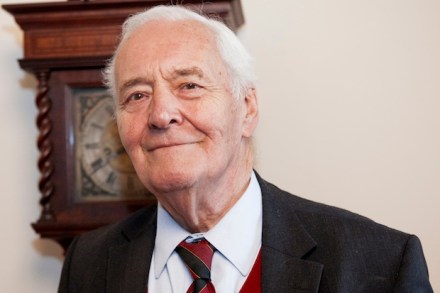
The former Labour Cabinet Minister, author and long-serving MP Tony Benn has passed away today, aged 88. In 2009, our deputy editor Mary Wakefield interviewed Benn about the financial crisis and the basic decency at the heart of all human beings. Here is the article in full. I’m standing in Tony Benn’s front garden, on my way out but dawdling, reluctant to leave. Once I’m back on my bike I’ll be in Broken Britain again, snarling at the buses. But right now I’m still in Benn-land, where all people are kindly and the future is bright with mutual concern. Even the outside of Benn’s house reflects the decency within.

Michael Gove, Boris Johnson and the return of Tory wars

From our UK edition

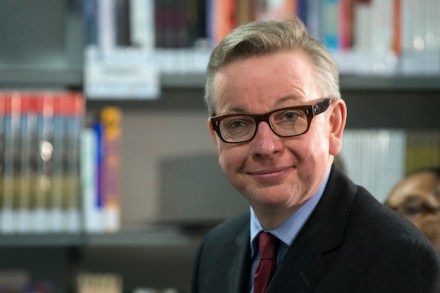
[audioplayer src="http://traffic.libsyn.com/spectator/TheViewFrom22_13_March_2014_v4.mp3" title="James Forsyth discusses Gove vs Boris" startat=722] Listen [/audioplayer]From the moment he took his job, Michael Gove knew that he would make energetic and determined enemies. The teachers’ unions, local councillors and even his own department all stood to lose from his reforms — and all could be expected to resist them. What the Education Secretary did not expect was hostile fire from those who should be his friends. At the start of the coalition, Gove and Nick Clegg were allies. With a moral passion rarely seen in British politics, they used to argue that social mobility should be the centrepiece of the government’s reform agenda.

Is Ed Balls scared of Question Time?

From our UK edition

Like it or not, Question Time is Britain’s most popular forum for political debate. Two million viewers regularly tune in, and Thursday evenings on BBC1 is when and where ordinary people are most likely to encounter a secretary of state or shadow cabinet minister. For politicians, it’s a golden opportunity — a huge audience to which they can sell both themselves and their party’s policies. The choice of guests usually causes an uproar on Twitter — mostly along the lines of 'why is X appearing again? ' and ' I’m sick of seeing Y party getting so much airtime' — but who actually appears most frequently?

Podcast: Gove’s last stand, the march of the dog police and the future of conservatism in America

From our UK edition

Why is Michael Gove under attack from his coalition partners, his own party and numerous enemies? On this week’s View from 22 podcast, Toby Young, James Forsyth and Fraser Nelson ask whether the Education Secretary’s attitude and policies are his own undoing. Is he, as Anthony Horowitz describes in this week's magazine, an unsettling character who is too abrasive in his approach to reforming education? Which of Gove’s friends are out to get him? Should he be worried about the threat from Boris Johnson? Are we witnessing a return of the Tory wars? And is Rupert Murdoch involved? James Delingpole and Freddy Gray ask if conservatism is in a better or worse state in America than it is in Britain? Can anyone in the GOP stop Hillary Clinton?

Jobs for the girls | 13 March 2014

From our UK edition

Martin Vander Weyer tells an interesting tale in his Any Other Business column this week of Business Secretary Vince Cable demanding that companies appoint more women to senior positions: 'The Business Secretary has been busy behind the scenes, too. "We had a letter from Vince telling us we should appoint a female non-exec…" one chief executive told me last week "…and we’ve found a really good one, totally one of the boys, she even likes shooting."' Martin points out that Cable's campaign is 'about equality for its own sake rather than the distinctive qualities of female decision-making, and the otherwise already emancipated objects of his support feel themselves patronised'.

Ed Miliband adopts a rope-a-dope strategy on Europe

From our UK edition

Hopi Sen is not alone. There are many people in this country supremely indifferent to the whole and vexatious question of whether or not there should be a referendum on Britain's continued membership of the European Union. Yes, yes, they will tell pollsters that if they must they suppose they might fancy having a referendum some day. But they don't really care. They mumble about a referendum because that seems the done thing to do and because when a pollster asks you if you'd like to have a say on something it sounds better to say Yes than No thanks, I really can't be bothered. And sure, if pressed, they might grumble and chunter about the European Union too and say that it seems to be an unnecessarily invasive institution - or set of institutions, treaties and agreements.

Douglas Alexander’s weasel words on Labour’s EU pledge

From our UK edition

Unsurprisingly, Douglas Alexander's Today interview about Ed Miliband's pledge to not give the British people a referendum without saying he's not giving you a referendum wasn't the most edifying performance. Alexander admitted that what Miliband is promising is an 'unlikely' referendum, saying: 'He will say that our priority in government would be tackling the cost-of-living crisis and getting the economy back on track, not getting Britain out of Europe. He’ll set out some very practical and I think needed changes to make Europe work better for the United Kingdom. And he’ll also be open that we are not, as a prospective Labour government, proposing a further transfer of powers to Brussels.

Ed Miliband rules out EU referendum

From our UK edition

Why is Ed Miliband going to rule out a referendum on Britain's membership of the EU in a speech tomorrow? The Labour leader has written in the FT that he would legislate for a new referendum lock which would force an In/Out referendum if there was another transfer of British power to Brussels, which essentially means he supports the current situation under the Coalition. And he says in the piece that the transfer is unlikely in the next Parliament. Which means no referendum. He writes that Labour's position on Europe... "… is clear and principled: we strongly believe Britain’s future is in the EU. And my priorities for government after the next election are very different from those of the Conservatives.

Alistair Carmichael: Chris Huhne put the ‘T’ in Cancun

From our UK edition

Jovial Lib Dem Scottish Secretary Alistair Carmichael addressed lobby journalists over lunch today. Speaking from his experience as the party's former chief whip, he managed to praise the discipline of his party in the Coalition. But he also recalled a rather tense episode with Chris Huhne refusing to return to the UK to vote: 'One thing which I was thinking about recently was that Chris Huhne, in the interests of tackling climate change, had managed to be at some big summit in Cancun, so was not available to take part in the division on the day and it was one of the features of Chris's political operation that when the really difficult days would arrive, somehow or other he always seemed to be somewhere else.

Renewal offers a vision for a Tory workers’ budget

From our UK edition

How can the Tory party broaden its appeal? Renewal, a group founded to do just that offered its answer at a packed Westminster pub yesterday evening. With just eight days to George Osborne’s 2014 budget, Robert Halfon MP and Renewal’s David Skelton offered their vision of a ‘workers' budget for the Workers’ Party.' Arguing that ‘what happened in Scotland [to the Conservative party] is slowly happening in the North’, Halfon outlined why he believes the Conservative Party needs to change its narrative, mission and structures to go beyond its traditional reach, particularly with working class and ethnic minority voters.

Bob Crow, 1961-2014: An old-fashioned trade unionist

From our UK edition

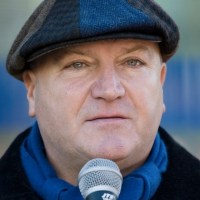
Bob Crow's death is a shock - he was only 52 - but it also signals the end of old-school style union operating. Crow was a real old-fashioned union boss. He cared only about the deals for his workers, not the wider party political machinations that other leaders such as Len McCluskey and Paul Kenny like to embroil themselves in. As Ed wrote in March, he focused on the interests of working people without much regard to anything else, including regular rage from commuters. His union was the first to be booted out of the Labour party after a series of rows which culminated in RMT refusing to sever links with the Scottish Socialist Party in 2004. Thus RMT became even more focused on its members and less on party politics.

Powys County Council reaches dizzy new heights

From our UK edition

This must count as the most bizarre government decision in a long time. But from 31 March, Powys County Council will take over the Office for Fair Trading's role as the lead enforcement body for all UK estate agents. When I was first told this, I assumed it was a joke. Powys County Council might have many strengths but one struggles to see how they are qualified to be the lead enforcement agency for estate agents in London or Birmingham or, frankly, anywhere other than Powys. But when you check Hansard, it is confirmed by the relevant minister the Lib Dem Jenny Willott: 'The Office of Fair Trading has a duty to supervise the working and enforcement of the Estate Agents Act 1979.

The British constitution has never made sense or been fair. Why expect it to do so now?

From our UK edition

Well, yes, Hamish Macdonell is correct. A coherent devo-max option could win the referendum for Unionists. Some of us, ahem, have been arguing that for years. There were, of course, good reasons for insisting that the referendum vote be a simple Yes/No affair. A single question cuts to the heart of the issue and, notionally, should produce a clear outcome. Nevertheless it also greatly increased the risk - or prospect, if you prefer - of a Yes vote. A multi-option referendum would have killed a Yes vote. But if Hamish is correct I am not, alas, so sure the same can be said of Comrades Forsyth and Nelson. James writes that: The lesson of devolution is that we tamper with the constitutional framework of the United Kingdom at our peril.

Jeremy Browne: Some bosses are a bit ‘control freakish’

From our UK edition

What makes a good Secretary of State? Today Jeremy Browne was interviewed on the Daily Politics about what it's like to be a junior minister, from his experience of working in both the Foreign Office and Home Office. Towards the end, Jo Coburn asked whether it was true that he'd been given more freedom at the Foreign Office than he had when working for Theresa May at the Home Office. He said: 'Well that would be telling tales, but I think… anybody who's ever been in any workplace will know that some bosses are willing to give you a little bit more freedom and discretion and others are a bit more control freakish.

Number 10 tries to defend Brokenshire speech

From our UK edition

What fortunate timing it is that Home Office questions falls this afternoon, during the aftermath of one of the worst debut speeches a minister has managed in this Parliament. Doubtless Labour will have a great deal of fun with James Brokenshire's 'metropolitan elite' speech which appears to have been rather disowned by figures in Number 10 over the weekend. Today at the Number 10 lobby briefing, the Prime Minister's official spokesman said: 'The speech was setting out the government's approach to immigration policy, it's a policy the Prime Minister very much supports. We want to attract the brightest and the best, people who want to work hard and get on, that needs to be done within a policy of controlled migration.

I’m not surprised at David Cameron’s Nepalese nanny

From our UK edition

Why the surprise? Of course the Prime Minister would employ a nanny from somewhere like Nepal. David Cameron is simply taking part in the familiar upper-middle class game of 'Exploited Third World Labour Top Trumps'. The more backward, far-flung and desolate the country of origin, the higher your nanny scores. And, incidentally, the cheaper she is likely to be. Nepal scores a very commendable fifty points. Right now I’ll bet Osborne is trying desperately to source a skivvy from Kyrgyzstan, or perhaps a member of the Melpa tribe from Papua New Guinea, with their strange binary counting system and facility for pig-rearing. Nick Clegg has gone for easy points with a Belgian (thirty points for a Walloon, fifteen for a Flem).