Uk politics

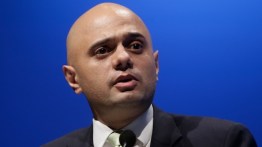
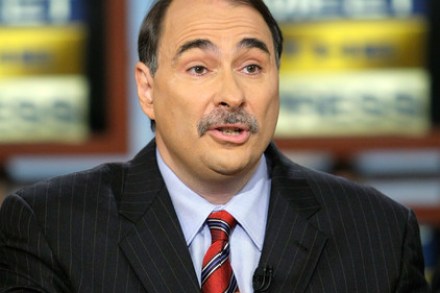
An American, an Australian and a South African walk into a British election

From our UK edition

All three main parties have now hired foreign advisers to help run their general election campaigns. These foreign advisers have one thing in common: they’re all from the English speaking world. Despite our membership of the European Union, when it comes to winning elections, all our political parties think there is more to learn from other English speaking countries than France or Italy. Indeed, it is hard to imagine any of them putting a European in charge of their campaign. But they are all delighted to have their American, Australian and South African campaign hands. Partly, this is a language thing. But, I think, it also goes deeper than that.
John Bercow’s problem with PMQs

From our UK edition

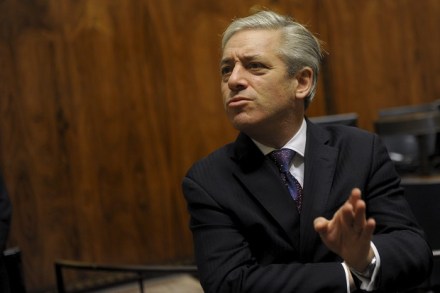
John Bercow doesn’t like Prime Minister’s Questions. He’s told the BBC in an interview that it is ‘so bad’—in other words, rowdy—that a bunch of female MPs no longer attend. PMQs is becoming particularly partisan with the approach of the election. Miliband has abandoned his attempts to change it just as quickly as Cameron did before him. But Bercow would do well to look closely at his own role in setting the tone of these sessions. From the chair, Bercow understandably tries to silence the hecklers. But, sometimes, he seems to be indulging in a bit of ‘Punch and Judy’ too. Often he moves into put-down mode, trying to get the House to laugh at the offender.

Britpop 20 years on: the Tory voters who love Oasis

From our UK edition

It’s twenty years since the height of Britpop, but does anyone still care about it? YouGov has carried out some polling on the subject today. Although 35 per cent stated that they like or really like Britpop (compared to 20 per cent who dislike/really dislike), 44 per cent replied 'don’t know'. There’s also a lot of indifference on whether music has been better or worse since. Nine per cent think better, 26 per cent worse, and 34 per cent stated they also don’t know. At the height of Britpop, Oasis painted themselves as a working class band, the lads, in contrast to the perceived effete and posh boys of Blur. Based on this public image, one would expect Oasis fans to be natural Labour supporters (like Noel Gallagher, who posed in No.

David Cameron tells Britain to be ‘more confident about our status as a Christian country’

From our UK edition

David Cameron is doing God. He has followed up his comments about his faith at last week’s Downing Street reception with an article for The Church Times in which he declares that we should be ‘more confident about our status as a Christian country’ and ‘frankly, more evangelical about a faith that compels us to get out there and make a difference to people's lives.’ This is a strikingly different tone to the one that Cameron used to adopt. Back in opposition, he talked about his faith being ‘like reception for Magic FM in the Chilterns: it sort of comes and goes'. Personally, as I say in the magazine this week, I find Cameron’s openness about the importance of religion in his life refreshing.

Why Fraser Nelson is wrong about a jobs ‘miracle’

From our UK edition

In his blog earlier today, Fraser Nelson argues: 'The UK jobs miracle is happening mainly due to radical welfare reform – the type Labour ducked in office..Under Labour, record numbers of people in work were celebrate as an end in itself – but most of the increase was accounted for by immigration. So more jobs did not mean less poverty – not if a quarter of Glasgow and Liverpool were still languishing on the dole at the peak of a boom. This time, it’s different. The welfare reforms are restoring the see saw link between jobs and dole queues.' I suppose I should by now get over the fact that intelligent, articulate journalists feel able to write with such certainty about data they simply don't understand.

Inflation falls again

From our UK edition

Wages in the private sector are now rising faster than inflation. The latest CPI inflation figures show that it now down to 1.6 per cent, comfortably below the Bank of England’s 2 per cent target. This is the sixth time in a row where inflation has fallen. An interest rate rise this side of the election is becoming ever more unlikely. Tomorrow, the Office for National Statistics provides it figures for average wage growth in the last three month. This is expected to show that wages are now increasing faster than prices, easing the cost of living squeeze. Labour argues that the cost of living crisis is about far more than this. But there’s no doubt that if this trend continues between now and May 2015, people will feel better off on polling day than they do today.

Modern Britain: little islanders who love the Queen and Richard Branson

From our UK edition

Who and what represents Britain today? Our country has changed significantly in the last few decades; but, a batch of YouGov polls published this weekend suggest that traditional notions of what is British remain remarkably unchanged. The public was asked to choose which prominent people they think reflect Britain today. Members of the Royal Family occupy four of the top five positions — the Queen, Prince William, Harry and the Duchess of Cambridge — while fifth spot is represented by the nouveau riche Richard Branson: David Beckham is the only mega celebrity to have made this list.

Cabinet concern over the state of the Unionist campaign in Scotland laid bare

From our UK edition

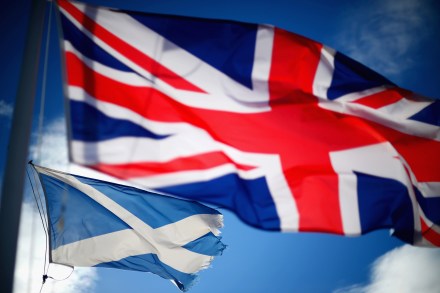
There are only five months to go to the Scottish referendum and the Cabinet is becoming increasingly agitated about the state of the Unionist campaign. At Tuesday’s meeting there was a frank and realistic discussion about its problems. The government’s concern is prompted by the fact that it has fired its biggest gun, telling the Scots there’ll be no currency union after independence, but the Nationalists are still standing. Indeed, they appear to have strengthened their position. The coalition now thinks that part of the problem is that there are not enough purely Scottish voices making the case for the Union. They fear that even Scots with Westminster seats are, to some extent, seen as outsiders in this debate. Another worry is the state of Scottish Labour.

What if mayors ruled the world?

From our UK edition

Once, countries competed. Now, cities do. Take the above video of Stockholm, boasting about being the best place in the world to live and work. As the magician says, 'it’s not a coincidence' that the Swedish capital is doing well. It's an example of all that can go right in a city, thanks to the power of elected mayors. Since 1920, Stockholm has had a variety of powerful leaders who have shaped the city with their own vision. As the magician explains, it’s a great place to live. It’s not just Stockholm that has benefited from a good municipal leader. Plenty of other cities are thriving without help from their national governments.

What are the Liberal Democrats for?

From our UK edition

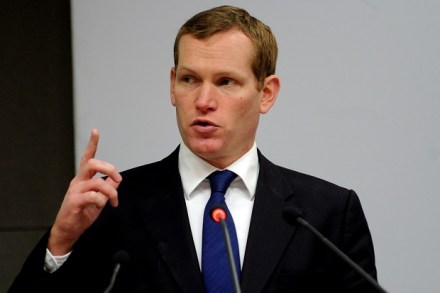
Of the three main parties, none is clearer about how they intend to fight the next election than the Liberal Democrats. Their message will be that they’ll make the Tories be fair and Labour economically responsible. Their ground game will fight for every inch in the seats they hold but effectively withdraw from the rest of the country. I suspect that this strategy will yield the Liberal Democrats around 40 seats and, if there’s another hung parliament, the balance of power again. But this near-term strategic certainty obscures a bigger question, what are the Liberal Democrats for? This is a question that Jeremy Browne, the former Lib Dem minister, is trying to answer in his new book.

Parliament unusually full of women

From our UK edition

It's quite easy to grow quite used to the way things are, and only realise that they're a bit odd when there's a momentary shift. Today Parliament is packed with women, which is a bit of a shock to the system. They're in New Palace Yard to film scenes from 'Suffragette', rather than as part of a new influx of female MPs or journalists. I have to admit that I often don't notice how masculine this place is: you just get used to it and by and large Parliament is a very pleasant place to work indeed. It was only when a visiting female journalist remarked after the post-PMQs huddle this week that the discussion had been dominated by blokes asking about the gender balance of the new Cabinet that I realised how few women journalists had been present - and how many men.

Osborne banks the recovery – and whacks his critics

From our UK edition

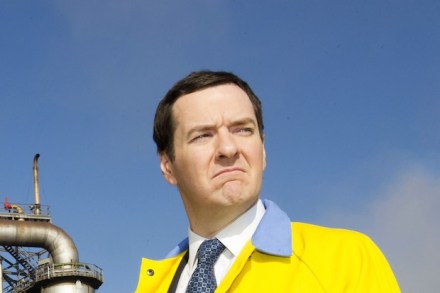
A few months ago, colleagues of George Osborne were worried the Chancellor risked 'banking the recovery' too early. If they're still worried about that, then Osborne certainly isn't. Today he's delivering a speech attacking economic pessimists who he says can be proven wrong: 'Our nation's best days lie ahead'. He will say: 'The evidence increasingly shows that monetary policy, broadly defined and effectively deployed, can work but with two caveats. Banks need to be well capitalised so that the monetary transmission system is working. And there needs to be credible fiscal policy.' His speech will also characterise what 'proponents of secular stagnation' argue for: 'further fiscal stimulus and higher government debt'. Who is the Chancellor talking about here?

David Cameron: Trust me to change EU, not Ukip

From our UK edition

David Cameron launched his party's European and local elections campaign in Manchester today. After weeks of polarised debate between Nick and Nigel, the PM had a task in suggesting that there could be some nuance between In and Out which involves a bit of shake-it-all-about. He repeated his line that both the Lib Dems and Ukip took an 'extremist' stance on the EU, saying: 'Looking at the other parties, there are effectively two extremist camps. One says: “we love the European Union.” The other says: “we hate the European Union.” One says: “we want things to stay the same.” The other says: “let’s just walk away from the EU.

Hilary Benn squashed by 720,479 packets of Jammie Dodgers

From our UK edition

For months now the Tories and Labour have each been trying to out-do the other by revealing embarrassing examples of spending. Labour has generated the odd story about pot plants, biscuits and tellies by using written parliamentary questions to get departments to spill the beans. Eric Pickles’s Department for Local Government has never played ball and replies by flagging up how much Labour spent in government; thereby reminding the public of those Halcyon days. Yesterday's response to one of Hilary Benn’s questions was a classic of the genre: ‘Hilary Benn: To ask the Secretary of State for Communities and Local Government what his Department's (a) catering and(b) hospitality budget was in (i) 2012 and (ii) 2013.

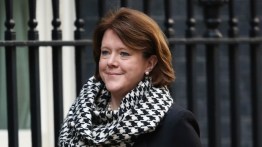
Why Maria Miller should not have resigned

From our UK edition

Maria Miller’s forced resignation is a disgrace. No iniquity was proved against her. Over her expenses, I suspect her motive was innocent: she was trying to work out childcare with her parents in a way compatible with the weird rules, rather than plotting larceny. The parliamentary committee probably understood the circumstances fairly. The press anger was confected because of our (justified) dislike of the post-Leveson Royal Charter. We keep complaining that MPs are ‘marking their own homework’, forgetting that this is exactly what we have done ourselves — incredibly indulgently — for all these years, whenever people have complained about our behaviour. Besides, it is constitutionally wrong for MPs not to mark their own homework. We elect them.

Podcast: Can William Shakespeare save the union, plus Maria Miller’s resignation

From our UK edition

Did William Shakespeare invent Britain and can he save it? On this week’s View from 22 podcast, Fraser Nelson debates this week’s Spectator cover feature with the SNP’s Westminster leader Angus Robertson. Do the English and Scots have many cultural values in common? Are there any other countries contemplating splitting up who are so similar? Is there a political disconnect between the two countries, or is the ‘No’ campaign simply losing the debate? James Forsyth and Isabel Hardman also discuss Maria Miller’s resignation and what it means for David Cameron. Was she pushed out of her job or did she jump? Has the Prime Minister's reputation and judgment been damaged by supporting her for too long? Will there be any long-term effects for the government?

Michael Fabricant sacked: what about other HS2 opponents?

From our UK edition

It's difficult to know what astonished people more about Michael Fabricant's sacking: that he has lost his job or that he was still in a role that required some semblance of collective responsibility. Shortly after assuming the role of Vice Chair of the Conservative Party, he called for a pact with Ukip. Some of his tweets have raised eyebrows. He said it was 'about time' that Maria Miller resigned.

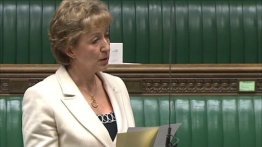
Andrea Leadsom joins the Treasury

From our UK edition

After excited rumours flew around the Conservative party that she was finally getting a promotion, Andrea Leadsom has been confirmed as the new Economic Secretary to the Treasury. She was on the Number 10 policy board, but should have risen much sooner - had she not offended George Osborne by suggesting that he should apologise to Ed Balls for these comments to the Spectator about the Libor scandal. Offending the Chancellor is the political equivalent of getting a black spot from a pirate. But now Leadsom has the promotion she deserves, having impressed in a number of roles. She co-founded the Fresh Start Project, which visits European capitals making the case for reform of the EU and feeds back to the Foreign Office.

Scottish independence: an exemplary or cautionary foreign policy Rorschach Test?

From our UK edition

The eyes of the world are upon us. Or so Scottish Nationalists like to say. Whae's like us? There is some truth to this even if you think unseemly all the boasting we heard about the number of foreign journalists attending, say, the launch of the Scottish Government's White Paper on independence. It's all a bit Sally Field for me. A kind of cringe, if you will. What's less frequently said is that almost all foreign governments would prefer Scotland to vote No. "We all prefer the status quo" one western diplomat told me recently. "That's just the way states operate." Known things are preferable to unknown things, even if the unknown things might be fine. Which brings me to Lord Robertson of Port Ellen's speech to the Brookings Institute yesterday.

Sajid Javid: How I became a Conservative

From our UK edition

Although I joined the Conservative Party during my time at Exeter University, it was my upbringing and early life that shaped my political consciousness. Abdul-Ghani Javid (or, as he was known to me, Dad) arrived in the UK in 1961 at 23 years of age. His family lost everything during the partition of India and their move to Pakistan, so my father’s motivation was quite simple – he wanted to work in Britain and provide the means for his brothers back in Pakistan to be educated. Disembarking at Heathrow with a £1 note in his pocket (which his father, touchingly but mistakenly, had said would see him through his first month in the UK), my father made his way up north and found a job in a Rochdale cotton mill. Happy to be employed, he nevertheless strived for more.