Uk politics

Today in #middleclassproblems: worrying how your lamb was killed

From our UK edition

It doesn't matter. It really doesn't. At least not very much. The notion, apparently scandalous, that the Great British food market is being contaminated - sorry, infiltrated - by meat slaughtered according to traditional religious practices is the most #MiddleClassProblem of the year. I mean, you know it's serious when Waitrose is in the dock. Waitrose! Now I can see that there is a case for requiring meat slaughtered without the animal being stunned to be labelled as such. But, as Melanie McDonagh concedes, the proportion of livestock slaughtered in this fashion is tiny. Perhaps 10% of sheep but only 3% of cattle and 4% of poultry. A reasonable person might conclude that the attention devoted to this newly-discovered problem is as hysterical as it is disproportionate.

Podcast: the gilded generation, one year countdown to the election and rise of the bores

From our UK edition

Is it fair to describe today’s youth as the ‘gilded generation’? On this week’s View from 22 podcast, James Delingpole discusses this week’s Spectator cover feature with The Economist’s Daniel Knowles. With rising house prices, increasing levels of debts and a highly competitive jobs market, is the notion that the young have never had it so good a myth? Were things better for young people in the 1970s? And will today’s young generation witness a fall in living standards, compared to their elders? James Forsyth and Isabel Hardman also look forward to the general election, which is exactly one year today.

The 2015 conundrum

From our UK edition

One of the striking things about the next election is how what is going on at the macro level looks so different from what is happening at a micro level. On the macro front, things seem to be moving the Tories' way. The economy is growing at a good clip and that is set to continue until polling day and David Cameron has a considerable advantage on the question of who would make the best Prime Minister. But to return to the micro, it is easier to see seats where Labour might gain from the Tories rather than the other way round. Ask even the most optimistic Tories what constituencies they might win to give them a double-digit majority, and they come up short. The crucial question is whether these marginals are a lagging indicator or not.

Five things you need to know about the Myners Co-op report

From our UK edition

The Myners Report into the Co-operative Group (pdf) has been published today, and it doesn’t make for pleasant reading. Following the discovery of a £1.5 billion black hole in their finances, followed by the Paul Flowers ‘crystal Methodist’ scandal, the Co-op commissioned the former City Minister Paul Myners to look into the group’s problems and put together a restructuring plan to make it sustainable and properly governed. Here are the key things you need to know from the 180-page report: 1. The Co-op group is still ‘manifestly dysfunctional’ Lord Myners is not impressed with the current state of the Co-op Group and warns it needs to radically change ‘soon’ or face breaking up.

Exclusive: Leaked Lib Dem letter reveals changes to controversial ‘stateless’ plan

From our UK edition

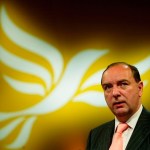
The debate on the Immigration Bill has just begun in the Commons. Many MPs are still trying to decide how to vote on the proposal to render foreign-born terror suspects 'stateless'. In an attempt to persuade his party to vote with the government, Lib Dem Home Office minister Norman Baker has sent out a 'dear colleague' letter to MPs, leaked to Coffee House, in which he says he has amended the legislation to the extent that there is a 'major shift' from the Home Secretary. This 'major shift' means the Home Secretary must believe the suspect being deprived of their citizenship will be able to secure alternative citizenship from another country, and that the process can be examined by an independent reviewer.

Labour aims squarely for its base with witty class war broadcast

From our UK edition

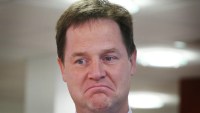
Labourites are very pleased with their latest party election broadcast, featuring the 'un-credible shrinking man', Nick Clegg, growing smaller and smaller at the Cabinet table as the Tories around him hatch various evil plans to ruin poor people's lives through the bedroom tax, cuts to the NHS and tuition fees. If you are already inclined to think the Tories are evil and Nick Clegg a bit of a weakling, you'll enjoy this video. Which suggests that Labour is entirely playing to its base here. It's not even Ed Miliband's cost-of-living crisis pitch to hardworking families up and down the country who are a bit cheesed off that their lives don't feel any better now than they did in 2010.

Tories and ethnic minorities: lessons from George W Bush

From our UK edition

Dan Hannan makes many good points in today's Telegraph as he considers the Conservatives' grim failure to attract support from black and ethnic minority voters. This isn't merely a problem for the Tories, it is a crisis. As I pointed out yesterday, the Tory share of the BME vote in 2010 was exactly the same as their share of the vote in Scotland: 16%. True, this was an improvement on 2005 when only 11% of BME voters endorsed Conservative candidates but that's a matter of only modest solace for Tory modernisers. Naturally (this being British politics) there is a thirst to look elsewhere for examples or lessons that might point towards a solution to this particular Tory problem. Like Paul Goodman, Dan Hannan looks to Canada and not without reason.

Busy afternoon for whips as would-be rebels mull controversial stateless plan

From our UK edition

The Immigration Bill pops back up in the Commons today and MPs will have a second chance to scrutinise the government's plans to deprive foreign-born terror suspects of their citizenship. In reality, it's their first chance as these proposals were slapped into the legislation by ministers at report stage, and no-one really understood what they meant. Tory MPs were promised a briefing on it after the vote, so they trooped through the lobbies hoping for the best. Now they've had a few months to mull what the plans mean, they get a chance to vote again after the Lords amended the bill to make the stateless proposals subject to a committee. It looks as though the Liberal Democrat rebellion, which numbered seven at report stage, will be a similar size.

With one year to go, Cameron has won over his internal swing voters – for now

From our UK edition

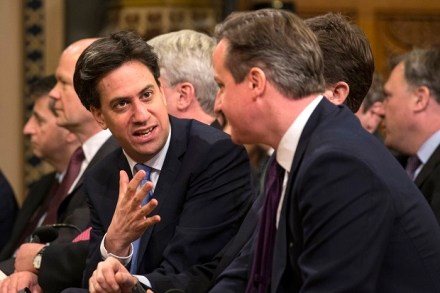
It's a year to go until the longest election campaign finally finishes. Ed Miliband thinks he has more intellectual self-confidence than David Cameron, which since his 2013 autumn conference speech where the Labour leader finally found the courage of his convictions. But David Cameron has more confidence about his own party sticking by him for the campaign at least. The Prime Minister has mended some relationships, and others are more cordial and banging the Tory drum simply because they want their party to win next year. But it's fair to say that for the time being the PM has got the contingent of swing voters amongst his own MPs - those who are not his loyal servants but who also don't hate his guts - working on his side.

Roger Helmer is a gift to CCHQ, so the Tories need to do really well in Newark

From our UK edition

Well, the Ukip constituency association in Newark has certainly considered Nigel Farage's musings on the success of appointing an unknown local candidate in a pivotal by-election… and completely ignored it. They've picked Roger Helmer, who, as Seb says, is not known for his mollifying centre-ground views. His selection as the party's candidate for the Newark by-election is a gift for CCHQ, which now needs a teaspoon rather than a spade to dig out awkward comments the MEP has made. Perhaps it also suggests that Ukip have decided there's not much hope of winning so why bother to field a good candidate who the party's opponents would lay into. Or perhaps that's reading too much into it: decisions that look baffling from the outside tend to be down to complex internal party politics.

Ukip selects Roger Helmer as candidate for Newark by-election

From our UK edition

As expected, Ukip has announced that Roger Helmer will be the party's candidate for the upcoming Newark by-election on 5 June. The 70-year-old MEP is a former Conservative who defected to Ukip two years ago, citing an ‘increasing disillusion with the attitudes of the Conservative Party’. Farage said of Helmer’s selection this afternoon: ‘He is a massively experienced and respected figure on the national political stage and on the local political stage as well. I know that the UKIP membership will rally to the cause of making Roger our first directly elected MP.' Helmer is a colourful character, whose past remarks will be undoubtedly dug up by his opponents in Newark.

Conservatives and ethnic minority voters: how the Immigration Bill might not help

From our UK edition

Policy Exchange's report on the face of modern Britain this morning is fascinating reading for anyone interested in the way this country has changed and will change in years to come. But it is especially fascinating reading for those wondering how on earth the Conservative party can appeal to ethnic minority voters. This is partly because it makes quite clear that the party is currently not appealing to those voters: indeed, while politicians have a bad habit of lumping 'ethnic minority' voters together without good cause, the one thing that does lump these groups together is a reluctance to vote Conservative.

Number 10: Government is ‘active in engagement’ over Pfizer bid

From our UK edition

What is the government's stance on Pfizer's takeover bid of AstraZeneca? Today the Prime Minister's official spokesman was asked this - and his answer didn't shed a great deal of light on the situation. He said the position was 'active in engagement, with both companies in terms of the importance to the UK of R&D and the science base, with regard to the decision as to whether or not going ahead is the right thing to do for either company and their shareholders, is entirely a matter for the companies, their boards and their shareholders'. But what if the takeover does turn out to damage jobs and the science base in this country?

Modern England: a triumph of immigration and integration.

From our UK edition

In a better, more sensible, world David Cameron would make a virtue of the opportunity UKIP has given him. He would appreciate that defending his party's record is actually an opportunity for a counter-attack. UKIP complain - loudly - that 4,000 people arrive in the United Kingdom from the EU each and every week. This, they suggest, is awful and Something Must Be Done to limit the number of people coming to the United Kingdom. The Conservative party appears, in its dark heart, to share this concern. It suspects the Kippers might have at least half a point. There's something nauseous about all this immigration, isn't there? No wonder the party is hemmed-in, unable to find a response to UKIP that is both sensible and persuasive. Better, then, to attack.

Labour market flexibility and dignity

From our UK edition

Two front pages today report what they see as bad news, and both stories are certainly ones politicians need to worry about. The Guardian reveals a leaked letter showing jobseekers will face sanctions if they do not apply for or accept 'certain zero hours jobs under the new universal credit system', while the Indy splashes on research by the Resolution Foundation which found that self-employed workers are earning 40 per cent less than a typical employee. The paper says these workers are the 'hidden victims of the recession struggling by on low pay'. Saying that either of these stories represent 'good news' sounds far too flippant - but they do reflect the flexibility of Britain's labour market which has enabled many people to remain in employment and off the dole during the downturn.

Why policy wonks love Milton Keynes

From our UK edition

How can political parties solve the housing crisis? The vogue a few years ago was to talk about garden cities, although once it became clear that the National Planning Policy Framework had upset a lot of Conservative voters, politicians started to prevaricate over plans for more garden cities, and then eventually published a 'prospectus' asking for locally-led ideas. I spent this morning exploring Milton Keynes, which was a New Town, rather than one of the original garden cities, but which planning policy wonks, including Number 10's Alex Morton, hold up as an example of a new development built from scratch which has become hugely successful, with high rates of private sector job creation.

Ukip faces its toughest test yet over the next 12 months

From our UK edition

The European election creeps closer and the smart money has switched from Labour to Ukip topping the poll. A Labour win would be spectacular in its own right as it would probably require a doubling of their 2009 vote share. I confess there was an intake of breath in the ComRes office when our ITV News poll results were in showing an 11-point Ukip lead over Labour. But the naysayers were confounded by a second poll released on the same day showing a nine-point Ukip lead. The ramifications of a party with no Westminster MPs topping a popular ballot within a year of a General Election puts us into new territory.

Ukip aren’t just David Cameron and the Tories’ problem anymore

From our UK edition

How the Tory party will react if, as excepted, Ukip pushes the party into third place in the European elections is one of the most discussed topics in UK politics. But overlooked in all this is how Labour will react if Farage’s party beats them on May 22nd. If Ukip come top in the European Elections, as the polls indicate they have a very good chance of doing, Labour will be thrown into a panic. No opposition has ever triumphed at a general election having not won the previous European Elections. A failure in the European Elections would be a big blow to the idea that Ed Miliband is going to be the next Prime Minister. Already, influential members of the shadow Cabinet are grumbling about how the leadership hasn’t taken these elections seriously enough.