Uk politics

Party donations: Labour receives £3 million from unions this year

From our UK edition

It’s time to find out which parties are in the money, thanks to the latest Electoral Commission information on party donations. According to the figures for Q1 2014, the Tories have received £6.7 million in donations (up from £3.7 million in Q1 2013) and Labour £4.4 million (compared with £3.7 million last year). It’s not surprising that donations are up because we've entered an important election season. Most of the donors are not new, so here are the top five donations to the Conservative party in 2014 so far, compared with last year: [datawrapper chart="http://static.spectator.co.uk/ETr2q/index.html"] Michael Hintze: £1.

MPs on holiday: the truth about what they really get up to

From our UK edition

MPs are now in recess. Again. Cue plenty of moans about them escaping the zombie parliament and jetting off on holiday. There's not much you can do about the former, but the latter is not, as any MP will angrily remind you, quite true. If you're a type with a big majority who is a bit fonder of the Westminster game than you are of your constituents, then a holiday might be an option. But at this time of year, MPs are more likely to be found canvassing for the European and local elections, or holding extra constituency surgeries to catch up on time lost to Parliament. The Conservative whips have told MPs, via one of their many text messages that they send throughout each day, that they are expected to visit Newark three times before the by-election, and that few exemptions will be allowed.

Lord Howell offends the North of England again — but does he have a point?

From our UK edition

Oh Lord Howell, you’ve done it again. Offending the North of England once wasn’t enough, so he’s had a second go — warning today that the Conservative party will lose votes in their heartlands if fracking goes ahead. In an online article for the Institute for the Analysis of Global Security, George Osborne’s father-in-law lambasts the government’s fracking plans: ‘Trying to start in southern England, and in the home counties, or in rural and countryside areas anywhere, north or south, is a guarantee of longer delays, higher costs and increased hostility from both green left and countryside right.

Alistair Darling is not being replaced as the leader of the Better Together campaign

From our UK edition

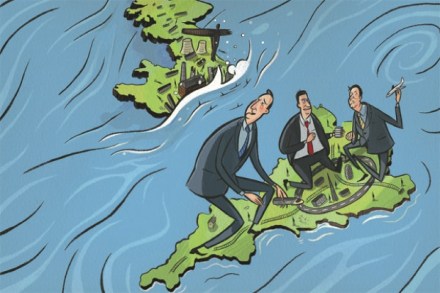
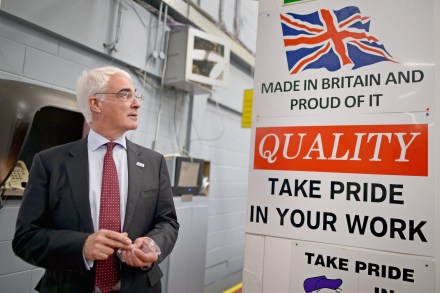
'Utter fucking bollocks'. In case that's not clear enough for you, the suggestion that Alistair Darling is being replaced as the head of the Better Together campaign is, as one insider puts it, 'absolute horseshit'. Douglas Alexander, the man replacing Darling according to the Daily Mail, was at the Better Together HQ in Glasgow earlier today and, I understand, mildly surprised to learn of his elevation. Then again, the Mail only reports that there will be 'no formal announcement of a change' merely a 'secret agreement' that Alexander should effectively supplant Darling. So secret, however, that no-one involved appears to have heard of it.

Airport wars: Heathrow and Gatwick argue about who offers the most benefits

From our UK edition

Gatwick or Heathrow, who will triumph in the battle of the airports? Both sides have submitted more detailed proposals to the Airports Commission today, setting out why they are the right choice for expanding the UK's airport capacity. While Boris Island appears to be mostly sidelined, the battle is looking to be between a second runway at Gatwick and a third (or possibly extending the second) runway at Heathrow. In the revised proposals, Heathrow has increased its compensation fund for the effected 750 homeowners to £550 million, while Gatwick argues its expansion would be cheaper, more beneficial and have a lesser environmental impact — 14,000 people vs 250,000 for Heathrow.

Labour poll blow: party anger could focus on shadow cabinet

From our UK edition

What will the Labour fallout, if any, from today's polls, be? Generally when this sort of bad news befalls to the Conservative party, the gossip turns quickly to David Cameron's standing as leader. But in the Labour case, it's a bit more complicated. This is partly because the party tends to feel far more loyal to Miliband than Conservative MPs do. They feel as though he tends to invest in them personally - even those who didn't support his leadership or are unhappy with his policies. And so they're less likely to turn on him. The knives have already been out for Douglas Alexander for some time, with shadow cabinet members talking more and more about their frustration with key aspects of the party's campaign for the European elections and for the general election.

Second poll lead is perfectly- timed gift for Tories

From our UK edition

The inconvenience of the Newark by-election notwithstanding, the Tories have had the perfect preparation for a drubbing in next week's European elections. They've told everyone who even stops for a second on the pavement next to them that they're expecting a difficult time and thus have managed the expectations of the party both at a parliamentary and grassroots level. They've seen the increased media scrutiny of Ukip as a sign it is ok to attack the party, albeit not using insulting language. They've tried to keep MPs busy with campaign days, rather than plotting in Portcullis House. And now they've reached the point Labourites feared, when the two parties have crossed over in the polls.

Knives still out in Coalition sentencing fight

From our UK edition

What will become of the other big coalition row that's burning away alongside free schools? David Cameron was asked today about the plans to introduce mandatory sentences for repeat knife offences, and made some very supportive noises again, which the Tories signed up to Nick de Bois' amendment to the Criminal Justice and Courts Bill think is a sign that they've made the right decision. He suggested that Nick Clegg could change his mind about it - and some have taken this as a sign that there's a compromise on the cards. The Conservatives tell me they are 'looking carefully' at de Bois' amendments, but the Lib Dems say they haven't heard of any compromise being offered and they will only accept a deal that has evidence behind it that it would cut knife crime.

Does Boris Johnson really want to see Tony Blair tried for war crimes?

From our UK edition

What are we supposed to make of Boris Johnson? I mean, are we supposed to pay attention to what Boris actually says? Or is he permitted to play the game of politics by different rules? That is, the sort of stuff that applies to other politicians does not apply to Boris because the Mayor of London is a great entertainer and thus granted some kind of relief from the usual rules of responsibility. Just asking, you know. Consider his recent remarks about Tony Blair and the Iraq War. During an appearance on LBC last week, the Mayor appeared to endorse the fashionable daft idea that Mr Blair should be tried as a War Criminal. At the very least, Boris suggested, this is what Blair deserves.

Gove uses urgent question on free schools to trumpet his achievements

From our UK edition

Even though the row over free schools has nothing to do with the Labour party, it took a reasonable bet that it would benefit from joining the fray by asking an urgent question on the allegation that Michael Gove diverted £400 million from basic need funding to the free schools project. In the Commons this afternoon, Tristram Hunt accused the Education Secretary of lacking 'self-control and focus' and paying for 'pet political projects in expensive, half-empty, underperforming free schools'.

The Lib Dems no longer support school choice

From our UK edition

Throughout this latest, blazing Coalition row over Michael Gove - which is spreading like fire over dry heath and has now ignited the normally harmonious Treasury - the Liberal Democrats have insisted that they support free schools. They argue that it is simply Gove's 'zealotry' in transferring £400 million from the basic need allocation to the free schools project, not the principle of free schools. They are indeed mostly needled by years of working with a man who they find difficult to work with, and whose enthusiasm for certain aspects of education, whether it be free schools or the history curriculum, irritates them.

Will voters feel Cameron’s confidence about European reform?

From our UK edition

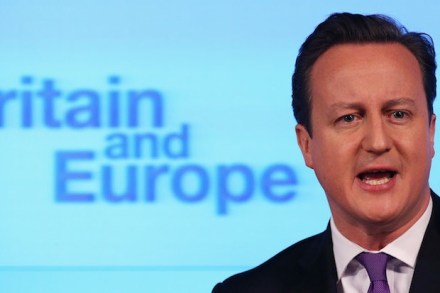
Why is David Cameron so confident that he'll get what he wants from his renegotiation of Britain's relationship with Europe? Today on the Andrew Marr Show he managed to advocate Britain voting 'yes' in the 2017 referendum before he's even started changing the terms of the membership voters would be backing. His reasoning for this was firstly that 'I'm someone who has a very positive, optimistic plan for this country' (a convenient contrast with Ukip), and secondly because he has a good track record of getting what he wants in Europe.

The Axe man cometh

From our UK edition

David Axelrod jets into London this week for the first time since signing up to help Labour in 2015. Axelrod, who friends admit is no expert on UK politics, will have two days to try and get his head round the shape of the next election campaign. This trip will mark the first time that Axelrod and Miliband have met face to face. Up to now, they have only spoken on the telephone. Axelrod will also address a specially convened meeting of the shadow Cabinet. There’s no doubt that having the man who helped Obama get to the White House in town will be a boost to Labour morale. But the scale of the task facing Axelrod is demonstrated by the events of the last week.

Ed’s one-way ticket

From our UK edition

Miliband has also been busy ‘looking at options’ for renationalising Britain’s railways at the end of current franchise contracts. This is yet another of what I have called Labour’s ‘targeted tweets’ designed to please trade unions and pick off loose voters — in this case disgruntled south–eastern commuters. What it’s not is a credible, costed policy. Even Ed Balls is said to be distancing himself from such a retrograde idea, while Martin Griffiths, chief executive of the Stagecoach transport group, rightly called it ‘a one-way ticket to higher taxes’ and others in the industry point out that there could be no quicker way to kill existing plans for investment in better trains.

Where is Labour’s intellectual self-confidence?

From our UK edition

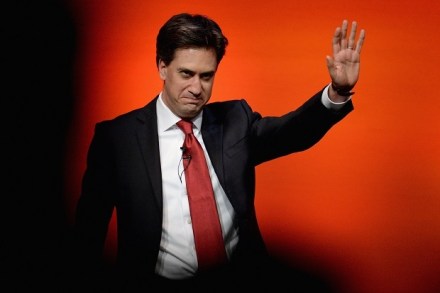
What a funny, contradictory week it has been for Labour's campaign machine. First Ed Miliband told the Evening Standard that he had greater intellectual self-confidence than the Prime Minister - and won praise in the Spectator's leading article for being someone who does indeed have the courage of their political convictions these days. Then he seemed so confident of his policies that he chose to needle David Cameron with one of them at Prime Minister's Questions. But then he seemed to have a crisis of confidence and decided to produce a party-political broadcast that, er, didn't mention anything Labour is up to at all. When I blogged about this latest offering from Labour on Wednesday, I said it was an example of class war with wit and panache.

David Cameron gets bullish on European elections: but what’s his clean-up plan?

From our UK edition

David Cameron has now decided that rather than pretend Ukip don't exist, he's going to attack them, and do so repeatedly. This morning on BBC Breakfast, the Prime Minister remarked that 'we've seen some extraordinary statements from Ukip financial backers and candidates and I think it does go to the issue of the competence of the party: what on earth are they doing selecting people and allowing people like this to be in their party'.

What is David Cameron’s big idea?

From our UK edition

[audioplayer src="http://traffic.libsyn.com/spectator/TheViewFrom22_8_May_2014_v4.mp3" title="James Forsyth and Isabel Hardman look forward to the general election next year" startat=766] Listen [/audioplayer]In almost a decade as Conservative leader, David Cameron has tended to avoid talking about his political philosophy. He has presented himself as a pragmatist, suspicious of anything ending in ‘-ism’ — and the very opposite of a swivel-eyed ideologue. There is something to be said for this, but it raises the great question: what is a Conservative government for? There was no clear answer at the last election and so no clear result from that election. Voters had turned away from Labour, but were not quite sure how their lives would be better under the Conservatives.

It’s not up to Cameron whether he survives a ‘Yes’ vote in Scotland

From our UK edition

David Cameron may well have privately resolved that there is no cause for him to step down if Scotland votes for independence in a few months' time, as per James Chapman's scoop today. But the problem is that it is not in the Prime Minister's gift to make that decision. He may well say that he isn't going to resign, but that would have no effect on the number of letters that would be sent to 1922 Committee chairman Graham Brady demanding a leadership contest. It's not as though the Tory party will reel from the shock of Scotland leaving, then wait to see what the Prime Minister says and then if he says he's staying, they all get back to their day jobs.