Uk politics

The Newark by-election might not be a disaster for Labour

From our UK edition

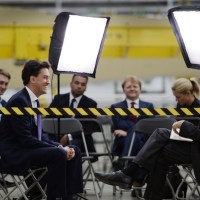
Will Labour do well in the Newark by-election? While all the focus has been on the fight between the Tories and Ukip (watch our exclusive interview with the candidates here), Labour has been mostly forgotten. Yet in this morning’s poll of the seat from The Sun, Labour are on 27 per cent — four points ahead of their result in 2010 and one point ahead of Ukip: [datawrapper chart="http://static.spectator.co.uk/4CGHl/index.html"] This is a rather good showing for a party with a pretty basic ground operation. During my visit to Newark-on-Trent yesterday, I did not spot a single Labour canvasser in the town centre. Their election HQ was smaller than any of the other parties.
Oh Scotland! You’ve really let yourself down. You should be ashamed.

From our UK edition

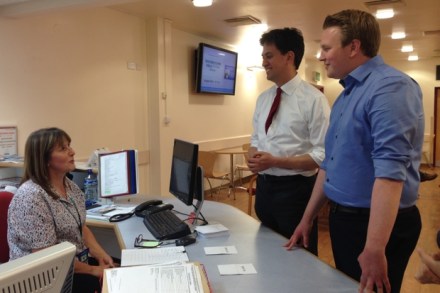
Lord, grant me strength. And serenity. Further evidence emerges that supporters of Scottish independence are losing their minds. Yesterday Iain Macwhirter was in full Can we no do anything right? mode; today it's the turn of Joyce Macmillan to wallow in self-pity. Again, you see, the problem with Scotland is that it is full of Scottish people and, golly, some of them hold nasty, inconvenient, dismal views. They are the enemy within. That may sound nastily conspiratorial but, hell, it's not my view. To wit: On Monday morning, as the final Euro elections results were being confirmed, I made my way up to the NHS outpost in Lauriston Place in Edinburgh for un ultrasound scan.

Europe Minister keeps close eye on Commissioner race

From our UK edition

What do Foreign Office ministers think about the possibility that Andrew Lansley could be the next European Commissioner? David Lidington was clearly intrigued by Isabel's column in the Telegraph this morning which says that Tory backbenchers are not fans at all. The Europe Minister, who would have to work closely with Lansley, retweeted the article with the headline 'the mysterious Mr Lansley will hardly set Brussels alight'. He then realised that this might not look very good, and tweeted: 'Apologies. Was trying to read last article not retweet it. Retweet def not my view.' Presumably he doesn't mean that he does think Lansley will set Brussels on fire?

Sir John Major: EU election results make renegotiation easier

From our UK edition

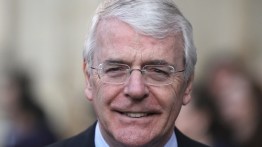
Sir John Major isn't a fan of Ukip and thinks it will fade away from its current position on the political scene. He's not the only one who thinks that: one of the problems that all three main parties have face is that they have continually assumed that Ukip is about to lose its head of steam, and have therefore made precious few preparations for the party getting bigger and stealing more of their voters. But there was one very interesting remark that Major made in his interview on the Today programme. He said: 'The circumstances between the 1990s and now are very different in many ways, and in a very curious way the recent European elections have emphasised that very clear. I think the results of these elections right across Europe have made a renegotiation much easier.

Ed Miliband must be careful when he talks about suicide

From our UK edition

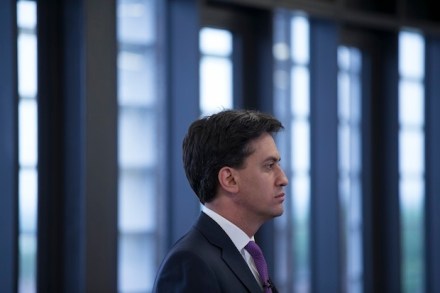
Jim Waterson's BuzzFeed interview with Ed Miliband is well worth a read. But the opening paragraph stands out in particular: 'Ed Miliband was in Nottingham last Tuesday when a man approached him to say that his part-time job at a petrol station wasn’t paying enough to take care of two children. This is an anecdote of the sort Miliband is always telling in his campaign to lower Britain’s cost of living, but what the man said next was “chilling.” '“He was really, really desperate because he felt couldn’t properly provide for his family,” Miliband recalls. “He was thinking of ending it all because he just couldn’t make ends meet.” '“Suddenly bacon sandwiches look slightly beside the point,” Miliband says.

What’s the matter with Scotland? It’s full of Scottish people.

From our UK edition

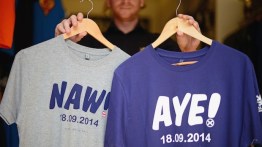
Here's the thing many people misunderstand about Scotland's referendum on independence: it isn't really very much to do with England. When someone starts chuntering on about Braveheart and Bannockburn you know you're listening to a fruitcake. This is true whether the fruitcake is Scots or English. At least the latter have the excuse of ignorance, I guess. Anyway, the point is that as much as we may occasionally dislike or, more frequently, be irritated by the English they're not the problem. The people we really hate are our fellow Scots. And with good reason. I mean, look at us. The worst part of losing the referendum (whichever side you favour) is having to share a country with the winners. I spy much unhappiness. So I enjoyed Iain Macwhirter's column in today's Herald.

Peter Mandelson: Ed Miliband needs more policies and fewer promises

From our UK edition

In his Spectator diary this week Lord Mandelson offers Ed Miliband some advice... Nigel Farage has no trouble in heaping praise on Putin because of their shared antipathy towards Europe. Farage’s party had a good week. The challenge for them is to build a genuine movement beyond a charismatic leader, a band of fruitcake candidates and a clutch of reactionary ideas. I doubt they will succeed. In my political career we’ve seen two similar ‘breakthrough’ moments, both in the 1980s: the SDP’s rise and fall, then the Greens coming and going. Those parties’ success was only due to Labour’s weakness. When Labour got its act together, their appeal faded.

Why no one’s ready to oust Nick Clegg (except the Tories, of course)

From our UK edition

[audioplayer src="http://traffic.libsyn.com/spectator/TheViewFrom22_29_May_2014_v4.mp3" title="James Forsyth and Isabel Hardman discuss the Lib Dem's internal warfare" startat=818] Listen [/audioplayer]Nigel Farage is pretty good at giving people hangovers, and on Monday morning all three Westminster party leaders woke up with one. Ukip’s victory in the European elections represents the first time in more than a hundred years that Labour or the Tories had not won a nationwide vote. It showed that the old allegiances on which our politics are predicated have broken down. It also reminded us that none of the parties are national affairs any more; Labour came third in four regions, as the Tories did in six.

Nick Clegg is safe, but his party will continue to glower a while longer

From our UK edition

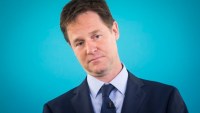
Nick Clegg is safer now than he was this morning. Lord Oakeshott's outing as the source of these ICM seat polls and his resignation from the party has put the plotters on the back foot. MPs who were ambiguous in their support for the leader are now much more forthright. Vince Cable himself is preparing a further statement of loyalty to Clegg following his denunciation of Oakeshott yesterday. The Clegg operation is more interested in getting this story over with than settling scores. It is vigorously defending Cable, arguing that he can't be held responsible for Oakeshott's actions. But the problem for Clegg is that the Lib Dems' internal structures mean that it will take a fair while for the last embers of this plot to be put out.

Will Oakeshott’s demise kill off Lib Dem revolt?

From our UK edition

Nick Clegg said this morning that 'appropriate steps' will be taken to deal with Lord Oakeshott after the peer was outed as the 'Lib Dem supporter' who had commissioned uncomfortable polling about the Lib Dems' chances in 2015. As with other difficult situations with Lib Dem peers, though, Clegg doesn't have that much power to remove the whip from Oakeshott, even if he'd like to.

Scottish Independence: The Cost of Living Like This

From our UK edition

Yippee! The number-crunching boffins are at war again. The UK and Scottish governments have today released rival forecasts for life in an independent Scotland. It will not surprise you that the UK government's projections run towards the pessimistic side of the ledger while their opponents in Edinburgh take a sunnier view of Scotland's future economic circumstances and performance. Fancy that! The Scottish government suggests there might be £5bn windfall from independence; the UK government reckons each Scot receives a 'Union dividend' worth something like £1,400 a year.  They can't both be right. In fact the probability is they are both wrong. That is, Scotland's fiscal and economic position would be neither as bleak as London suggests nor as rosy as Edinburgh claims.

Ukip pin Newark hope on data access

From our UK edition

Ukip types, already with a spring in their step this week, are further buoyed by the fact that they will be going into the Newark by-election with data up their sleeves. The Tory machine is in full swing on the ground, but the playing field has been levelled. Whereas in previous by-elections Farage turned up to the pub or hung about meeting people in the market square, Newark will be different. Thanks to the proximity of the crunch Nottinghamshire ballot to the European and local elections, the self-styled ‘people’s army’ will be on an equal footing with the embedded local Tories, as they will be able to see exactly who voted last week.

Michael Gove hasn’t banned Steinbeck – but perhaps he should have.

From our UK edition

I've never quite understood why so many people hate Michael Gove. I mean, really hate him. To my mind his heart is so obviously in the right place that I'm happy to forgive him his occasional excesses. It may not quite be the case that anyone who so thoroughly upsets the teaching establishment must be doing something right but it is very plainly something more likely to be right than wrong. Which, I suppose, means I do understand why so many people hate the Education Secretary. As the left often reminds us (albeit usually tediously) speaking truth to power is rarely popular. But no, Michael Gove has not banned  the teaching of To Kill A Mockingbird or Of Mice and Men. Nor has he suggested the English literature GCSE begin with Shakespeare and end with Milton.

Miliband’s sense of humour failure over relatively helpful question

From our UK edition

Ed Miliband has just delivered his post-European and local elections comeback speech in Thurrock, to show that he's not afraid to confront the challenges that Labour still faces in the run-up to 2015. I'll post on the details of the speech and what it means shortly, but one exchange in the Q&A told us quite a lot not just about Miliband but politicians in general. Here is a video clip: And here is the transcript: Journalist: 'Peter Dominiczak from the Telegraph. You've been attacked in your party for being too wordy and too academic. I wondered if you could give us here today just one word that defines your leadership and tells voters what makes you different and sets you apart from the other party leaders?

Briefing: what you need to know about that leaked Lib Dem poll

From our UK edition

Will Nick Clegg hold onto his Sheffield Hallam seat next year? No, according to internal Lib Dem polling which has been leaked to the Guardian. ICM have now released the full tables, which outline the fight Clegg and the Lib Dems face in 2015. It's worth noting sample sizes are small — 500 were polled in each seat compared to 1,000 in Ashcroft survey this weekend. But here are the most important details: While Clegg held onto his seat comfortably with 53 per cent of the vote in 2010, the ICM snapshot suggests that if there was a general election tomorrow, Clegg would come third behind Labour and the Tories: [datawrapper chart="http://static.spectator.co.uk/xaqCs/index.html"] In other key seats for the Lib Dems, the picture isn't any more cheerful.

Polling council investigates anonymous Lib Dem seats survey

From our UK edition

Who is the mysterious 'Lib Dem supporter' behind the ICM poll showing that the Lib Dems would fare very badly next year if Nick Clegg remains leader? ICM have published the poll tables, saying only that the commissioning client is a 'member of the Liberal Democrats'. The British Polling Council rules state that its members must refer to the 'client commissioning the survey', and there is some suggestion that simply saying the client is a Lib Dem member isn't quite sufficient. I've spoken to the BPC's Secretary Nick Moon, who says the Council is examining ICM's disclosure to see whether it complies with the rules. He says: 'It is a little unclear, we are looking at it, but we've never had a case quite like this. It's not clear whether the rule includes the actual individual.